Artwork
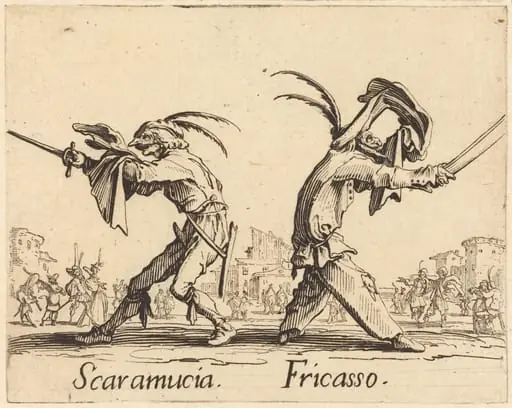
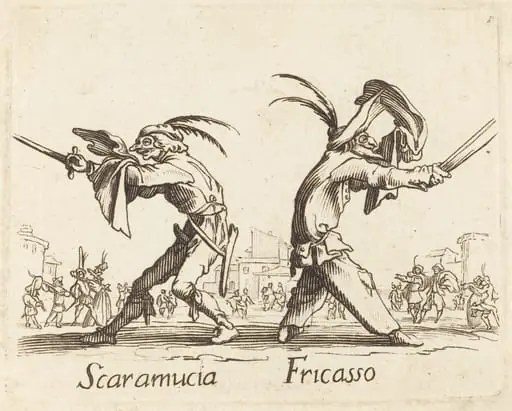
Scaramucia and Fricasso
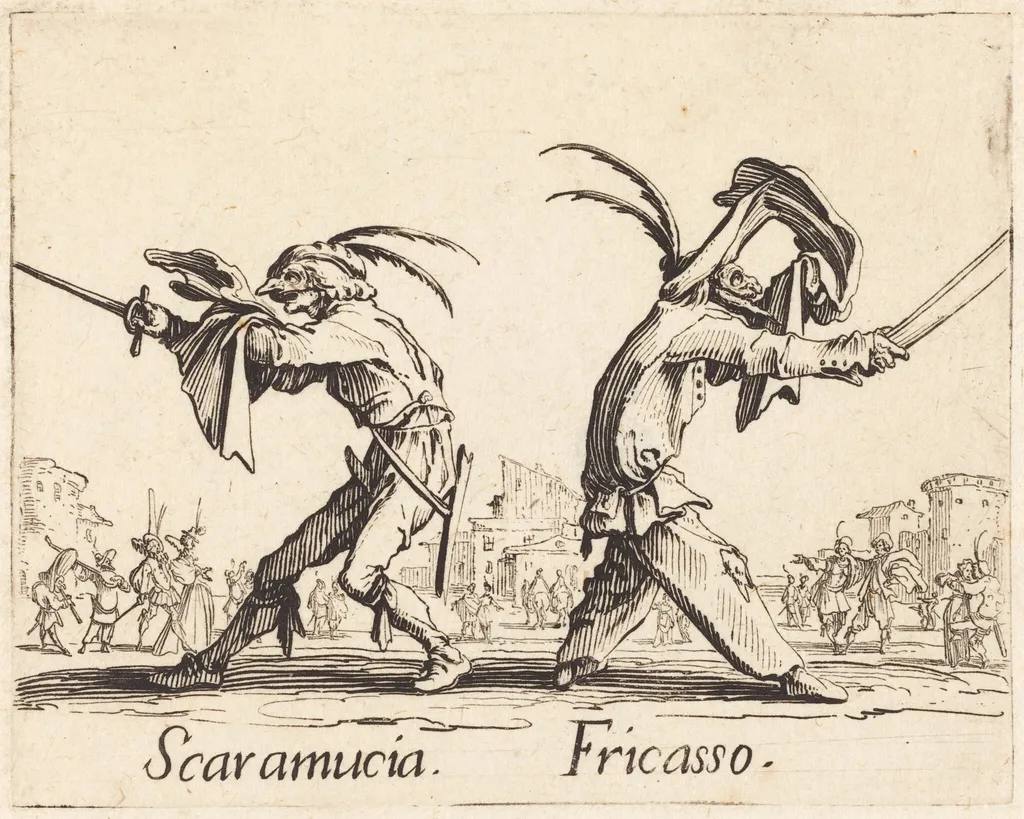
Scaramucia and Fricasso is an ink print by the Baroque artist Jacques Callot. It dates from 1622 and is held in the collection of the National Gallery of Art.
About this work
Overview
Scaramucia and Fricasso, an etching on laid paper created by Jacques Callot around 1622, exemplifies the artist's prolific Baroque printmaking style, characteristic of his work from the Duchy of Lorraine.
Subject & Meaning
The etching depicts two theatrical figures, Scaramucia and Fricasso, engaged in a dynamic sword fight amidst a chaotic yet controlled scene, reflecting 17th-century Europe's fascination with performance arts and social archetypes. The characters' attire and the presence of spectators suggest a staged or theatrical context.
Technique & Style
Executed in etching, the piece showcases Callot's mastery of the medium, capturing intricate details and movement. The composition balances energy with precision, highlighting the artist's ability to convey drama through line work and texture on laid paper.
History & Provenance
Created circa 1622, this etching is part of Callot's extensive oeuvre of over 1,400 prints, which broadly documented contemporary life, including military, theatrical, and everyday figures, often set against detailed backdrops.
Context
Scaramucia and Fricasso reflects the Baroque period's interest in capturing dynamic movement and everyday life. The work's emphasis on theatrical figures also aligns with the era's vibrant performance culture.
Artist & collection
Artist
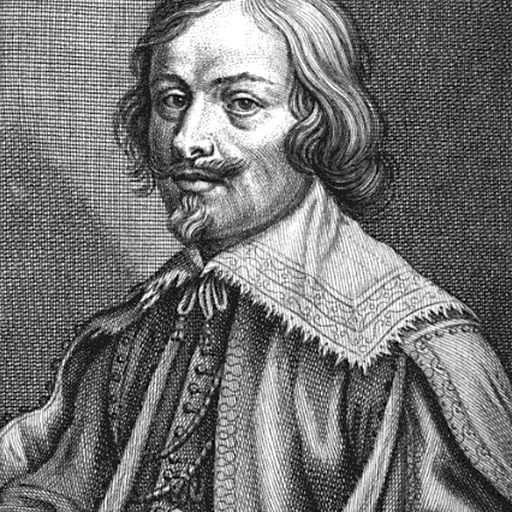
Jacques Callot was a baroque printmaker and draftsman from the Duchy of Lorraine.

 Holy Family at supper
 Restoration of the Aqueduct at Pisa
 Restoration of the Aqueduct at Pisa
 Square in Paris with Many Figures
 Square in Paris with Many Figures
 Horsemen Attacked by Robbers
 HOW WILL A COVERED PART BE CORRECTED?HOW WIKA A COVERED HEART DEED CORRECTED?
![Christ Walking on the Water [second plate], by Jacques Callot](https://artifactworldgallery.com/img/jacques-callot--christ-walking-on-the-water-second-plate--2069f3bfe4cb2126-w320.webp) Christ Walking on the Water [second plate]
Christ Walking on the Water [second plate]