Artwork
Unarmed Drill
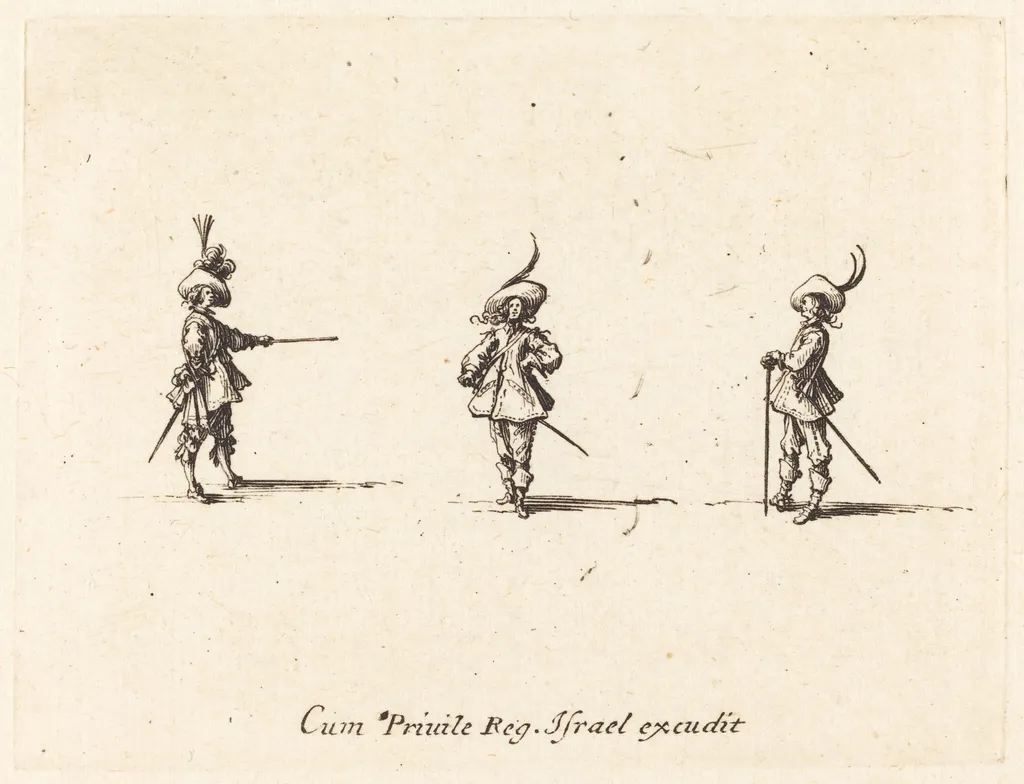
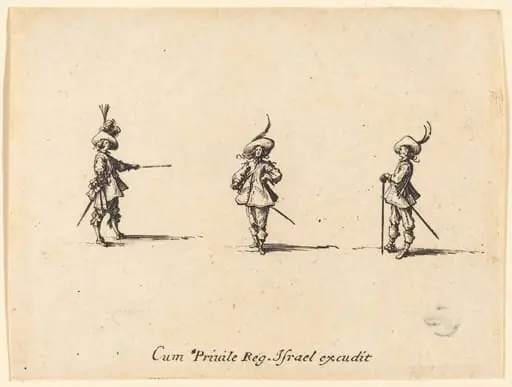
Unarmed Drill is an ink print by the Baroque artist Jacques Callot. It dates from 1634 and is held in the collection of the National Gallery of Art.
About this work
Overview
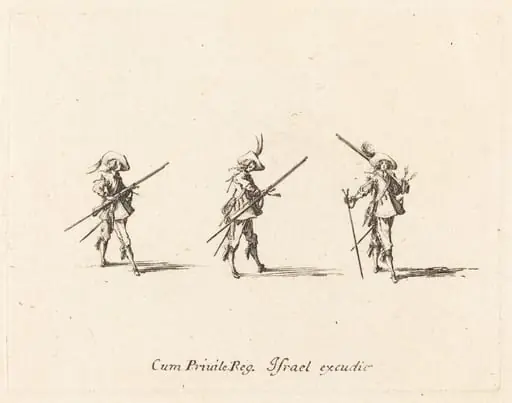
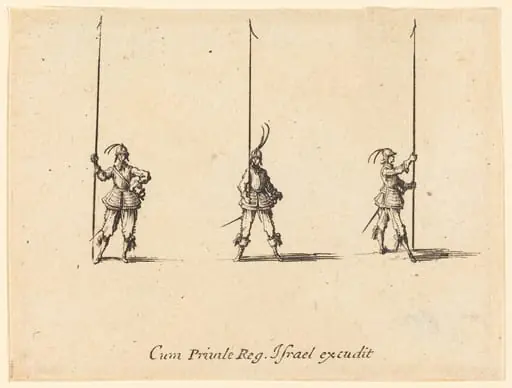
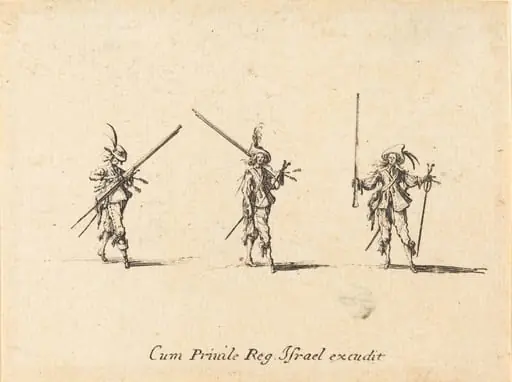
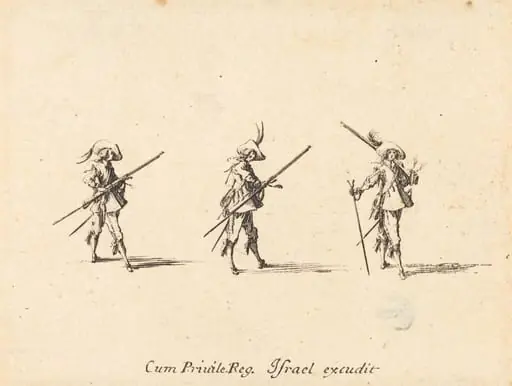
Created in 1634, *Unarmed Drill* is an etching on laid paper by Jacques Callot, a French printmaker active in the Duchy of Lorraine. The work measures a modest size typical of his prints and depicts three uniformly dressed men practicing a military exercise. The composition is rendered in fine, closely spaced lines that give the figures a tangible sense of volume against a plain background.
Subject & Meaning
The scene shows three soldiers in richly ornamented attire, each bearing a sword; one extends his weapon laterally while the others keep theirs at their sides. By portraying a drill without combat, Callot highlights the ritualized discipline of 17th‑century soldiery, offering a glimpse into the everyday preparations that underpinned contemporary warfare.
Technique & Style
Callot employed a meticulous etching process, incising intricate lines into a copper plate before transferring the image onto laid paper. The dense cross‑hatching and subtle gradations of tone create a realistic texture on the clothing, armor, and boots, while the neutral ground plane isolates the figures, emphasizing their gestures and the precision of the drill.
History & Provenance
Part of Callot’s prolific output of more than 1,400 prints, *Unarmed Drill* belongs to his series of military subjects that documented the visual culture of early modern Europe. The print circulated among collectors and print dealers in the mid‑17th century, and later entered museum collections that specialize in Baroque graphic art.
Context
During the Baroque era, printmaking served both as a means of disseminating news and as a vehicle for artistic experimentation. Callot’s work reflects the period’s fascination with detailed observation, and his focus on soldiers, beggars, and itinerant groups provides a broad social panorama of his time.
Legacy
Callot’s precise etching technique influenced subsequent generations of printmakers, notably in the development of the French school of engraving. His military scenes, including *Unarmed Drill*, remain valuable documentary sources for historians studying the visual representation of early modern armed forces.
Artist & collection
Artist
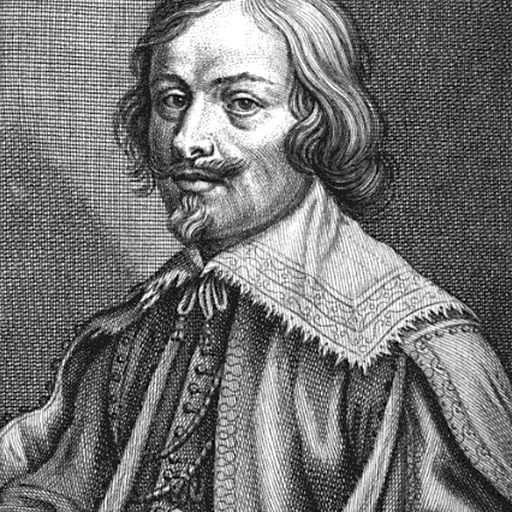
Jacques Callot was a baroque printmaker and draftsman from the Duchy of Lorraine.

 Holy Family at supper
 Restoration of the Aqueduct at Pisa
 Restoration of the Aqueduct at Pisa
 Square in Paris with Many Figures
 Square in Paris with Many Figures
 Horsemen Attacked by Robbers
 HOW WILL A COVERED PART BE CORRECTED?HOW WIKA A COVERED HEART DEED CORRECTED?
![Christ Walking on the Water [second plate], by Jacques Callot](https://artifactworldgallery.com/img/jacques-callot--christ-walking-on-the-water-second-plate--2069f3bfe4cb2126-w320.webp) Christ Walking on the Water [second plate]
Christ Walking on the Water [second plate]