Artwork
Shorwell, Isle of Wight
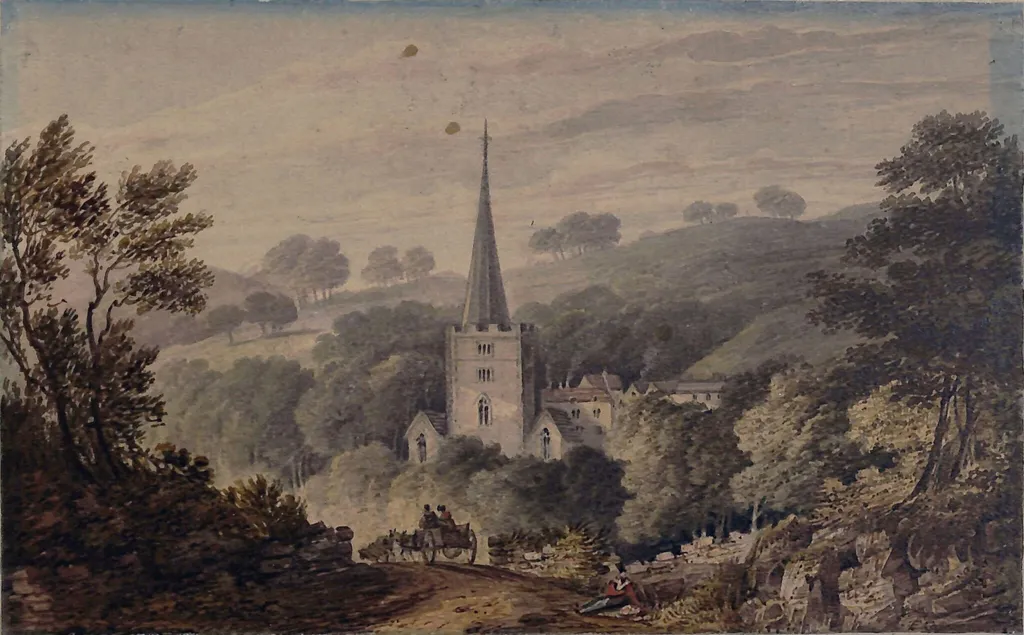
Shorwell, Isle of Wight is a watercolor work on paper by Frederick Calvert. It dates from 1850 and is held in the collection of the Victoria and Albert Museum.
About this work
Overview
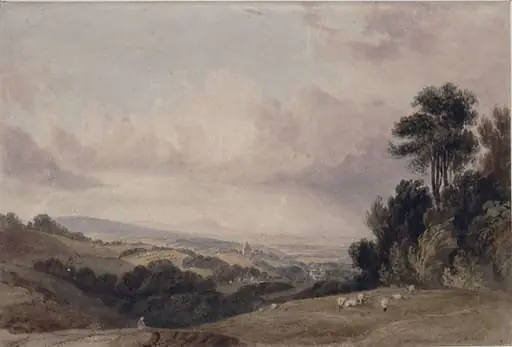
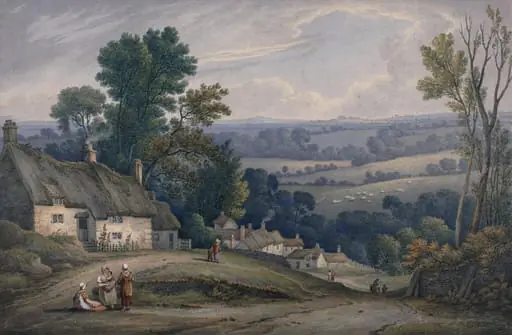
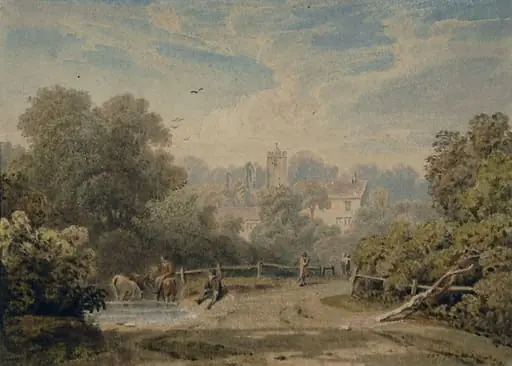
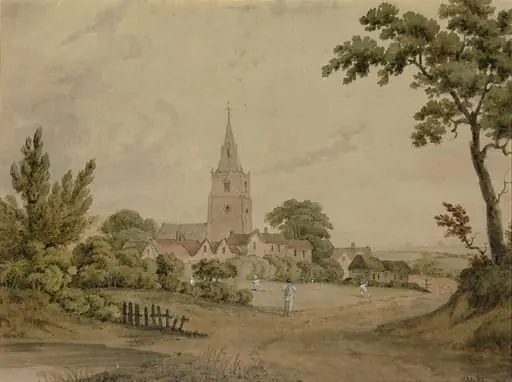
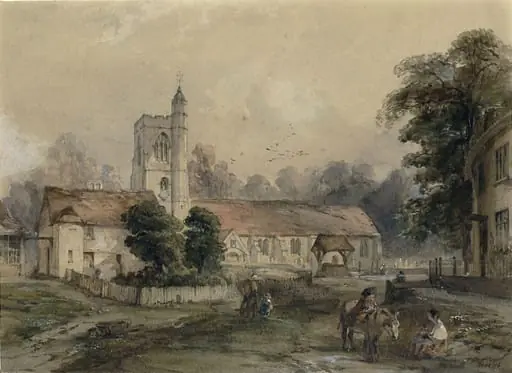
Frederick Calvert’s 1850 watercolour depicts the village of Shorwell on the Isle of Wight. The composition frames a modest settlement set within a gentle valley, dominated by a tall church with a pointed spire perched on a rise. A winding lane leads past a horse‑drawn cart, while a few figures attend to daily tasks along the roadside, conveying a tranquil rural atmosphere.
Subject & Meaning
The church, elevated above the homes, serves as a visual focal point, suggesting the central role of faith in the community.
The work presents an idealised vision of mid‑nineteenth‑century country life, emphasizing the harmony between the built environment and the surrounding landscape. The church, elevated above the homes, serves as a visual focal point, suggesting the central role of faith in the community. The presence of the cart and laboring figures underscores the continuity of agrarian routines within a peaceful setting.
Technique & Style
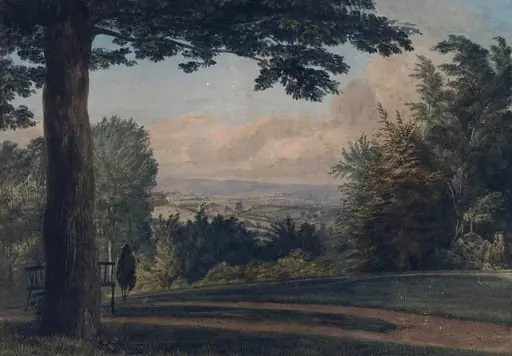
Calvert employs a restrained palette of muted greens, browns, and soft blues, applying the watercolour with loose, fluid brushstrokes that blur edges and create a slightly hazy ambience. The technique softens architectural details while preserving enough definition to convey depth, allowing light to diffuse across the scene as if filtered through a gentle mist.
History & Provenance
The original watercolour bears Calvert’s signature and dates to 1850. Its composition was later reproduced as an aquatint engraving by Percy Roberts for the 1846 volume The Isle of Wight Illustrated, indicating that the image circulated in print before the watercolour’s completion, a common practice for disseminating picturesque views of the island.
Context
Created during a period when the British public showed heightened interest in coastal and rural tourism, the image reflects contemporary tastes for picturesque depictions of the Isle of Wight. Such works catered to travelers and collectors eager for visual records of charming villages and their serene surroundings.
Artist & collection
Artist
Frederick Calvert painted the Isle of Wight’s coastline in the early 1800s, mostly in watercolor.