Artwork
The Mender
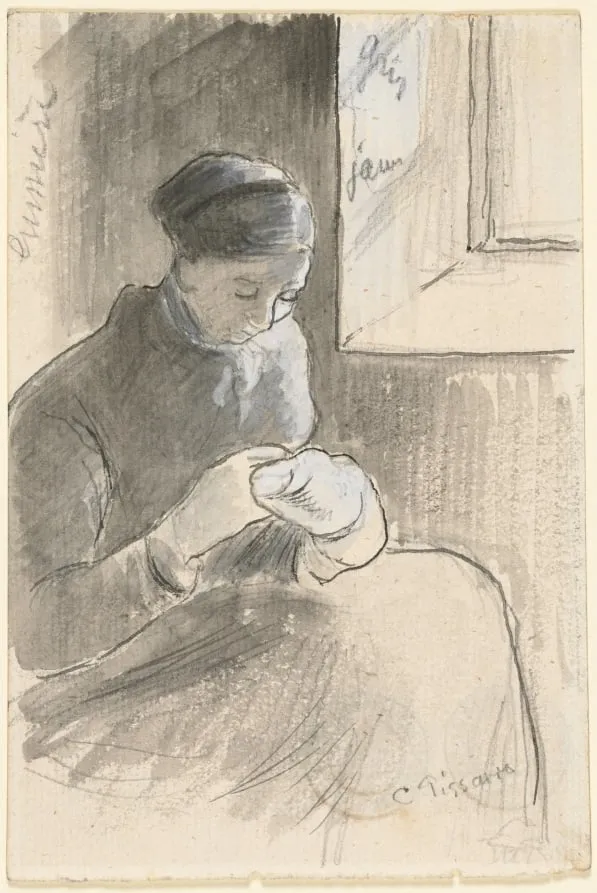
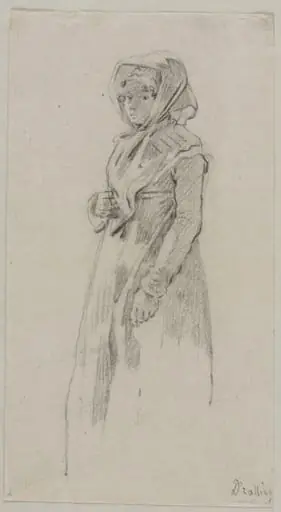
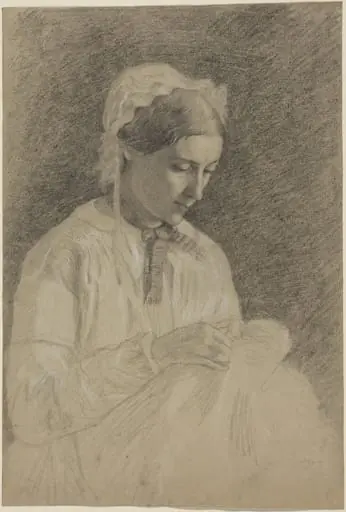
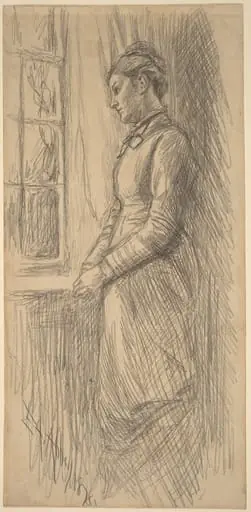
The Mender is a drawing by the Impressionist artist Camille Pissarro. It dates from 1881 and is held in the collection of the Cleveland Museum of Art.
About this work
Overview
The artist annotated the margin with the word 'lumière,' signaling his attention to the quality of natural illumination.
This drawing by Camille Pissarro captures a quiet moment of daily labor: a woman sewing near a window. Executed in pencil or charcoal, it reflects his lifelong interest in rural life and the routines of working people. The artist annotated the margin with the word 'lumière,' signaling his attention to the quality of natural illumination. The sketch is unembellished, prioritizing observation over narrative.
Subject & Meaning
The figure is a woman engaged in the ordinary act of sewing, a common theme in Pissarro’s work. She is not idealized; her posture and focus suggest routine, not performance. The setting—part interior, part exterior through the window—connects domestic labor with the natural world. The inclusion of swaying trees outside implies continuity between human activity and the rhythms of the landscape.
Technique & Style
Pissarro employed loose, rapid lines to suggest form and movement, particularly in the folds of fabric and the gesture of the hands. The drawing’s economy of mark-making conveys immediacy. The marginal notation 'lumière' reveals his method: a personal reminder to track how light falls across surfaces. This attention to optical effect anticipates his later Impressionist concerns with atmosphere and perception.
History & Provenance
The drawing dates from Pissarro’s mature period, likely the 1880s or 1890s, when he frequently worked in the French countryside. It was likely made as a study, not a finished piece, and remained in the artist’s possession until his death. Its survival suggests it held personal significance, perhaps as a reference for later paintings or simply as a record of a moment observed.
Context
Pissarro’s focus on rural laborers aligned with broader 19th-century interests in social realism and the dignity of everyday life. Unlike urban scenes favored by some contemporaries, he turned to the countryside, where labor was tied to the land and seasons. His sketches of women sewing reflect both a personal fascination and a broader artistic movement seeking truth in unadorned existence.
Legacy
This drawing exemplifies Pissarro’s role as a bridge between realism and Impressionism. His emphasis on transient light and unposed figures influenced younger artists, including Cézanne and Gauguin. Though modest in scale, such studies contributed to a shift in how artists recorded the world—not through grand narratives, but through attentive, quiet observation of ordinary moments.
Artist & collection
Artist
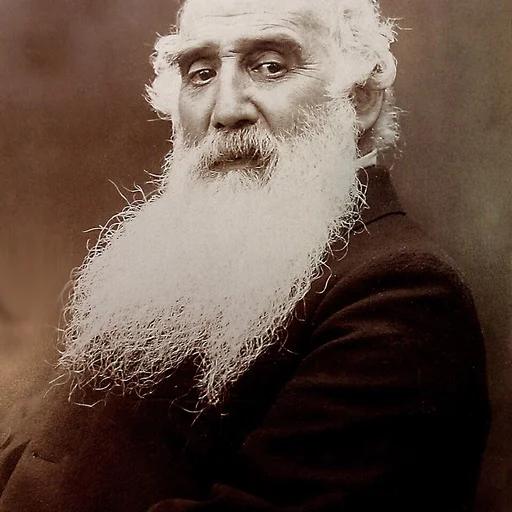
Jacob Abraham Camille Pissarro ( piss-AR-oh; French: ; 10 July 1830 – 13 November 1903) was a Danish-French Impressionist and Neo-Impressionist painter born on the island of Saint Thomas (now in the US Virgin Islands, but then in the…

![Susan on a Balcony Holding a Dog [verso], by Mary Cassatt](https://artifactworldgallery.com/img/mary-cassatt--susan-on-a-balcony-holding-a-dog-verso--491e0ff153c1eefc-w320.webp)