Artwork
Mercury and Aglauros
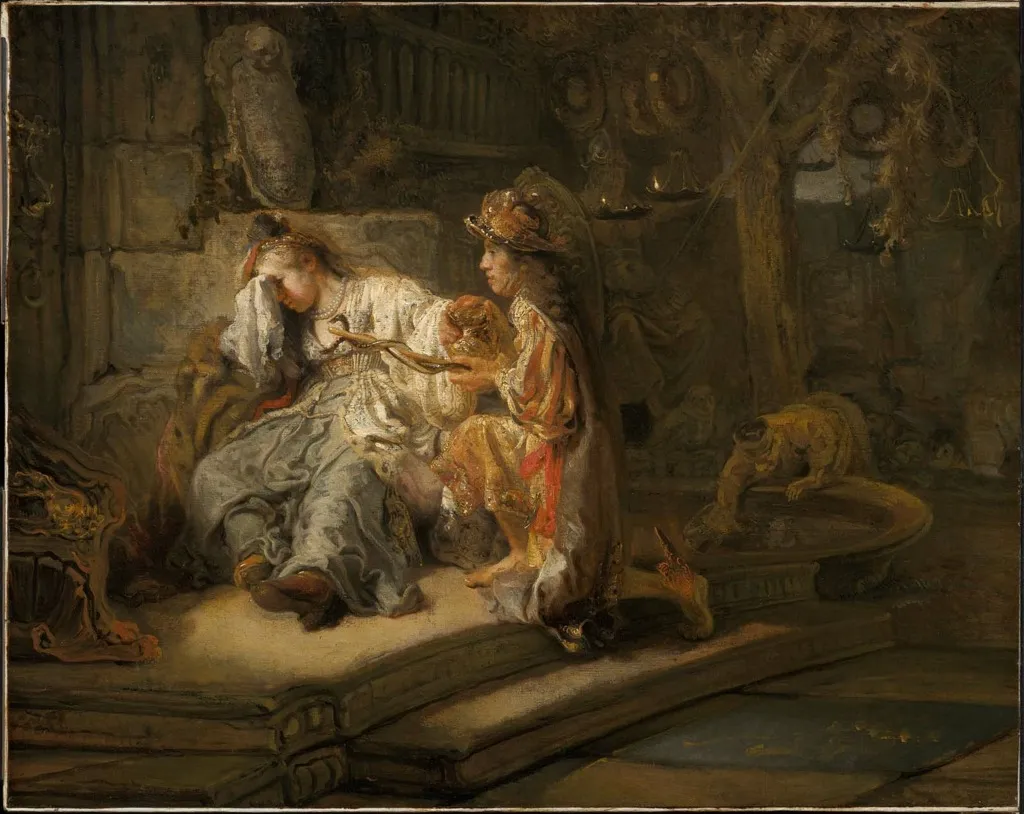
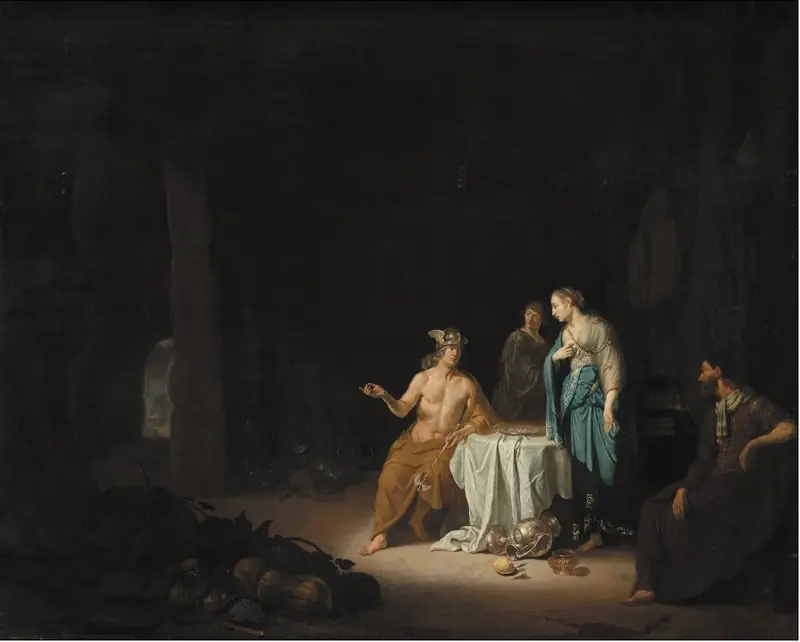
Mercury and Aglauros is an oil painting by the Dutch Golden Age artist Carel Fabritius. It dates from 1646 and is held in the collection of the Museum of Fine Arts Boston.
About this work
Overview
The composition presents a dimly lit interior where the Roman messenger god Mercury kneels beside a seated female figure identified as Aglauros.
Carel Fabritius painted *Mercury and Aglauros* in 1646, a work executed in oil on canvas during the height of the Dutch Golden Age. The composition presents a dimly lit interior where the Roman messenger god Mercury kneels beside a seated female figure identified as Aglauros. A crouching lion, assorted vessels on shelves, and a stone bench populate the space, while a single light source creates pronounced chiaroscuro.
Subject & Meaning
The scene draws on classical mythology: Mercury, recognizable by his winged helmet, is shown in contact with Aglauros, a mortal woman linked to the founding myths of Athens. The interaction suggests a moment of divine intervention or warning, a theme often explored by artists to convey moral or allegorical messages about virtue, betrayal, or the consequences of hubris.
Technique & Style
Fabritius employs the Delft School’s characteristic attention to light and spatial depth, using a solitary illumination to model forms and generate deep shadows on the rough walls. The painter’s handling of oil allows for subtle gradations of tone, while the perspective—suggested by the receding shelves and the placement of the stone bench—creates a convincing three‑dimensional interior that draws the viewer’s eye toward the central figures.
History & Provenance
Created while Fabritius was still a pupil of Rembrandt, the painting reflects his early experimentation before his untimely death in 1654. *Mercury and Aglauros* entered the collection of the Museum of Fine Arts, Boston, where it remains on view, providing insight into Fabritius’s development and his contribution to Dutch 17th‑century painting.
Context
The work belongs to a period when Dutch artists frequently turned to classical subjects, integrating them into contemporary domestic settings. Fabritius’s choice to place mythological figures within a modest, cluttered room aligns with the era’s interest in merging learned themes with everyday realism, a practice that distinguished the Delft School from the more grandiose Baroque traditions elsewhere in Europe.
Artist & collection
Artist
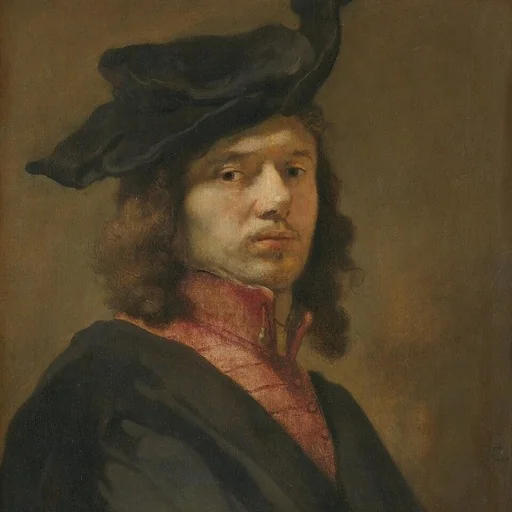
Carel Pieterszoon (abbr. Pietersz.) Fabritius (Dutch pronunciation: ; bapt. 27 February 1622 – 12 October 1654) was a Dutch painter. He was a pupil of Rembrandt and worked in his studio in Amsterdam. Fabritius, who was…