Artwork
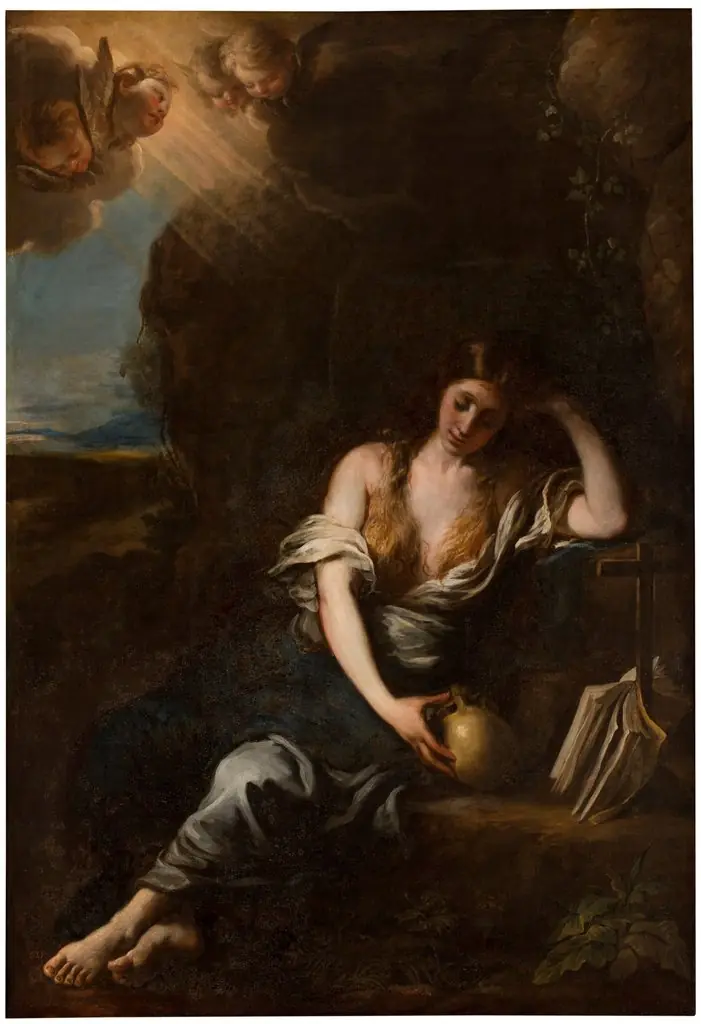
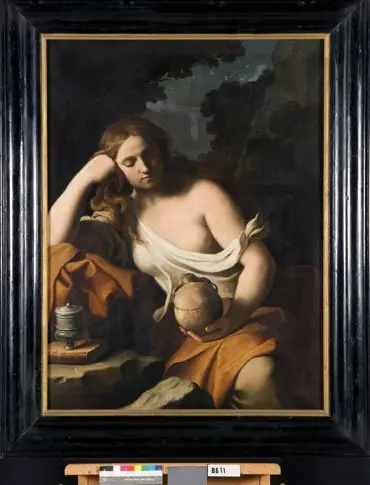
Die büßende Magdalena
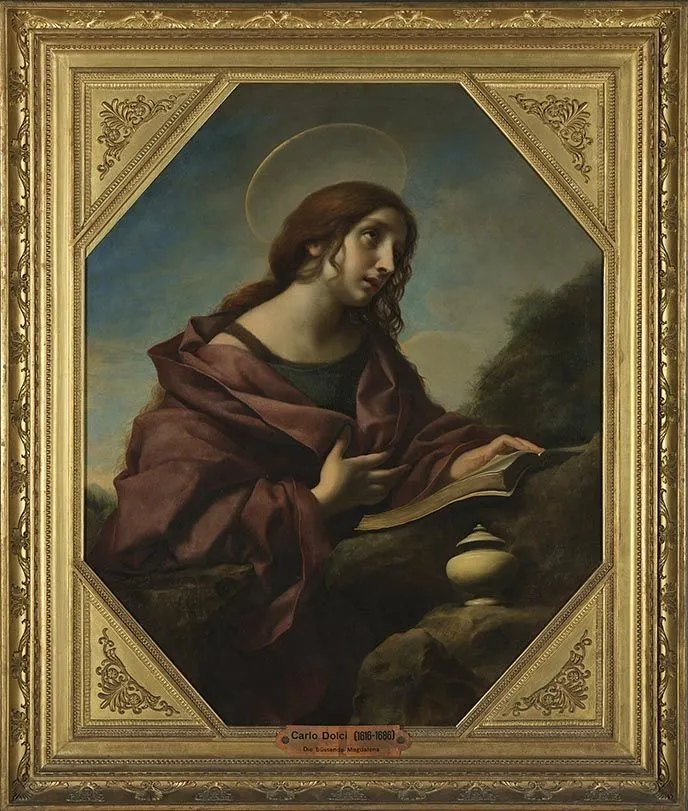
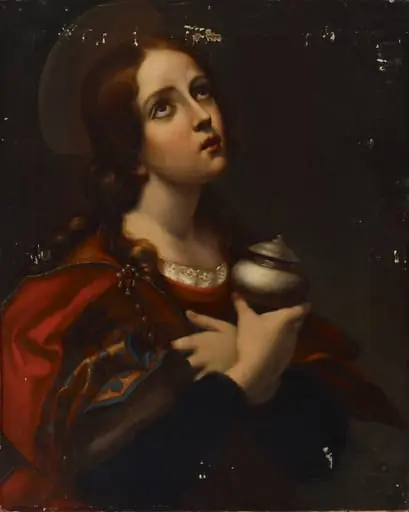
Die büßende Magdalena is an unspecified painting by the Early Baroque Italian artist Carlo Dolci. It dates from 1651 and is held in the collection of the Bavarian State Painting Collections.
About this work
Overview
Carlo Dolci, an Italian painter of the early Baroque period, completed the work known as *Die büßende Magdalena* in 1651. Executed as a devotional image, the painting portrays the biblical figure Mary Magdalene and is part of the collection of the Alte Pinakothek in Munich.
Subject & Meaning
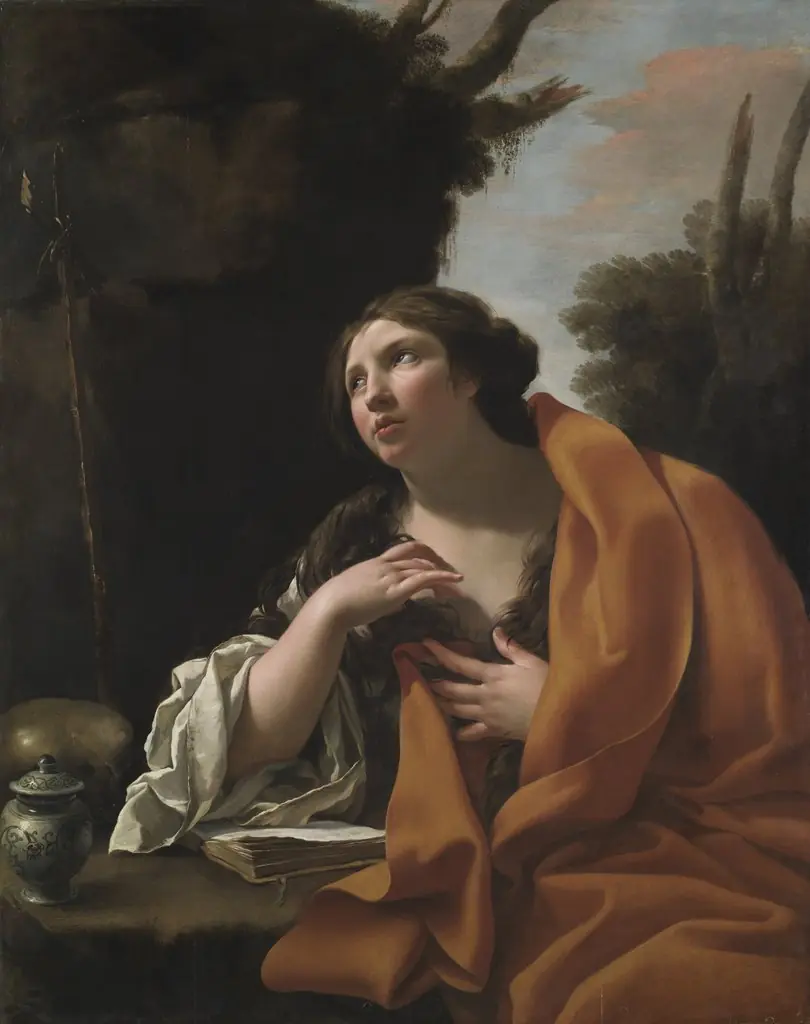
The composition presents a solitary woman seated outdoors, absorbed in a book, her expression serene and contemplative. A subtle golden halo crowns her head, indicating sanctity, while the presence of a small yellow sphere and a stone suggest symbolic references to penance and spiritual rebirth associated with the Magdalene narrative.
Technique & Style
Dolci applies a refined chiaroscuro, using a soft, luminous glow to model the figure against a muted landscape of trees and sky. The red cloak draped over a dark dress creates a restrained color contrast, and the meticulous finish reflects Dolci’s reputation for careful, detailed rendering typical of his Florentine workshop.
History & Provenance
Created in Florence, the painting exemplifies Dolci’s practice of revisiting popular religious subjects in multiple versions for patrons. After changing hands among private collections, it entered the Alte Pinakothek’s holdings, where it remains on display as part of the museum’s Baroque holdings.
Context
During the mid‑17th century, Italian Baroque art emphasized dramatic lighting and emotional engagement to inspire devotion. Dolci’s work aligns with this trend, yet his approach remains comparatively restrained, favoring delicate modeling over the more theatrical gestures seen in the work of his contemporaries.
Artist & collection
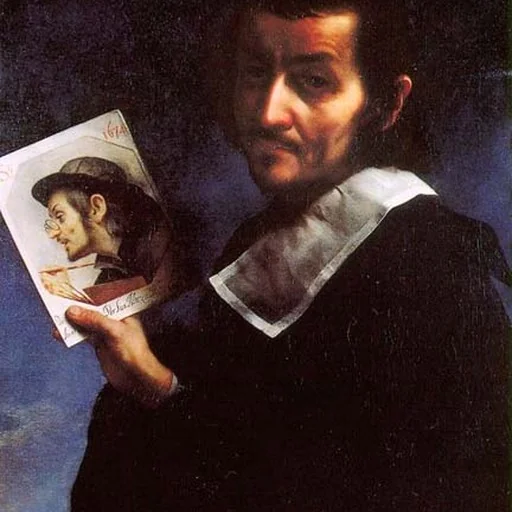
Artist
Carlo (or Carlino) Dolci (25 May 1616 – 17 January 1686) was an Italian Baroque painter active mainly in Florence, known for highly finished religious pictures, often repeated in many versions.