Artwork
Landscape with Two Washerwomen
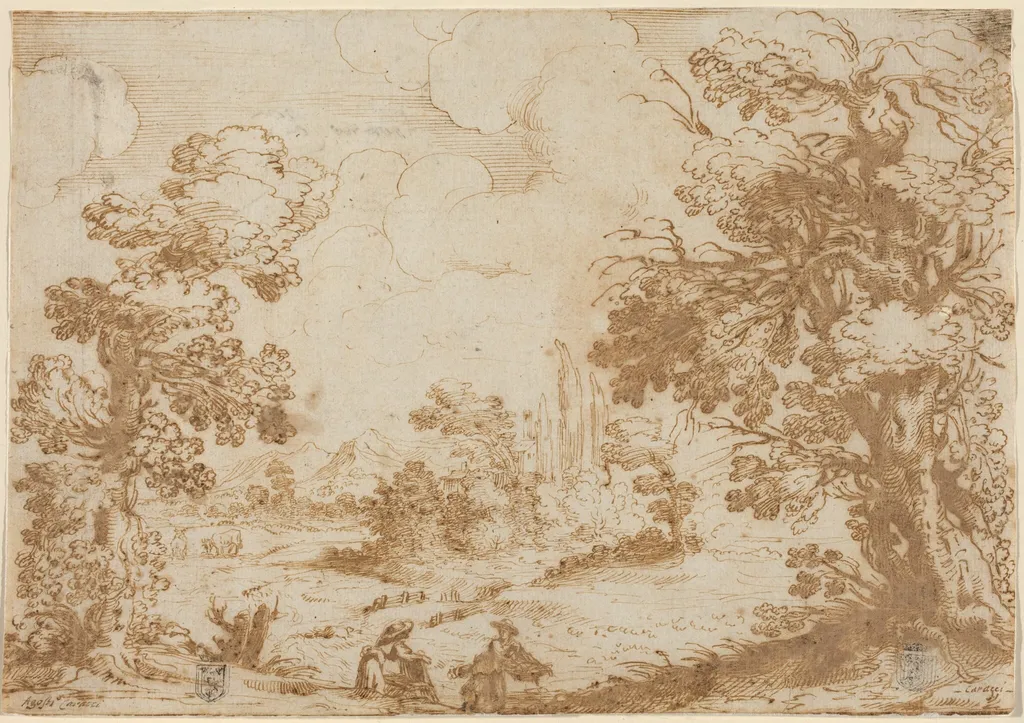
Landscape with Two Washerwomen is an ink drawing by the Renaissance artist Agostino Carracci. It dates from 1584 and is held in the collection of the National Gallery of Art.
About this work
Overview
Created circa 1584, *Landscape with Two Washerwomen* is a pen-and-brown‑ink drawing on laid paper by Agostino Carracci. The work presents a bucolic setting where two women are bent over a stream, engaged in laundry, while a gently rolling countryside unfolds behind them.
Subject & Meaning
The composition centers on everyday labor, emphasizing the rhythm of rural life. The washerwomen, positioned in the foreground, draw the viewer’s eye to the flowing water, while the surrounding hills and distant structures suggest a broader, harmonious landscape.
Technique & Style
Carracci employed swift, sketchy strokes to convey the movement of water and fabric, layering cross‑hatching to model shadows. The brown ink lines sit on the textured laid paper, whose horizontal ribbing is visible, adding a subtle tactile quality to the drawing.
History & Provenance
Agostino Carracci, a co‑founder of Bologna’s Accademia degli Incamminati, produced the drawing during the academy’s early years, when the Carracci family sought to move away from the prevailing Mannerist aesthetic. The piece reflects the academy’s emphasis on naturalistic observation.
Context
The drawing belongs to the Bolognese School’s shift toward realism and classical balance, a reaction against the artificiality of late‑16th‑century Mannerism. By portraying a simple, rural task, Carracci aligned his work with the academy’s pedagogical goals of studying nature directly.
Own this work as a print
Artist & collection
Artist
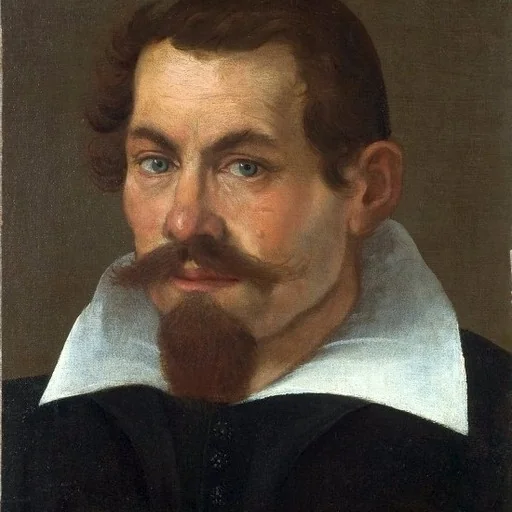
Agostino Carracci ( kə-RAH-chee, UK also kə-RATCH-ee, Italian: ; also Caracci; 16 August 1557 – 22 March 1602) was an Italian painter, printmaker, tapestry designer, and art teacher.

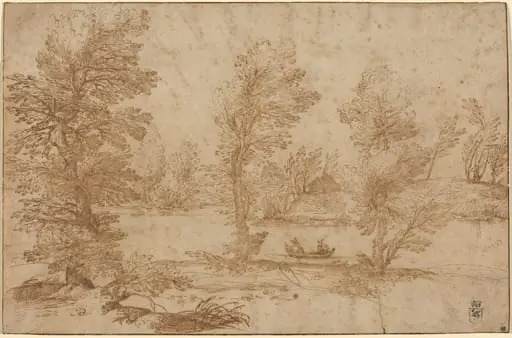 Woodland River with a Boat
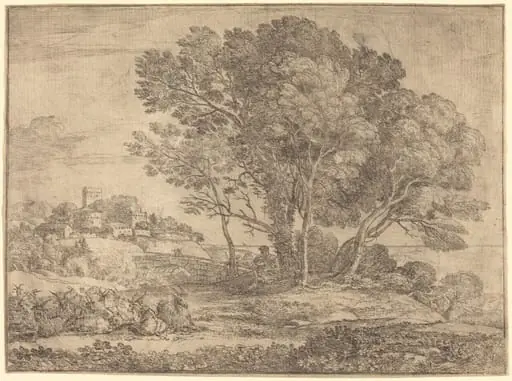 The Goatherd (Le chevrier)
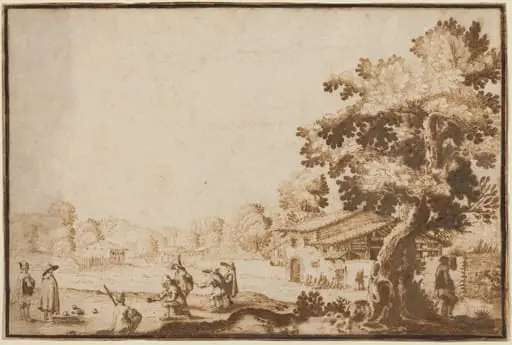 Men Playing Boccie in a Village
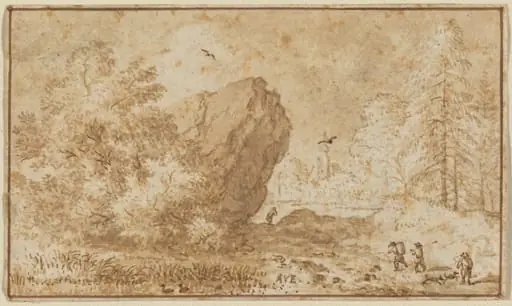 Landscape with Large Rock
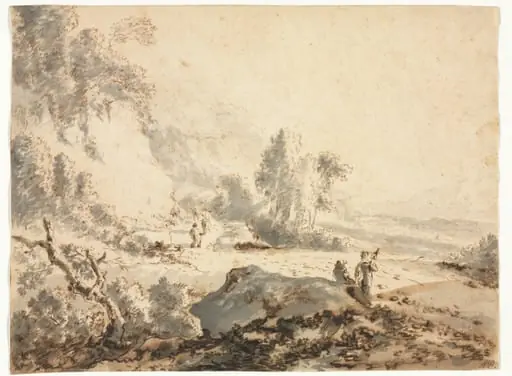 Landscape
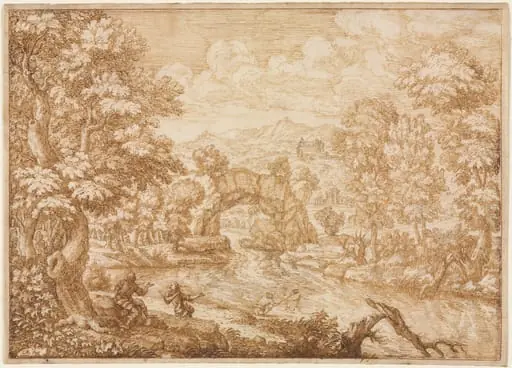 River Landscape with Arched Rock
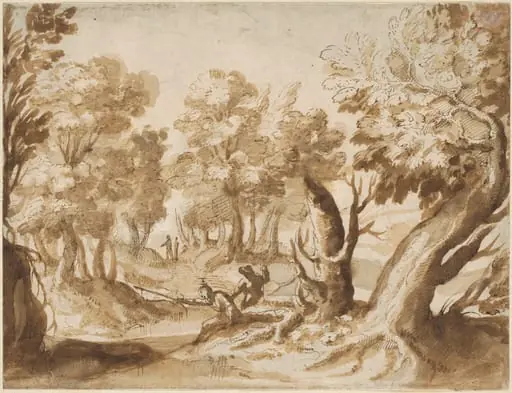 Two Figures Fishing in a Landscape
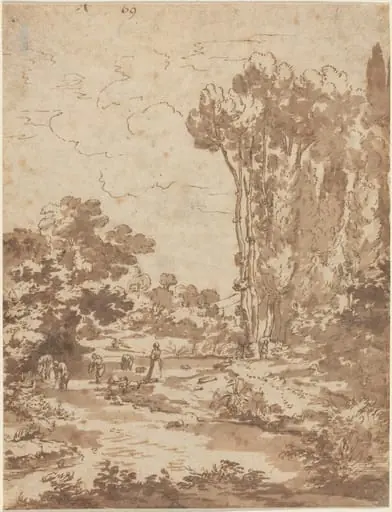 Figures Bathing in a Stream
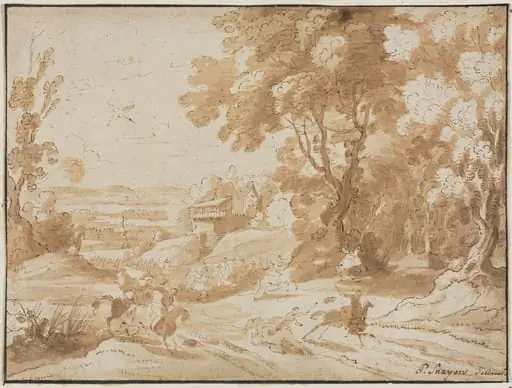 Landscape with Horsemen
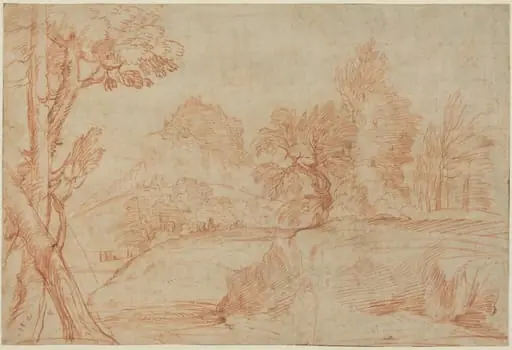 Classical Landscape
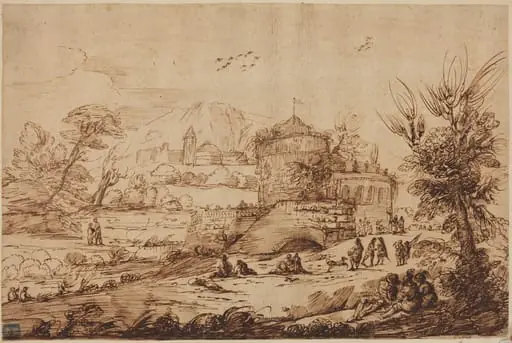 Landscape with Fortress and River
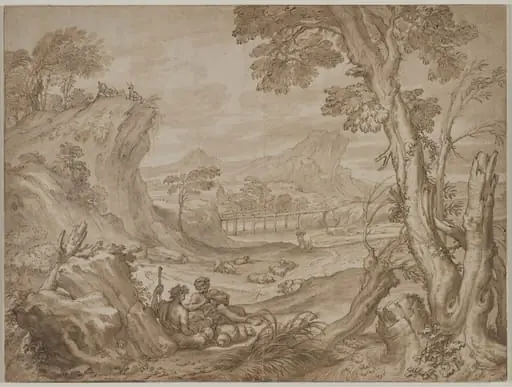 Landscape with Shepherds