Artwork
Auréole
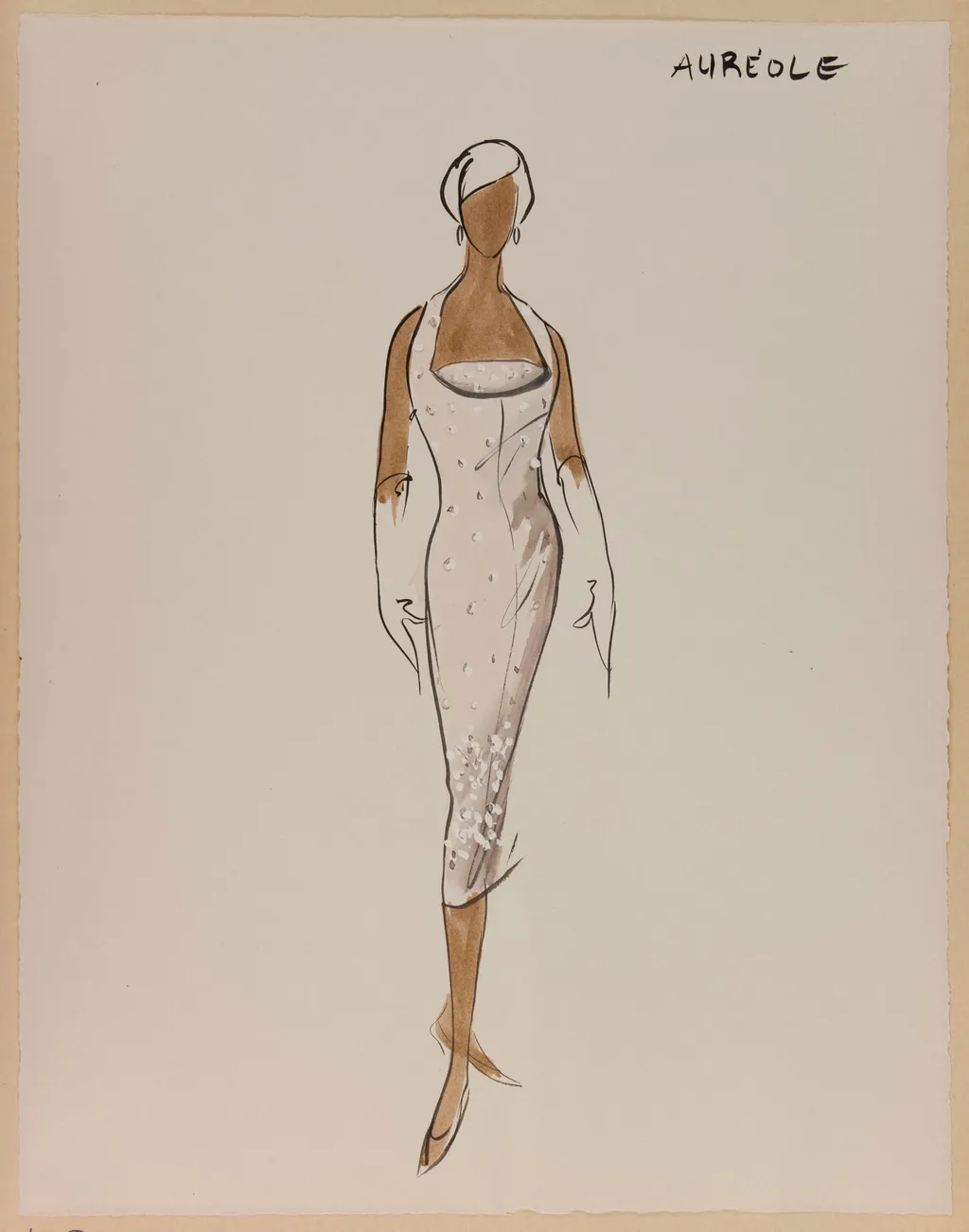
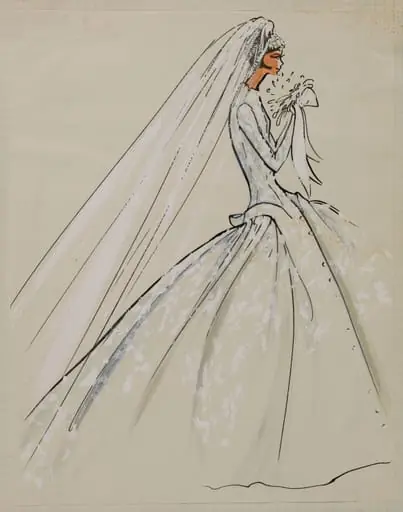
Auréole is a drawing by Carven. It dates from 1956 and is held in the collection of the Palais Galliera - Musée de la Mode de la Ville de Paris.
About this work
Overview
Auréole, dated around 1956, is a fashion sketch by designer Carven, currently held in the collection of the Museum of Ethnography. Executed in a fluid, spontaneous manner, it captures a dress design with minimal detail yet clear structure. The work reflects the artist’s practice of translating clothing concepts into rapid, expressive drawings, prioritizing form and suggestion over finish.
Subject & Meaning
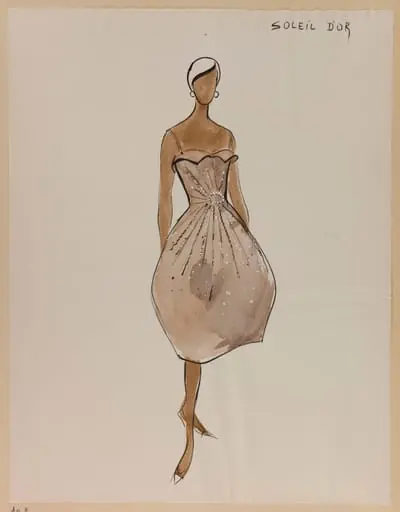
The drawing depicts a simple, fitted dress with a square neckline and short sleeves, worn by a standing female figure in a neutral pose.
The drawing depicts a simple, fitted dress with a square neckline and short sleeves, worn by a standing female figure in a neutral pose. The title, meaning 'halo' or 'glow,' invites interpretation of the scattered white dots as luminous texture, possibly evoking light, delicacy, or an ethereal quality. The dots do not depict embroidery but instead suggest an optical shimmer, aligning the garment with subtle, otherworldly connotations.
Technique & Style
Carven employed a loose, gestural line to define the dress’s silhouette, with the fabric’s texture rendered through fine, irregular white dots—likely applied with a pen or brush. This stippling technique creates visual depth without heavy shading, emphasizing lightness and movement. The sketch’s immediacy reflects its function as a working drawing, capturing design intent rather than presenting a polished illustration.
History & Provenance
The work entered the Museum of Ethnography’s collection as part of a broader archive of mid-20th-century fashion drawings. Its provenance traces back to Carven’s personal studio materials, preserved after the designer’s active years. While not exhibited widely, it remains a representative example of postwar French fashion documentation, valued for its insight into design processes rather than as a finished artifact.
Context
Created in the mid-1950s, Auréole reflects the era’s emphasis on refined simplicity in women’s wear, following the structured silhouettes of the 1940s. Carven, known for elegant, wearable designs, often used sketches like this to communicate ideas to ateliers. The drawing’s informality contrasts with the formality of haute couture presentations, revealing the private, iterative nature of fashion creation.
Legacy
Auréole endures as a quiet testament to the role of sketching in fashion design, illustrating how minimal marks can convey texture, form, and mood. It contributes to scholarly understanding of how designers like Carven translated aesthetic ideas into tangible garments. The work remains a reference point for studying the transition from concept to cloth in mid-century French fashion.
Artist & collection
Artist
These delicate ink-on-paper drawings capture the quiet poetry of everyday things: pinecones, reeds, apples.
Museum
Palais Galliera - Musée de la Mode de la Ville de Paris
Continue through works from the same source collection.