Artwork
Câline
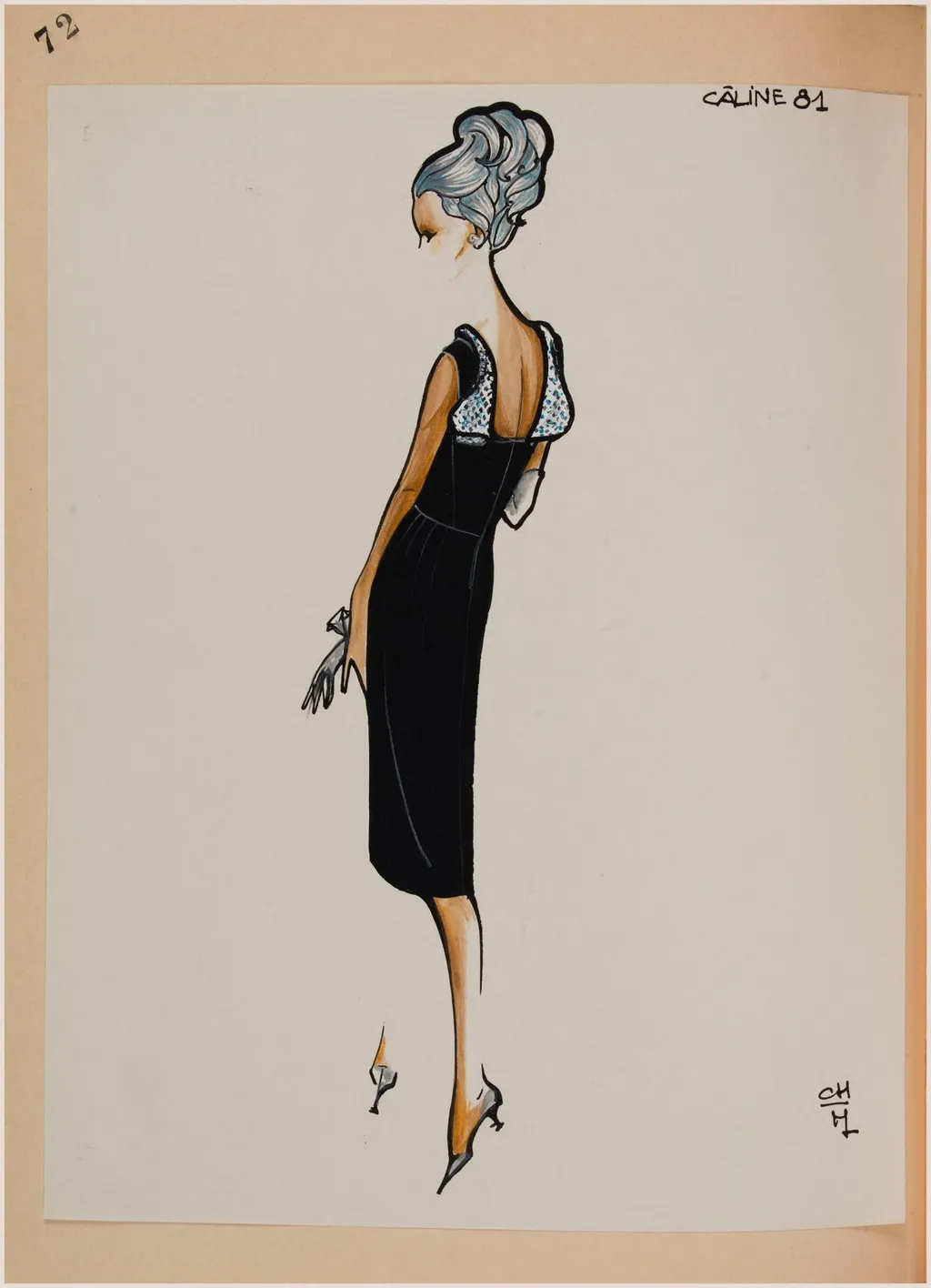
Câline is a drawing by Carven. It dates from 1963 and is held in the collection of the Palais Galliera - Musée de la Mode de la Ville de Paris.
About this work
Overview
The composition emphasizes silhouette and posture, with minimal tonal variation, reflecting a design-oriented approach rather than a traditional fine art style.
Câline is a pencil drawing from 1963 by the French designer Carven, held in the collection of the Museum of Ethnography. Executed with sharp, controlled lines, the work captures a woman in profile from behind, dressed in a formal black ensemble. The composition emphasizes silhouette and posture, with minimal tonal variation, reflecting a design-oriented approach rather than a traditional fine art style.
Subject & Meaning
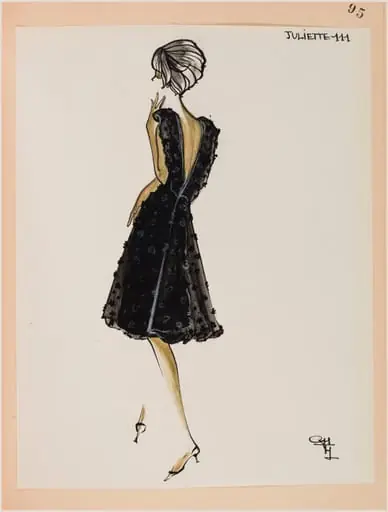
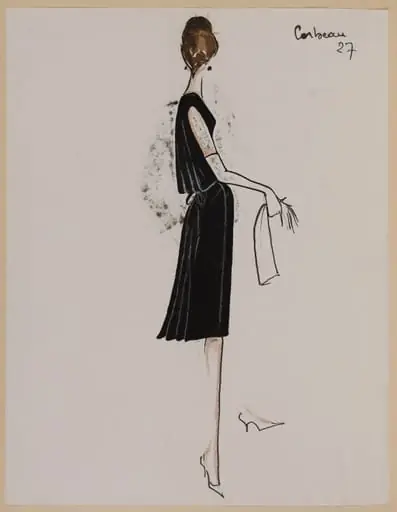
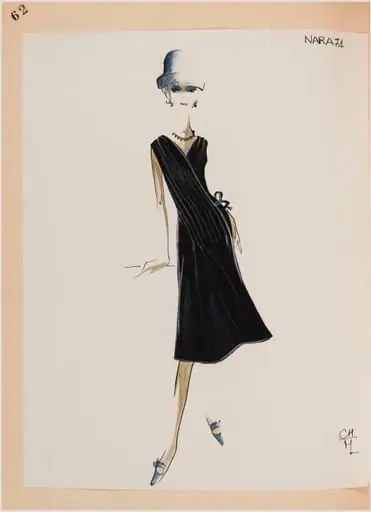
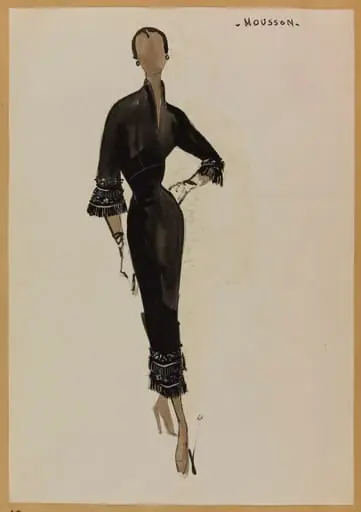
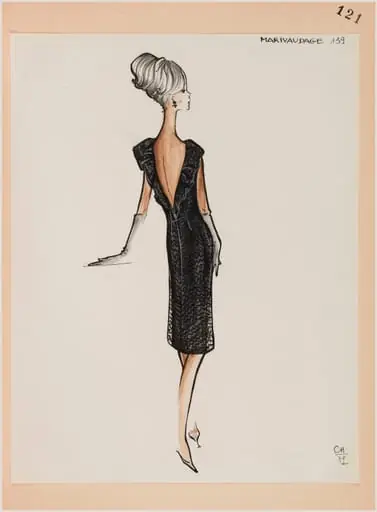
The figure depicted is a woman in evening attire, her posture poised and elegant. The deep V-neck, gloves, and pointed shoes suggest a refined social setting, possibly a formal event. The small purse and tightly styled updo reinforce a sense of curated sophistication. The drawing does not convey narrative but rather isolates an aesthetic ideal of mid-century femininity, rooted in fashion illustration traditions.
Technique & Style
The drawing employs clean, unbroken contours and sparse shading to define form. Lines are deliberate and confident, with no smudging or atmospheric effects. The absence of background or contextual elements focuses attention entirely on the figure’s silhouette and garment details. Handwritten annotations on the page suggest it may have been a working sketch or design reference, not a finished exhibition piece.
History & Provenance
Created in 1963, the drawing entered the Museum of Ethnography’s collection as part of a broader acquisition of fashion-related materials. Its presence in an ethnographic institution, rather than an art or design museum, indicates an interest in documenting everyday cultural expressions of style. The signature 'Carven' in the corner confirms authorship, aligning it with the designer’s known output during that period.
Context
In the early 1960s, fashion houses like Carven were producing detailed sketches to guide tailors and communicate design intent. This drawing reflects that practice, blending artistic precision with functional utility. Its preservation in an ethnographic context signals a growing recognition of fashion as a cultural artifact, not merely a commercial product, during a period of expanding museum interest in material culture.
Legacy
Câline remains a quiet example of how fashion design was documented and archived in the mid-20th century. While not widely exhibited, its inclusion in an ethnographic collection underscores its value as evidence of aesthetic norms and labor practices in postwar French fashion. It contributes to scholarly understanding of how designers translated ideas into wearable form through disciplined, economical draftsmanship.
Artist & collection
Artist
These delicate ink-on-paper drawings capture the quiet poetry of everyday things: pinecones, reeds, apples.
Museum
Palais Galliera - Musée de la Mode de la Ville de Paris
Continue through works from the same source collection.