Artwork
Cézanne
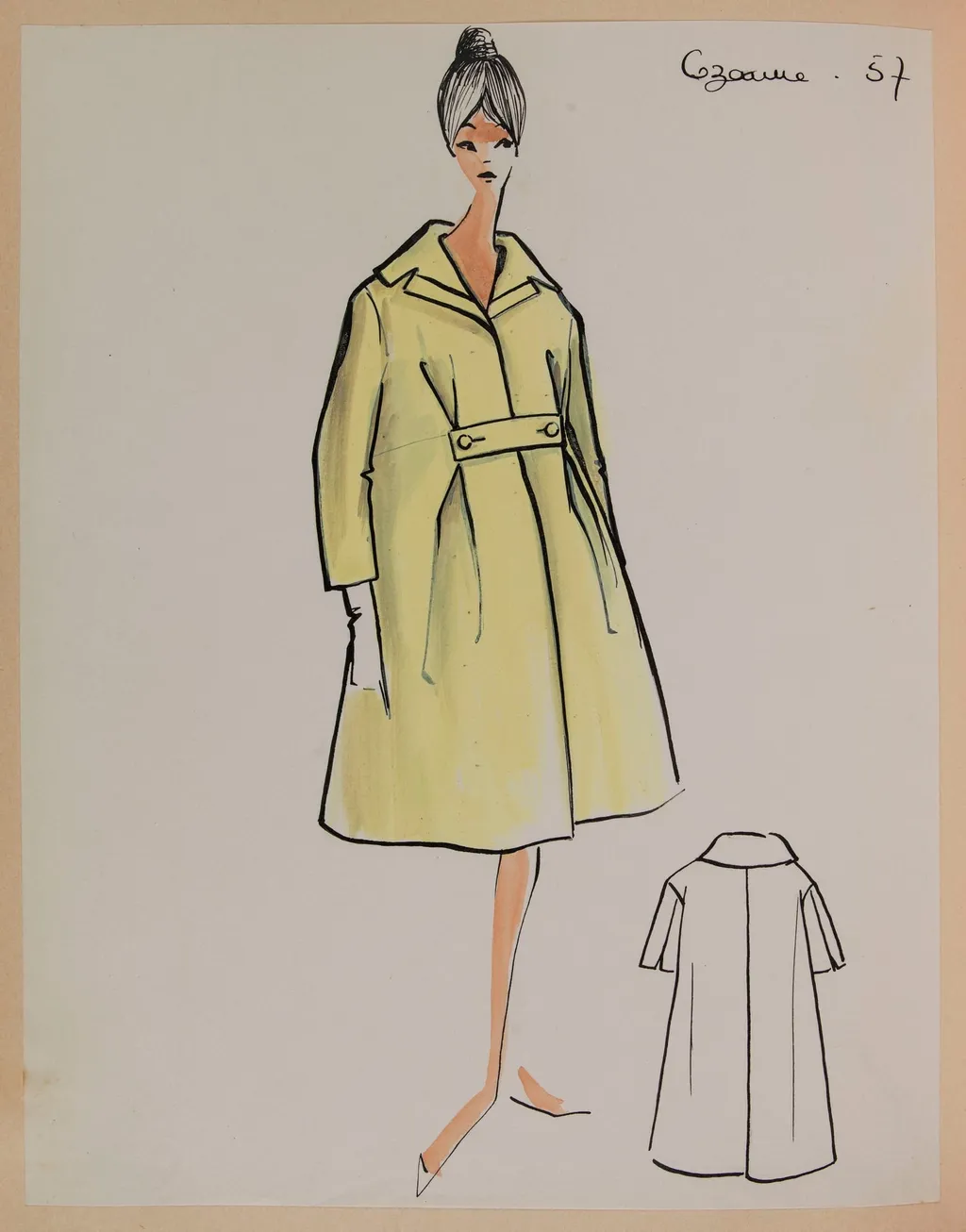
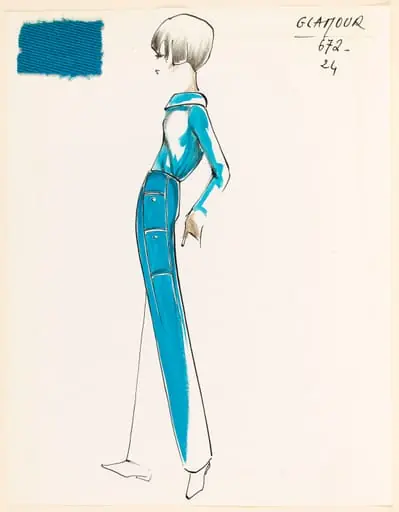
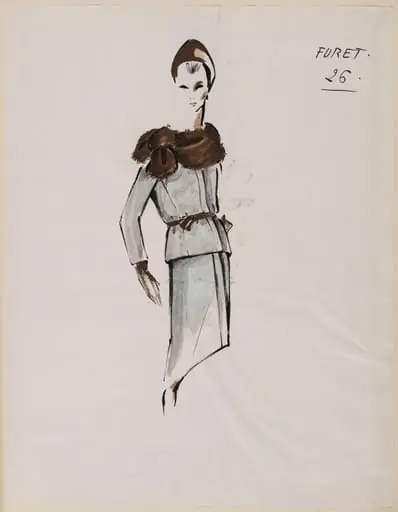
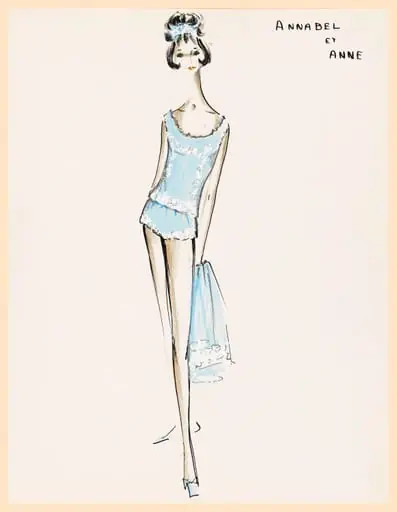
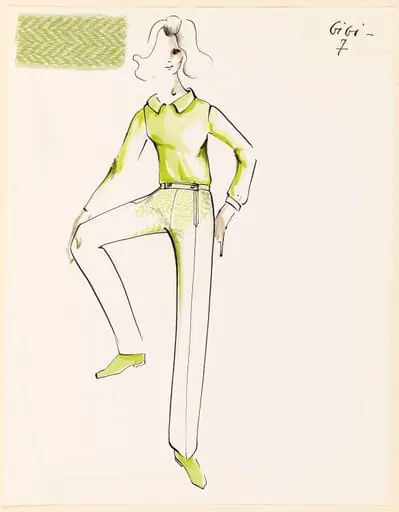
Cézanne is a drawing by Carven. It dates from 1958 and is held in the collection of the Palais Galliera - Musée de la Mode de la Ville de Paris.
About this work
Overview
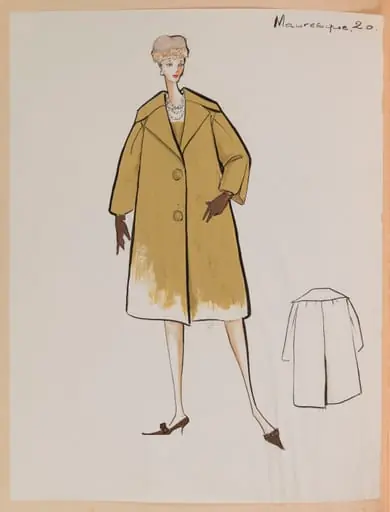
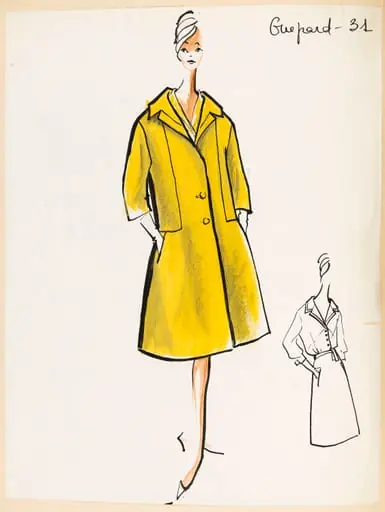
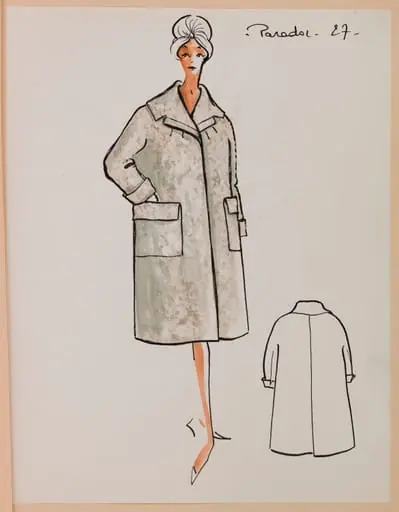
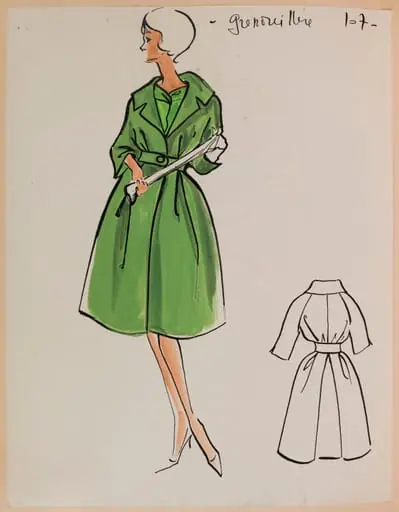
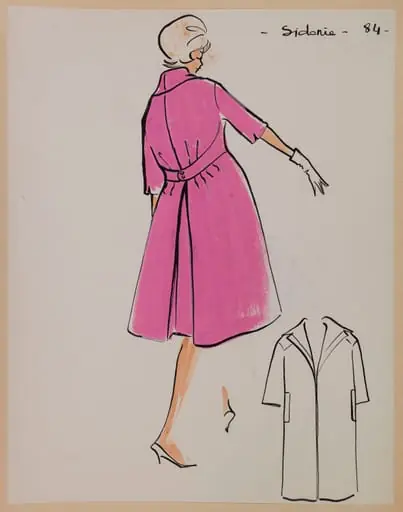
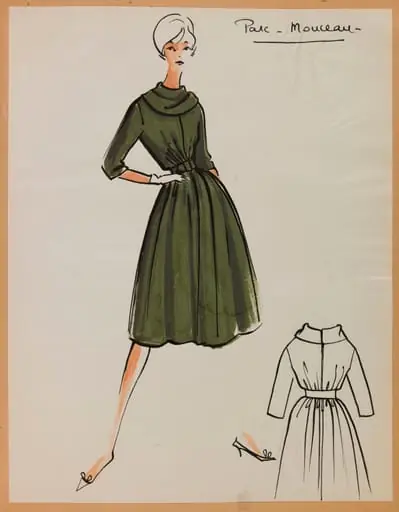
This drawing, attributed to Carven and dated circa 1958, is part of the Museum of Ethnography’s collection. Rendered in monochrome, it presents a seated female figure in a tailored yellow coat, with attention to garment structure rather than facial detail. The background is a muted gray, allowing the form and texture of the clothing to dominate the composition.
Subject & Meaning
The figure is depicted without identifiable features, emphasizing the garment over individual identity. The belt and pocket are rendered with precision, suggesting an interest in the functional elegance of mid-century women’s wear. The blurred face and simplified posture imply a focus on fashion as object, not portraiture.
Technique & Style
The drawing employs fine, deliberate lines and subtle shading to suggest fabric weight and fold. The single-color treatment of the coat enhances its form without distraction, while the faint outline of the coat’s back on the right adds spatial ambiguity. The texture is implied through hatching, not color variation, reinforcing a restrained, observational approach.
History & Provenance
The work is held in the Museum of Ethnography’s collection, indicating its classification as a cultural artifact related to dress rather than fine art. Its origin as a fashion study or design sketch is likely, though no documentation of its creation or commission is publicly available.
Context
Created in the late 1950s, the drawing reflects postwar European fashion’s emphasis on structured tailoring and quiet sophistication. Carven, known for her ready-to-wear designs, often translated garment construction into illustrative form. This piece aligns with contemporaneous fashion drawings used in design development and editorial contexts.
Legacy
The drawing contributes to the historical record of mid-century fashion illustration, where clarity of form and material representation took precedence over expressive flair. It remains a quiet example of how clothing was studied and communicated in design practice during a period of evolving mass-market style.
Artist & collection
Artist
These delicate ink-on-paper drawings capture the quiet poetry of everyday things: pinecones, reeds, apples.
Museum
Palais Galliera - Musée de la Mode de la Ville de Paris
Continue through works from the same source collection.