Artwork
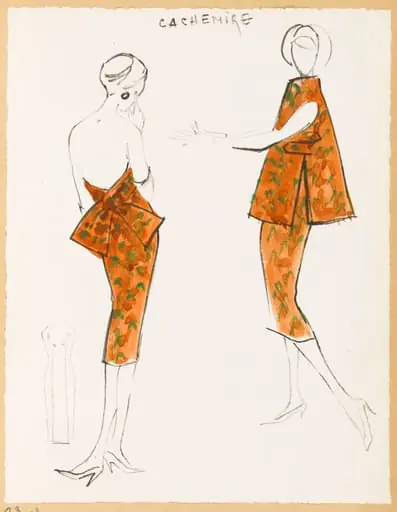
Cachemire
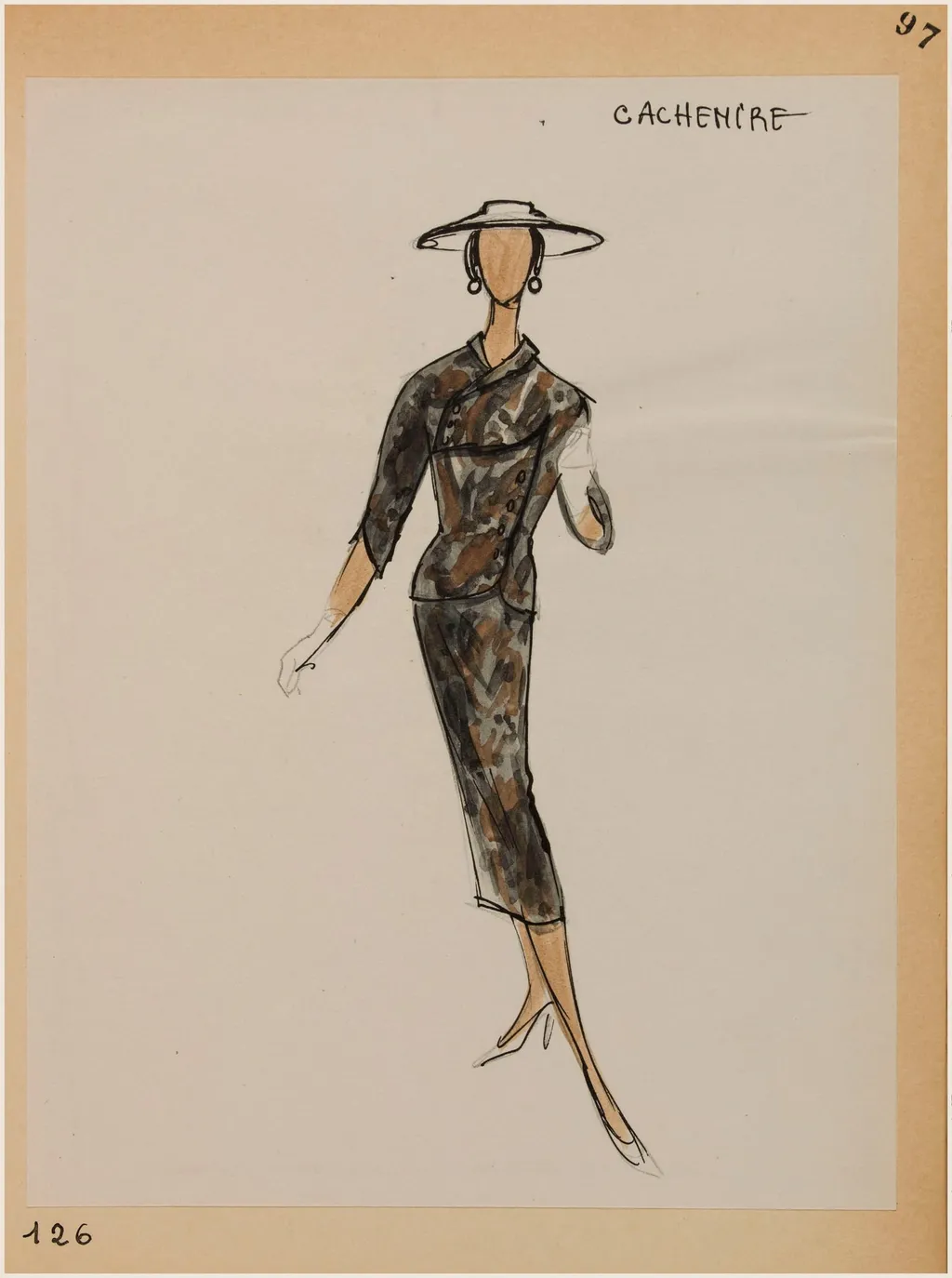
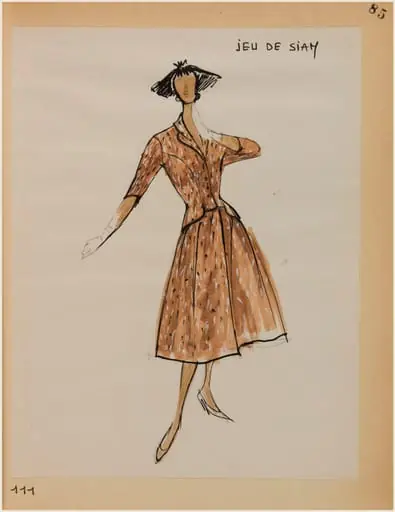
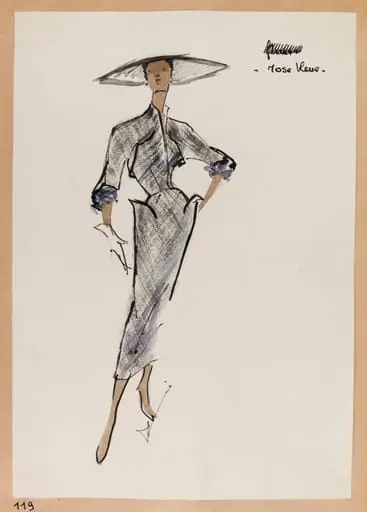
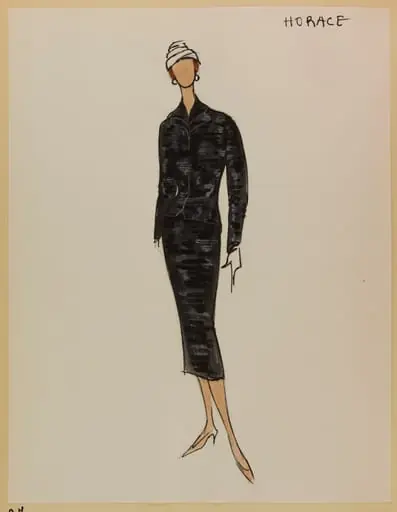
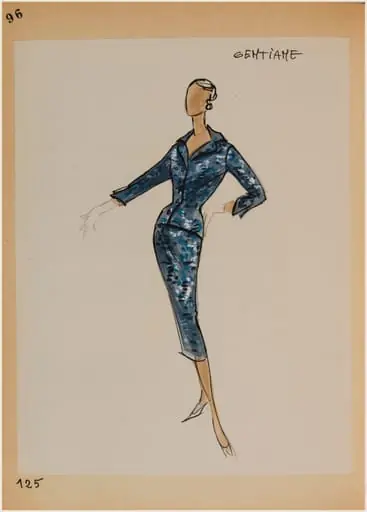
Cachemire is a drawing by Carven. It dates from 1956 and is held in the collection of the Palais Galliera - Musée de la Mode de la Ville de Paris.
About this work
Overview
Though labeled 'Cachemire,' the title likely refers to the textile or fashion style represented rather than the artist’s name.
Created in 1956, this ink sketch by Carven depicts a woman in motion, rendered with swift, economical lines. The work is held in the collection of the Museum of Ethnography. Though labeled 'Cachemire,' the title likely refers to the textile or fashion style represented rather than the artist’s name. The drawing’s immediacy suggests a study made from life, capturing a fleeting moment of pedestrian grace.
Subject & Meaning
The figure is a woman walking, dressed in a long-sleeved dress patterned with dark, irregular spots, a wide-brimmed hat, and gloves. She holds a small, indistinct object in her right hand, perhaps a purse or umbrella. The composition emphasizes posture and fabric flow rather than facial detail, suggesting an interest in the relationship between clothing and movement, possibly reflecting mid-century urban fashion dynamics.
Technique & Style
Executed in loose, confident ink strokes, the drawing prioritizes silhouette and rhythm over precision. The fabric’s texture is implied through clustered dots and fluid contours, while the limbs are rendered with minimal lines to suggest elongation and motion. The signature 'Cachemire' in the upper right may indicate the garment’s designation, reinforcing the work’s focus on textile design as much as figure representation.
History & Provenance
The sketch entered the Museum of Ethnography’s collection following Carven’s lifetime, though specific acquisition details are not documented. Its classification within an ethnographic context suggests it was valued for its representation of everyday dress and behavior, rather than as fine art. No earlier exhibition or ownership records are publicly known.
Context
Made in postwar France, the drawing reflects a period when fashion design was increasingly documented through rapid sketches. Carven, known for textile innovation, may have used such studies to explore how materials behaved in motion. The work aligns with contemporaneous fashion illustrations that treated clothing as dynamic, lived-in forms rather than static objects.
Legacy
Though not widely reproduced, the sketch remains a quiet example of how fashion designers engaged with observational drawing. Its presence in an ethnographic museum underscores its role as a cultural artifact of daily life, preserving a moment when clothing, movement, and personal style intersected in ordinary urban settings.
Artist & collection
Artist
These delicate ink-on-paper drawings capture the quiet poetry of everyday things: pinecones, reeds, apples.
Museum
Palais Galliera - Musée de la Mode de la Ville de Paris
Continue through works from the same source collection.