Artwork
Corne d'or
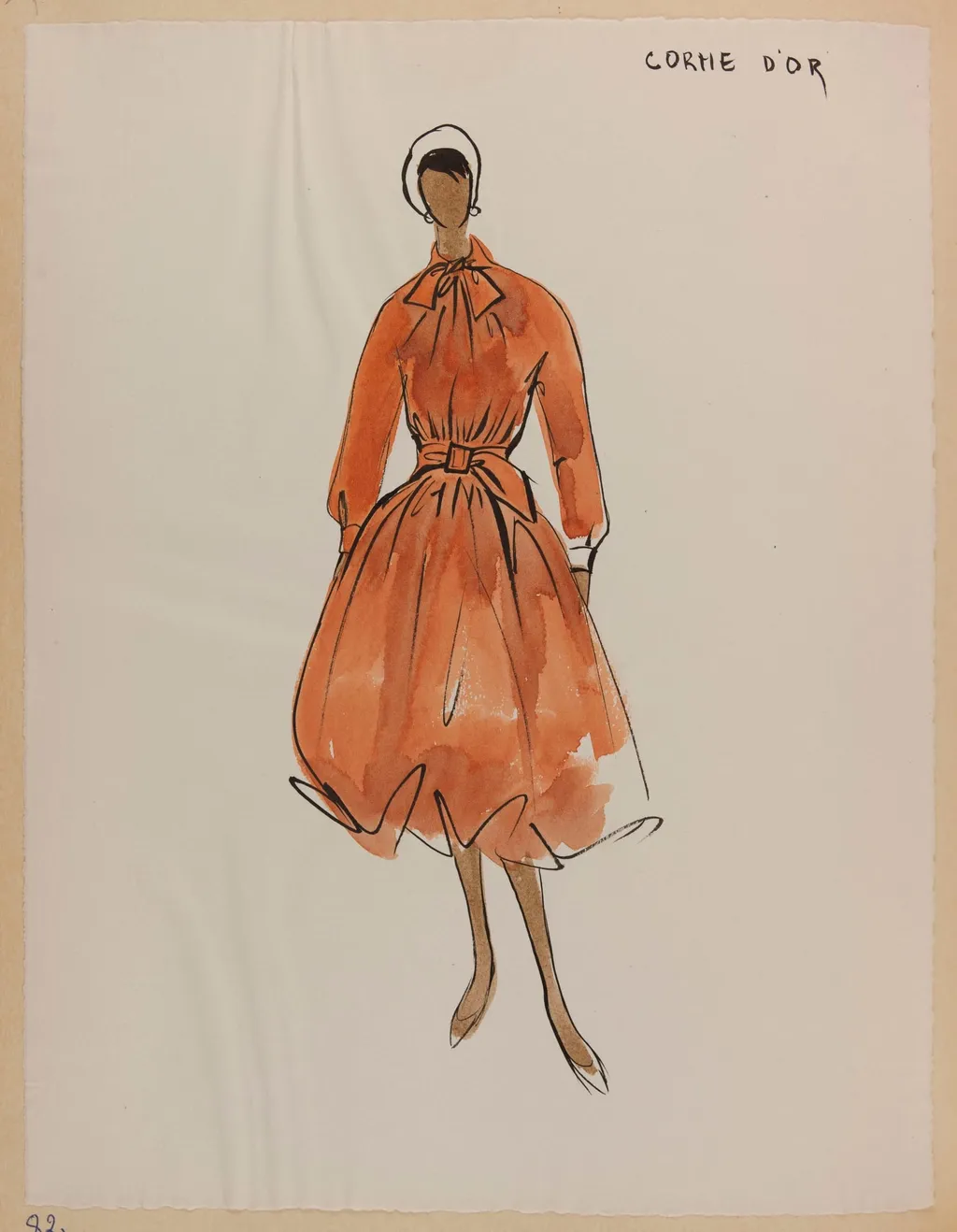
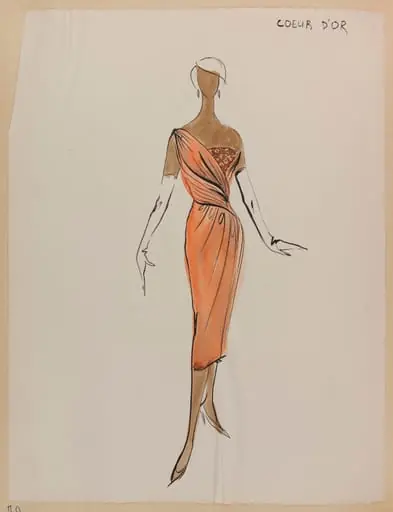
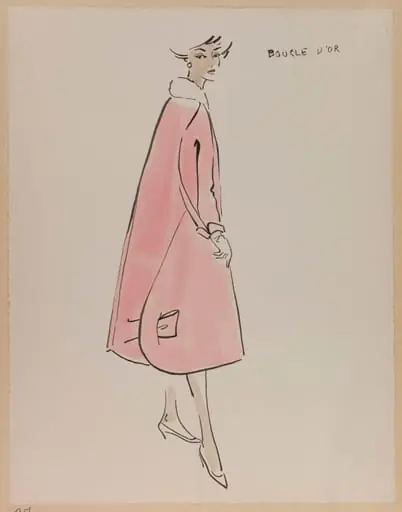
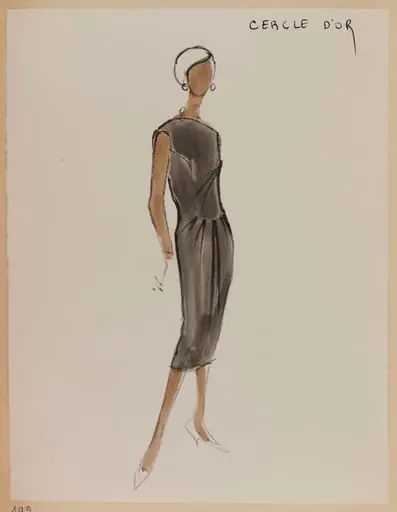
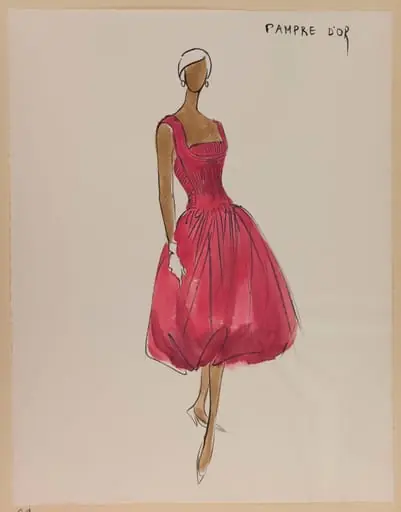
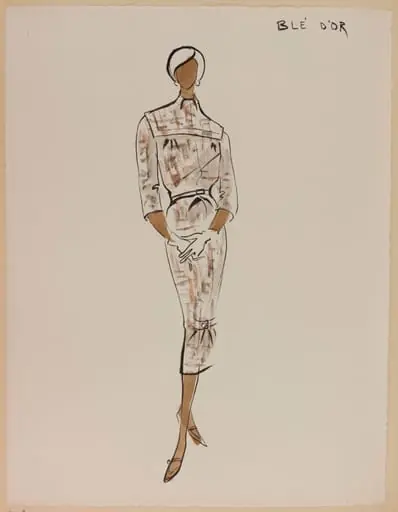
Corne d'or is a drawing by Carven. It dates from 1956 and is held in the collection of the Palais Galliera - Musée de la Mode de la Ville de Paris.
About this work
Overview
The title, meaning 'golden horn' in French, appears in the corner, though its connection to the image remains ambiguous.
Corne d'or is a line drawing created around 1956 by the French designer Carven. It is part of the collection at the Museum of Ethnography. The work depicts a woman in a stylized outfit, rendered with minimal detail against a plain white background. The title, meaning 'golden horn' in French, appears in the corner, though its connection to the image remains ambiguous. The piece reflects Carven’s interest in fashion as a visual language.
Subject & Meaning
The figure is a woman dressed in a fitted jacket with a bow at the neck and a short, flared skirt, paired with flat shoes and a small handbag. Her posture is neutral, suggesting a moment of quiet readiness rather than action. The absence of facial features or environmental context invites interpretation, but no definitive narrative is offered. The title may allude to a place, a color, or a symbolic form, though its relevance to the figure is not visually explicit.
Technique & Style
The drawing employs clean, unbroken lines to define form, with no shading or texture. The orange dress is the only area of color, contrasting sharply with the white ground. Faint, ambiguous lines in the background suggest movement or space without defining it. The style is reductive, prioritizing silhouette and garment structure over individuality or emotion. This approach aligns with mid-century fashion illustration that emphasized design over personality.
History & Provenance
Created circa 1956, the work entered the collection of the Museum of Ethnography at an unknown date. It is not signed or dated by the artist, and no exhibition history is documented. Its preservation as a standalone image suggests it may have been a study, sketch, or promotional item tied to Carven’s fashion house. The museum’s acquisition likely reflects an interest in fashion as cultural artifact rather than fine art.
Context
In the mid-1950s, Parisian fashion houses like Carven were refining a modern aesthetic that balanced elegance with accessibility. This drawing reflects the era’s shift toward simplified silhouettes and wearable designs. While fashion illustrations often served commercial purposes, this piece lacks advertising elements, hinting at a more personal or experimental intent. Its placement in an ethnographic museum underscores a growing recognition of fashion as cultural expression.
Legacy
Corne d'or remains a quiet example of Carven’s graphic approach to fashion. It has not been widely reproduced or studied, but its presence in an ethnographic collection signals a broader scholarly interest in everyday visual culture. The work contributes to understanding how fashion designers translated clothing into image, and how such images, once functional, later became objects of historical inquiry.
Artist & collection
Artist
These delicate ink-on-paper drawings capture the quiet poetry of everyday things: pinecones, reeds, apples.
Museum
Palais Galliera - Musée de la Mode de la Ville de Paris
Continue through works from the same source collection.