Artwork
Daisy
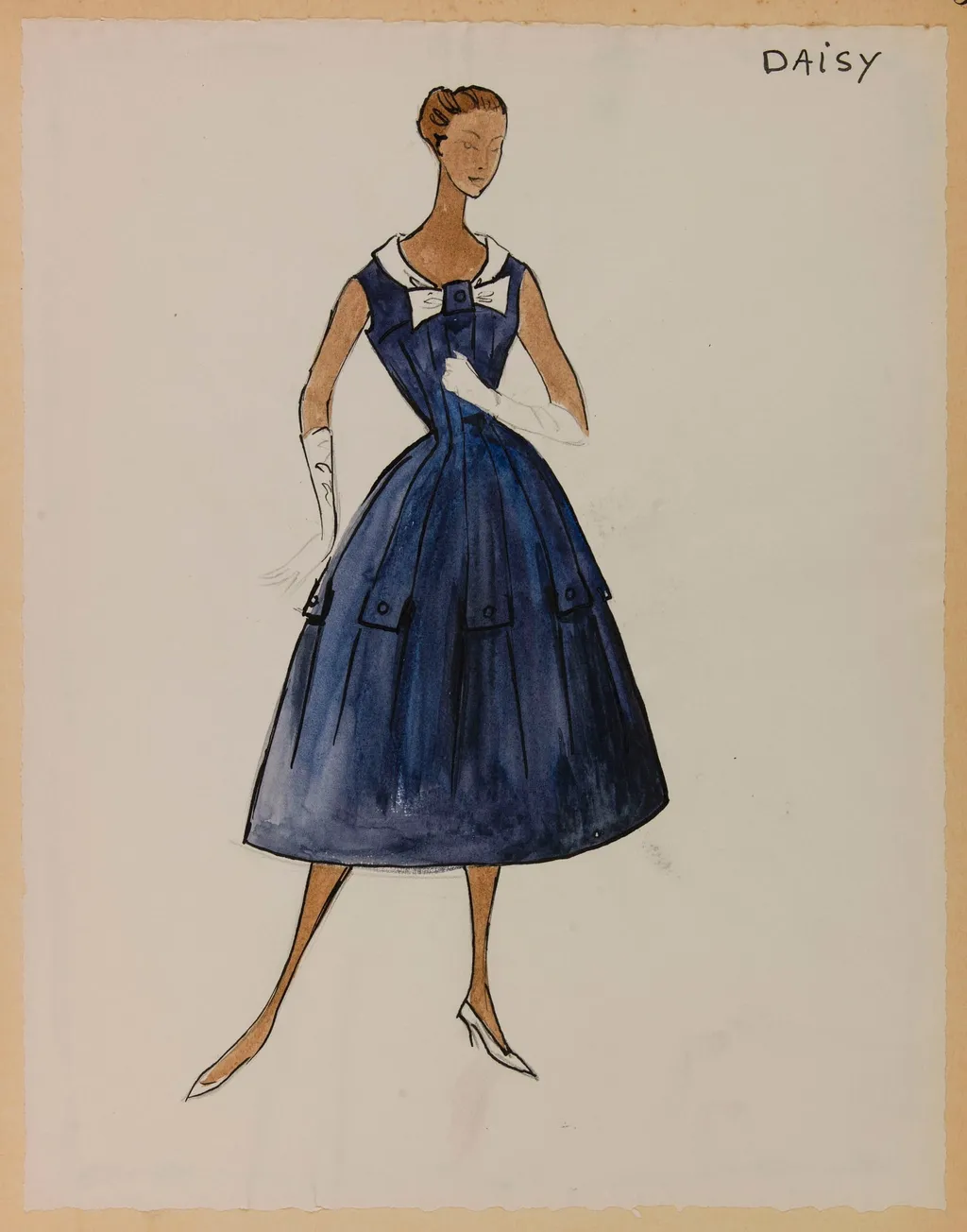
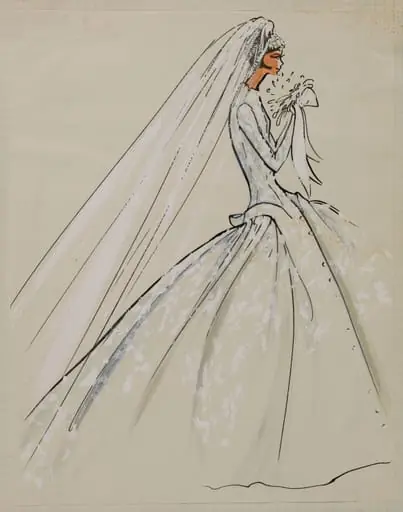
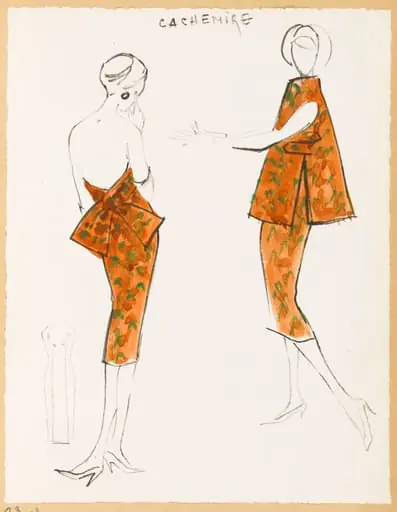
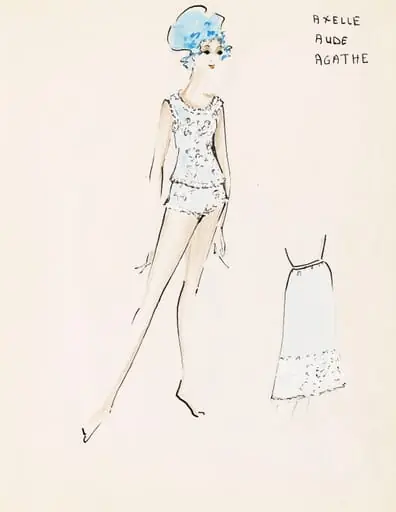
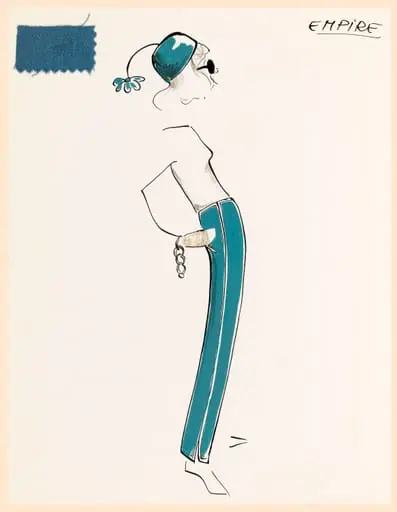
Daisy is a drawing by Carven. It dates from 1956 and is held in the collection of the Palais Galliera - Musée de la Mode de la Ville de Paris.
About this work
Overview
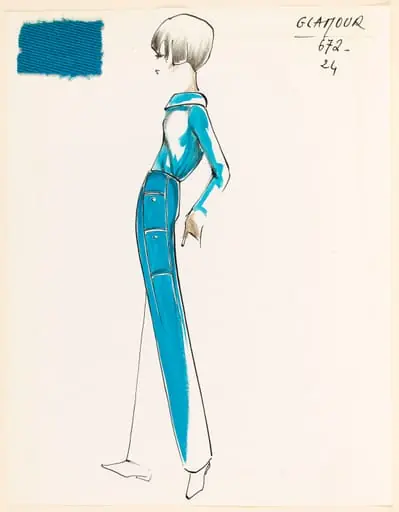
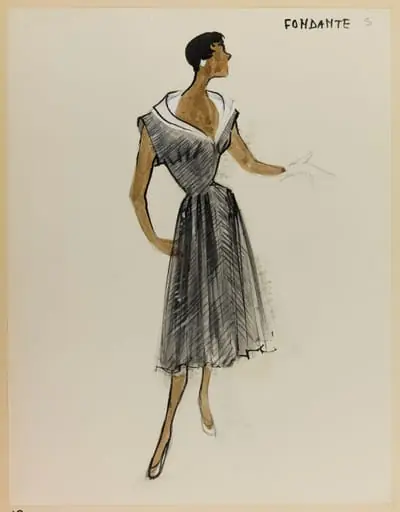
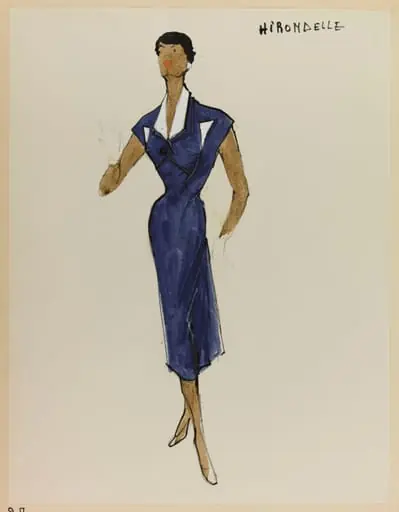
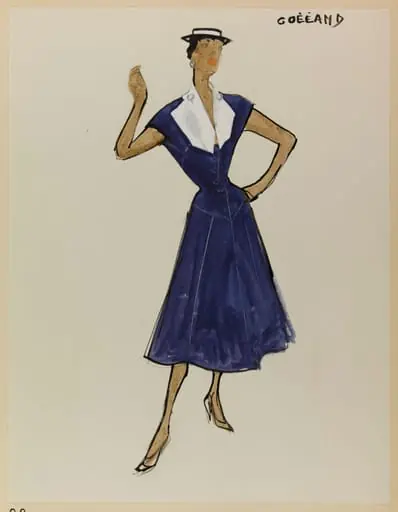
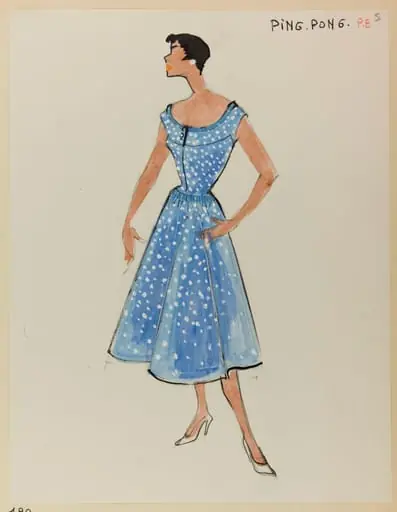
Created around 1956, this ink drawing by the French fashion house Carven depicts a woman in a tailored dress, rendered with loose, spontaneous lines. The work is part of the Museum of Ethnography’s collection, where it is preserved as an example of mid-century fashion documentation. Its informal sketch quality suggests it was made as a design study rather than a finished illustration.
Subject & Meaning
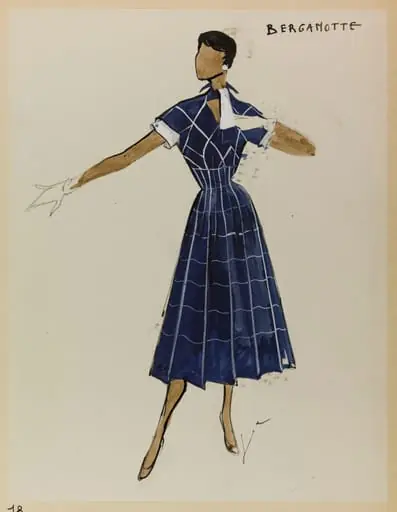
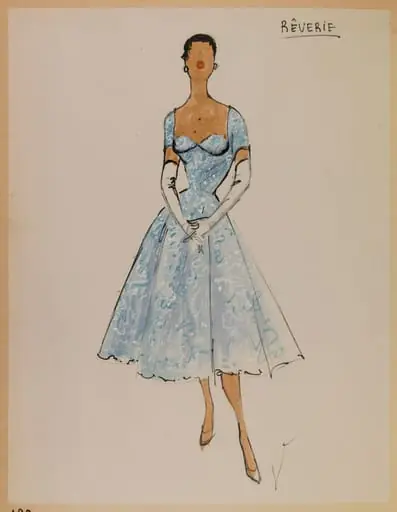
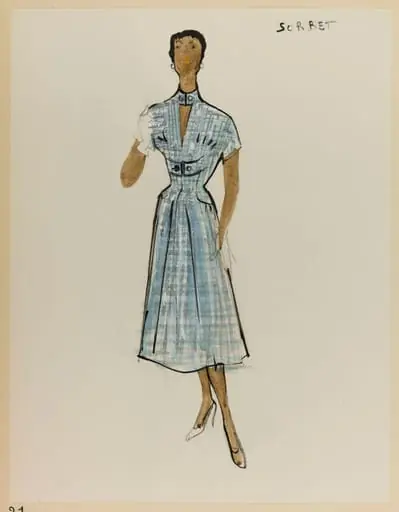
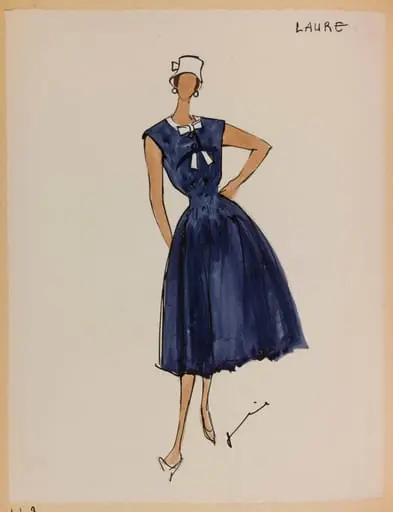
The figure, labeled 'Daisy,' wears a dark blue dress with a fitted bodice, flared skirt, and three front pockets, paired with white gloves and black heels. The neat hairstyle and precise details imply a sense of propriety, common in postwar women’s fashion. The name may refer to the dress model or a personal nickname, hinting at the human connection behind commercial design.
Technique & Style
Executed in freehand ink, the drawing uses fluid, uneven lines that convey motion and immediacy. Details like the collar buttons and pocket placement are rendered with care, while the overall form remains gestural. This blend of precision and spontaneity reflects the sketchbook tradition in fashion design, prioritizing idea over polish.
History & Provenance
The drawing originated in Carven’s atelier during the mid-1950s, a period when the house was known for its elegant, wearable designs. It entered the Museum of Ethnography’s collection as part of a broader effort to document fashion as cultural artifact. Its preservation underscores the institution’s interest in everyday aesthetics beyond fine art.
Context
In postwar France, fashion houses like Carven emphasized practicality and femininity, responding to a public seeking both structure and grace in clothing. This sketch aligns with trends favoring tailored silhouettes and modest detailing. As a working drawing, it reveals how designers translated client needs into wearable forms, bridging commerce and personal expression.
Legacy
Though not widely exhibited, the drawing contributes to scholarly understanding of mid-century fashion processes. It exemplifies how design studios used sketches not just for presentation, but as tools for refinement and memory. Its presence in an ethnographic museum highlights fashion’s role in shaping social identity beyond the runway.
Artist & collection
Artist
These delicate ink-on-paper drawings capture the quiet poetry of everyday things: pinecones, reeds, apples.
Museum
Palais Galliera - Musée de la Mode de la Ville de Paris
Continue through works from the same source collection.