Artwork
'Diégo'
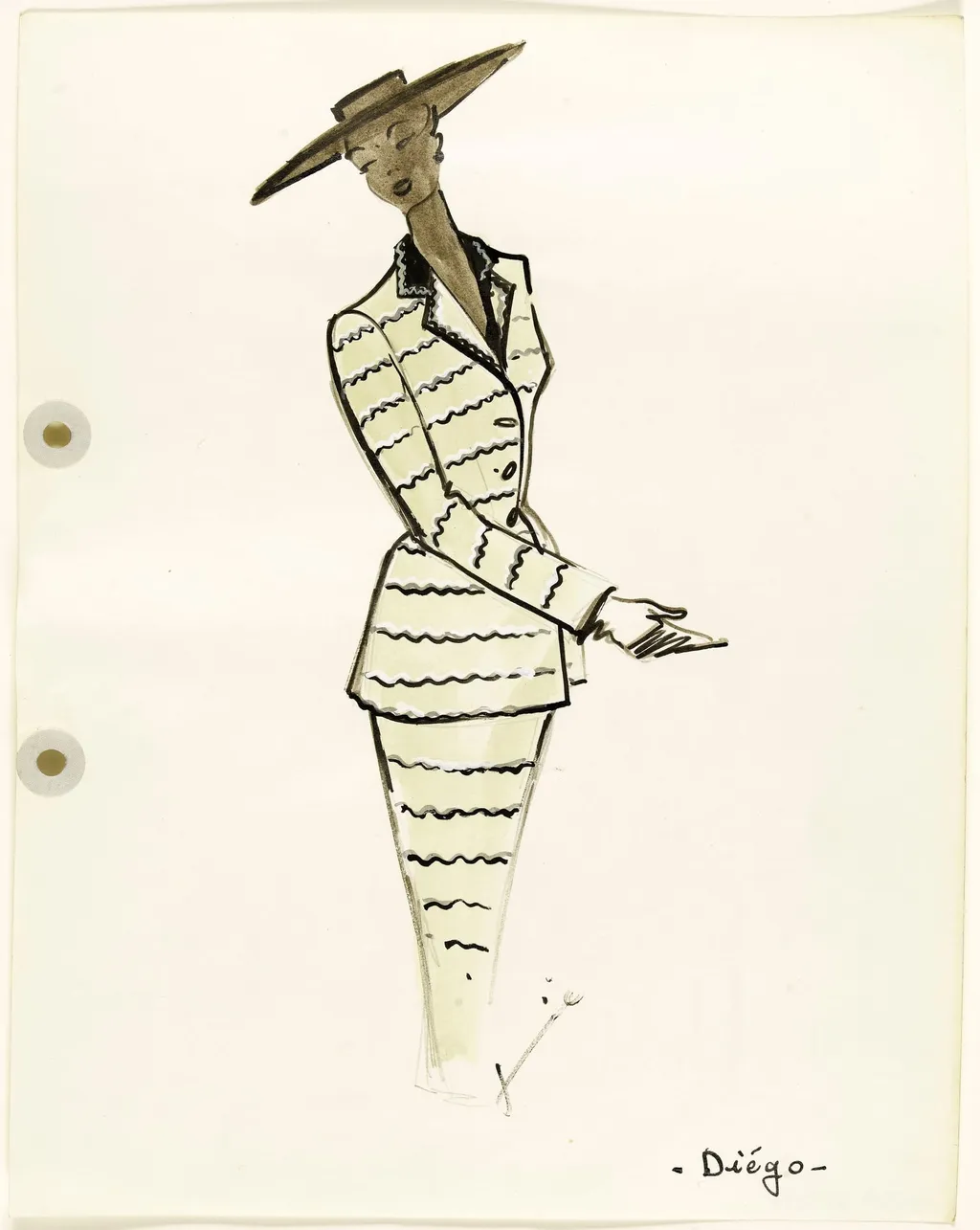
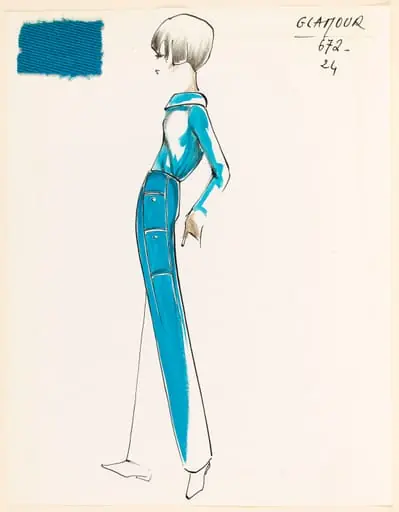
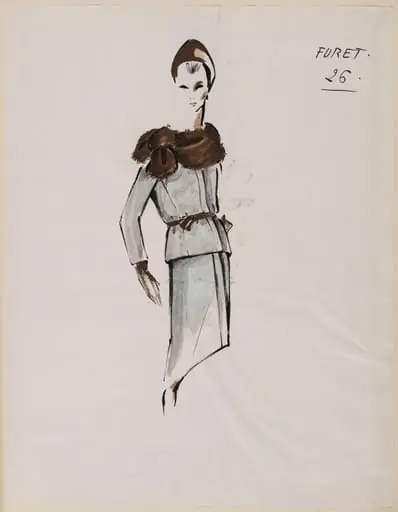
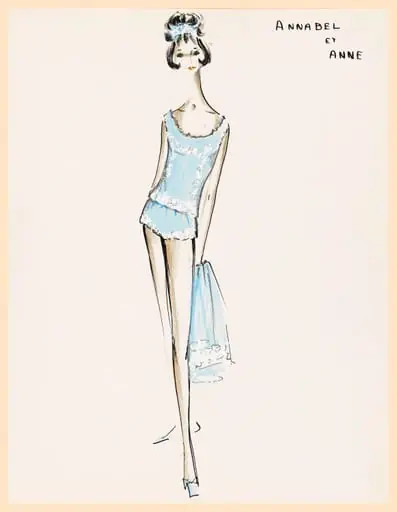
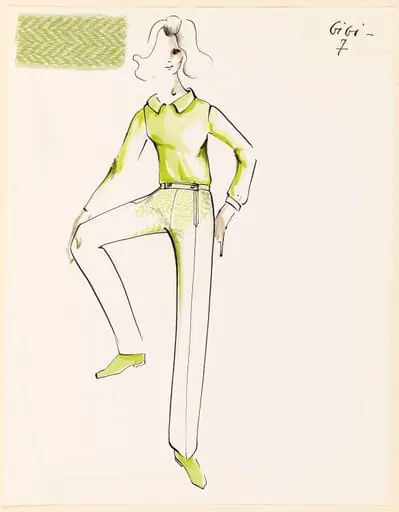
'Diégo' is a drawing by Carven. It dates from 1951 and is held in the collection of the Palais Galliera - Musée de la Mode de la Ville de Paris.
About this work
Overview
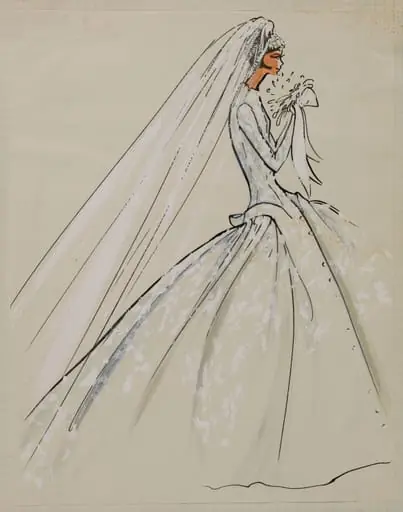
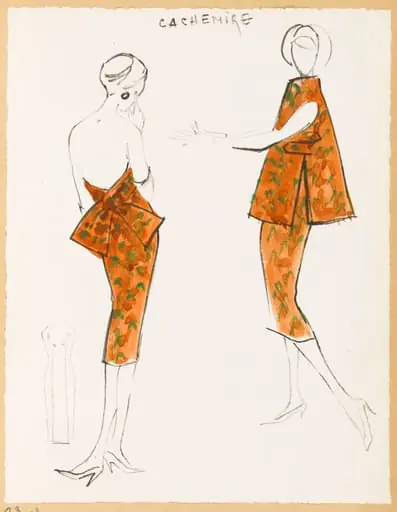
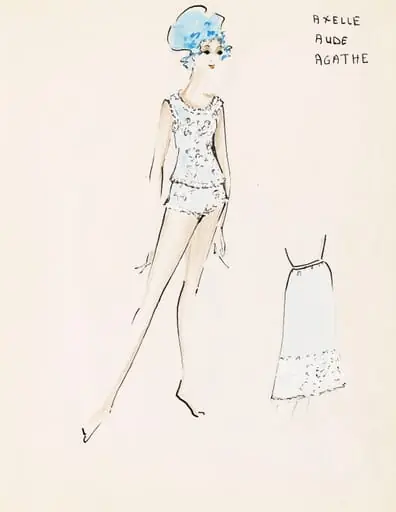
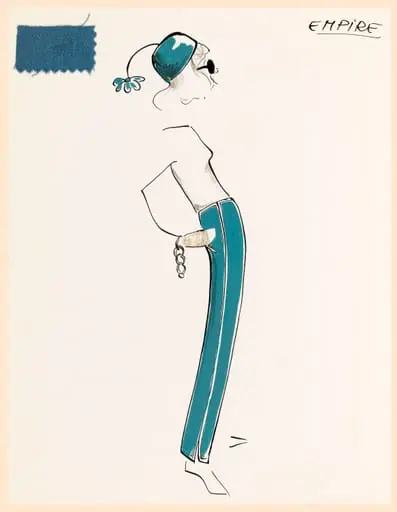
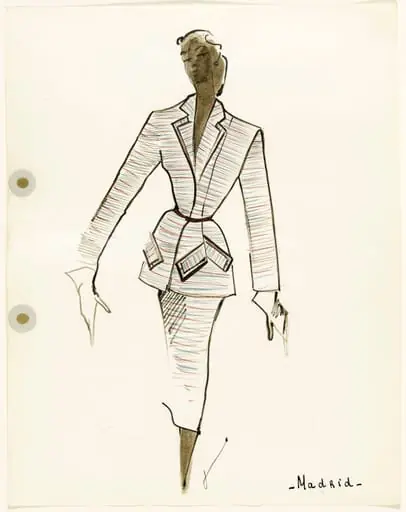
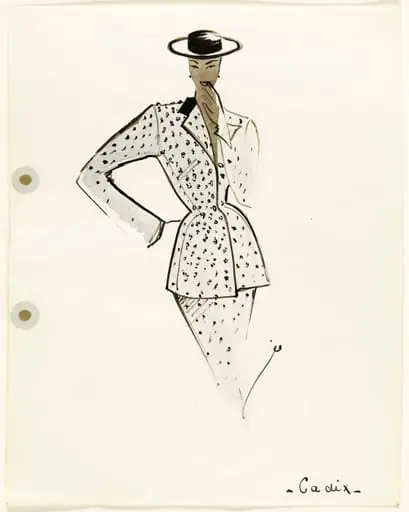
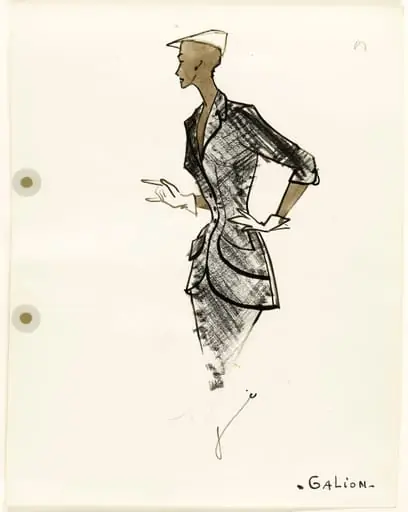
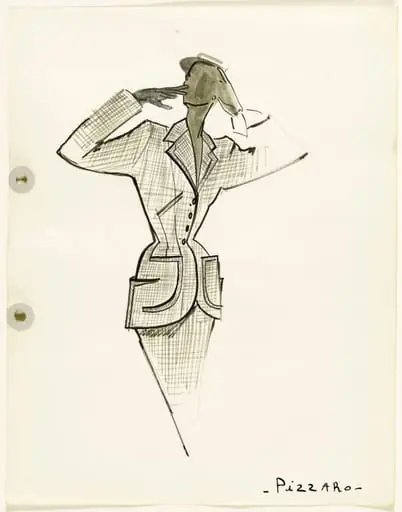
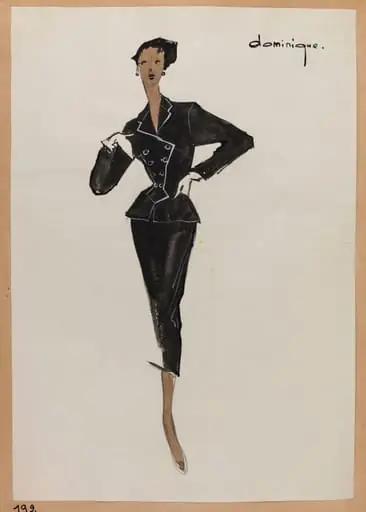
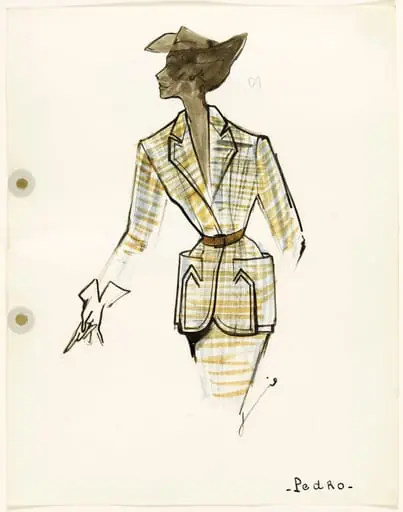
Created in 1951 by the designer Carven, this ink sketch depicts a woman in contemporary attire. Executed with fluid, spontaneous lines, the work captures a moment of poised movement rather than a formal portrait. It resides in the collection of the Museum of Ethnography, where it is valued as a record of mid-century fashion sensibility expressed through drawing.
Subject & Meaning
The figure is a woman dressed in a tailored short jacket and a flared skirt, accessorized with a broad-brimmed hat. Her stance is assertive—one hand extended forward—as if signaling direction or presence. The image conveys a sense of personal agency and urban elegance, reflecting the confident postwar female silhouette without narrative context or symbolic embellishment.
Technique & Style
The drawing employs rapid, gestural strokes to define form, particularly in the wavy patterning of the jacket. Details are minimized; contours are suggested rather than rendered precisely. The looseness of the line and absence of shading create a sense of immediacy, aligning the work with fashion illustration’s tradition of capturing movement and style in fleeting sketches.
History & Provenance
The sketch entered the Museum of Ethnography’s collection following its creation in 1951, likely acquired as part of a broader effort to document fashion as cultural expression. No record of prior ownership or exhibition history is documented, suggesting it was retained by the artist or studio and later donated as representative of mid-century design practice.
Context
In early 1950s Paris, fashion houses like Carven blurred lines between design and art, producing sketches that served both commercial and aesthetic purposes. This drawing reflects a moment when couture was increasingly visualized through expressive, hand-drawn formats—prior to the dominance of photography—in which the artist’s hand conveyed not just garment structure but attitude.
Legacy
The work stands as an example of how fashion designers used drawing not merely as a technical tool but as a medium for personal expression. Its preservation in an ethnographic museum underscores its role as a cultural artifact, illustrating how everyday style was articulated through the visual language of its time.
Artist & collection
Artist
These delicate ink-on-paper drawings capture the quiet poetry of everyday things: pinecones, reeds, apples.
Museum
Palais Galliera - Musée de la Mode de la Ville de Paris
Continue through works from the same source collection.