Artwork
Djinn
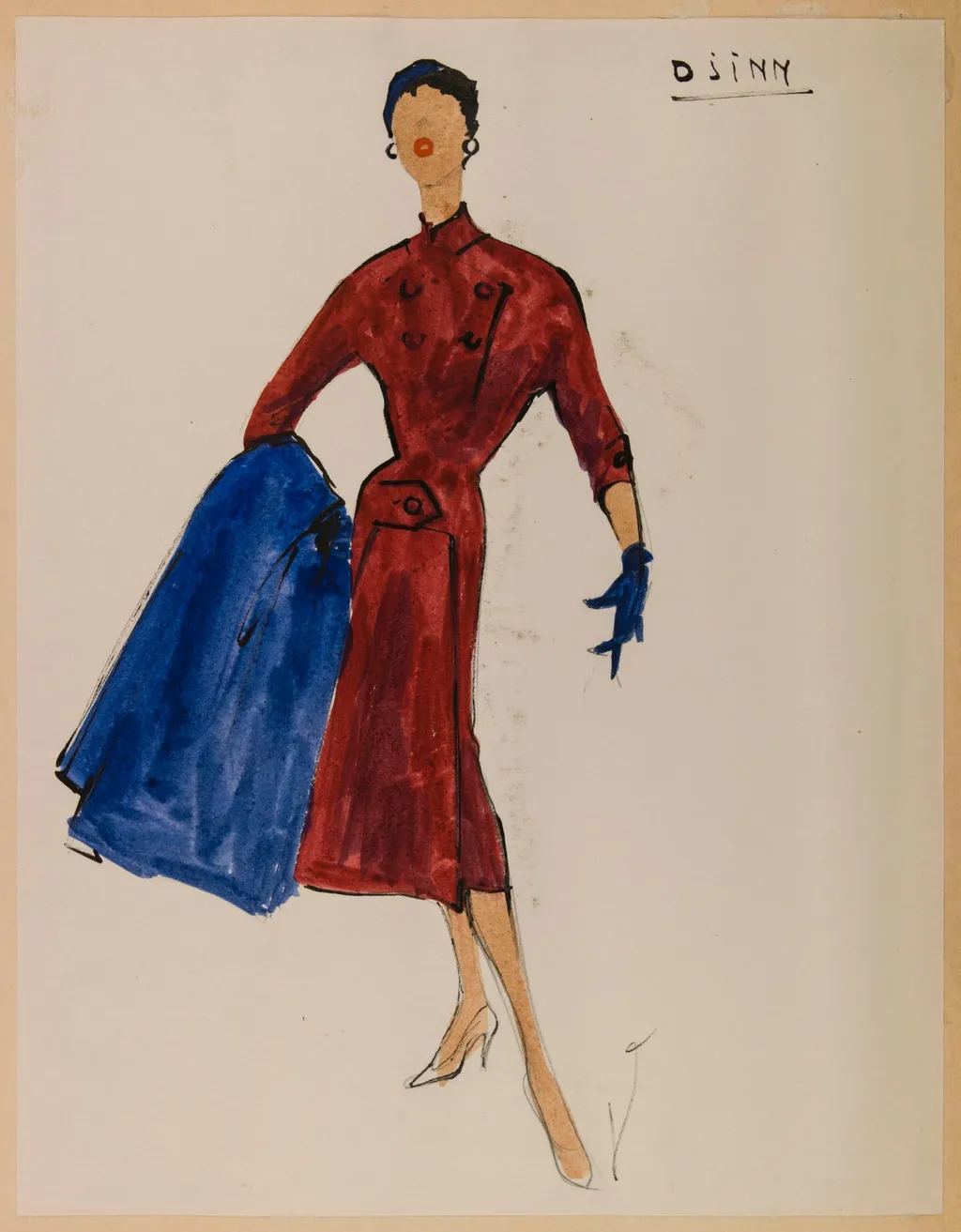
Djinn is a drawing by Carven. It dates from 1953 and is held in the collection of the Palais Galliera - Musée de la Mode de la Ville de Paris.
About this work
Overview
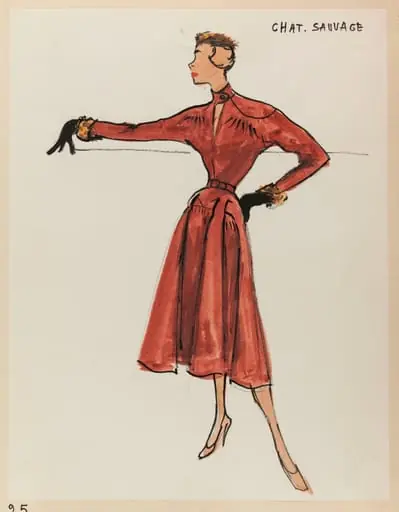
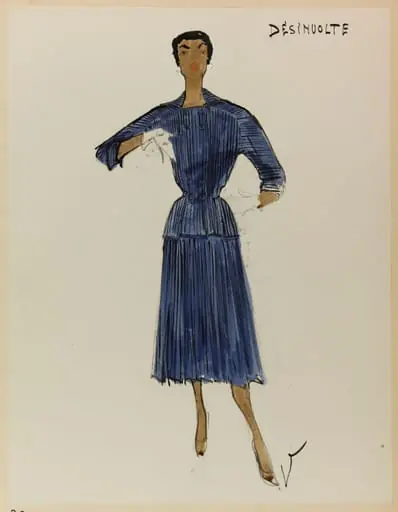
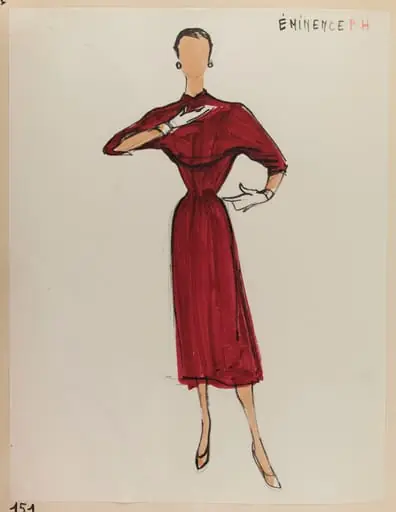
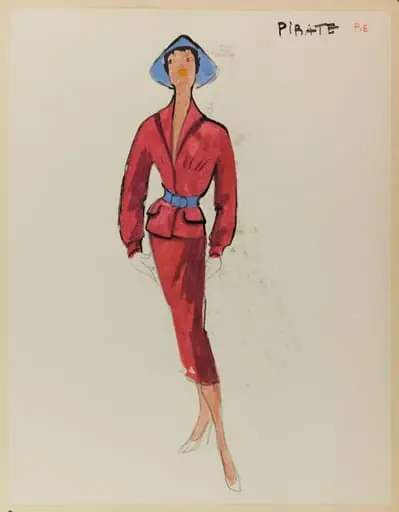
Djinn is a pencil and ink drawing from around 1953 by the French designer Carven. It resides in the collection of the Museum of Ethnography. The work depicts a woman in a stylized, energetic manner, suggesting a moment captured in motion rather than a formal portrait. Its informal quality aligns with fashion sketching practices of the period, emphasizing gesture and silhouette over fine detail.
Subject & Meaning
The title 'Djinn' introduces a layer of ambiguity, possibly evoking mythic or cultural associations beyond the garment itself.
The figure is a woman dressed in a vivid red jacket and long skirt, holding a blue coat loosely over one arm. Her stance—hand on hip—conveys poise and self-possession. The title 'Djinn' introduces a layer of ambiguity, possibly evoking mythic or cultural associations beyond the garment itself. This suggests the drawing may reflect broader ideas about identity, femininity, or exoticism in mid-century fashion.
Technique & Style
Carven employs swift, confident lines in black ink, with minimal shading. The palette is restricted to deep red, bright blue, and stark black, creating strong visual contrast. The loose, fluid brushwork and lack of refined detail reflect the immediacy of a fashion sketch, prioritizing movement and form over anatomical precision. This approach aligns with the functional drawings used in design studios of the time.
History & Provenance
The drawing was created circa 1953 during Carven’s active years as a fashion designer. It entered the Museum of Ethnography’s collection at an unspecified date, likely through donation or acquisition related to its cultural significance in postwar fashion. Its preservation in an ethnographic context, rather than a fashion museum, suggests an interest in its representation of social or symbolic identity.
Context
In the early 1950s, Parisian fashion houses often used quick sketches to communicate design ideas. Carven, known for elegant yet accessible womenswear, likely produced this as a working drawing. The choice of the name 'Djinn' may reflect contemporary fascination with Eastern motifs in Western fashion, a trend that blended exoticism with modernist simplicity in textile and silhouette design.
Legacy
Djinn remains a modest but evocative example of fashion drawing from the mid-20th century. While not widely published, its presence in an ethnographic museum signals its value as a cultural artifact. It offers insight into how designers encoded meaning beyond clothing, using gesture, color, and nomenclature to suggest narratives tied to identity and perception.
Artist & collection
Artist
These delicate ink-on-paper drawings capture the quiet poetry of everyday things: pinecones, reeds, apples.
Museum
Palais Galliera - Musée de la Mode de la Ville de Paris
Continue through works from the same source collection.