Artwork
Feuille d'or
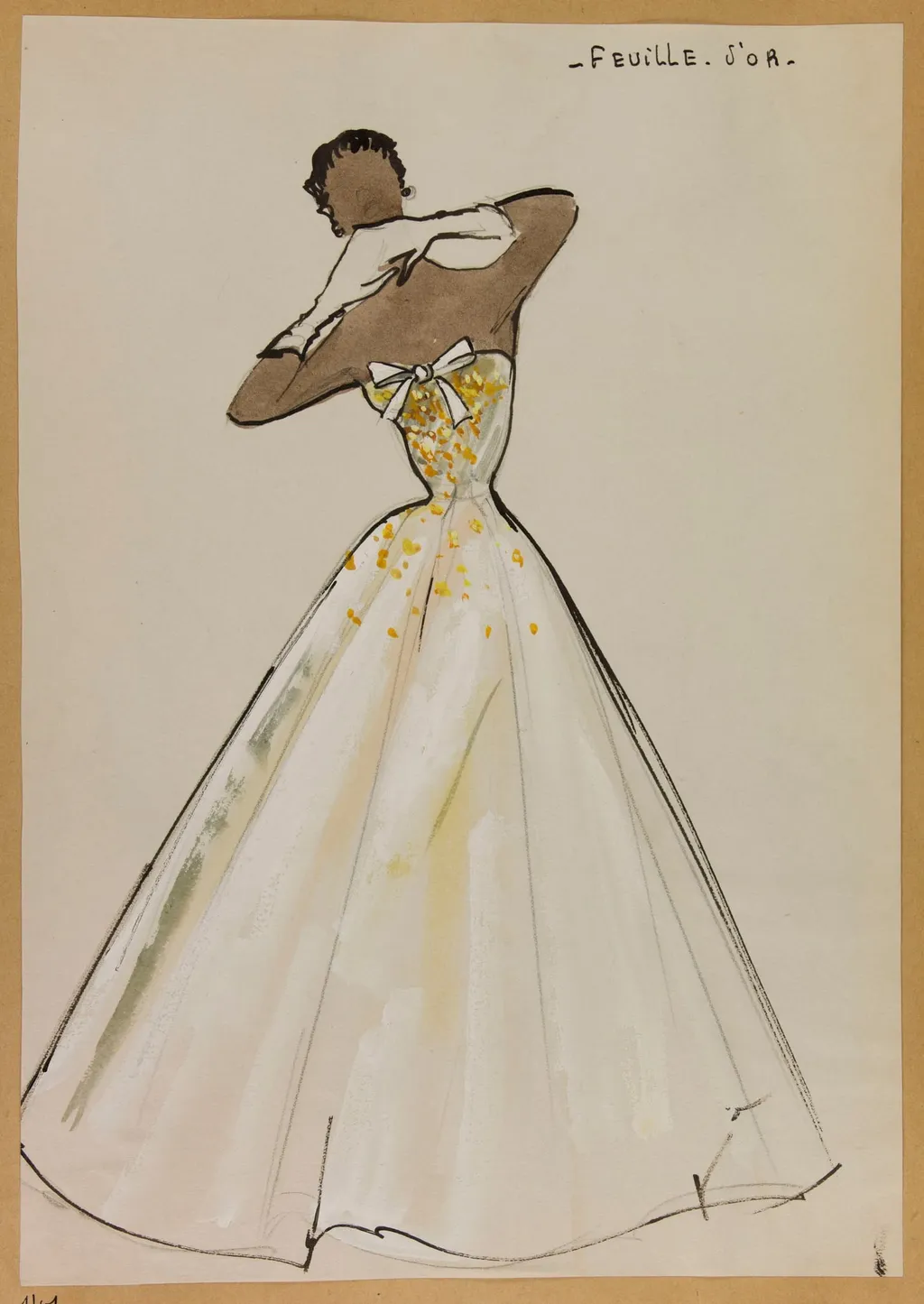
Feuille d'or is a drawing by Carven. It dates from 1952 and is held in the collection of the Palais Galliera - Musée de la Mode de la Ville de Paris.
About this work
Overview
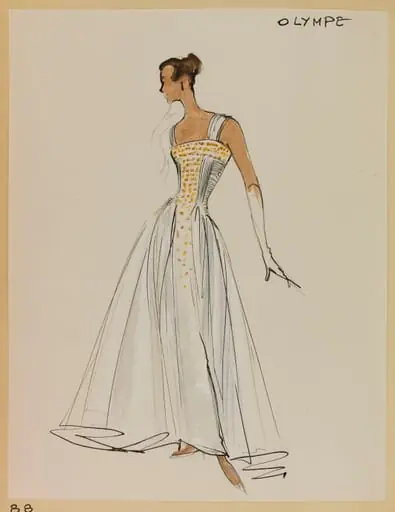
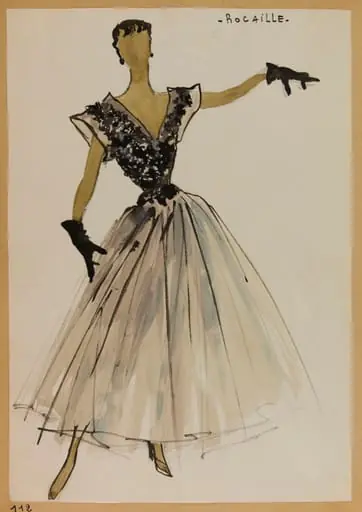
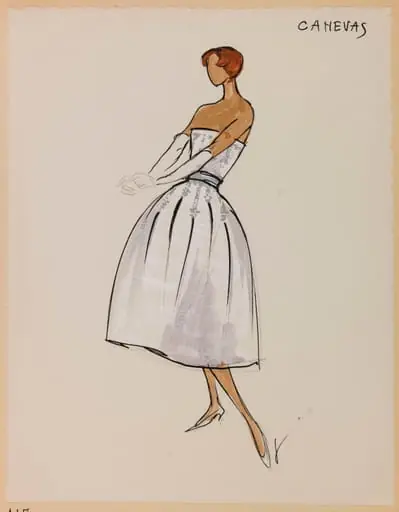
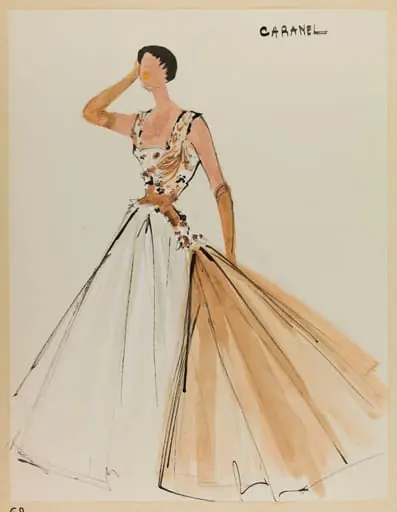
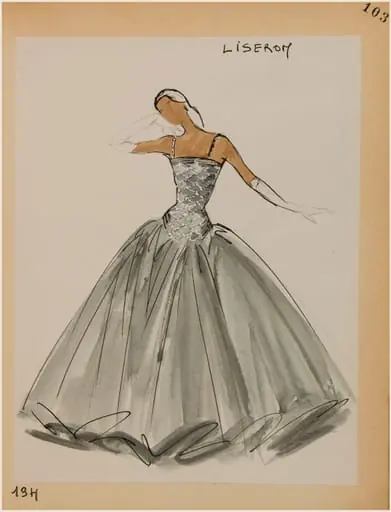
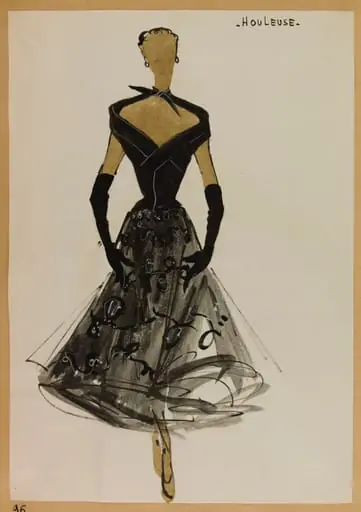
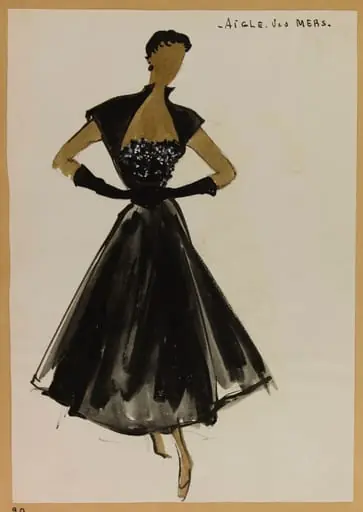
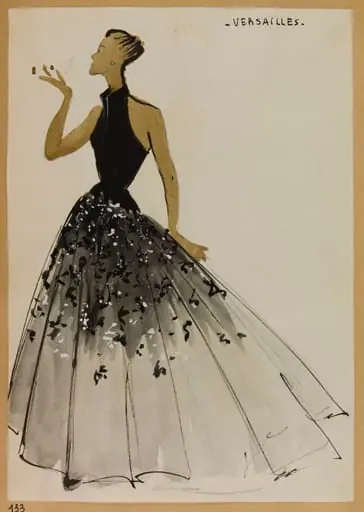
Created in 1952 by the French designer Carven, this ink and watercolor sketch bears the title 'Feuille d'or,' meaning 'gold leaf.' Executed with swift, fluid lines, it captures a figure in motion rather than as a static portrait. The work is part of the collection at the Museum of Ethnography, where it is preserved as an example of mid-century fashion illustration rather than fine art.
Subject & Meaning
The gold accents near the hips evoke shimmer without literal representation, aligning the title with the illusion of light rather than material gold.
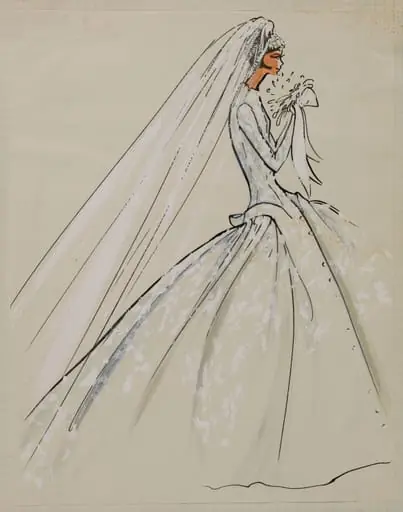
The figure is a woman in a long, white dress with a full skirt and a prominent waist bow, suggesting a garment designed for movement. Her arms are raised, implying dance or gesture, reinforcing the dress's dynamism. The gold accents near the hips evoke shimmer without literal representation, aligning the title with the illusion of light rather than material gold. The sketch conveys elegance through motion, not detail.
Technique & Style
The drawing employs loose, spontaneous brushwork typical of fashion sketches, prioritizing rhythm over precision. Fine gold dots and lines, likely applied with metallic ink or gouache, suggest texture and luminosity without obscuring the underlying form. The minimal use of color and absence of facial features or background focus the viewer on silhouette and fabric flow, characteristic of design studies intended for textile or garment development.
History & Provenance
The work was produced during Carven’s active years as a couturier, likely as a preparatory study for a dress design. It entered the Museum of Ethnography’s collection through acquisition or donation, possibly as part of a broader effort to document fashion as cultural artifact. Its preservation reflects institutional interest in the intersection of design, movement, and material culture in postwar Europe.
Context
In the early 1950s, Parisian fashion houses emphasized fluid silhouettes and lightweight fabrics, responding to wartime austerity and a renewed interest in feminine grace. Carven’s sketches, including this one, were tools for communicating design intent to ateliers. The use of gold accents aligns with period trends favoring subtle luxury, while the sketch’s informality reveals the intimate, iterative nature of fashion creation outside the runway.
Legacy
This sketch endures not as a finished garment but as a record of creative process. It illustrates how fashion designers translated aesthetic ideas into visual language before production. Its presence in an ethnographic museum underscores its value as a cultural document, capturing the ephemeral qualities of mid-century dress and the quiet artistry behind everyday elegance.
Artist & collection
Artist
These delicate ink-on-paper drawings capture the quiet poetry of everyday things: pinecones, reeds, apples.
Museum
Palais Galliera - Musée de la Mode de la Ville de Paris
Continue through works from the same source collection.