Artwork
Gélinotte
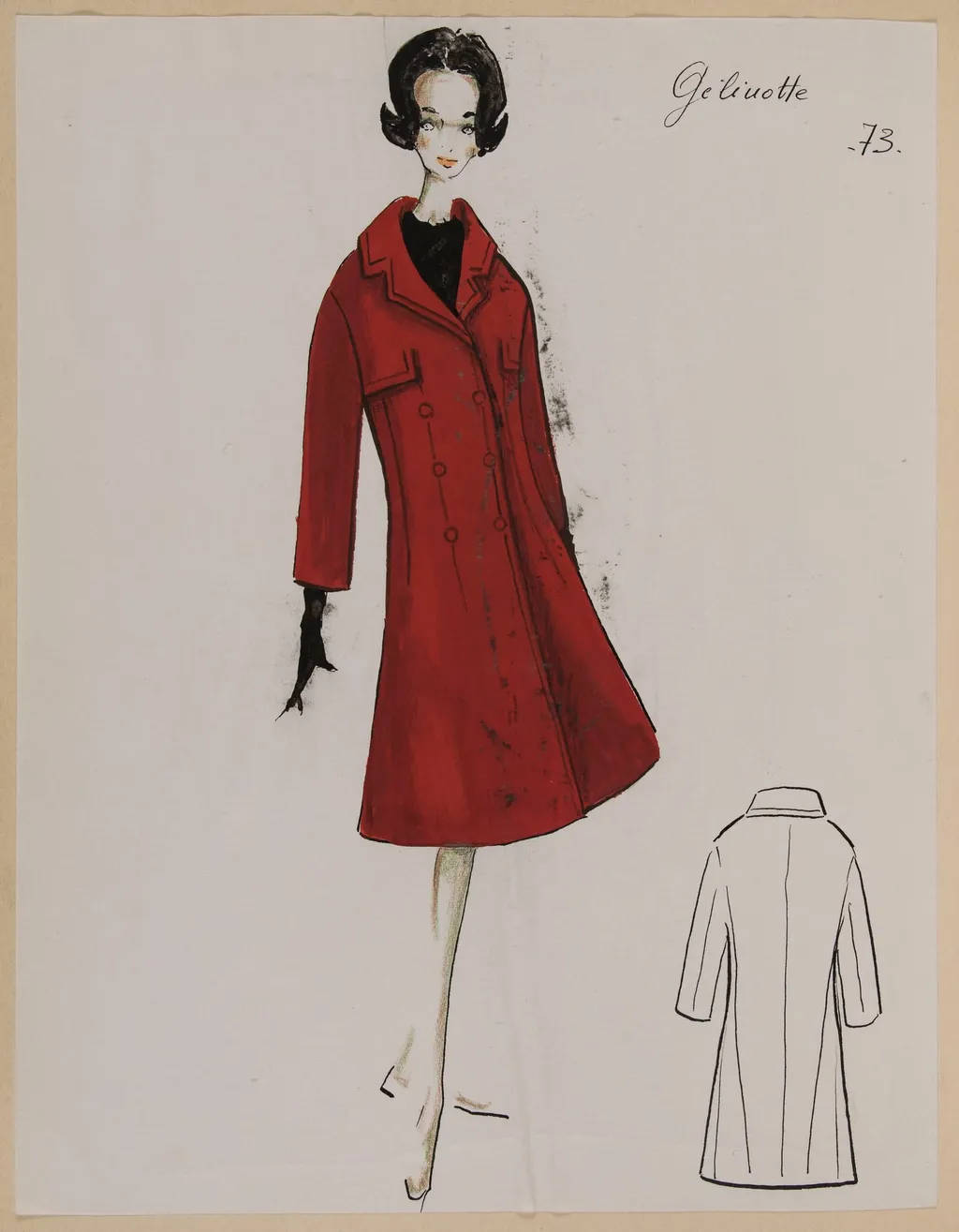
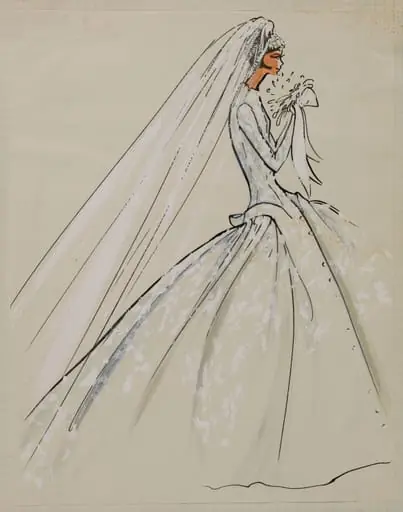
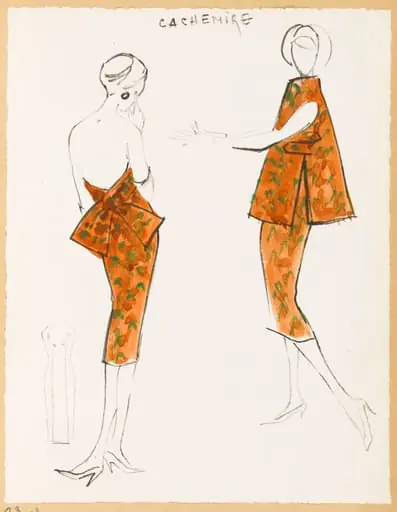
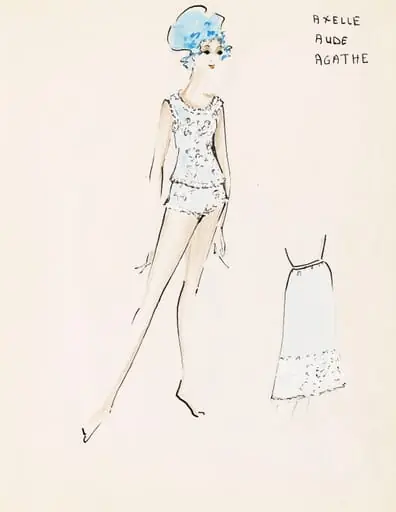
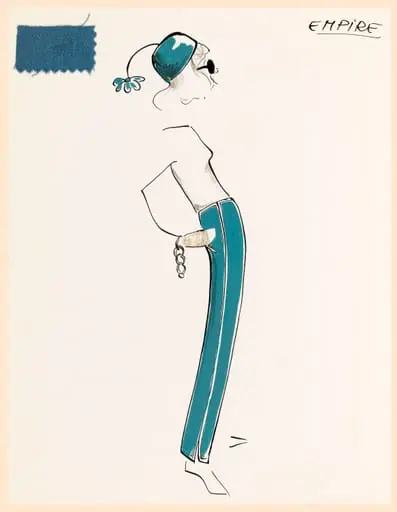
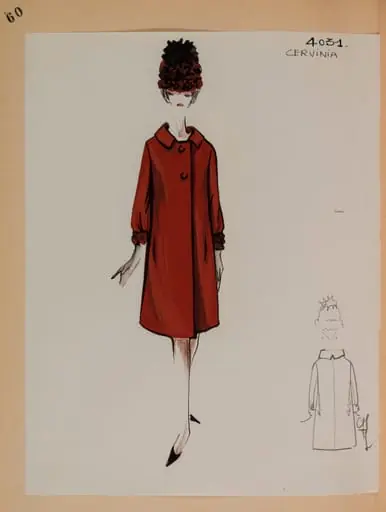
Gélinotte is a drawing by Carven. It dates from 1960 and is held in the collection of the Palais Galliera - Musée de la Mode de la Ville de Paris.
About this work
Overview
Gélinotte is a graphite drawing attributed to the French designer Carven, dated around 1960. It is part of the collection at the Museum of Ethnography. The work presents a solitary female figure in a stylized, reductive form, emphasizing silhouette over anatomical precision. Its modest scale and unadorned medium suggest a preparatory or personal study rather than a finished public piece.
Subject & Meaning
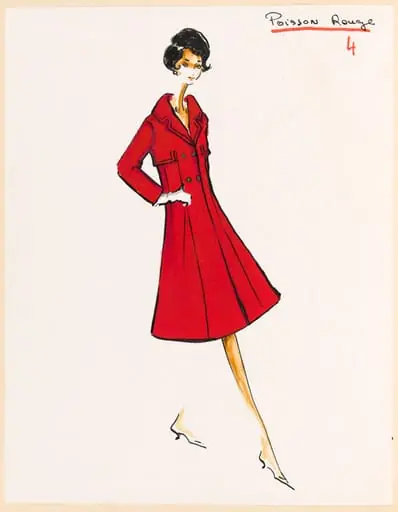
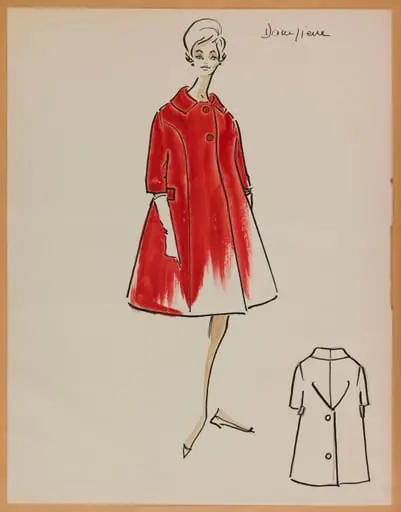
The figure wears a red coat over a black underlayer, with visible buttons and a defined collar, suggesting a winter garment.
The figure wears a red coat over a black underlayer, with visible buttons and a defined collar, suggesting a winter garment. Black gloves imply formality or cold weather. The absence of facial features and simplified hair render the subject anonymous, shifting focus to costume and posture. The title, Gélinotte, may reference a French term for a type of bird or a colloquial name, hinting at a metaphorical or poetic association with the figure’s quiet presence.
Technique & Style
Executed in bold, unmodulated lines, the drawing employs minimal shading and avoids fine detail. Contours define the coat’s shape and the figure’s posture with clarity, while the face and hair are reduced to loose, flowing strokes. The contrast between the red coat and black undergarment is suggested through negative space rather than color, reinforcing the drawing’s monochromatic restraint and emphasis on form.
History & Provenance
The drawing entered the Museum of Ethnography’s collection in the late 20th century, though its exact acquisition path remains undocumented. It is not known whether it was donated by the artist, a collector, or an estate. Its presence in an ethnographic context, rather than a fashion or fine arts archive, suggests it was acquired for its cultural or anthropological resonance rather than its artistic pedigree.
Context
Carven, primarily known for fashion design in mid-century France, occasionally produced sketches as part of creative process or personal practice. Gélinotte aligns with the era’s interest in streamlined aesthetics and the blurring of functional design with artistic expression. Its inclusion in an ethnographic museum may reflect broader postwar efforts to document everyday visual culture beyond traditional art categories.
Legacy
Gélinotte remains a quiet artifact of Carven’s lesser-known graphic work, offering insight into the designer’s visual language beyond textiles and garments. It has not been widely exhibited or published, preserving its status as a modest, understudied piece. Its value lies in its simplicity and the way it captures a moment of observation, bridging fashion design and personal drawing practice.
Artist & collection
Artist
These delicate ink-on-paper drawings capture the quiet poetry of everyday things: pinecones, reeds, apples.
Museum
Palais Galliera - Musée de la Mode de la Ville de Paris
Continue through works from the same source collection.