Artwork
Geai
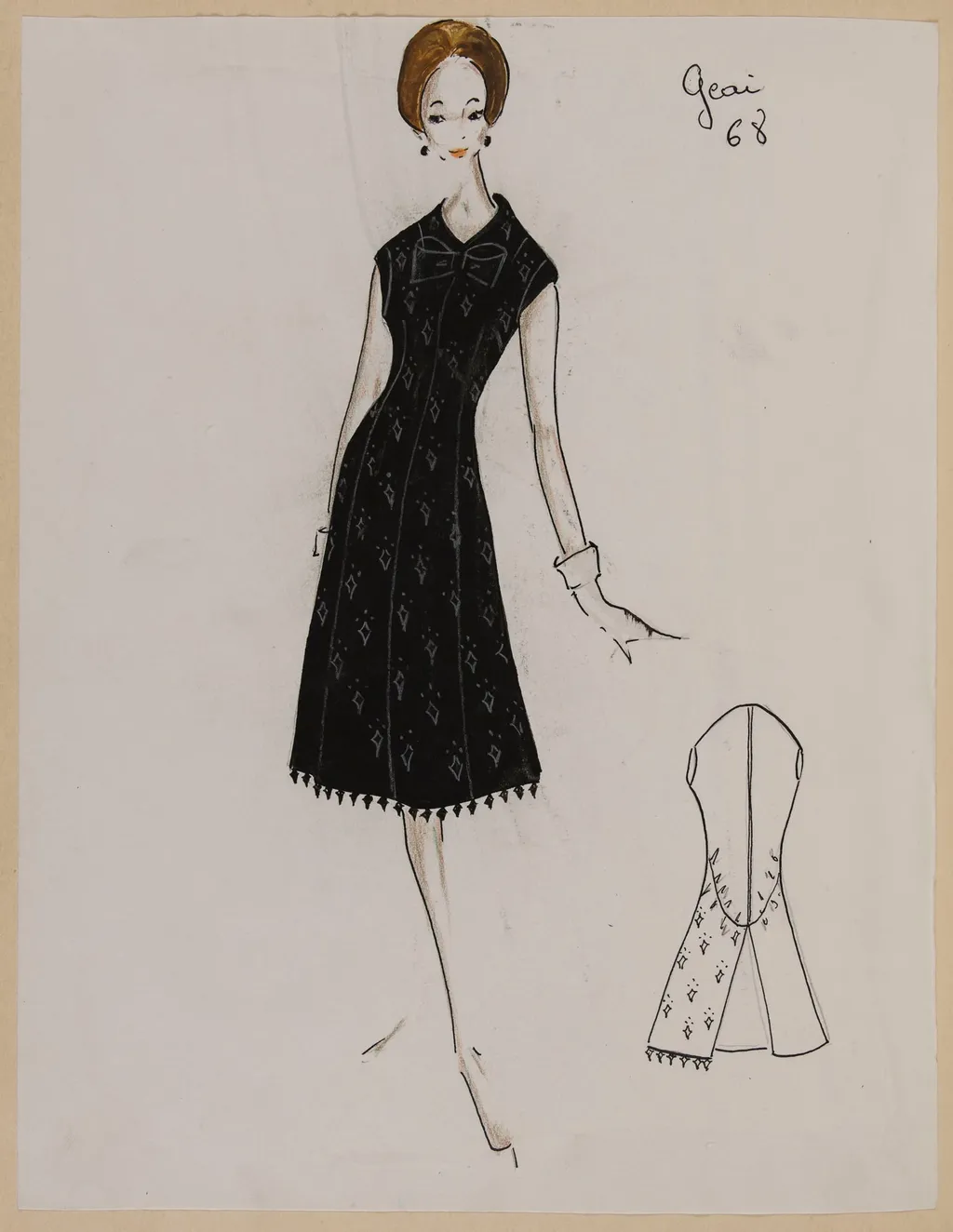
Geai is a drawing by Carven. It dates from 1960 and is held in the collection of the Palais Galliera - Musée de la Mode de la Ville de Paris.
About this work
Overview
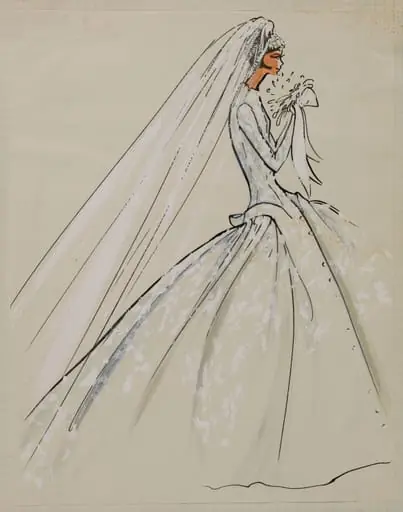
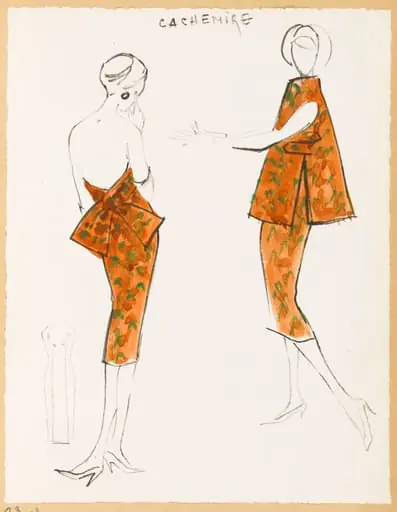
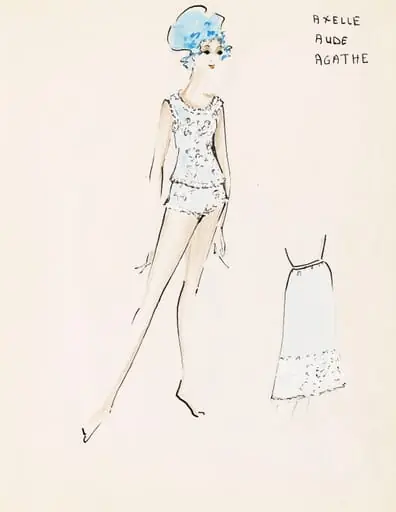
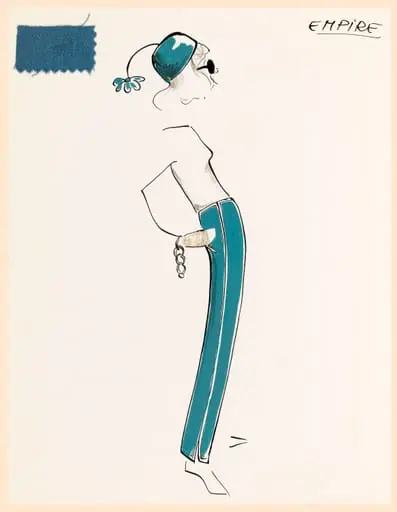
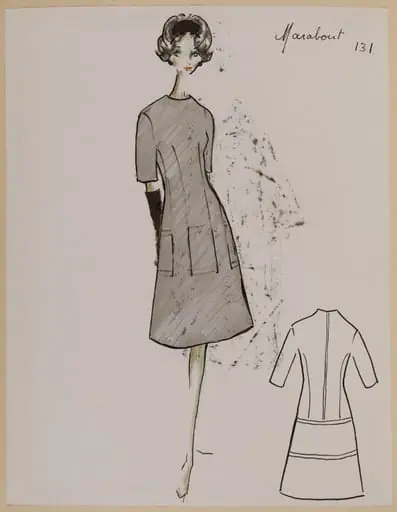
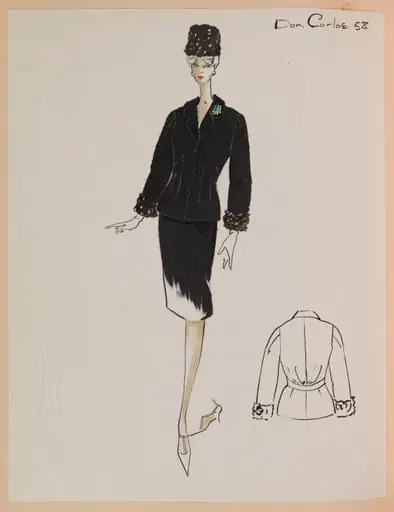
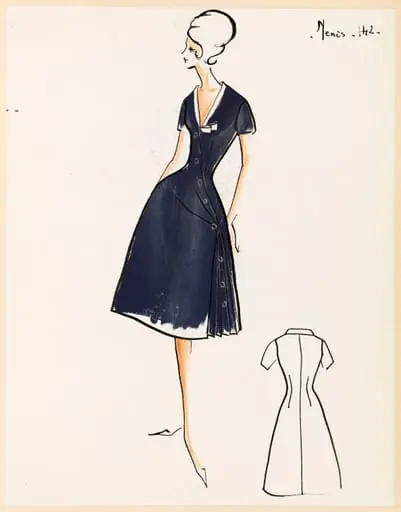
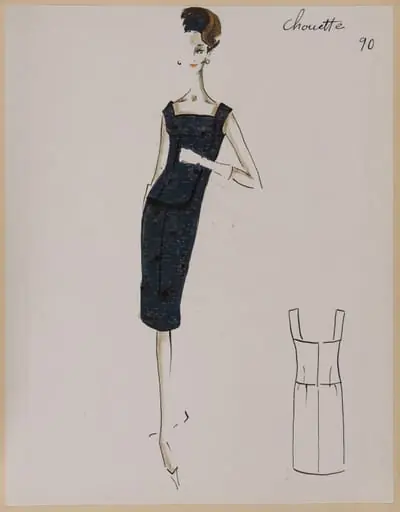
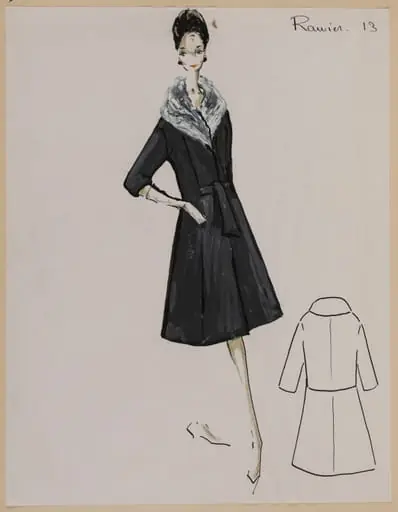
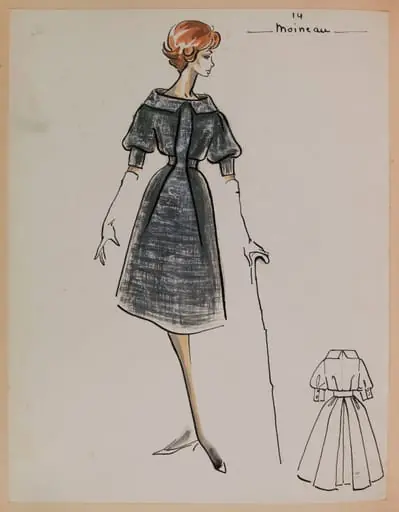
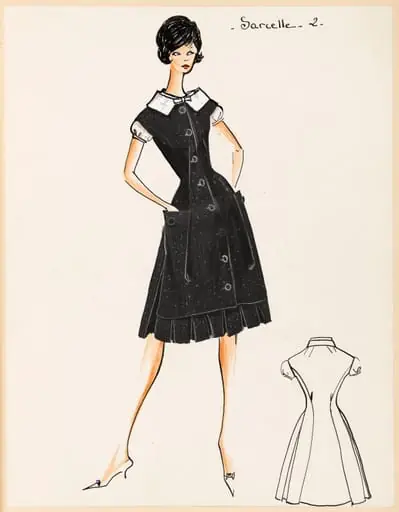
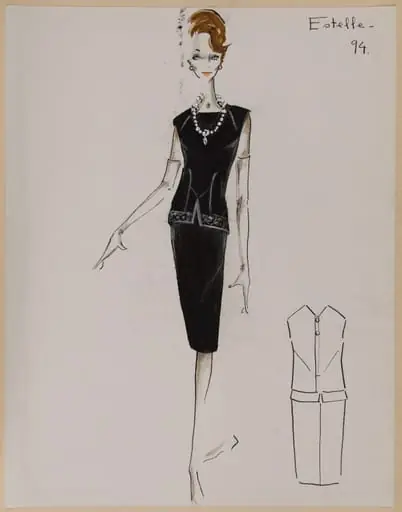
Created around 1960 by the fashion house Carven, this ink sketch captures a dress design in loose, rapid strokes. Executed as a working drawing, it prioritizes silhouette over detail, reflecting its function within the design process. The piece resides in the Museum of Ethnography, where it is preserved as part of a broader collection of mid-century fashion documentation.
Subject & Meaning
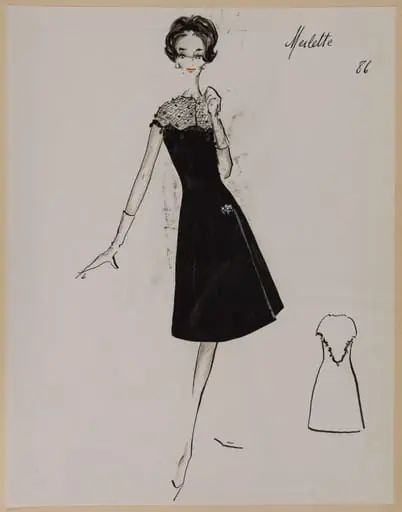
The drawing depicts a woman wearing a black dress with a high neckline featuring a bow and a hem edged in gentle scallops. The garment’s subtle, repetitive motif—possibly stars or diamonds—suggests a refined yet understated elegance. The figure’s minimal features and restrained accessories emphasize the dress as the central element, signaling the designer’s focus on form over ornamentation.
Technique & Style
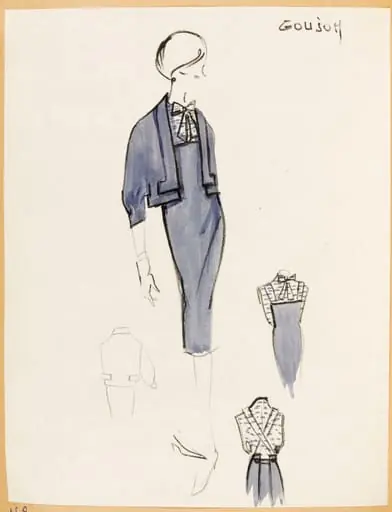
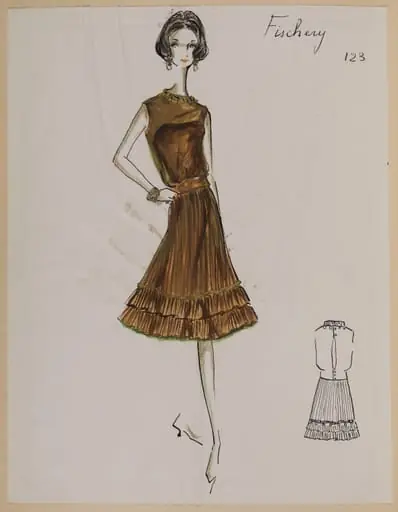
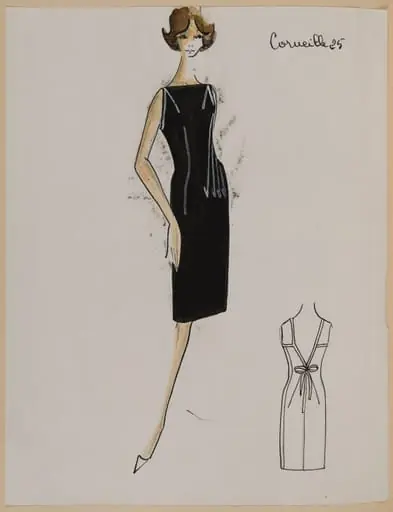
Rendered with swift, unrefined lines, the sketch resembles a fashion plate or pattern draft. The figure is lightly sketched, while the dress is rendered with greater emphasis, including a separate outline to the right that may represent a flat pattern piece. The absence of shading and facial detail underscores its utilitarian purpose: to communicate cut and structure rather than portraiture.
History & Provenance
The drawing entered the Museum of Ethnography’s collection as part of a group of materials documenting mid-century French fashion design. Its origin within Carven’s atelier is inferred from stylistic consistency with known designs from the period. No documentation of its original commission or use survives, but its condition suggests it was used in the design development phase.
Context
In the early 1960s, Parisian fashion houses relied on hand-drawn sketches to communicate designs to tailors and clients.
In the early 1960s, Parisian fashion houses relied on hand-drawn sketches to communicate designs to tailors and clients. This piece reflects the era’s shift toward streamlined aesthetics, where elegance was conveyed through clean lines and subtle texture rather than elaborate embellishment. Such sketches were often discarded after use, making this example a rare surviving record of the design process.
Legacy
As a preserved artifact of Carven’s design workflow, the sketch offers insight into how couture was conceptualized before digital tools. It contributes to scholarly understanding of how fashion houses translated aesthetic ideals into wearable forms. Its presence in an ethnographic museum highlights the cultural significance of clothing as a material expression of its time.
Artist & collection
Artist
These delicate ink-on-paper drawings capture the quiet poetry of everyday things: pinecones, reeds, apples.
Museum
Palais Galliera - Musée de la Mode de la Ville de Paris
Continue through works from the same source collection.