Artwork
'Goelette'
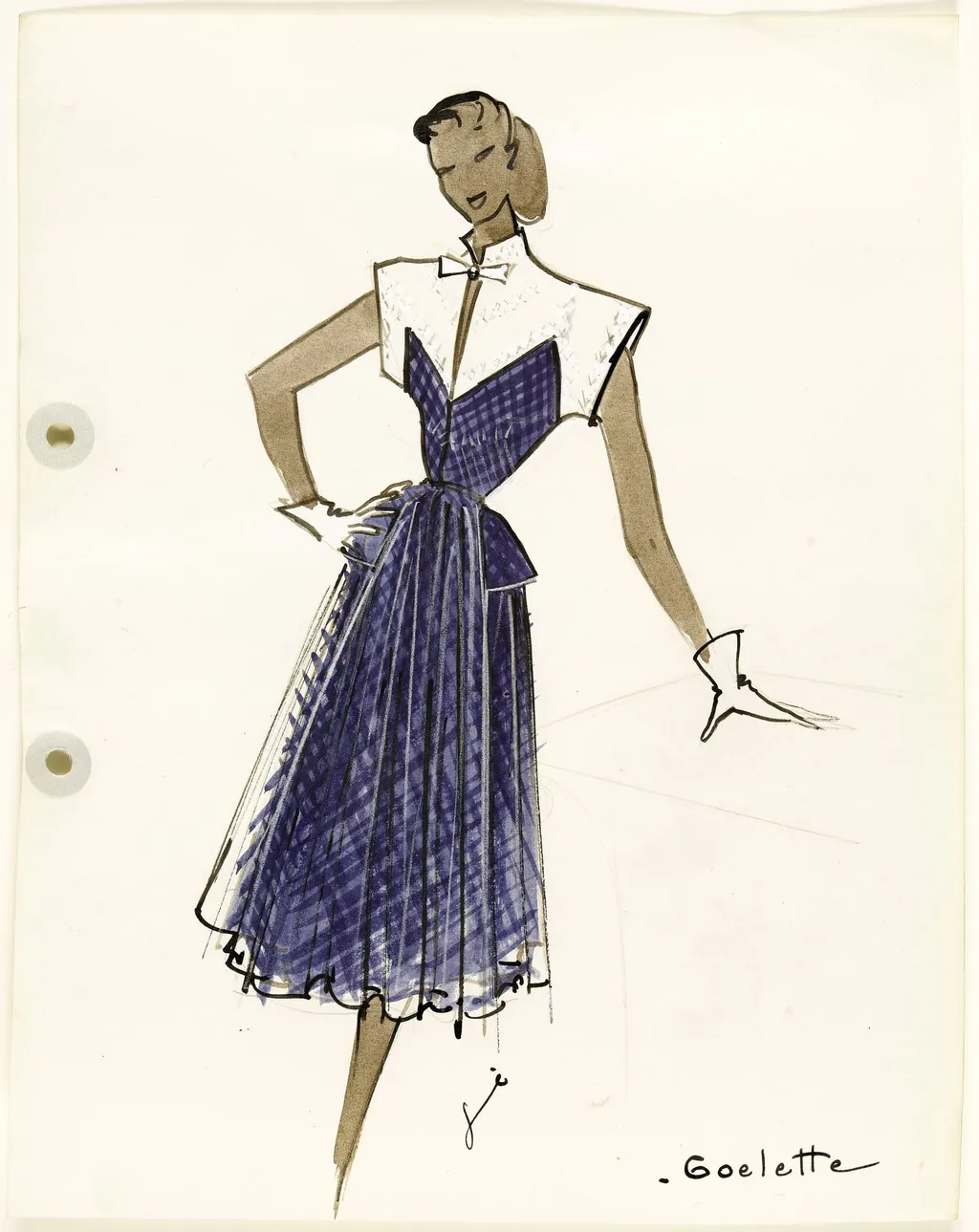
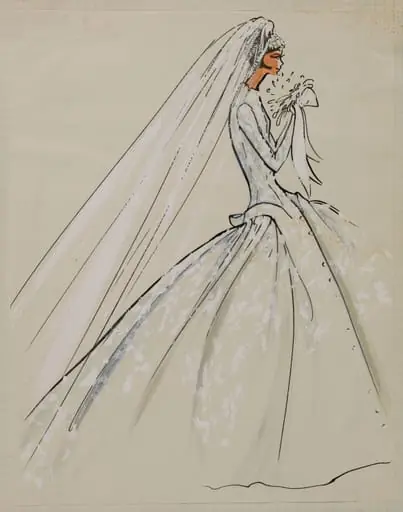
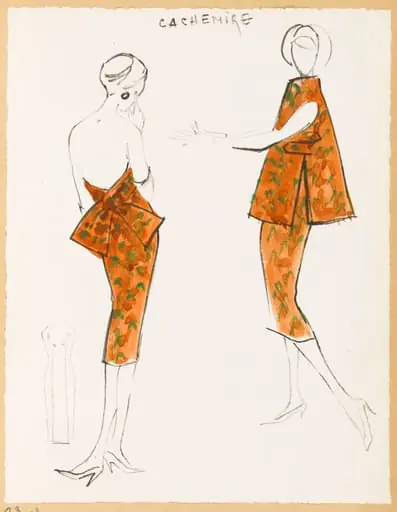
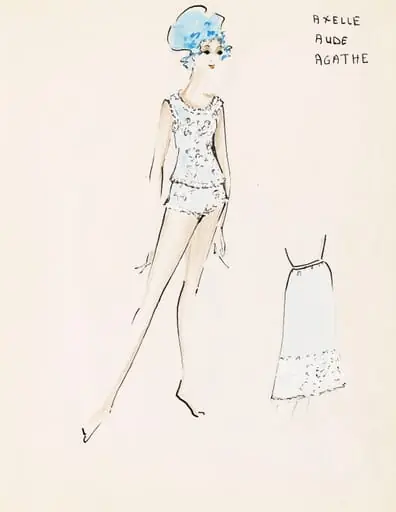
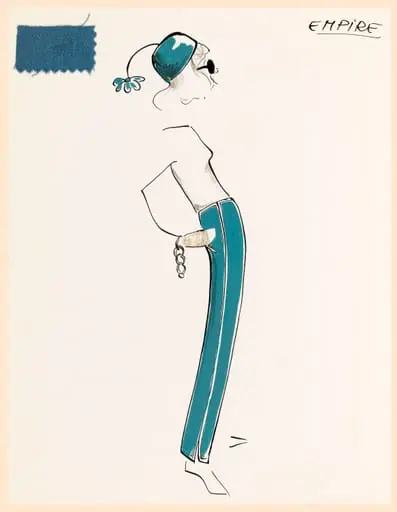
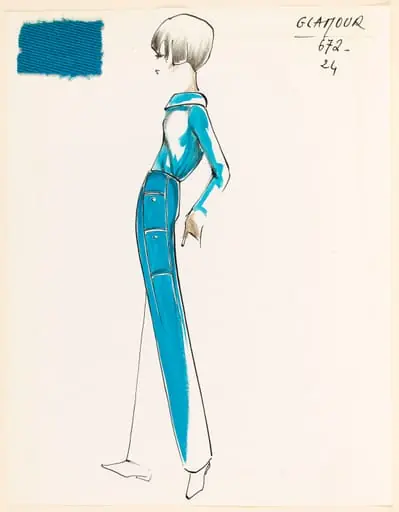
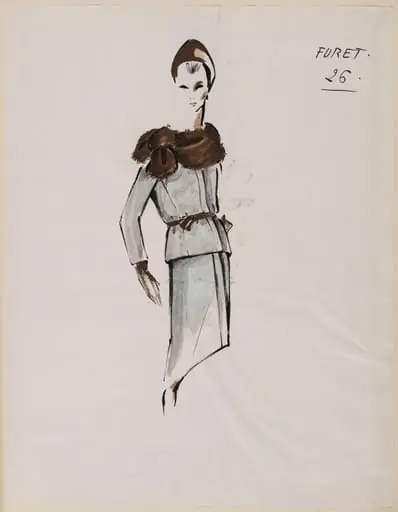
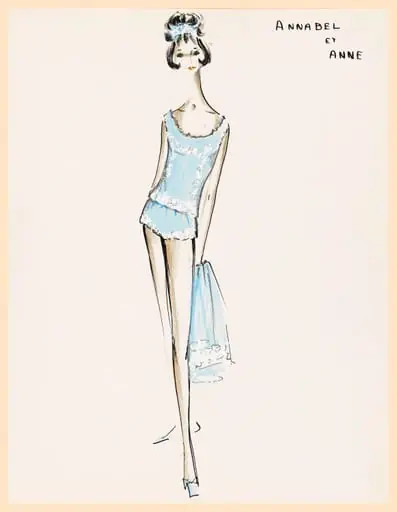
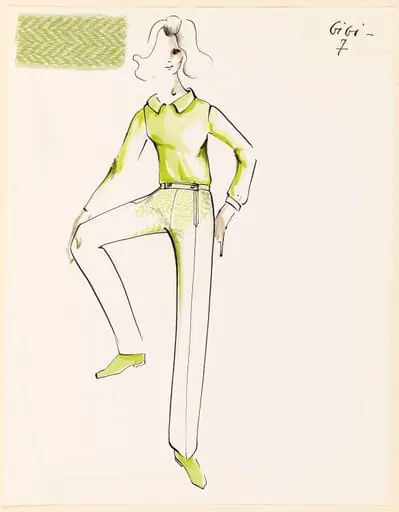
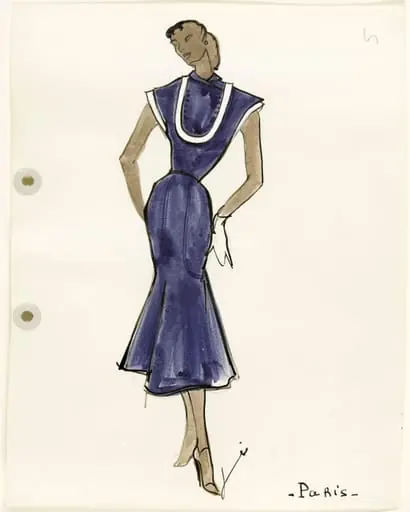
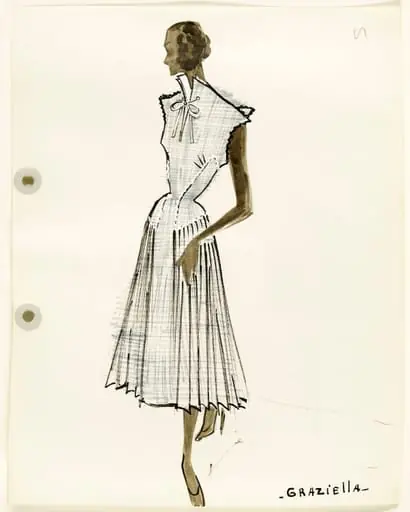
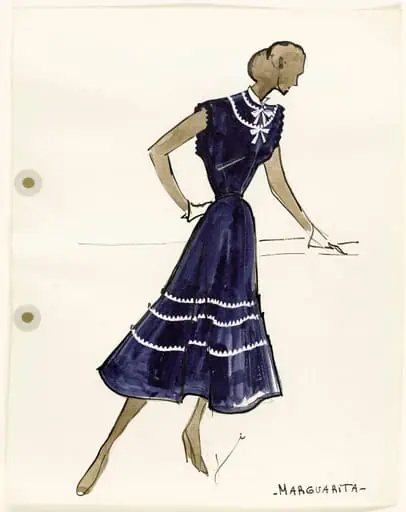
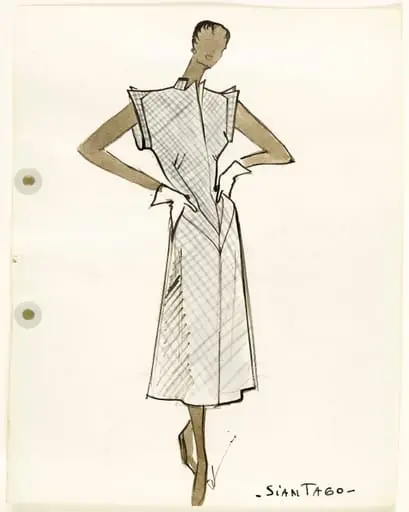
'Goelette' is a drawing by Carven. It dates from 1951 and is held in the collection of the Palais Galliera - Musée de la Mode de la Ville de Paris.
About this work
Overview
The work presents a single figure in motion, rendered with economical lines and restrained color.
Created in 1951, 'Goelette' is a pencil and watercolor sketch by French designer Carven. It resides in the collection of the Museum of Ethnography. The work presents a single figure in motion, rendered with economical lines and restrained color. Its format and immediacy suggest it was made as a fashion study rather than a formal portrait, reflecting Carven’s practice of documenting design ideas through rapid, observational drawing.
Subject & Meaning
The subject is a woman dressed in a navy dress with a checkered bodice and a full skirt, standing with one hand on her hip and the other gently holding the fabric. Her posture conveys poise and self-possession, aligning with mid-century ideals of feminine elegance. The title 'Goelette'—a term for a small sailing vessel—may hint at movement or freedom, subtly linking the figure’s grace to the fluidity of wind and sea.
Technique & Style
Carven employed loose yet controlled linework, suggesting spontaneity without sacrificing structure. The palette is minimal: navy, white, and a touch of brown for footwear, emphasizing form over detail. Watercolor washes define volume and shadow, while pencil outlines anchor the composition. The drawing’s unfinished quality reveals its function as a working sketch—intended to capture silhouette and movement rather than complete realism.
History & Provenance
The work entered the Museum of Ethnography’s collection in the decades following its creation, likely through donation or acquisition from Carven’s personal archive. Its preservation as a fashion study rather than a finished artwork reflects institutional interest in design processes. No public record of prior ownership exists, and the sketch has remained in the museum’s care since at least the late 20th century.
Context
In postwar France, fashion houses like Carven’s emphasized tailored elegance and wearable artistry. Sketches like 'Goelette' were essential tools for translating design concepts into production. This drawing aligns with contemporaneous practices among Parisian designers who used rapid figure studies to explore silhouette, proportion, and drape—prioritizing function and movement over ornamental detail.
Legacy
Though not widely exhibited, 'Goelette' contributes to the understanding of Carven’s design methodology. It exemplifies how fashion houses documented creative ideas before mass production. The sketch remains a quiet testament to the role of drawing in mid-century fashion, preserving the intimate link between hand, eye, and garment in an era before digital rendering.
Artist & collection
Artist
These delicate ink-on-paper drawings capture the quiet poetry of everyday things: pinecones, reeds, apples.
Museum
Palais Galliera - Musée de la Mode de la Ville de Paris
Continue through works from the same source collection.