Artwork
'Kanakry'
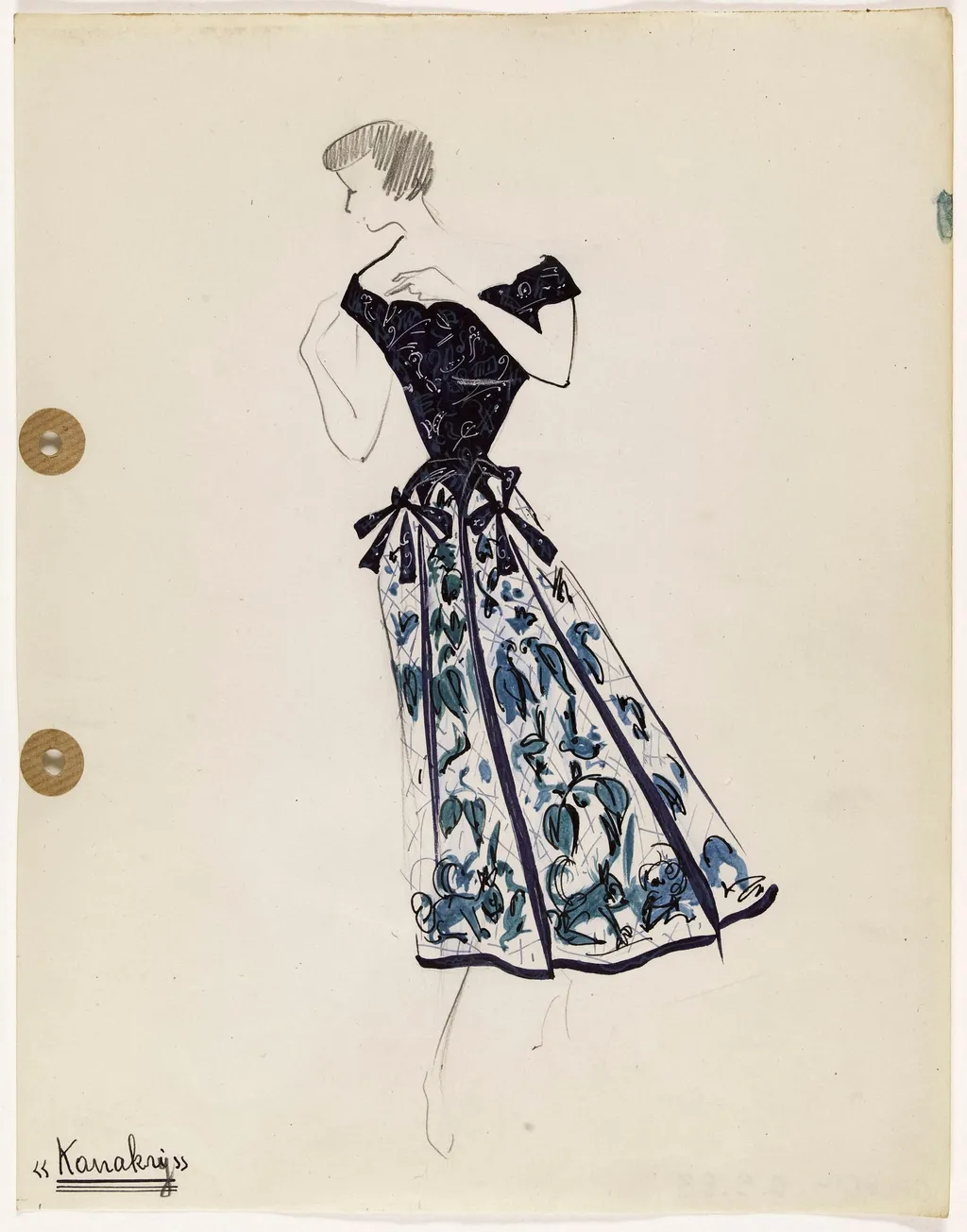
'Kanakry' is a drawing by Carven. It dates from 1949 and is held in the collection of the Palais Galliera - Musée de la Mode de la Ville de Paris.
About this work
Overview
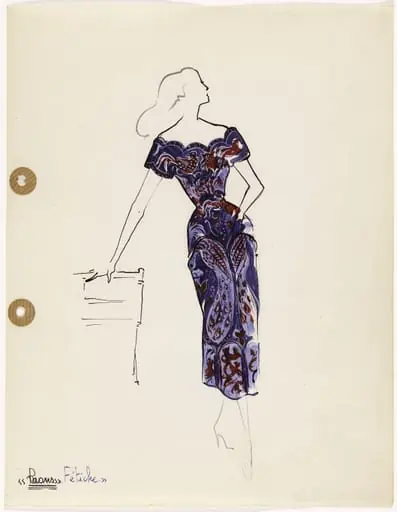
Created in 1949 by the designer Carven, 'Kanakry' is a pencil sketch depicting a female figure in traditional attire. The work resides in the collection of the Museum of Ethnography. Executed with rapid, fluid strokes, it captures a momentary pose rather than a polished composition, suggesting it was made as a preparatory study for fashion design rather than as a standalone artwork.
Subject & Meaning
The sketch emphasizes movement and silhouette, hinting at Carven’s interest in how clothing interacts with the body in motion.
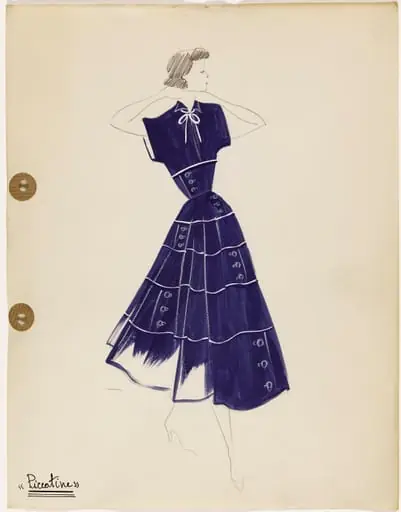
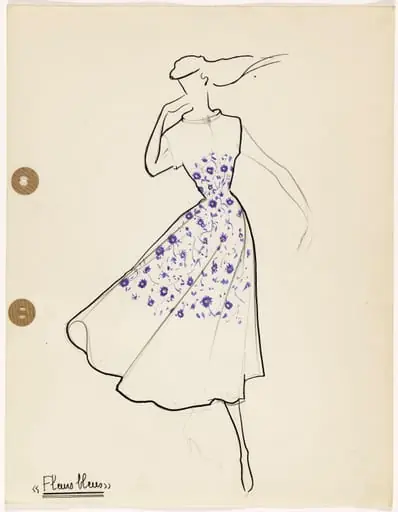
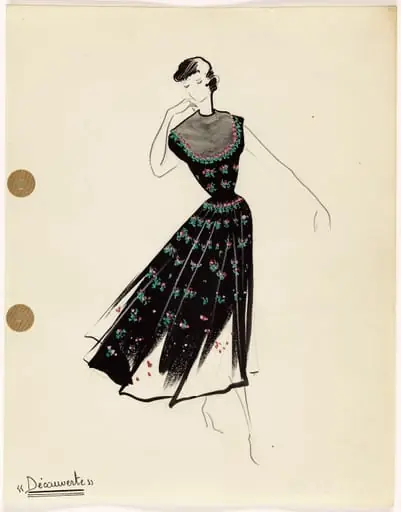
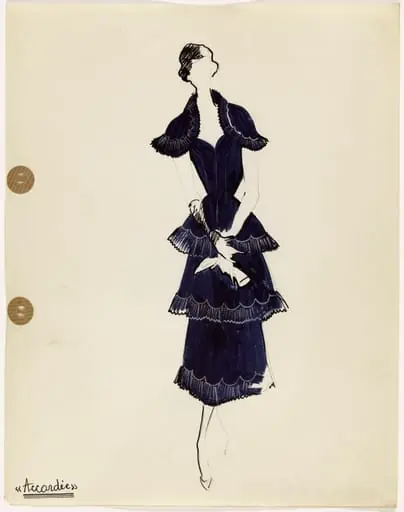
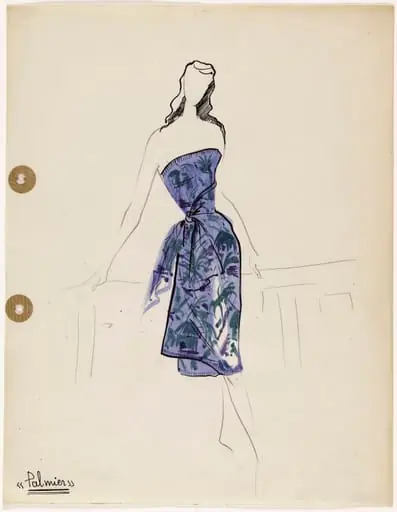
The figure is a woman wearing a long dress with a dark bodice and a vibrant, patterned skirt, fastened at the waist by a bow. Her posture—sideways stance, one hand resting on the hip—conveys casual poise. The attire suggests a regional or cultural costume, though no specific origin is documented. The sketch emphasizes movement and silhouette, hinting at Carven’s interest in how clothing interacts with the body in motion.
Technique & Style
Carven employed loose, gestural lines to render the dress, particularly the skirt, which appears to flutter with implied texture. The floral pattern is suggested through rhythmic, abbreviated marks rather than detailed rendering. Facial features and background are omitted, focusing attention on form and fabric. The sketch’s spontaneity reflects a working method common in fashion design, prioritizing energy over finish.
History & Provenance
The drawing entered the Museum of Ethnography’s collection after Carven’s career as a fashion designer. Its acquisition likely stemmed from its value as a document of mid-century design practice, illustrating how cultural motifs were interpreted in contemporary clothing. No record of prior ownership or exhibition history is publicly documented beyond its current institutional home.
Context
In postwar France, fashion designers like Carven often drew inspiration from global textiles and silhouettes, blending them with Parisian elegance. 'Kanakry' reflects this trend, incorporating what appears to be non-Western patterning into a European dress form. The sketch aligns with a broader interest in ethnographic aesthetics within fashion circles during the late 1940s.
Legacy
Though not widely reproduced, 'Kanakry' remains a quiet example of how fashion designers engaged with cultural imagery through direct observation. It contributes to understanding the informal, iterative nature of design development in mid-century couture. Its preservation in an ethnographic museum underscores its role as a bridge between art, dress, and cultural representation.
Artist & collection
Artist
These delicate ink-on-paper drawings capture the quiet poetry of everyday things: pinecones, reeds, apples.
Museum
Palais Galliera - Musée de la Mode de la Ville de Paris
Continue through works from the same source collection.