Artwork
Laetitia
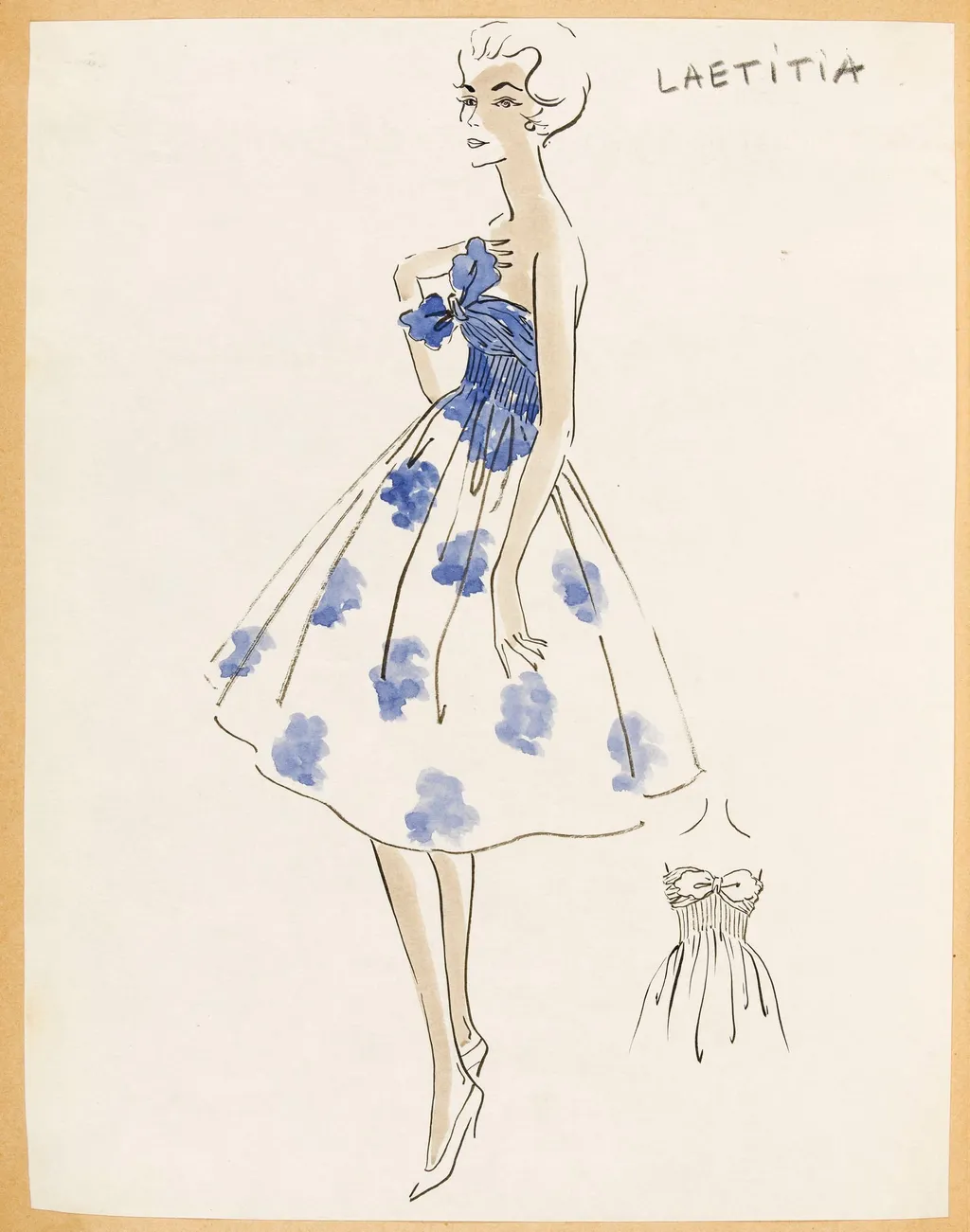
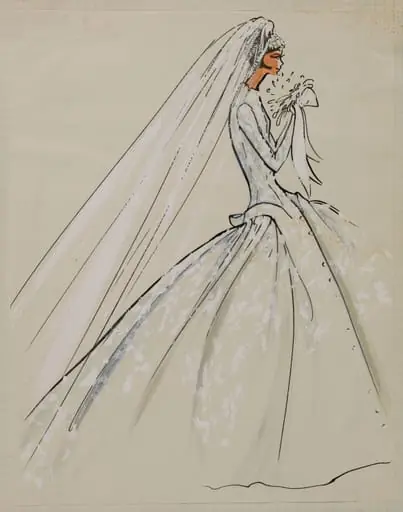
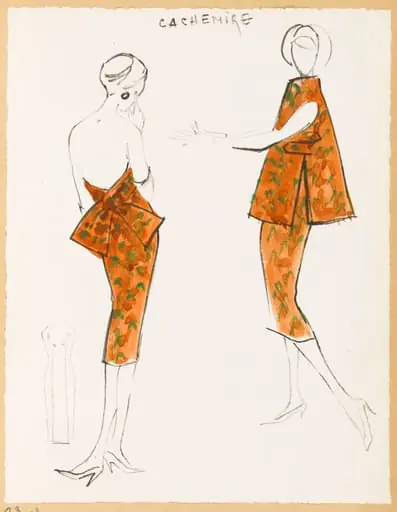
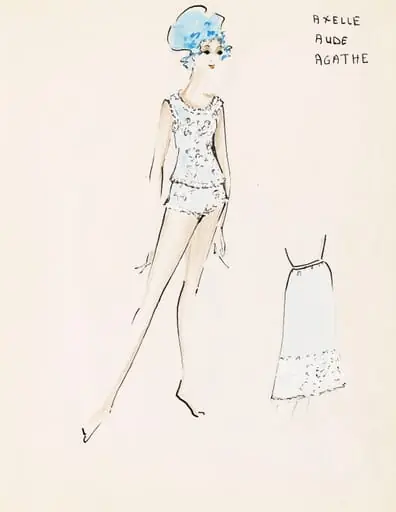
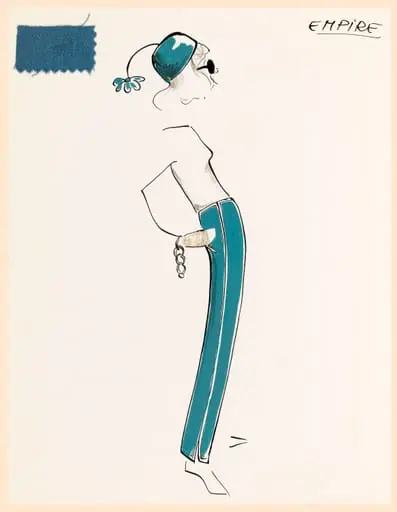
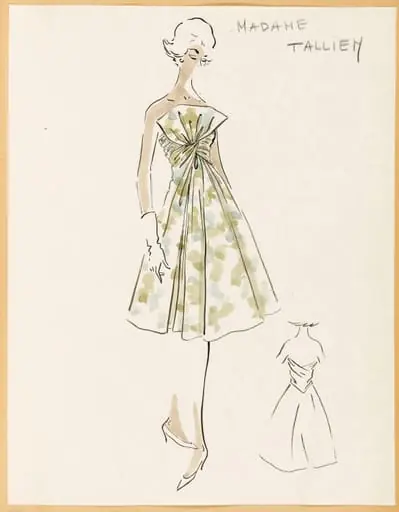
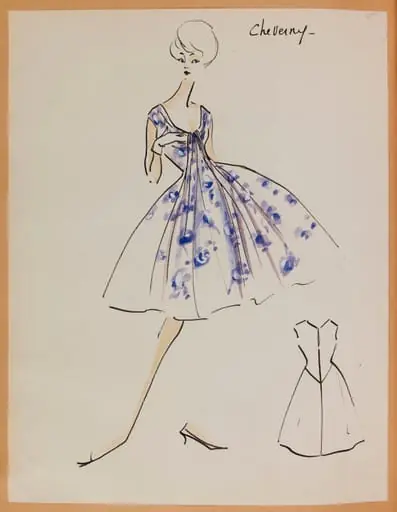
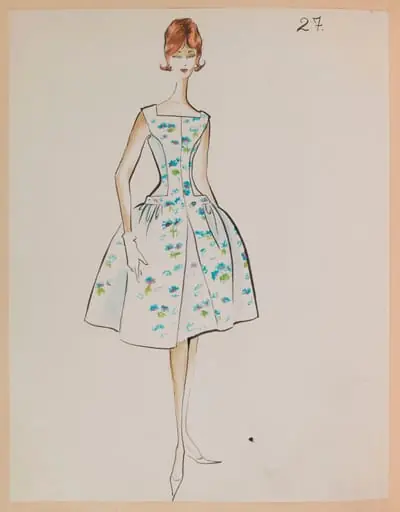
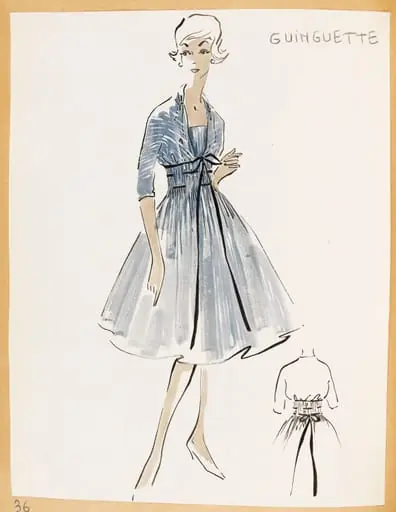
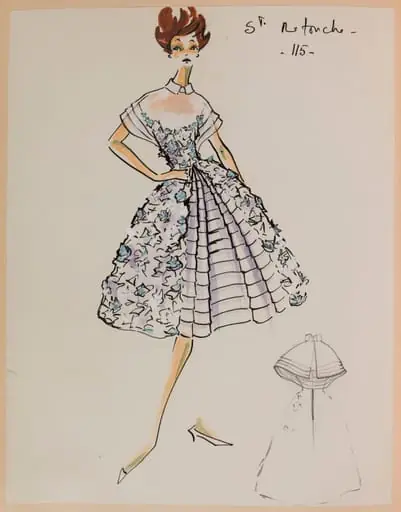
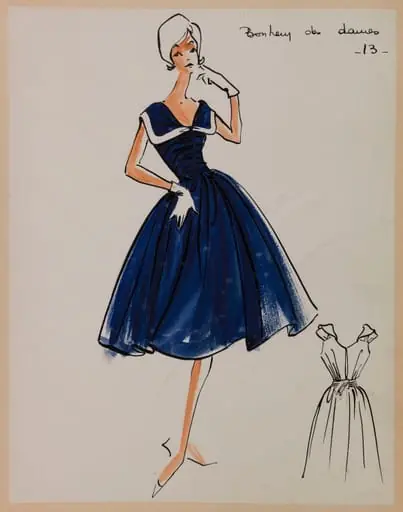
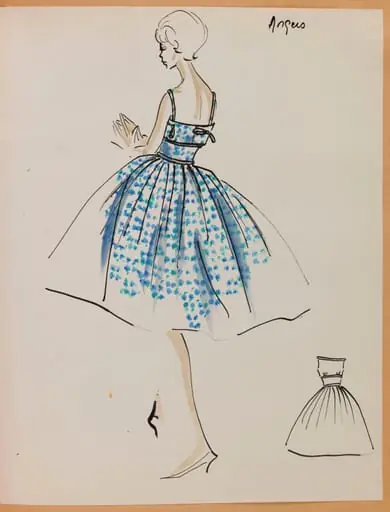
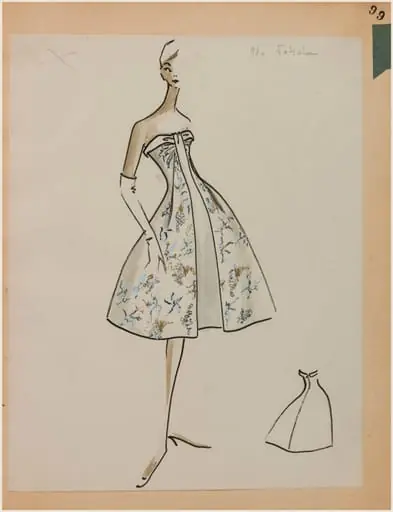
Laetitia is a drawing by Carven. It dates from 1957 and is held in the collection of the Palais Galliera - Musée de la Mode de la Ville de Paris.
About this work
Overview
It is currently held in the collection of the Museum of Ethnography, where it is preserved as an example of mid-century French fashion documentation.
Created around 1957 by the fashion house Carven, this ink sketch is part of a series of design studies produced for ready-to-wear garments. It is currently held in the collection of the Museum of Ethnography, where it is preserved as an example of mid-century French fashion documentation. The work’s intimate scale and delicate line work suggest it was intended as a working drawing rather than a finished illustration.
Subject & Meaning
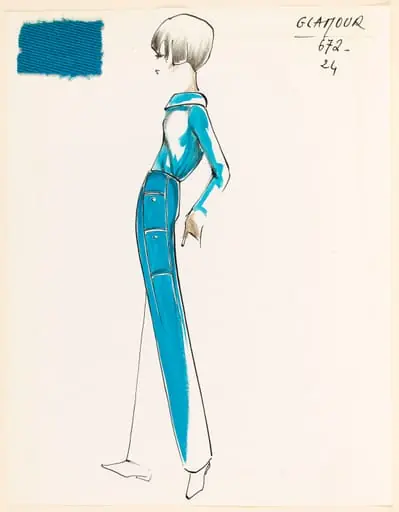
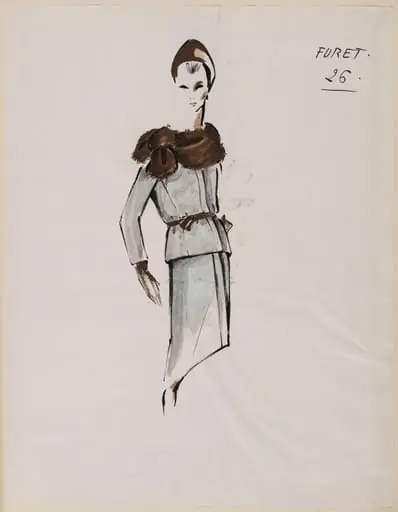
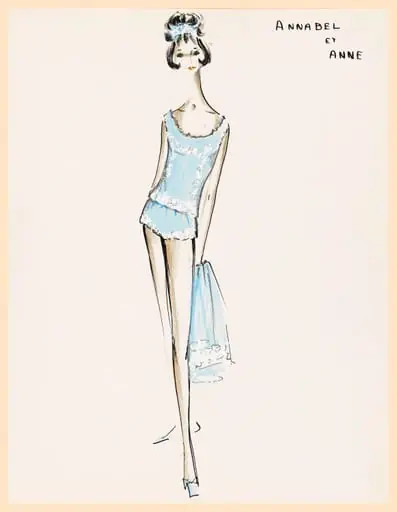
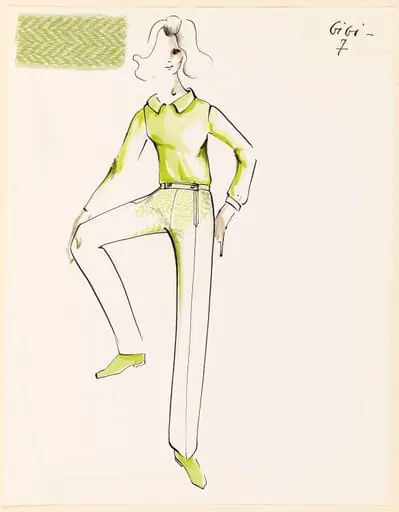
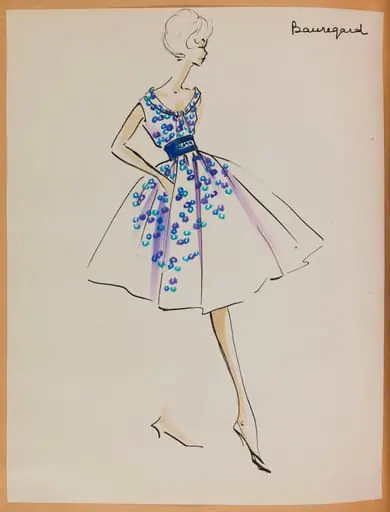
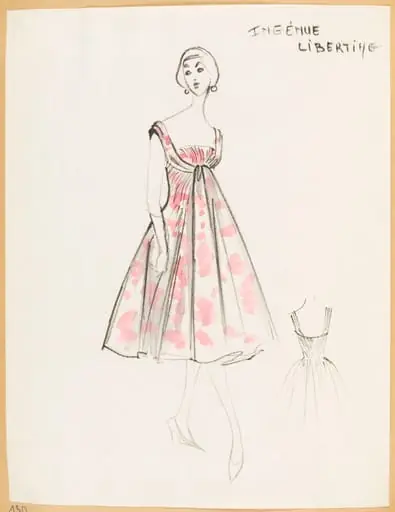
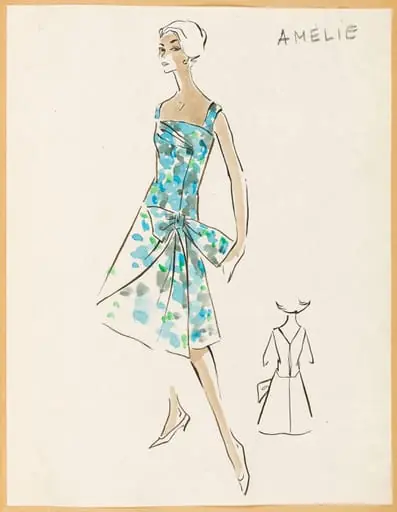
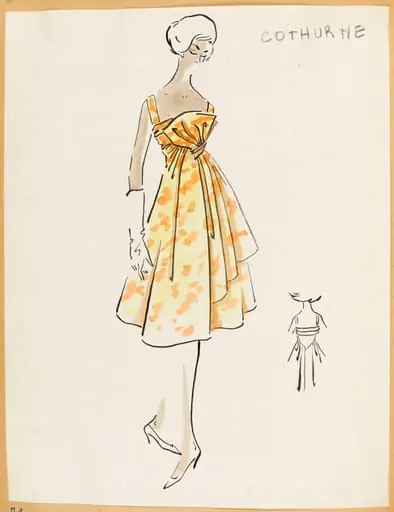
The figure depicted is a woman in a flowing, blue-floral dress, rendered with subtle attention to movement and drapery. Her posture—slight forward step, one leg relaxed—implies a moment of quiet motion, possibly mid-stride. The name 'Laetitia' inscribed in the corner may refer to the garment’s designation or the model’s identity, reflecting the personal naming conventions common in ateliers of the time.
Technique & Style
Executed in fine ink lines, the sketch emphasizes fluidity and weightlessness. The dress is suggested rather than fully rendered, with minimal shading to indicate fabric fall and volume. The floral pattern is delicately outlined, and the hair is drawn with precise, restrained strokes. The inclusion of a small bow at the lower edge functions as a design detail marker, typical of technical fashion drawings used for production.
History & Provenance
The sketch originated in Carven’s design studio during the late 1950s, a period when the house was expanding its ready-to-market collections. It entered the Museum of Ethnography’s holdings through acquisition or donation, likely as part of a broader effort to document fashion as cultural artifact. Its preservation reflects institutional interest in the material culture of postwar European fashion design.
Context
In the 1950s, Parisian fashion houses like Carven relied on hand-drawn sketches to communicate design intent to tailors and patternmakers. These drawings were functional tools, not public advertisements. The emphasis on movement and fabric behavior in this piece aligns with contemporary trends favoring lightweight, feminine silhouettes, contrasting with the structured forms of earlier decades.
Legacy
Though not widely exhibited, this sketch contributes to scholarly understanding of how fashion was conceptualized before digital tools. Its presence in an ethnographic museum underscores the transition of fashion design from private craft to public heritage. It remains a quiet testament to the precision and artistry embedded in the unseen labor of garment creation.
Artist & collection
Artist
These delicate ink-on-paper drawings capture the quiet poetry of everyday things: pinecones, reeds, apples.
Museum
Palais Galliera - Musée de la Mode de la Ville de Paris
Continue through works from the same source collection.