Artwork
Lavande
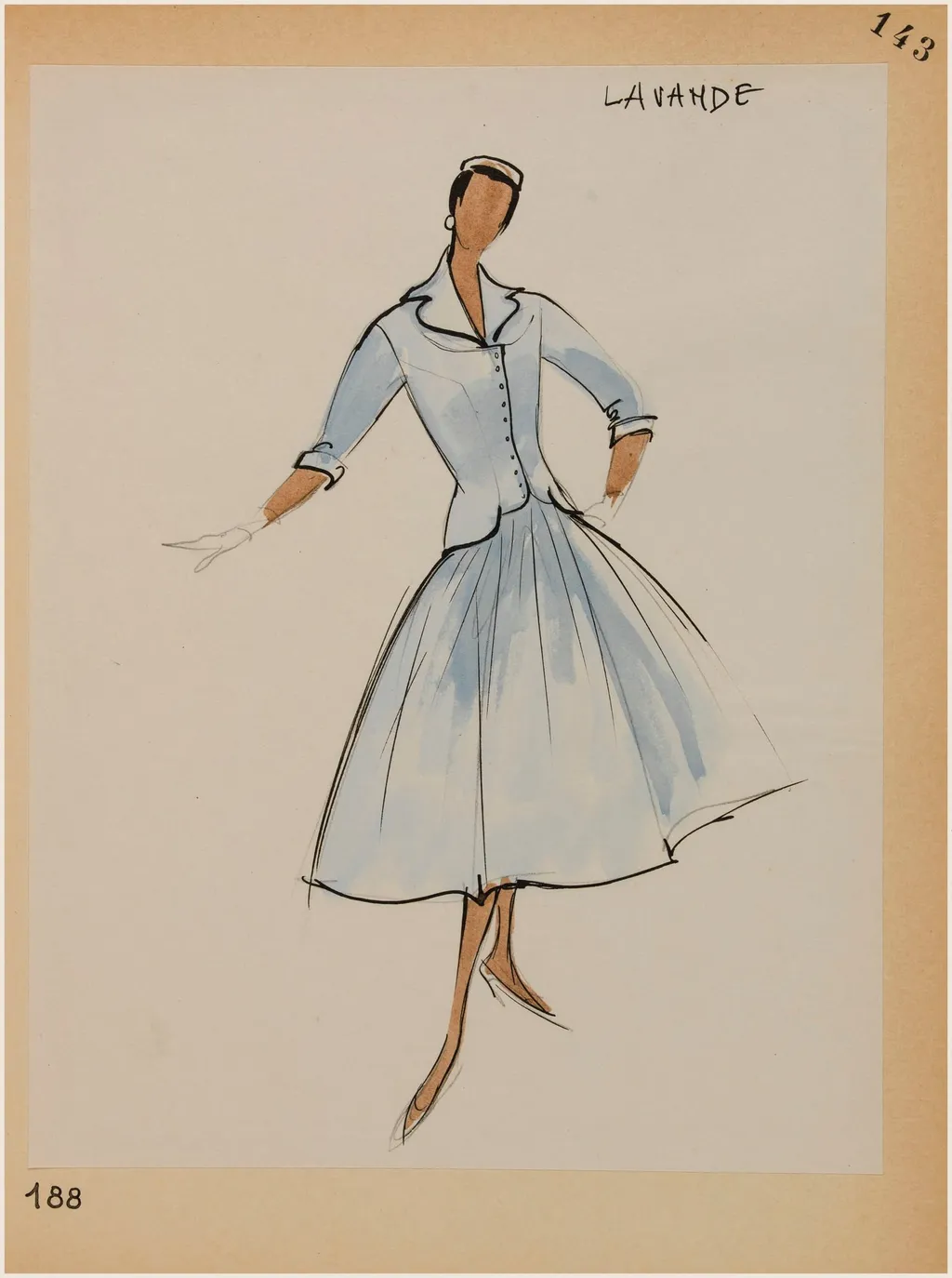
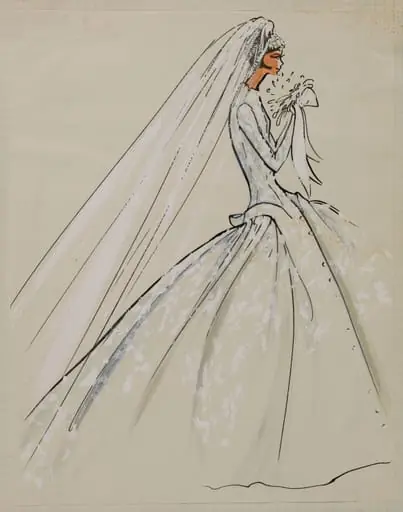
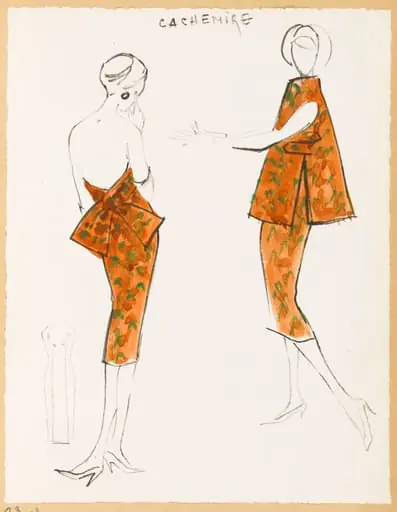
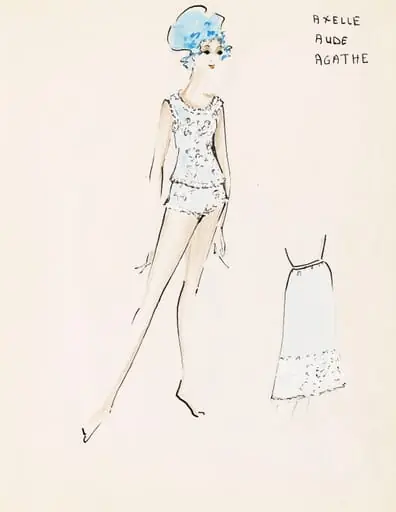
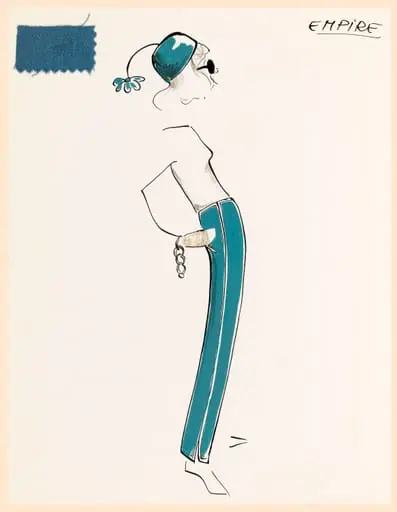
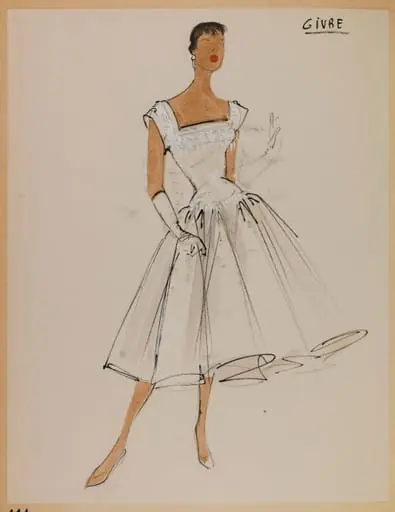
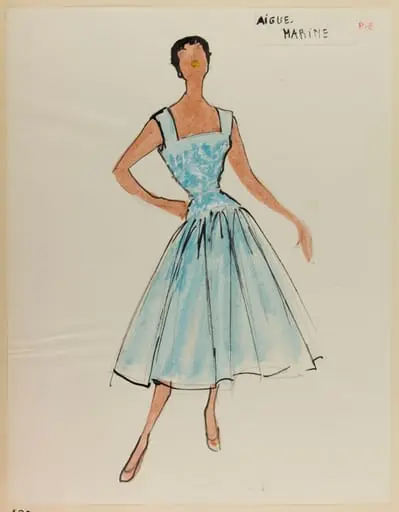
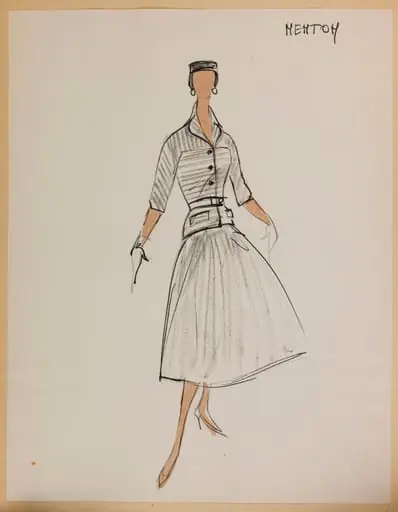
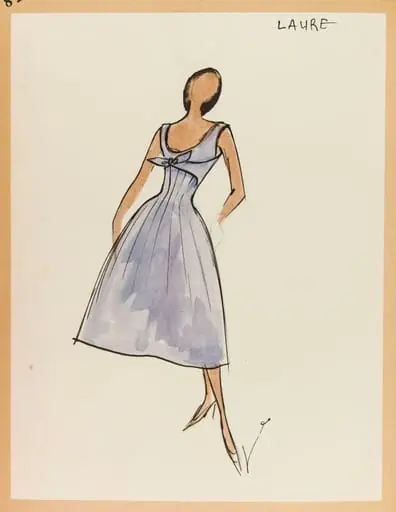
Lavande is a drawing by Carven. It dates from 1956 and is held in the collection of the Palais Galliera - Musée de la Mode de la Ville de Paris.
About this work
Overview
Lavande is a 1956 ink and watercolor sketch by French designer Carven, currently held in the Museum of Ethnography’s collection.
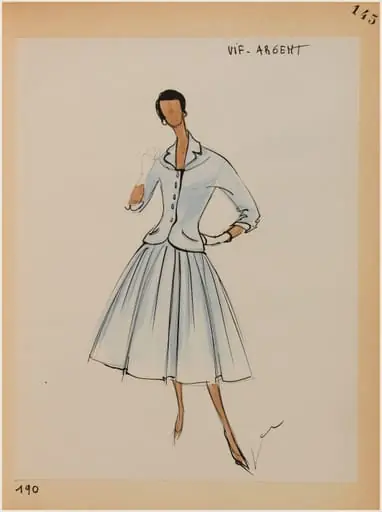
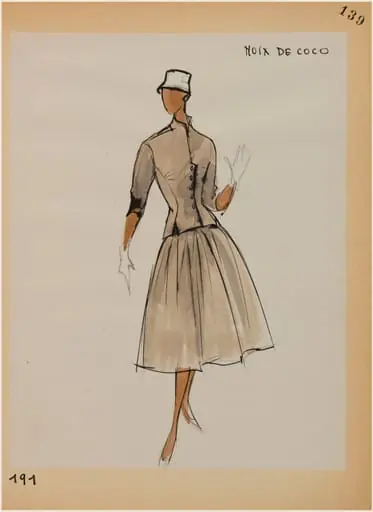
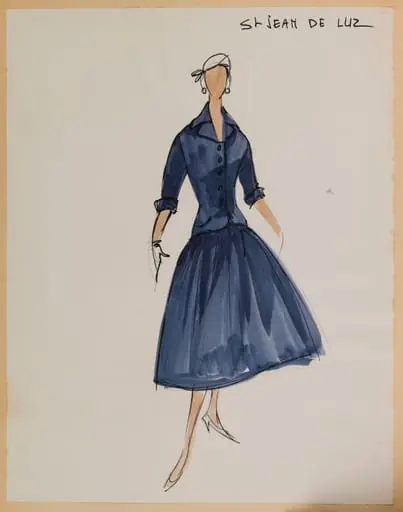
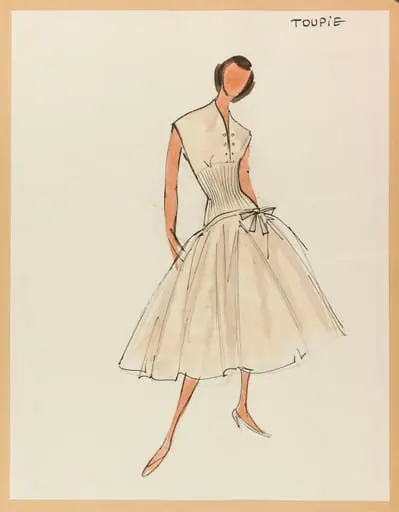
Lavande is a 1956 ink and watercolor sketch by French designer Carven, currently held in the Museum of Ethnography’s collection. Executed with rapid, fluid strokes, it captures a woman in a light blue dress, suggesting a moment of informal design development rather than a polished presentation. The work’s spontaneity and modest scale reflect its function as a working drawing, likely used in the creative process of fashion design during the mid-20th century.
Subject & Meaning
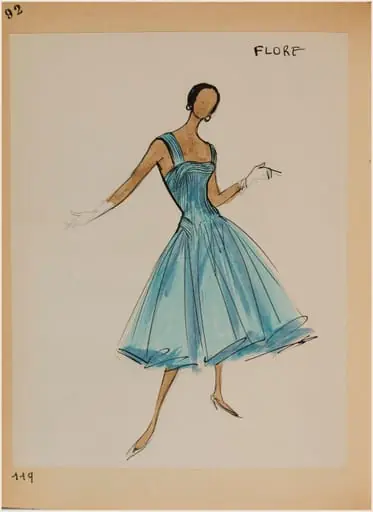
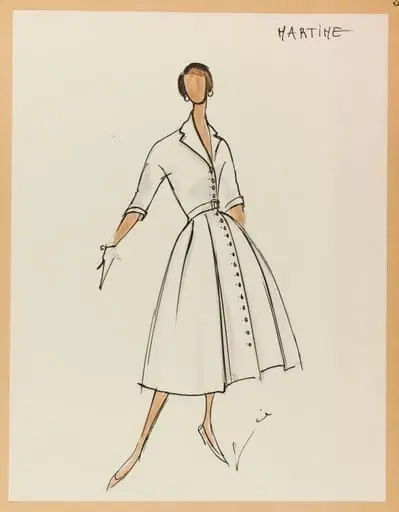
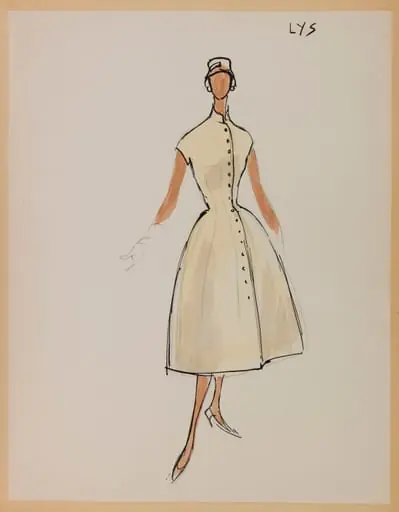
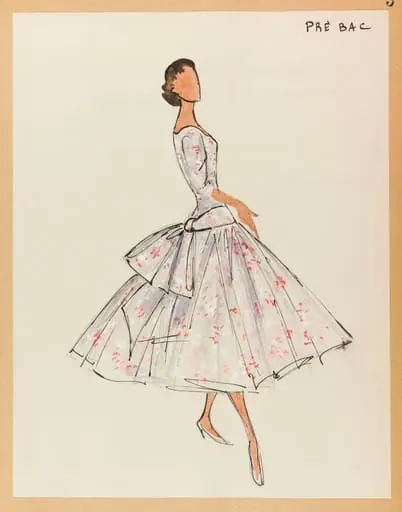
The figure depicted wears a fitted jacket with three buttons and a flared skirt ending above the knee, paired with simple footwear and neatly pulled-back hair. The title, Lavande—French for lavender—may reference the dress’s pale hue or serve as an informal label for the design. The absence of facial detail and the focus on silhouette suggest an emphasis on garment structure over individual identity, aligning with fashion’s functional priorities at the time.
Technique & Style
Rendered in soft watercolor washes and minimal ink lines, the sketch conveys movement through loose, unrefined strokes. Color is applied sparingly, with subtle gradients suggesting fabric drape rather than detailed texture. The absence of shading or background elements directs attention to the dress’s form, while the sketch’s unfinished quality reveals the artist’s process—prioritizing speed and gesture over finish.
History & Provenance
Created in 1956 during Carven’s active design years, Lavande entered the Museum of Ethnography’s collection as part of a broader acquisition of fashion-related materials documenting mid-century European design practices. Its preservation reflects institutional interest in the ephemeral nature of fashion sketches, which often serve as critical but overlooked records of creative labor beyond final garments.
Context
In the 1950s, fashion houses relied on hand-drawn sketches to communicate design ideas before pattern-making. Carven, known for her tailored yet youthful aesthetic, produced numerous such studies. Lavande exemplifies this practice: a private, working document meant for internal use, not public display. Its survival offers insight into how designers translated inspiration into wearable form during an era of rapid postwar stylistic change.
Legacy
Though not a finished garment or public advertisement, Lavande endures as a testament to the quiet, iterative nature of fashion design. It contributes to scholarly understanding of how designers like Carven worked behind the scenes, using sketching as both tool and memory. Its presence in a museum underscores the growing recognition of preparatory drawings as culturally significant artifacts, not merely preliminary drafts.
Artist & collection
Artist
These delicate ink-on-paper drawings capture the quiet poetry of everyday things: pinecones, reeds, apples.
Museum
Palais Galliera - Musée de la Mode de la Ville de Paris
Continue through works from the same source collection.