Artwork
Mékong
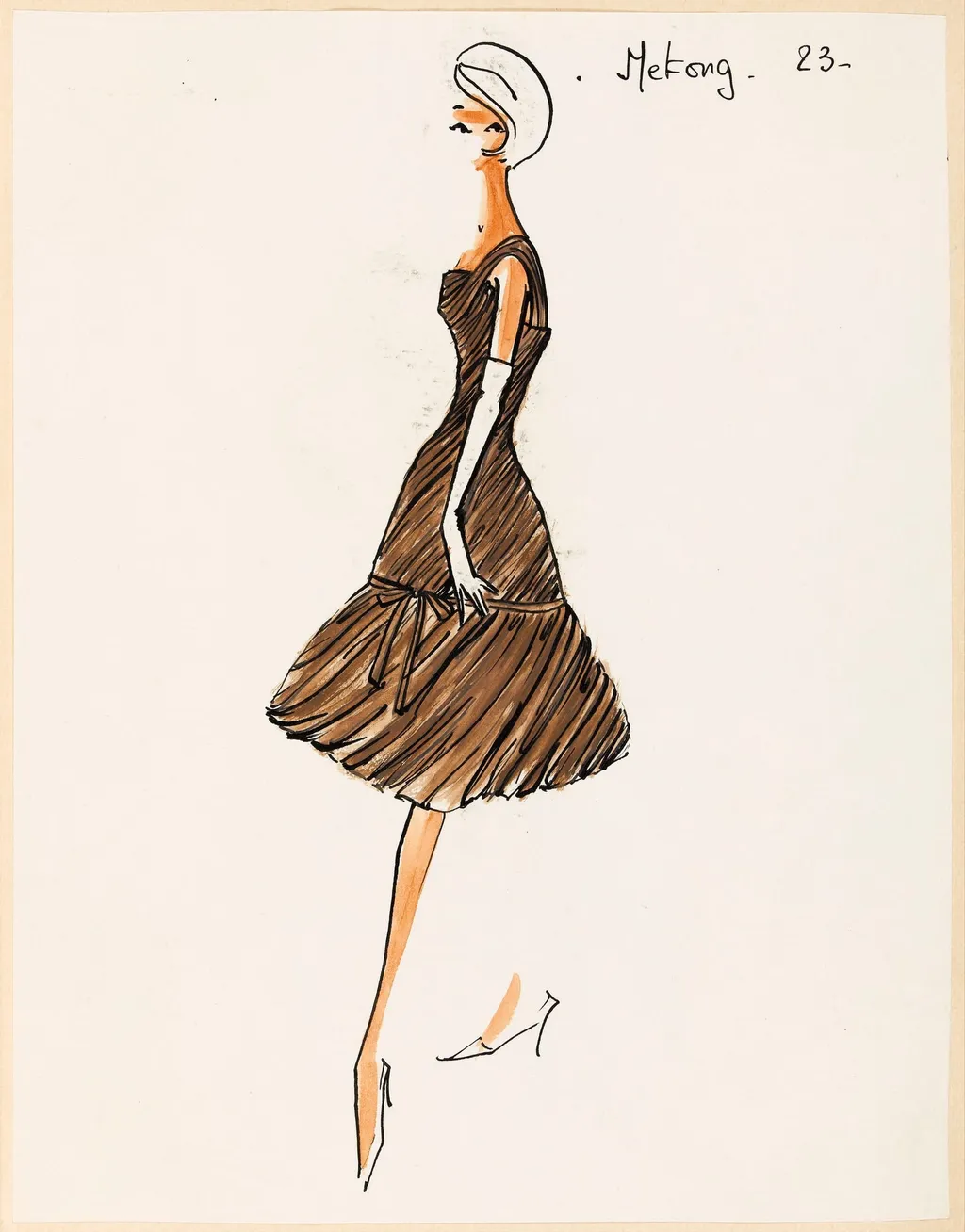
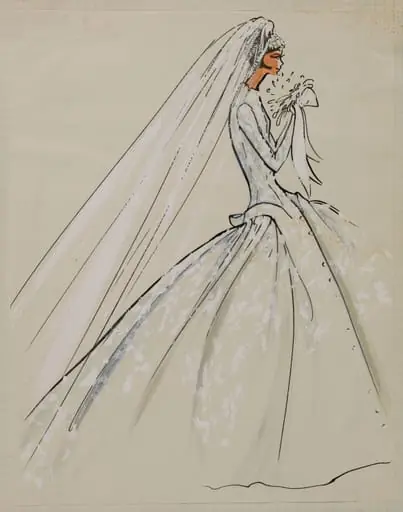
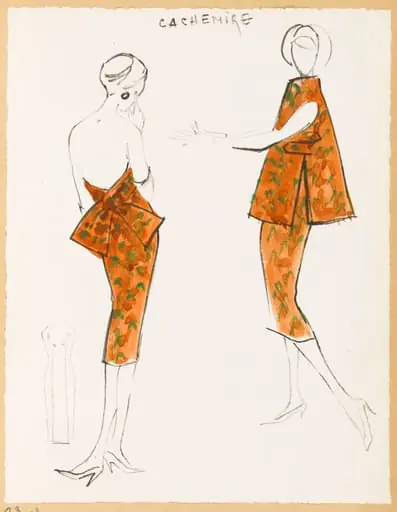
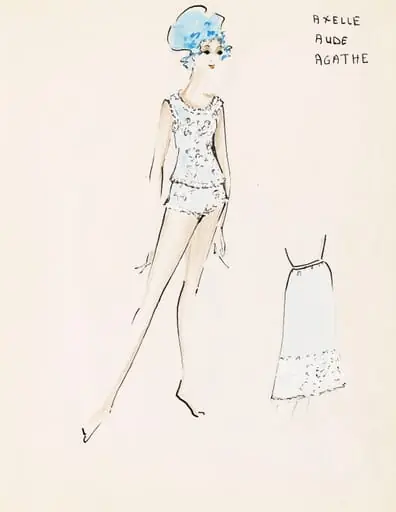
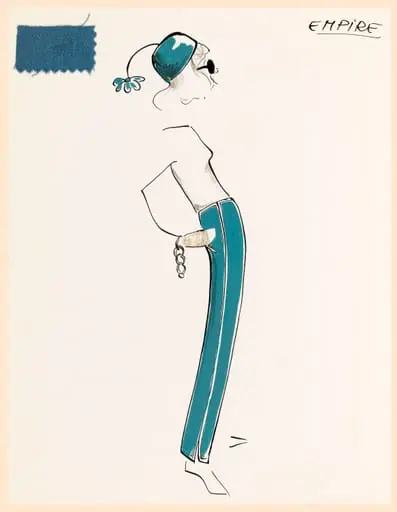
Mékong is a drawing by Carven. It dates from 1959 and is held in the collection of the Palais Galliera - Musée de la Mode de la Ville de Paris.
About this work
Overview
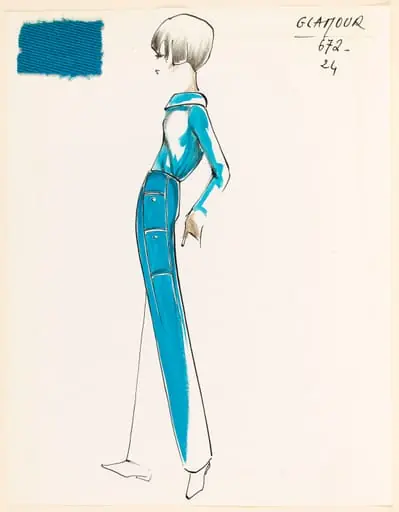
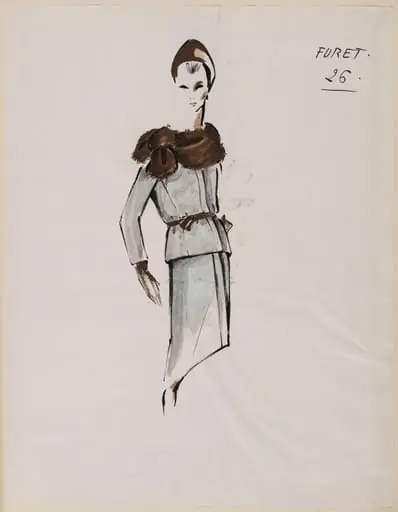
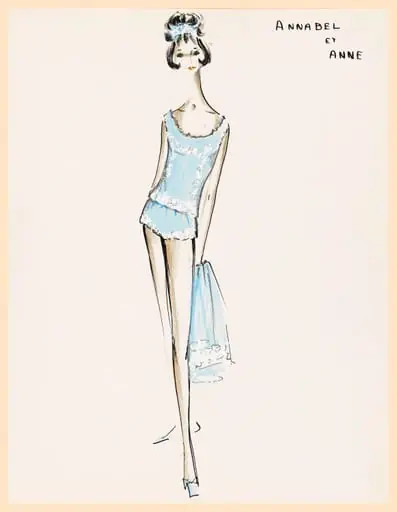
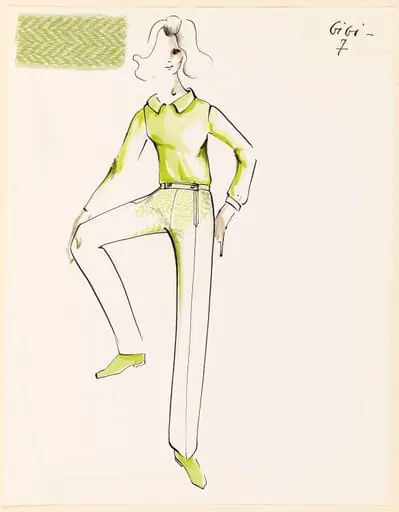
The work presents a stylized portrait of a woman, rendered with precise linework and subtle tonal variations.
Mékong is a pencil and ink drawing created around 1959 by the French designer Carven. It is part of the collection at the Museum of Ethnography. The work presents a stylized portrait of a woman, rendered with precise linework and subtle tonal variations. Though classified as an image, its function aligns with mid-century fashion illustration, capturing a moment of urban elegance rather than documenting a specific individual.
Subject & Meaning
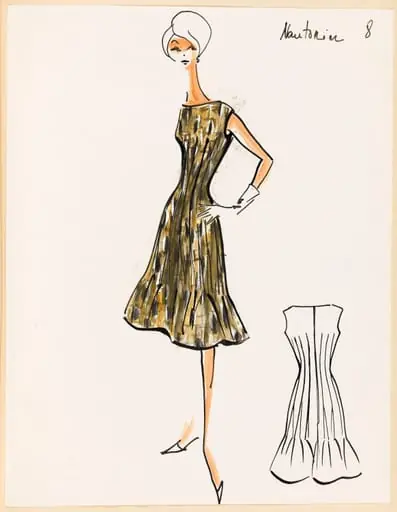
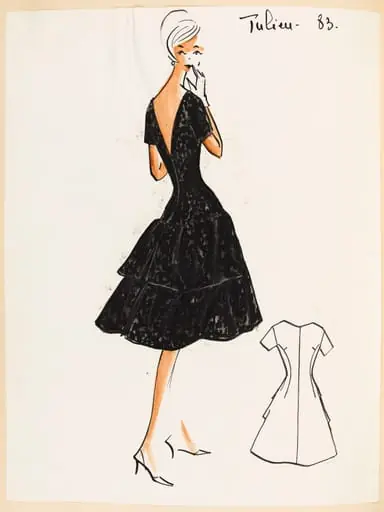
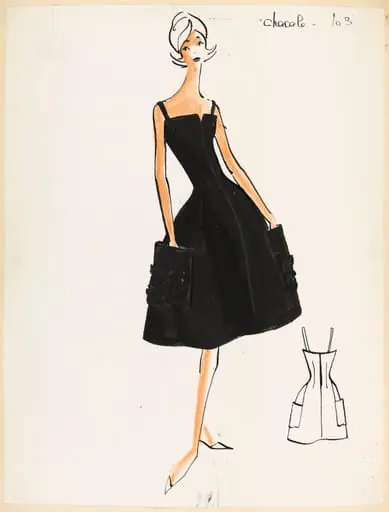
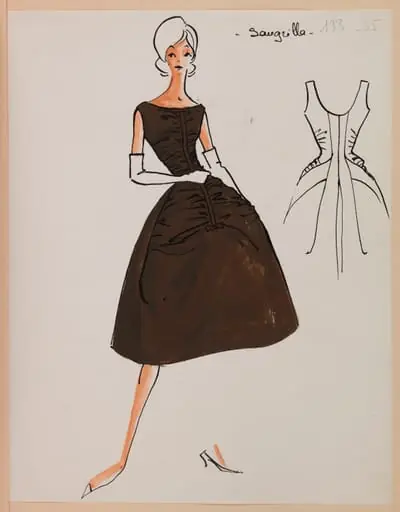
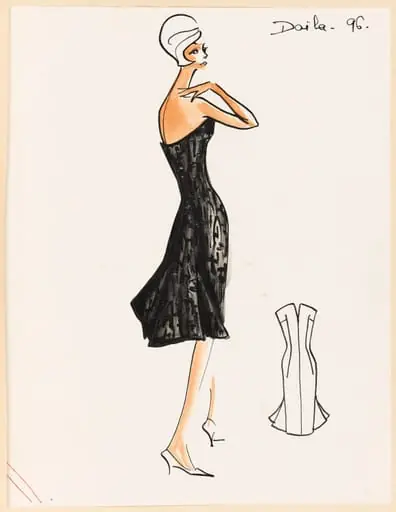
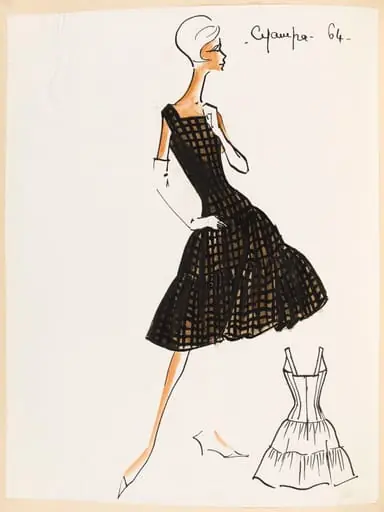
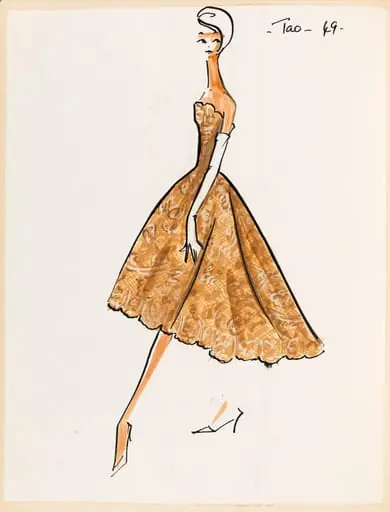
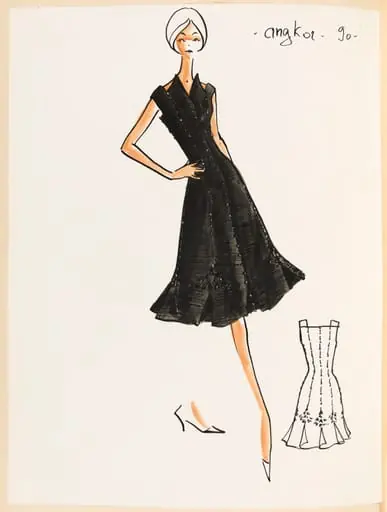
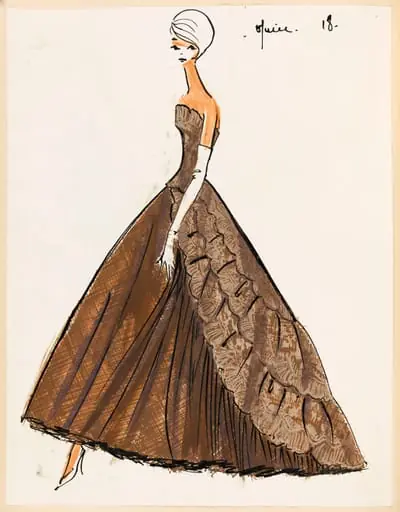
The figure is a woman dressed in a striped brown dress with a full skirt, white gloves, and high heels, her bobbed hair framing a composed expression. Her posture suggests self-assurance, reflecting postwar ideals of feminine poise and modernity. The image does not depict a named person but rather embodies a cultivated archetype—urban, refined, and attuned to contemporary style—typical of fashion media from the era.
Technique & Style
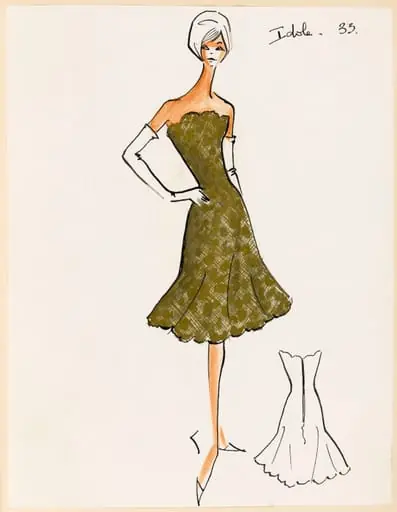
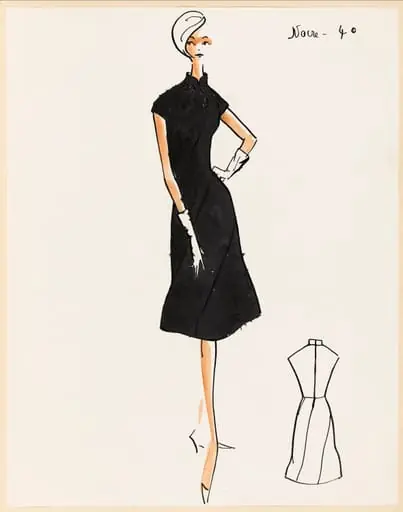
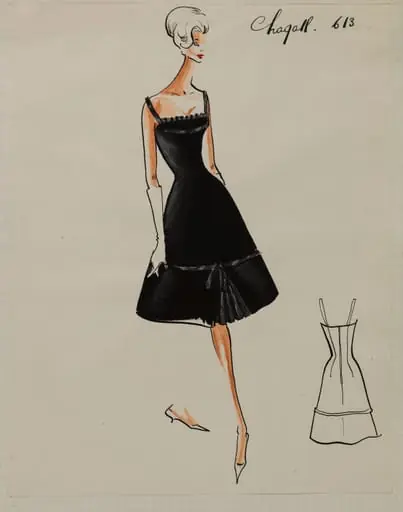
Carven employs fine, controlled lines to define the contours of the dress and figure, with delicate shading to suggest fabric texture and volume. The off-white background isolates the subject, directing focus to the details of her attire. The rendering balances realism with stylization: the stripes on the skirt are rhythmic, the gloves and heels rendered with crisp clarity, enhancing the illustration’s polished aesthetic without overt naturalism.
History & Provenance
Created circa 1959, Mékong was likely produced as part of Carven’s broader work in fashion design and editorial illustration. It entered the Museum of Ethnography’s collection as an artifact of mid-century visual culture, valued for its representation of fashion as social expression. Its preservation reflects institutional interest in everyday design practices beyond fine art traditions.
Context
In the late 1950s, Paris remained a center for fashion illustration, where designers like Carven translated garments into compelling visual narratives for magazines and clients. Mékong aligns with this tradition, capturing the era’s emphasis on tailored femininity and consumer elegance. The drawing reflects broader cultural shifts—women’s increasing visibility in public life, and fashion’s role in constructing personal identity.
Legacy
Mékong endures as a quiet example of fashion illustration’s capacity to convey social nuance through form and detail. While not widely reproduced, its presence in a museum of ethnography signals recognition of design as cultural record. It invites reflection on how clothing, posture, and style encode values of their time, beyond the runway or the page.
Artist & collection
Artist
These delicate ink-on-paper drawings capture the quiet poetry of everyday things: pinecones, reeds, apples.
Museum
Palais Galliera - Musée de la Mode de la Ville de Paris
Continue through works from the same source collection.