Artwork
Madame
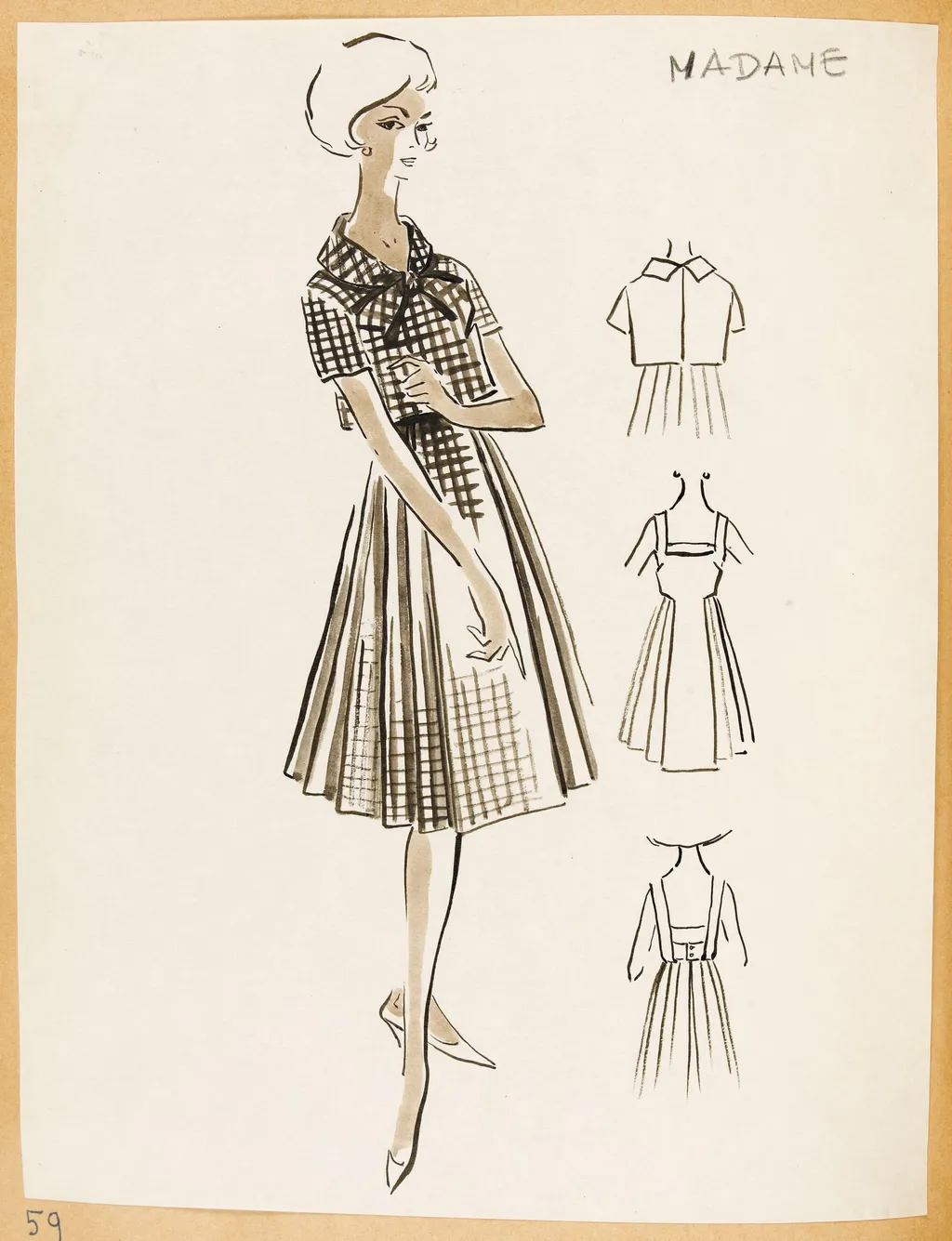
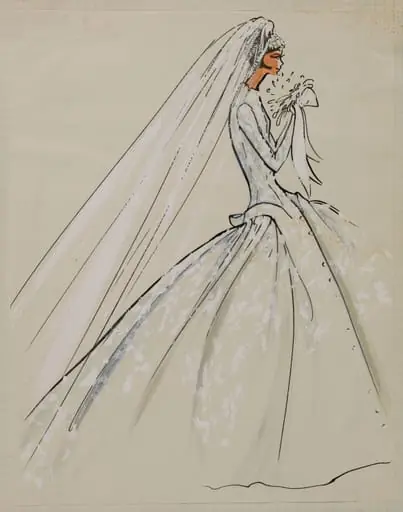
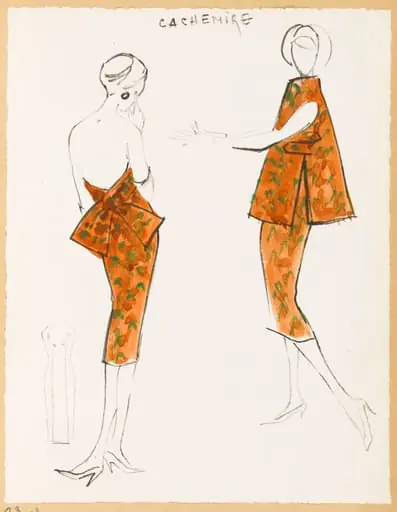
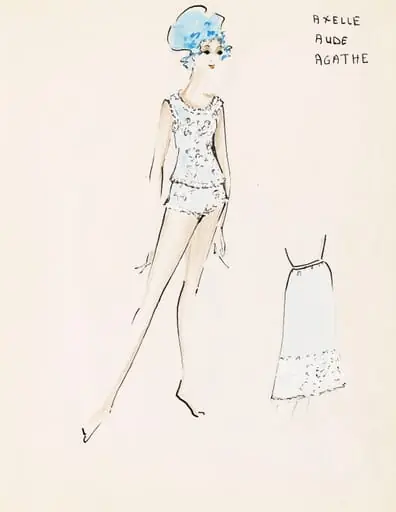
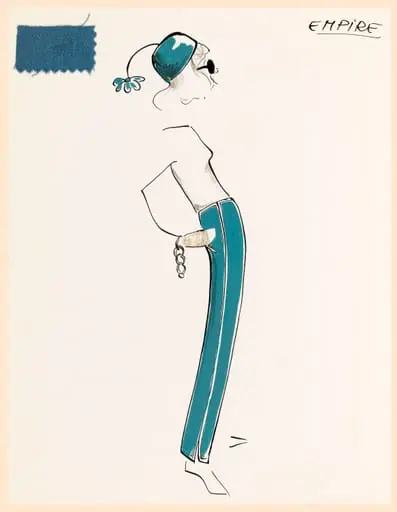
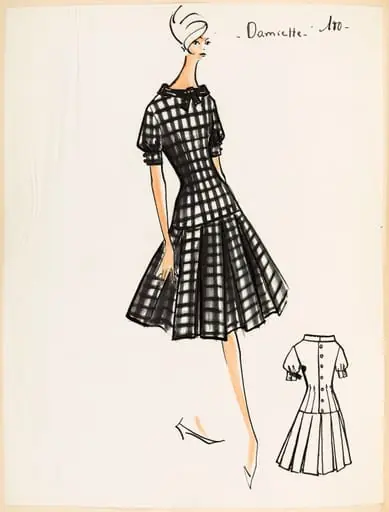
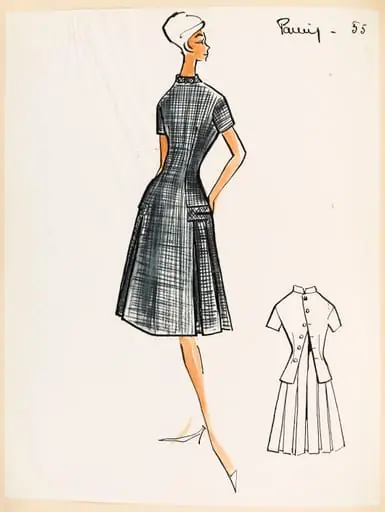
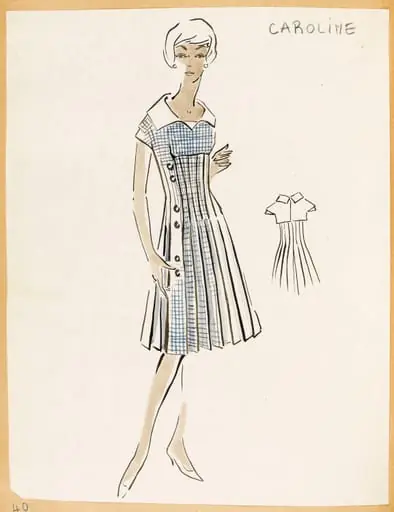
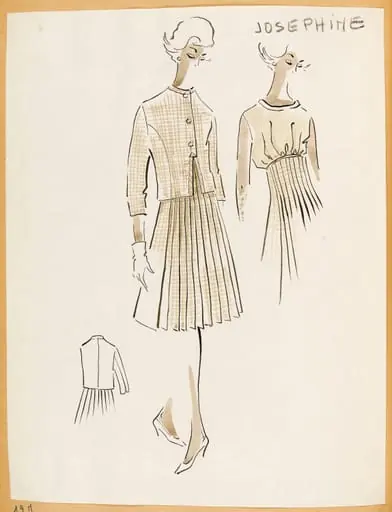
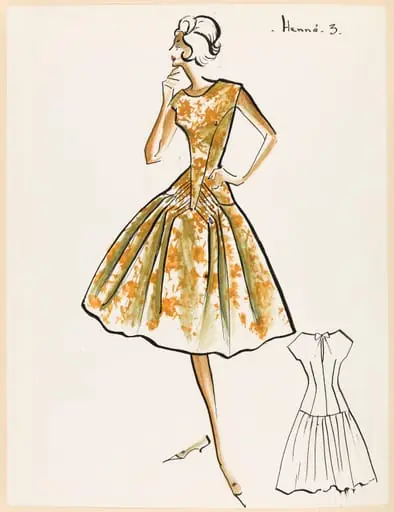
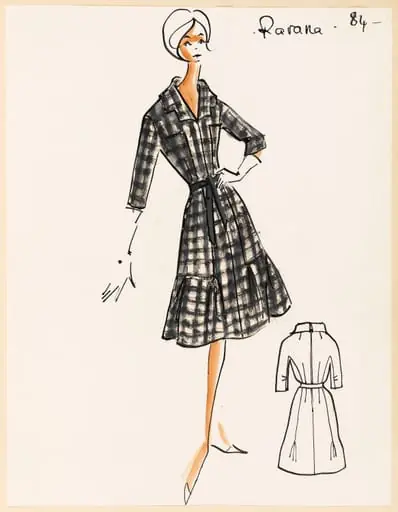
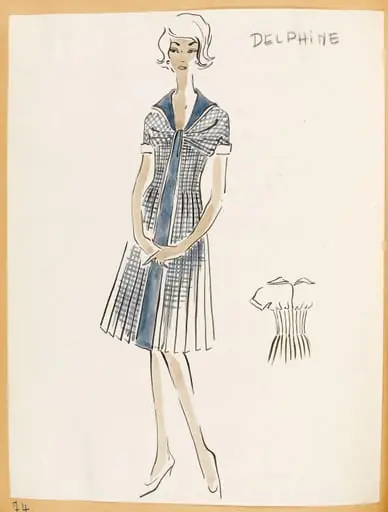
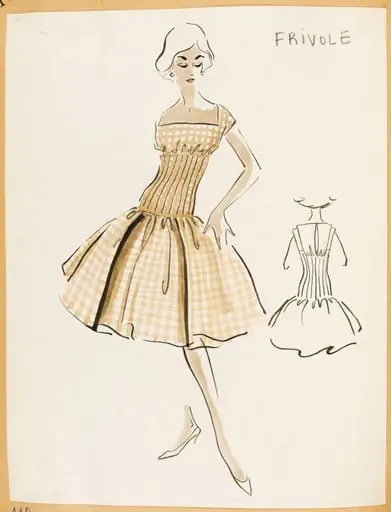
Madame is a drawing by Carven. It dates from 1957 and is held in the collection of the Palais Galliera - Musée de la Mode de la Ville de Paris.
About this work
Overview
Created around 1957 by the designer Carven, this sketch is part of the Museum of Ethnography’s collection.
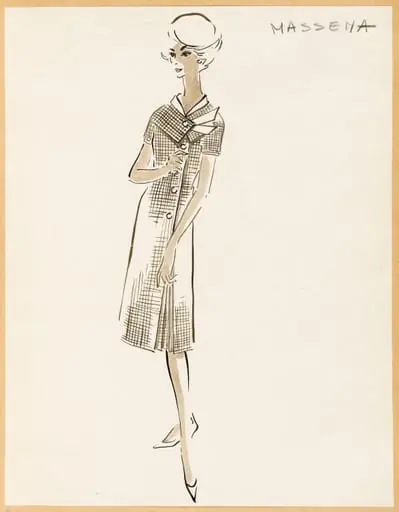
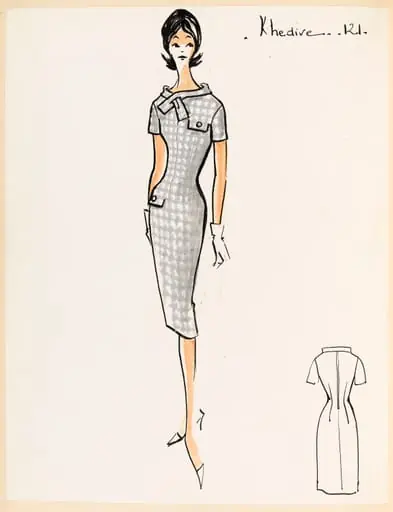
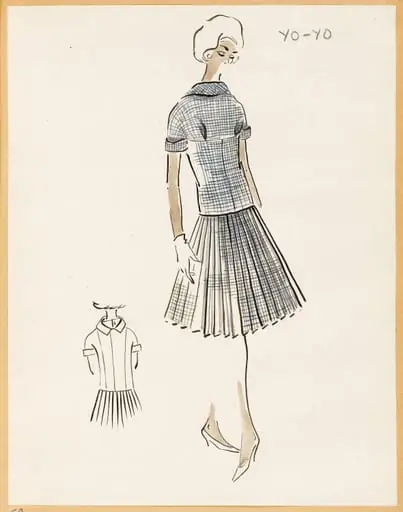
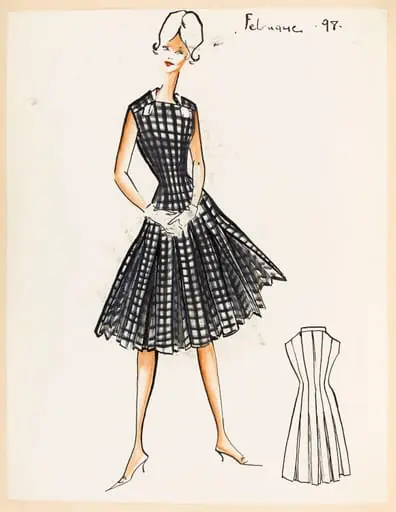
Created around 1957 by the designer Carven, this sketch is part of the Museum of Ethnography’s collection. It captures a mid-century woman’s outfit with attention to tailoring and silhouette. The drawing includes not only a rendered figure but also technical views of the garment—front, back, and side—suggesting its function as a design prototype rather than a portrait. The informal inscription 'Madame' hints at either the wearer or the design’s intended identity.
Subject & Meaning
The subject is a woman dressed in a checkered jacket and flared skirt, typical of late 1950s fashion. Her poised posture and neat hairstyle reflect ideals of refined femininity of the era. The inclusion of pattern views transforms the image from a stylistic rendering into a working document, implying the design was intended for production. The label 'Madame' may reference a client, a collection name, or a cultural archetype of the time.
Technique & Style
The sketch employs loose yet controlled linework to define form and fabric movement. Cross-hatching is used deliberately to suggest volume and shadow, particularly along the folds of the skirt and jacket. The absence of color emphasizes structure, allowing the cut and drape of the garment to take precedence. The technical views are rendered with clarity, showing an understanding of garment construction and spatial relationships.
History & Provenance
The sketch entered the Museum of Ethnography’s holdings as part of a broader collection of mid-century fashion materials. Its origin lies within Carven’s design studio, where such drawings served as internal references for tailors and patternmakers. While its exact provenance before museum acquisition is undocumented, its condition and content suggest it was preserved for its illustrative value rather than as a finished artifact.
Context
In the 1950s, fashion houses relied on hand-drawn sketches to communicate designs before mass production. This piece reflects the transition from haute couture’s bespoke tradition to emerging ready-to-wear systems. The inclusion of technical views aligns with industry practices of the time, where designers documented garments for replication. The informal tone of the label 'Madame' contrasts with the precision of the drafting, revealing the human element behind industrial design.
Legacy
This sketch endures as a quiet testament to the craftsmanship of mid-century fashion design. It illustrates how functionality and aesthetics were intertwined in the creative process. Today, it offers insight into the labor behind garments often seen only as finished products. Its preservation in an ethnographic museum underscores its value as a cultural artifact of everyday style and production.
Artist & collection
Artist
These delicate ink-on-paper drawings capture the quiet poetry of everyday things: pinecones, reeds, apples.
Museum
Palais Galliera - Musée de la Mode de la Ville de Paris
Continue through works from the same source collection.