Artwork
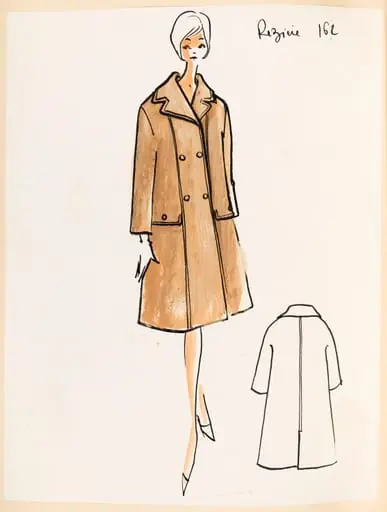
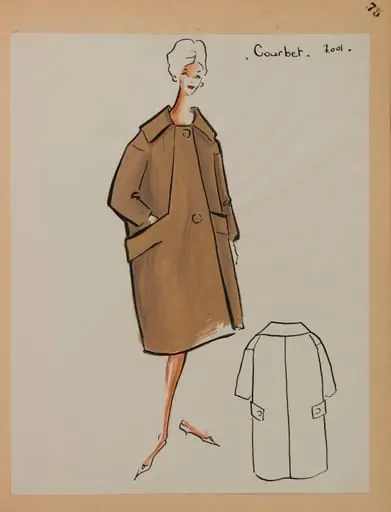
Manteau corolle marron
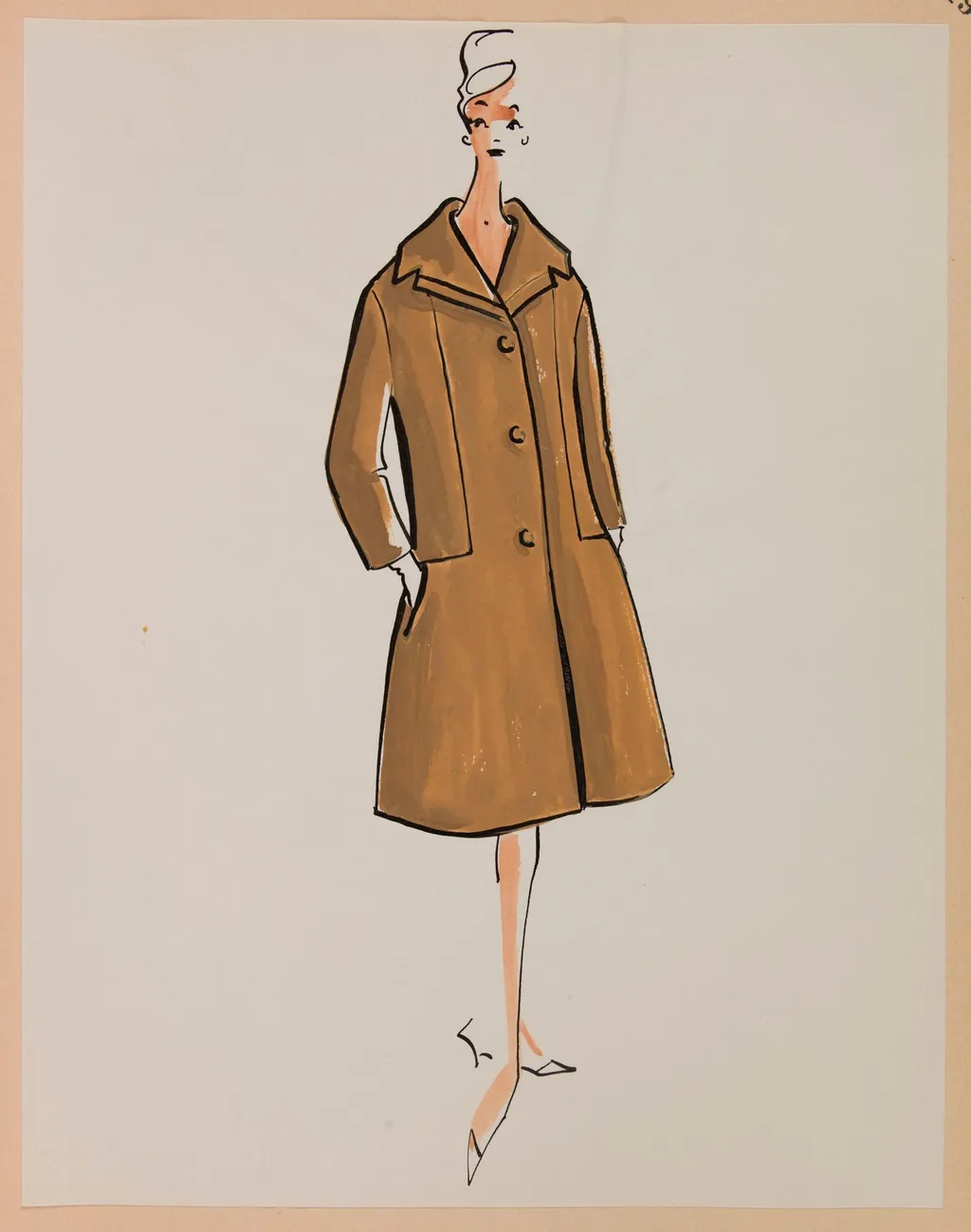
Manteau corolle marron is a drawing by Carven. It dates from 1959 and is held in the collection of the Palais Galliera - Musée de la Mode de la Ville de Paris.
About this work
The coat’s style looks like it’s from the mid-20th century, with a clean, tailored shape.
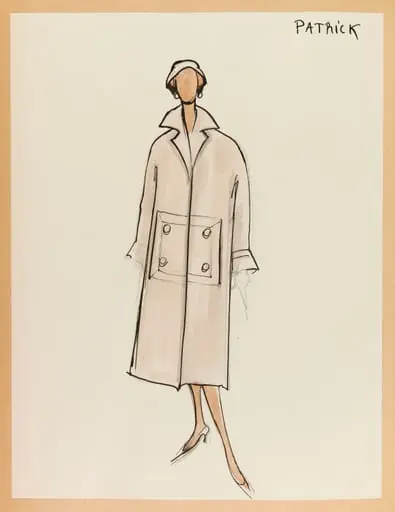
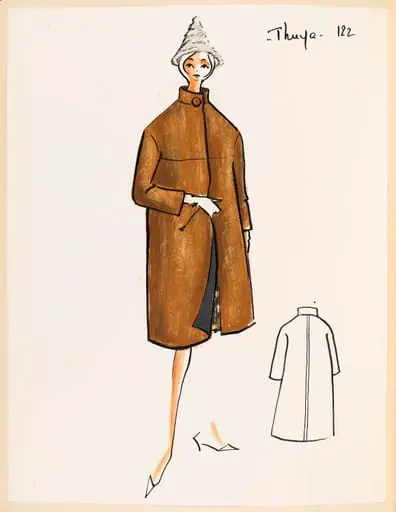
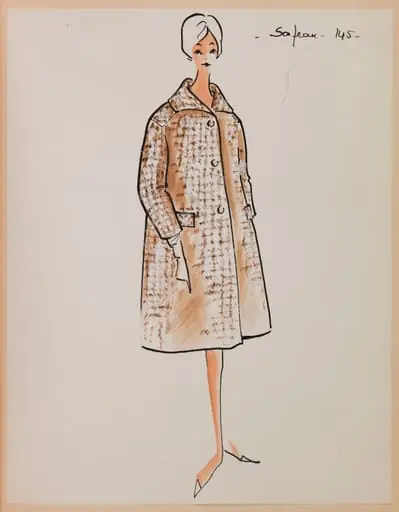
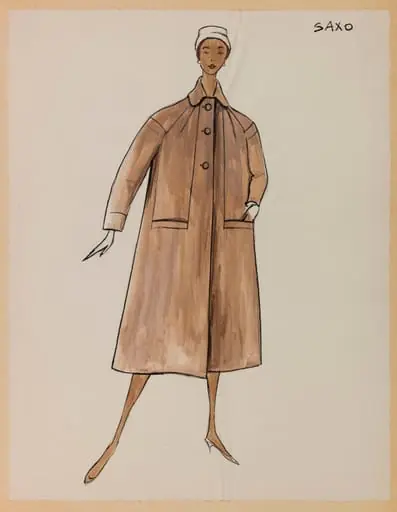
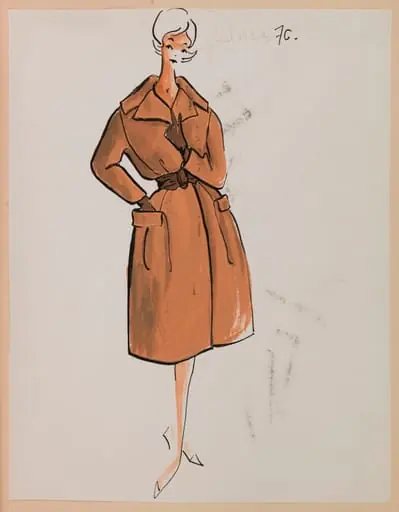
This sketch shows a woman in a long, brown coat with big pockets and a high collar. The coat is loose but structured, and she’s wearing simple shoes. Her hair is pulled back neatly, and the lines are quick and confident.
The coat’s style looks like it’s from the mid-20th century, with a clean, tailored shape. The artist kept it simple—no background, just the figure and the fabric.
If you like this drawing, check out Carven for more fashion-focused art.
Overview
Manteau corolle marron is a pencil sketch from around 1959 by French designer Carven, depicting a woman wearing a tailored brown coat. The drawing is held in the collection of the Museum of Ethnography. Rendered with minimal detail, it focuses entirely on the garment and the figure’s posture, omitting background or ornamentation. The work reflects Carven’s practice of documenting fashion designs through direct, observational drawing.
Subject & Meaning
The subject is a woman in a long, loose yet structured brown coat with high collar and large pockets, dressed in plain footwear. Her hair is neatly pulled back, suggesting practicality and modesty. The absence of facial features or context shifts focus to the clothing as an object of design, emphasizing form and function over individual identity. The sketch captures an everyday aesthetic, aligned with mid-century ideals of understated elegance.
Technique & Style
Executed in swift, confident pencil lines, the drawing conveys volume and texture through economy of mark-making. The coat’s folds and structure are suggested rather than detailed, relying on contour and weight to imply fabric behavior. The lack of shading or background isolates the figure, reinforcing the garment as the central subject. This restrained approach reflects a designer’s working method—focused on silhouette and proportion.
History & Provenance
Created circa 1959, the sketch entered the Museum of Ethnography’s collection as part of a broader effort to document 20th-century fashion as cultural artifact. While little is documented about its immediate provenance, its preservation suggests recognition of Carven’s role in shaping postwar French design. The drawing likely originated from the designer’s personal archive, later acquired for its typological significance in fashion history.
Context
In late 1950s France, fashion design emphasized clean lines and functional elegance, moving away from wartime austerity. Carven’s work aligned with this shift, favoring wearable silhouettes over theatricality. This sketch reflects a broader trend among designers to record ideas quickly and directly, often without color or embellishment. The drawing’s simplicity mirrors the era’s preference for practicality in both dress and artistic representation.
Legacy
The sketch endures as a record of mid-century design thinking, illustrating how fashion was conceived through observation rather than illustration. It contributes to scholarly understanding of how designers engaged with form and utility. While not widely exhibited, its presence in a museum of ethnography signals its value as a cultural document—capturing the quiet, everyday aesthetics of its time.
Artist & collection
Artist
These delicate ink-on-paper drawings capture the quiet poetry of everyday things: pinecones, reeds, apples.
Museum
Palais Galliera - Musée de la Mode de la Ville de Paris
Continue through works from the same source collection.