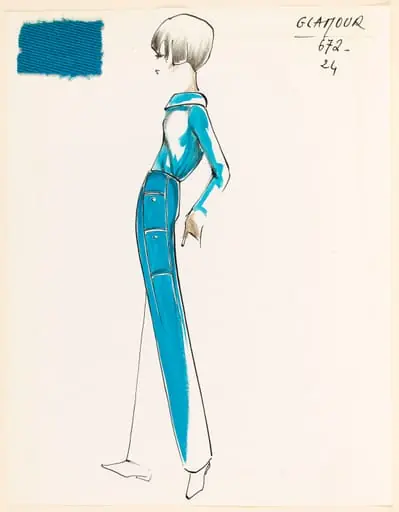
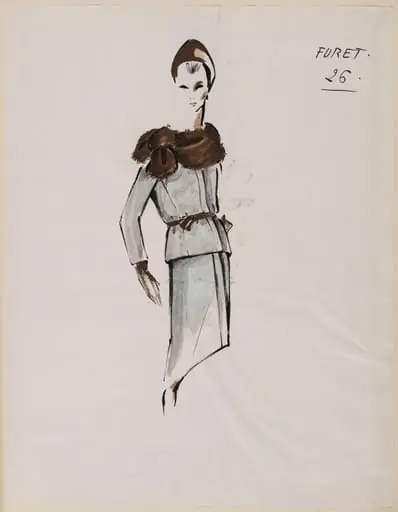
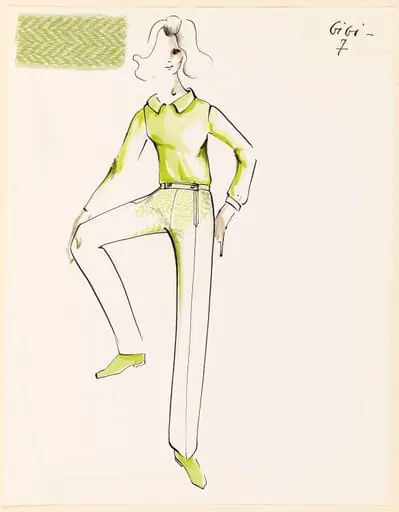
Artwork
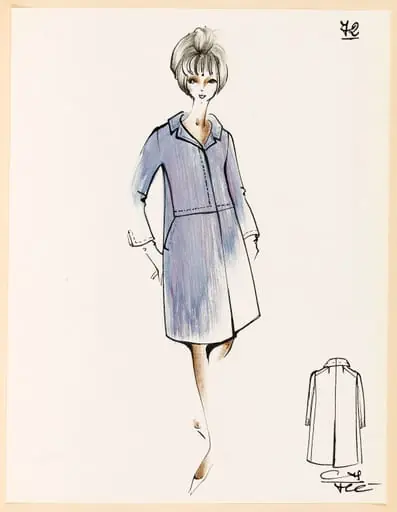
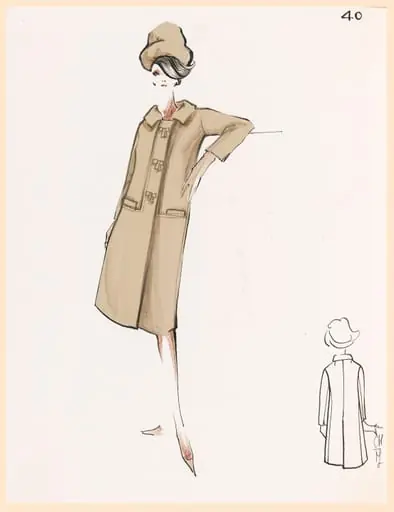
Manteau évasé sable à deux grandes poches et resserré aux poignets
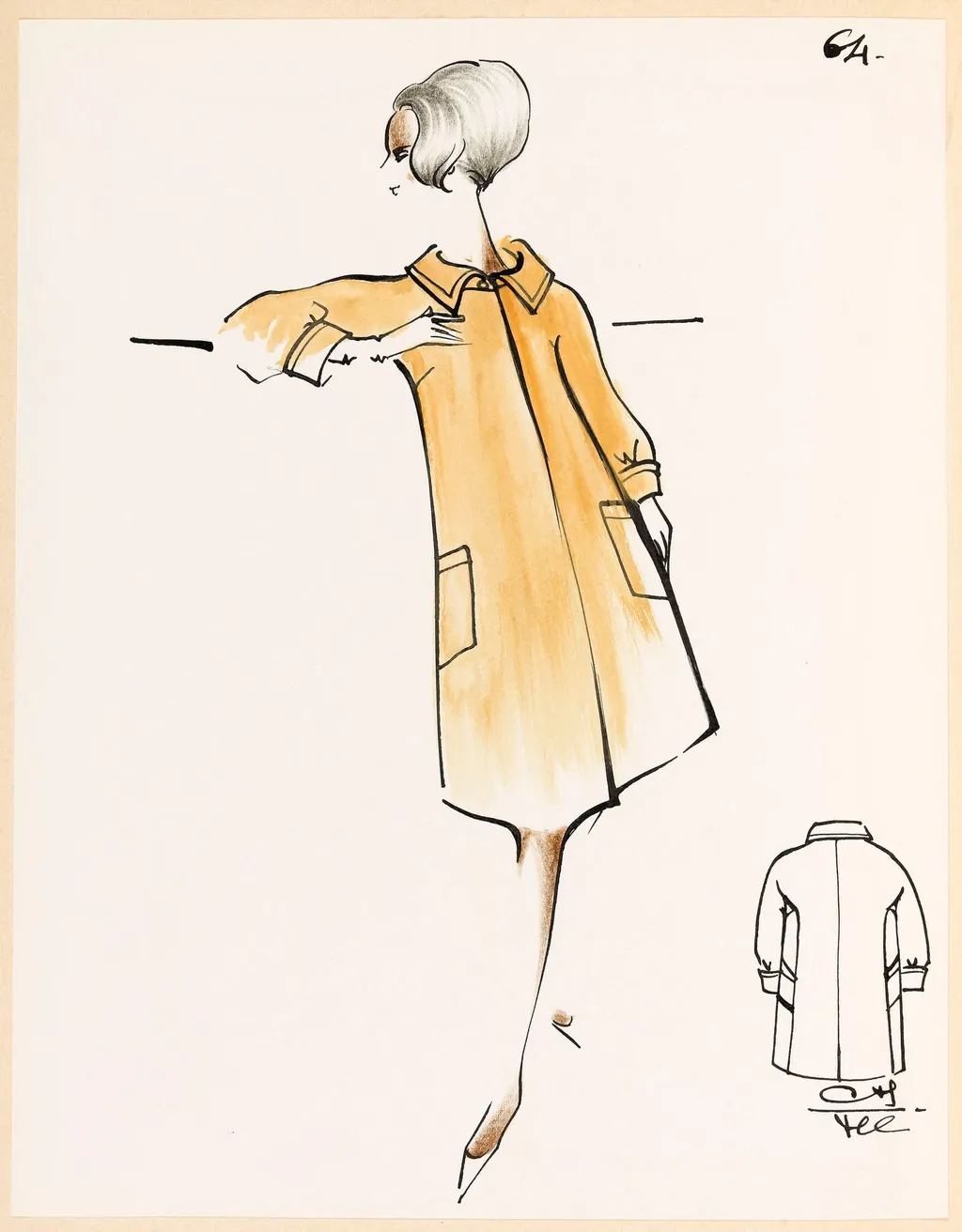
Manteau évasé sable à deux grandes poches et resserré aux poignets is a drawing by Carven. It dates from 1967 and is held in the collection of the Palais Galliera - Musée de la Mode de la Ville de Paris.
About this work
Overview
A small supplementary drawing on the corner shows the garment’s rear construction, indicating attention to structural detail.
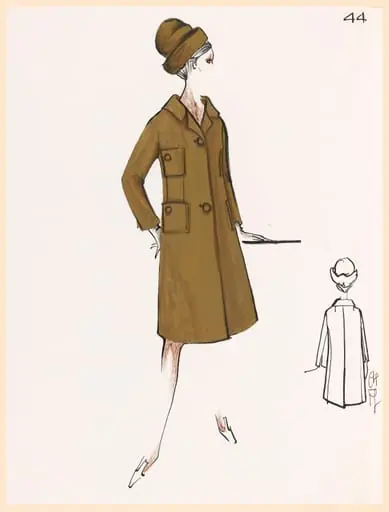
This fashion sketch, attributed to the French house Carven and dated around 1967, depicts a woman wearing a flared beige coat with wide pockets and fitted cuffs. Rendered in clean, minimal lines and flat tones, it functions as a design study rather than a finished illustration. The figure’s relaxed posture and the coat’s loose drape suggest an emphasis on wearable, everyday elegance. A small supplementary drawing on the corner shows the garment’s rear construction, indicating attention to structural detail.
Subject & Meaning
The sketch captures a moment of casual poise: the woman stands with one hand on her hip, suggesting ease and self-assurance. The coat’s generous silhouette and practical pockets imply a design philosophy centered on comfort without sacrificing form. There is no overt symbolism; instead, the work conveys a quiet modernity, reflecting postwar ideals of functional, understated femininity in clothing.
Technique & Style
The artist employed swift, unembellished lines and muted, flat color to convey volume and movement. The lack of shading or texture focuses attention on the garment’s cut and drape. The inclusion of a rear view as a marginal annotation reveals a methodical approach to design documentation. The style aligns with mid-century fashion illustration—clear, efficient, and oriented toward production rather than artistic expression.
History & Provenance
The sketch is held in the collection of the Museum of Ethnography, suggesting its value as a cultural artifact rather than a fine art object. Its presence there indicates recognition of fashion design as a reflection of social habits and material culture. While the exact provenance prior to acquisition is undocumented, its preservation implies institutional interest in mid-century French fashion practices.
Context
Created in the late 1960s, this sketch emerged during a period when Parisian fashion houses were adapting to shifting gender norms and casual lifestyles. Carven, known for its refined yet accessible designs, responded to demand for practical, well-tailored garments. This sketch reflects a broader trend toward relaxed silhouettes and functional details, moving away from the formality of earlier decades.
Legacy
As a preserved design study, the sketch contributes to the historical record of mid-century French fashion production. It illustrates how designers communicated ideas internally and to manufacturers before mass production. Though not widely publicized, such works underpin the evolution of everyday wear and remain valuable for understanding the mechanics of fashion design in its time.
Artist & collection
Artist
These delicate ink-on-paper drawings capture the quiet poetry of everyday things: pinecones, reeds, apples.
Museum
Palais Galliera - Musée de la Mode de la Ville de Paris
Continue through works from the same source collection.