Artwork
Memphis
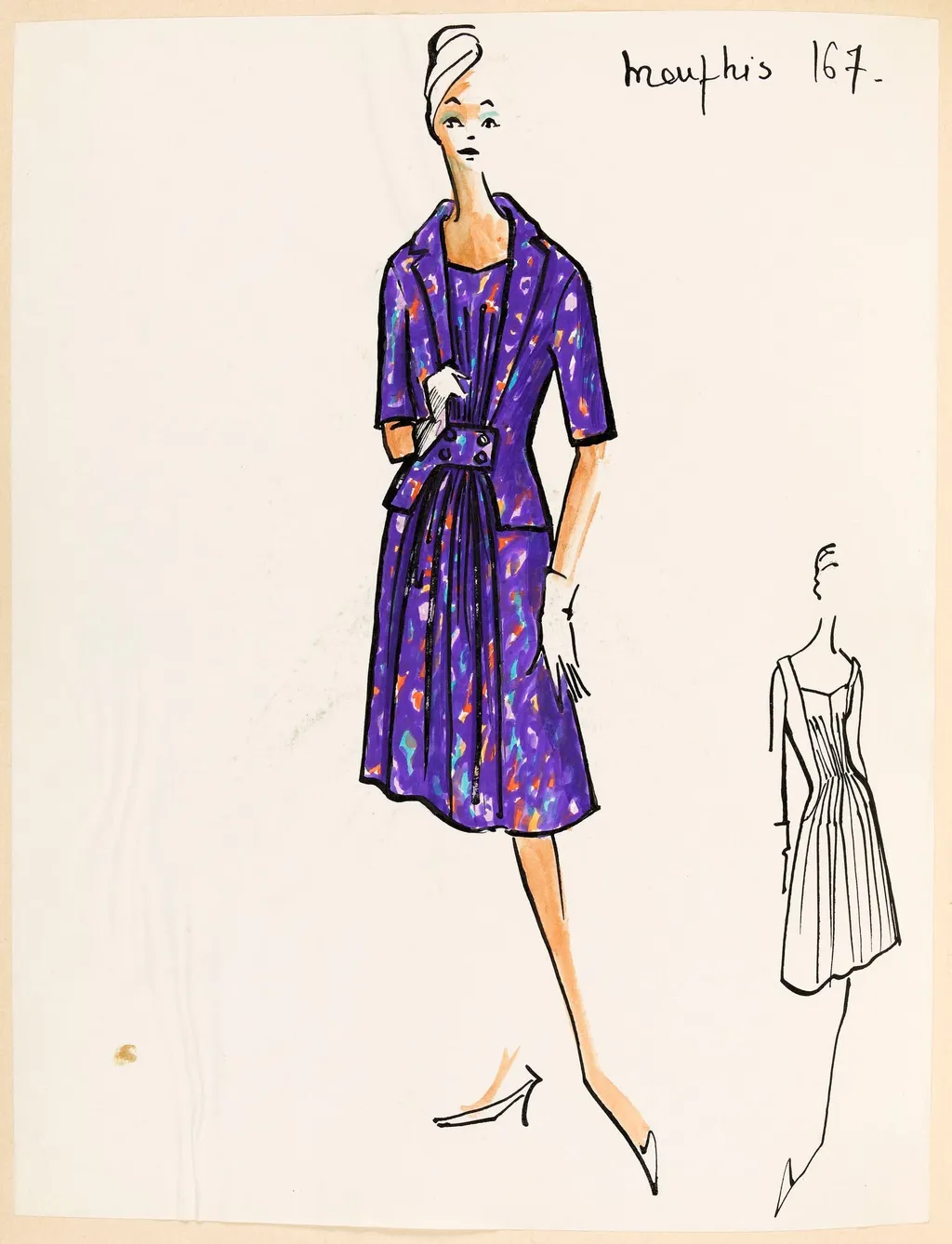
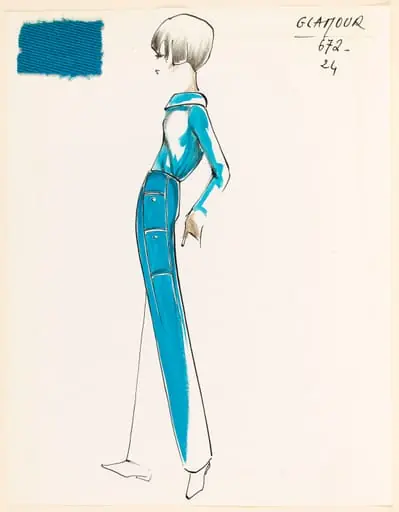
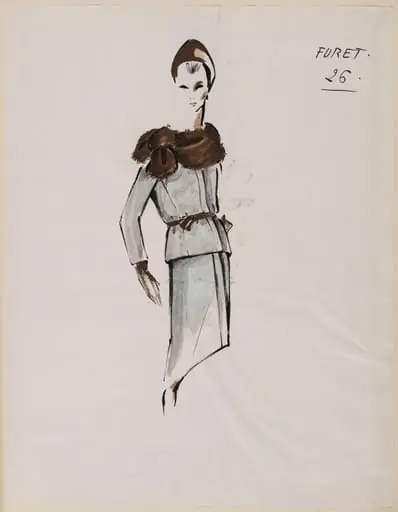
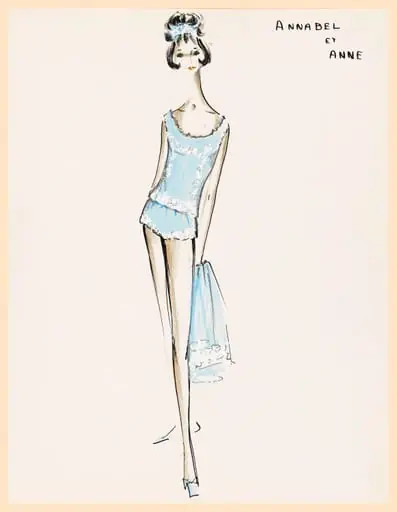
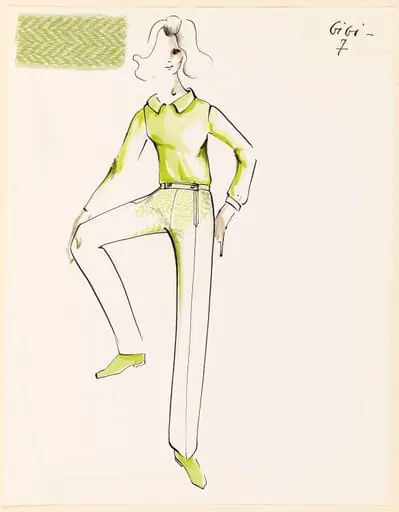
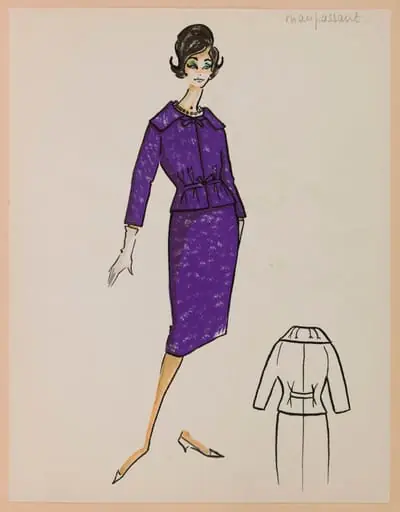
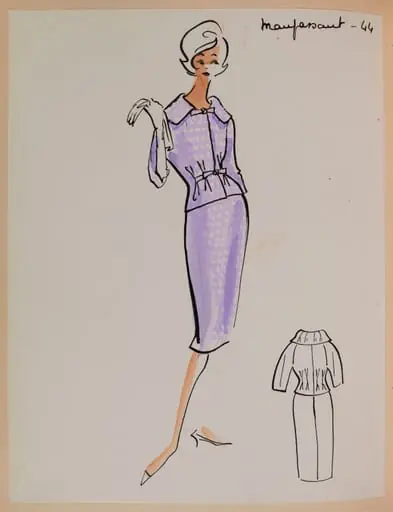
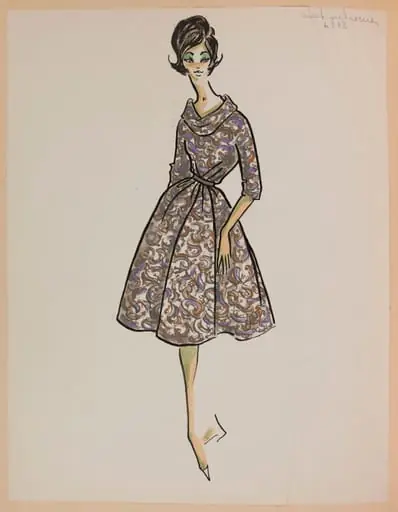
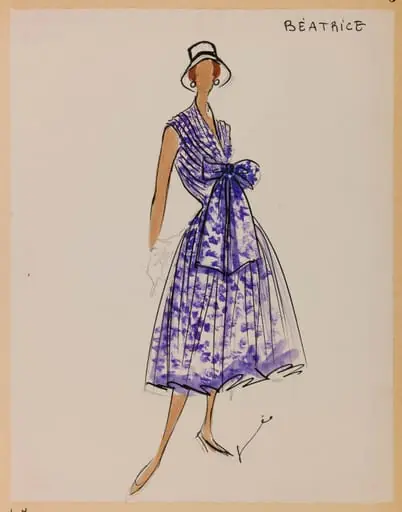
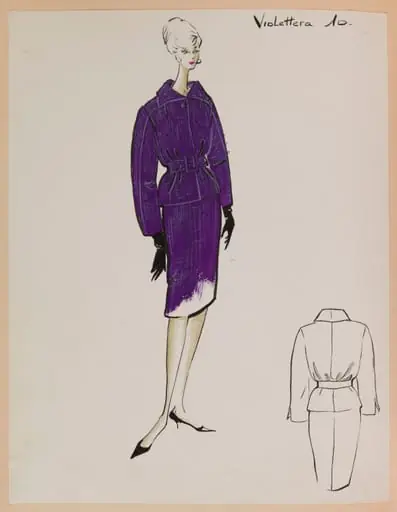
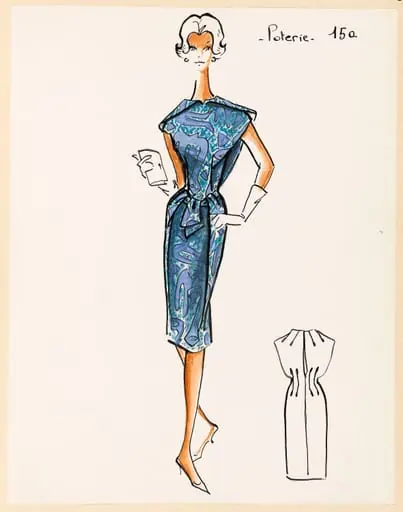
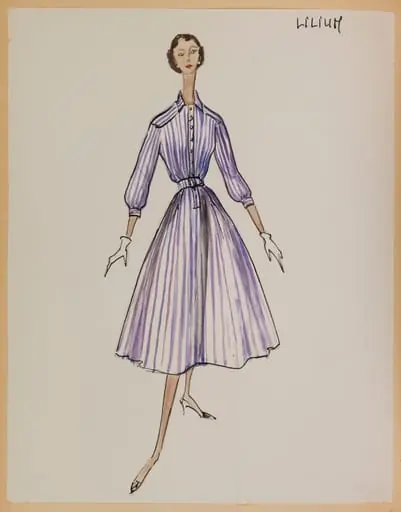
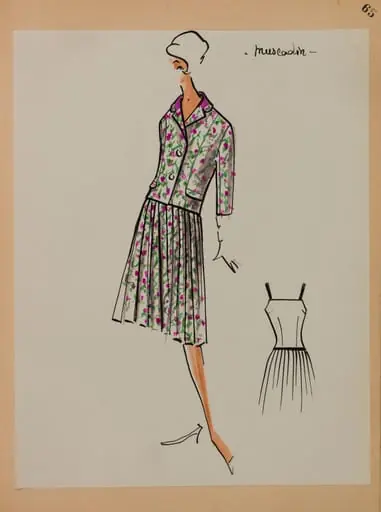
Memphis is a drawing by Carven. It dates from 1959 and is held in the collection of the Palais Galliera - Musée de la Mode de la Ville de Paris.
About this work
Overview
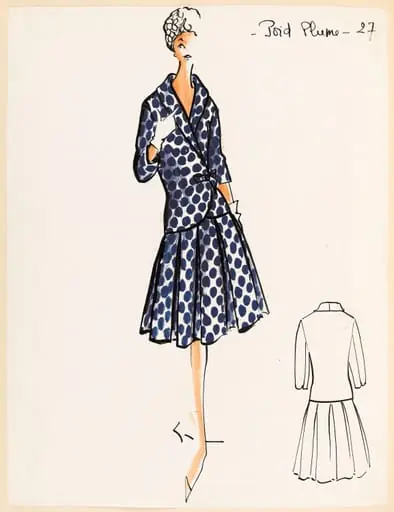
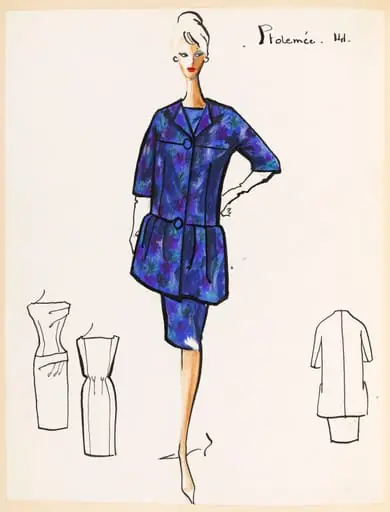
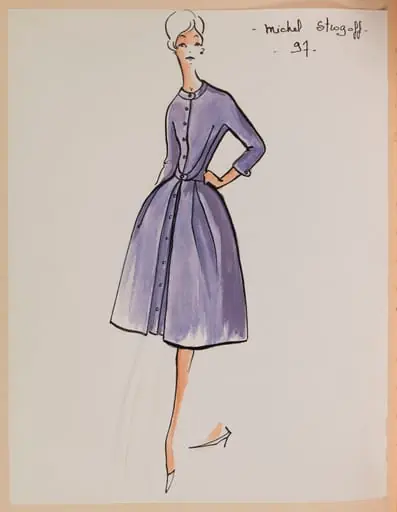
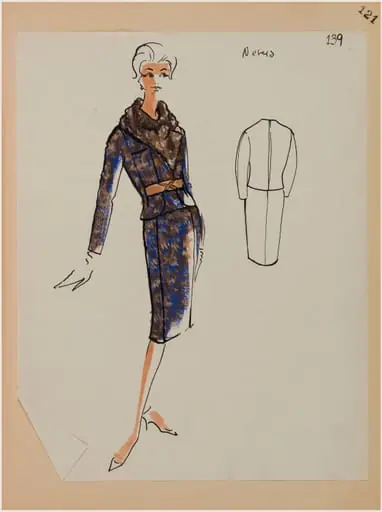
Created around 1959 by the fashion designer Carven, this sketch depicts a woman in a vividly patterned purple dress. Executed in ink or pencil with fluid, spontaneous lines, the drawing captures a moment of movement rather than a formal portrait. It resides in the collection of the Museum of Ethnography, where it is preserved as part of a broader archive of mid-century fashion studies.
Subject & Meaning
Beside her, a simplified outline of a vertical-striped dress offers a comparative study, possibly indicating design alternatives.
The figure wears a flared, belted dress with a bold floral print, accompanied by a headscarf and a small handbag—elements suggesting everyday urban wear of the late 1950s. Beside her, a simplified outline of a vertical-striped dress offers a comparative study, possibly indicating design alternatives. The composition reflects an interest in textile variation and silhouette, not narrative or identity.
Technique & Style
The artist employed rapid, gestural lines to convey the flow and weight of fabric, particularly in the skirt’s flare and the scarf’s drape. The background is left bare, directing focus to the dress’s pattern and form. The loose handling suggests a working sketch—intended for design development rather than display—emphasizing motion and texture over detail.
History & Provenance
The drawing entered the Museum of Ethnography’s collection as part of Carven’s archival materials, likely donated or acquired in the decades following its creation. Its preservation underscores the institution’s interest in fashion as cultural artifact. No public record of prior ownership or exhibition exists prior to its inclusion in the museum’s holdings.
Context
In the late 1950s, Parisian fashion houses like Carven emphasized tailored yet playful silhouettes for a growing middle-class clientele. Sketches such as this were essential tools in design studios, allowing rapid exploration of patterns and cuts. This work aligns with contemporaneous practices where designers documented textile choices and garment structure before production.
Legacy
Though not widely exhibited, the sketch contributes to scholarly understanding of Carven’s design process and mid-century French fashion aesthetics. Its presence in an ethnographic museum highlights how clothing functions as cultural expression. It remains a quiet example of how fashion design was conceived—not as finished garments, but as evolving visual inquiries.
Artist & collection
Artist
These delicate ink-on-paper drawings capture the quiet poetry of everyday things: pinecones, reeds, apples.
Museum
Palais Galliera - Musée de la Mode de la Ville de Paris
Continue through works from the same source collection.