Artwork
Murcie
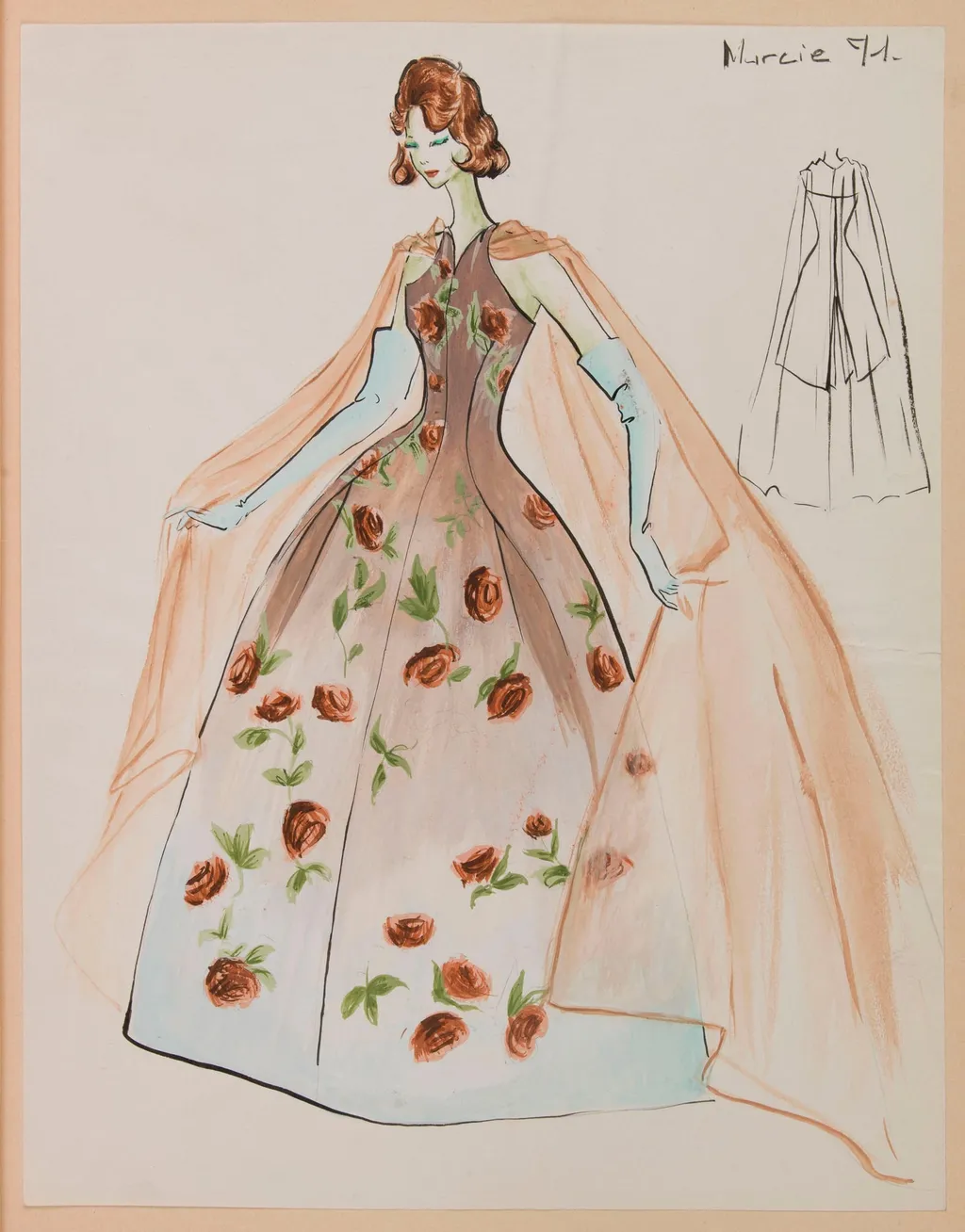
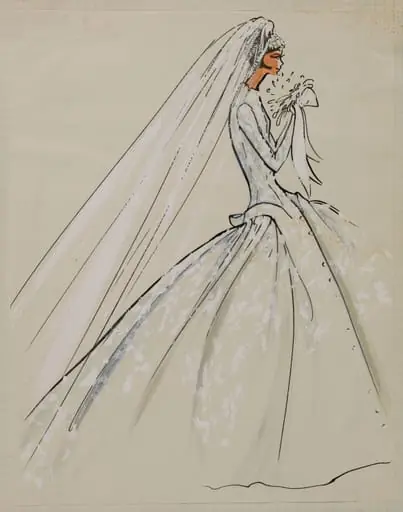
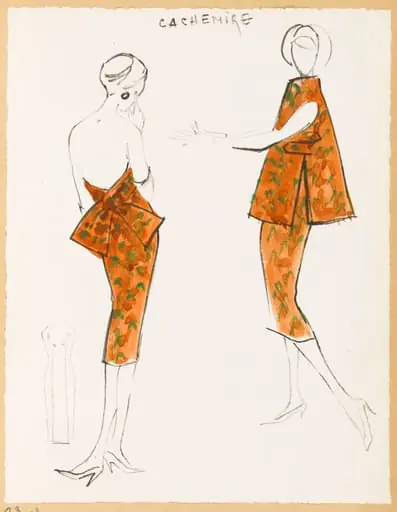
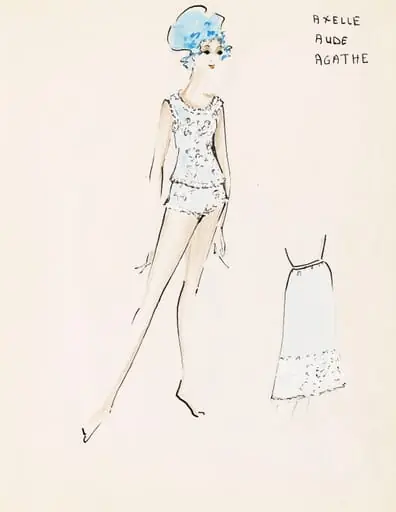
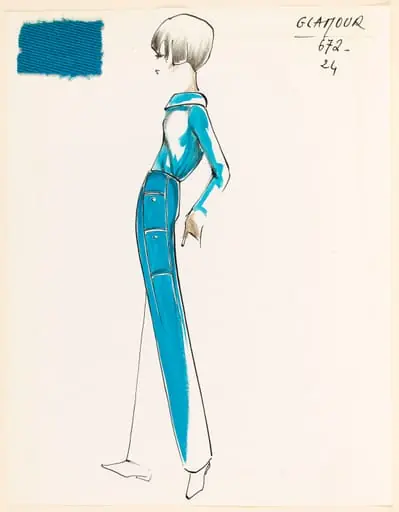
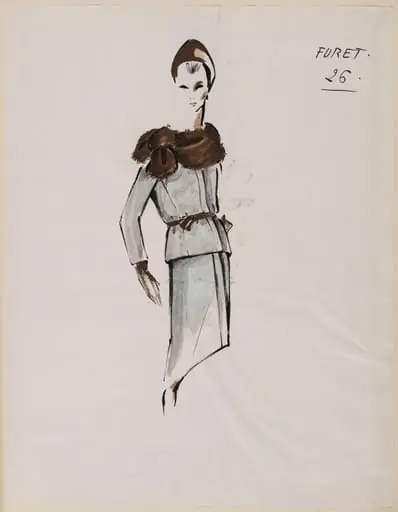
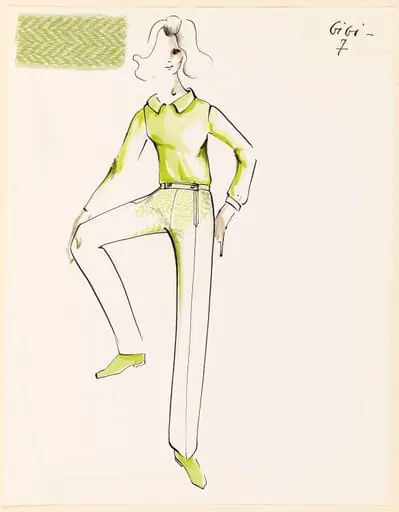
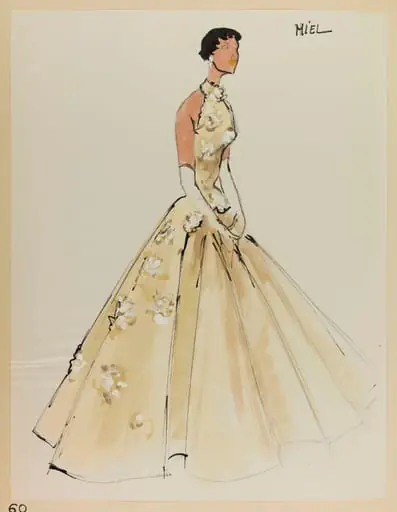
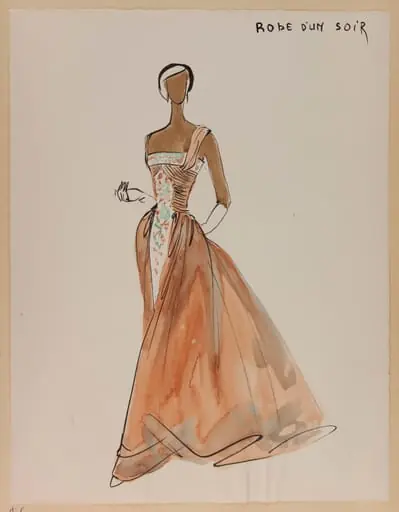
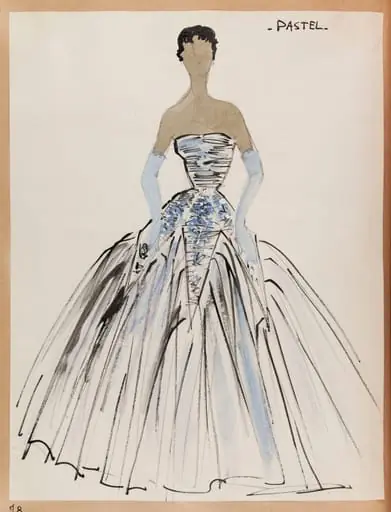
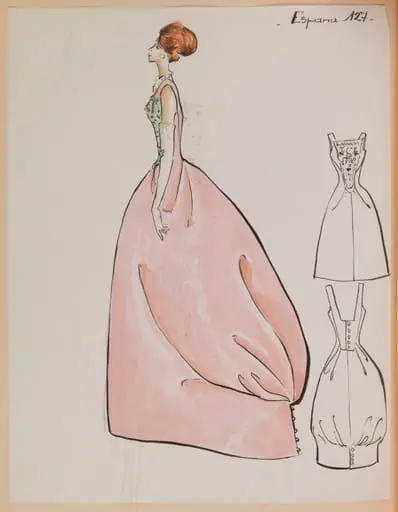
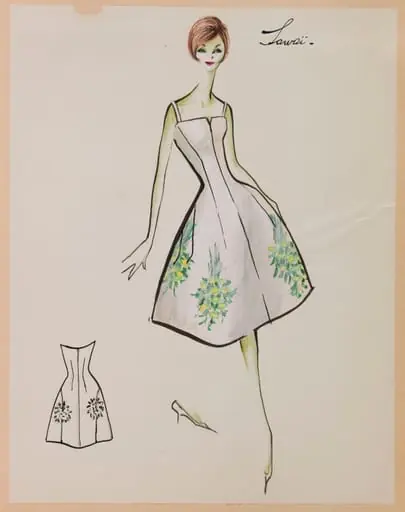
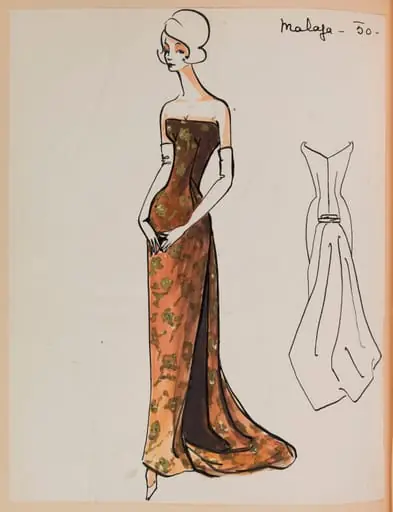
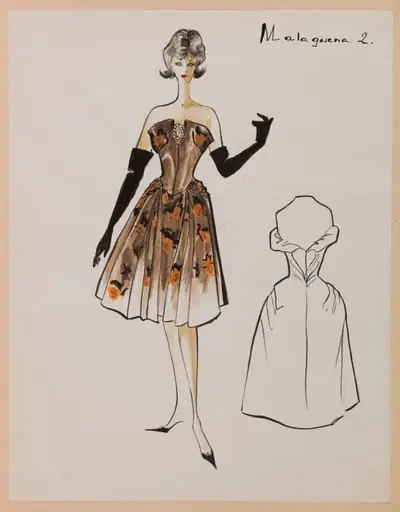
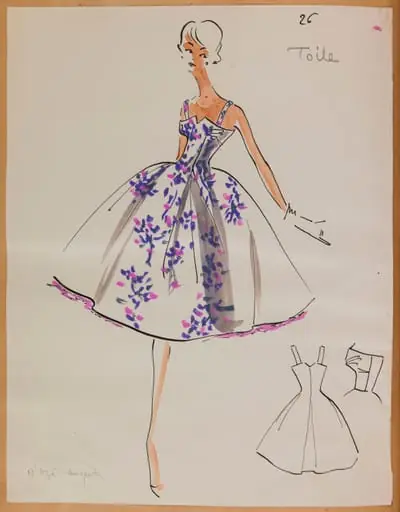
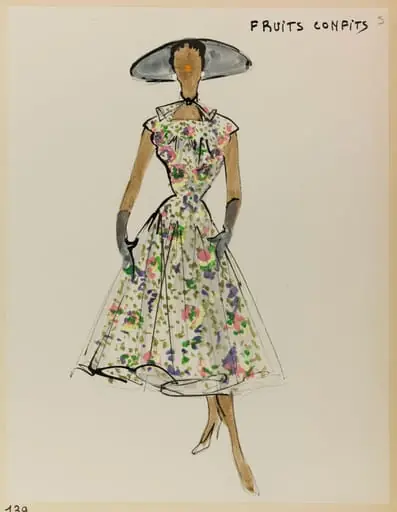
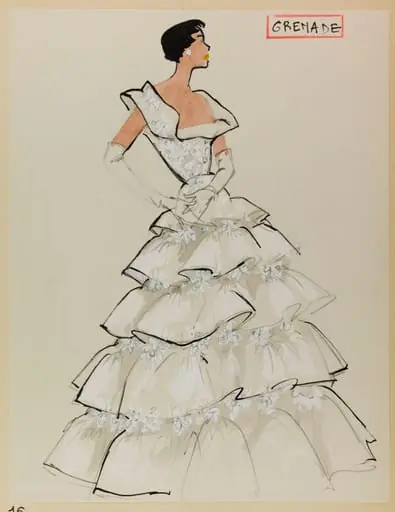
Murcie is a drawing by Carven. It dates from 1958 and is held in the collection of the Palais Galliera - Musée de la Mode de la Ville de Paris.
About this work
Overview
The work resides in the Museum of Ethnography, where it is cataloged as part of a collection exploring cultural expression through visual form.
Created around 1958 by the designer and artist Carven, Murcie is a painted portrait that blends fashion sensibility with figurative art. The work resides in the Museum of Ethnography, where it is cataloged as part of a collection exploring cultural expression through visual form. Its composition centers on a solitary female figure, rendered with deliberate stillness and refined detail, suggesting a quiet narrative rather than dramatic action.
Subject & Meaning
The subject is a woman dressed in a light-hued gown adorned with large red roses and green foliage, paired with a flowing cape draped over her shoulders. Her arms are extended, as if presenting or unveiling the garment. The pose and attire suggest ceremonial or ritualistic undertones, though no specific cultural context is documented. The image evokes themes of adornment, identity, and the symbolic power of clothing, without anchoring itself to a known tradition.
Technique & Style
Carven employed soft pastel tones and fluid brushwork to convey movement and texture, particularly in the dress’s floral pattern and the cape’s drapery. The background is minimal—a pale, undetailed wall—that isolates the figure and emphasizes her form. Lines are gentle and continuous, avoiding sharp edges, which contributes to an atmosphere of calm elegance. The style reflects an affinity with mid-century fashion illustration, tempered by a painterly sensitivity to light and fabric.
History & Provenance
Murcie entered the Museum of Ethnography’s collection in the late 1960s, acquired directly from Carven’s personal archive. The artist, primarily known for textile and fashion design, produced few standalone paintings, making this work a rare example of her fine art output. Its provenance is well-documented, with no known prior ownership or exhibition history outside the artist’s circle before its institutional acquisition.
Context
In the late 1950s, Carven was transitioning from haute couture into more experimental visual projects, often merging garment design with portraiture. Murcie reflects this interdisciplinary shift, aligning with broader postwar European interests in the symbolic potential of dress. While not tied to a specific movement, the painting resonates with contemporaneous explorations of femininity and material culture in art and design circles.
Legacy
Murcie remains one of the few painted works by Carven held in a public collection. It is occasionally referenced in studies of fashion as visual art and in exhibitions on mid-century women designers. Its quiet presence in the Museum of Ethnography underscores its role as a bridge between wearable art and painted representation, offering insight into how textile aesthetics informed broader artistic practices of the era.
Artist & collection
Artist
These delicate ink-on-paper drawings capture the quiet poetry of everyday things: pinecones, reeds, apples.
Museum
Palais Galliera - Musée de la Mode de la Ville de Paris
Continue through works from the same source collection.