Artwork
'Nuit Vénitienne'
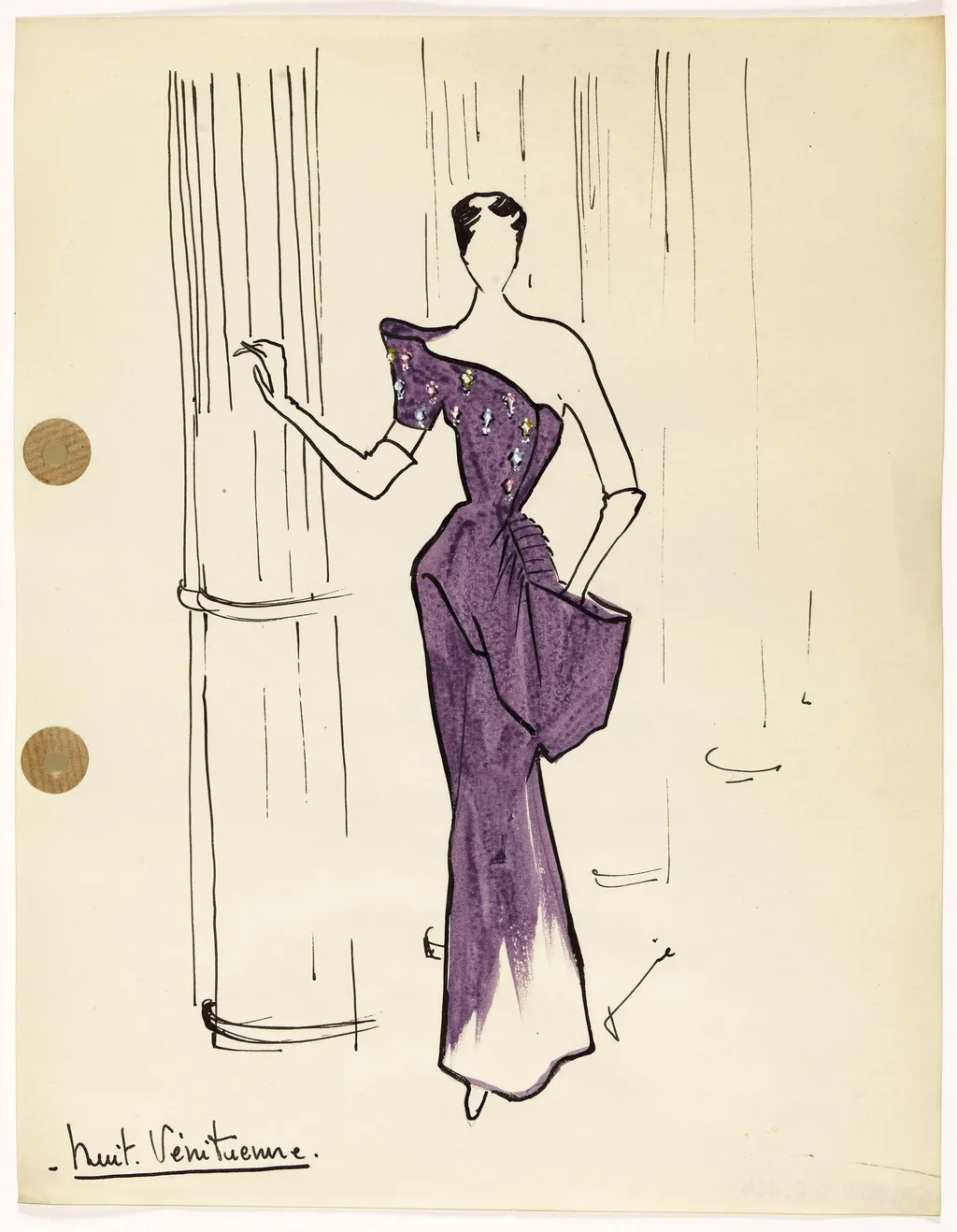
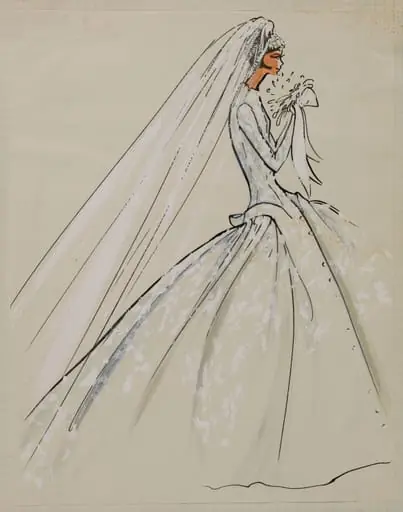
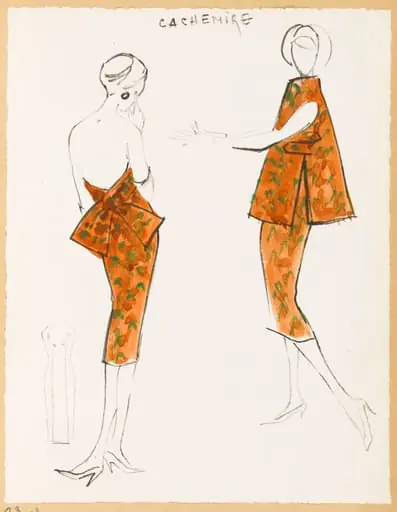
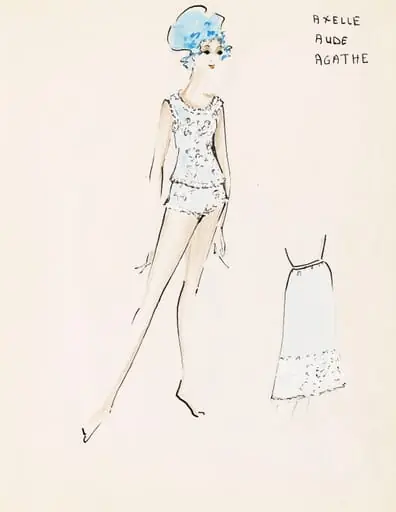
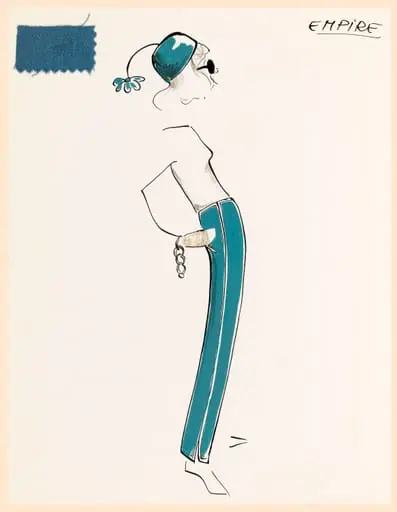
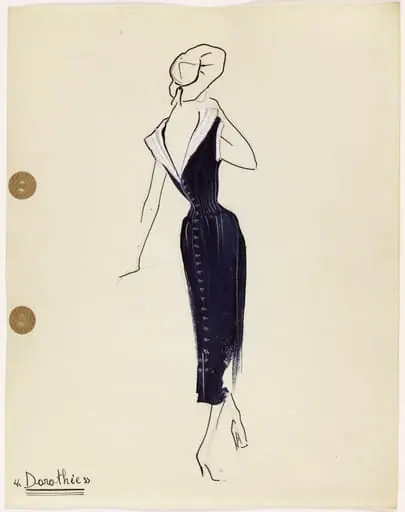
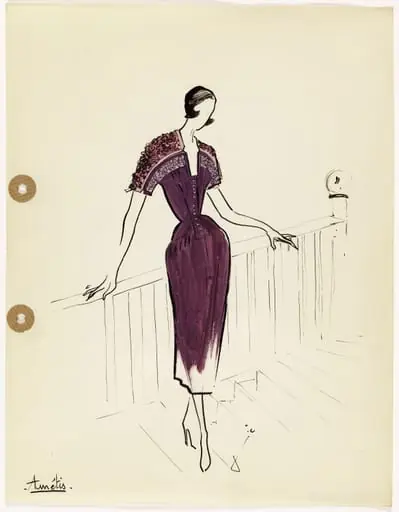
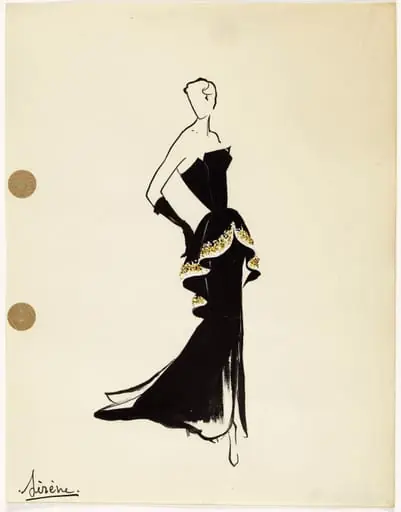
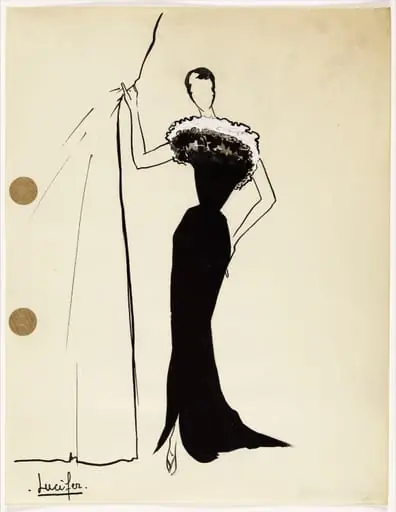
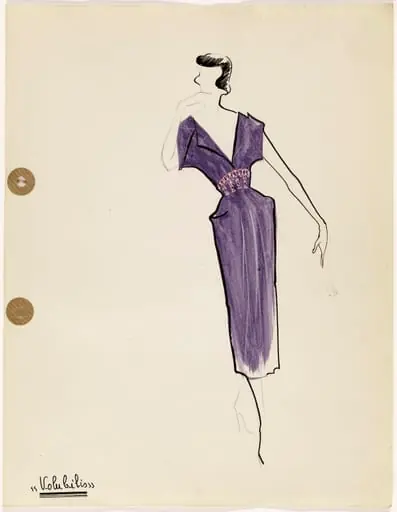
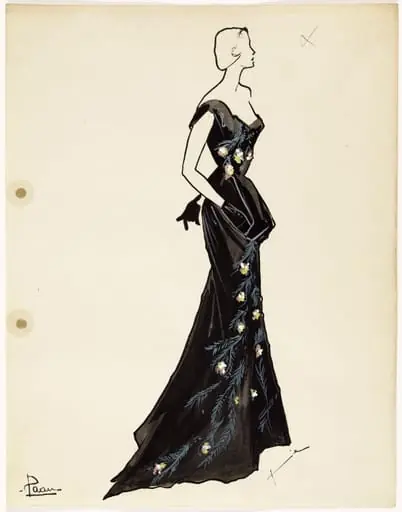
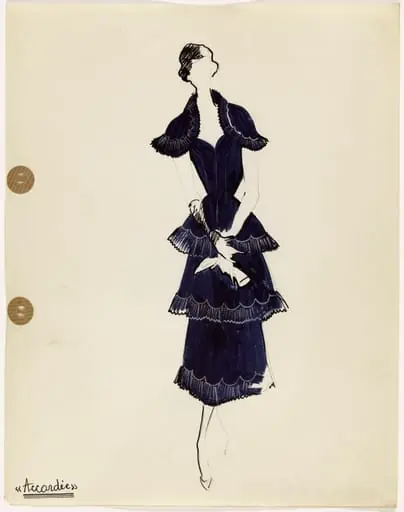
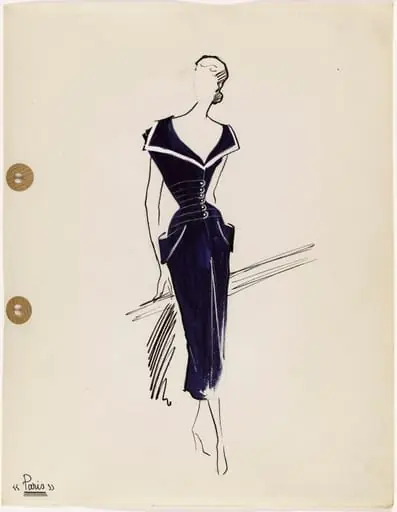
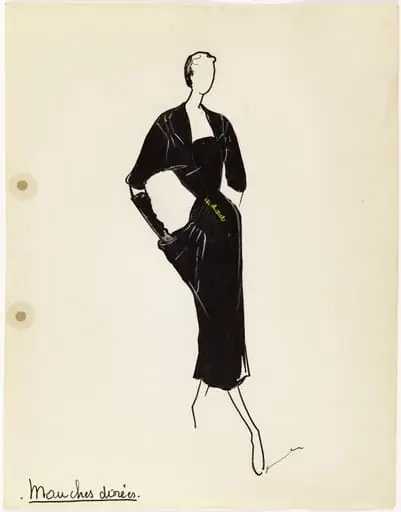
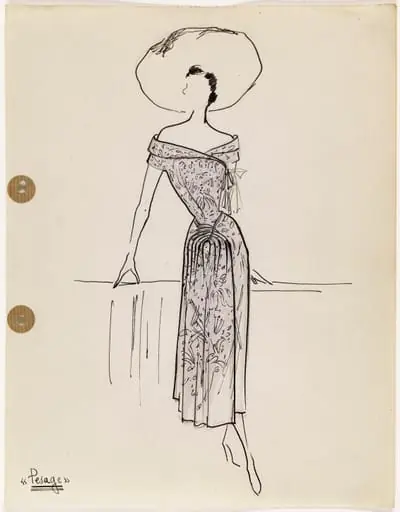
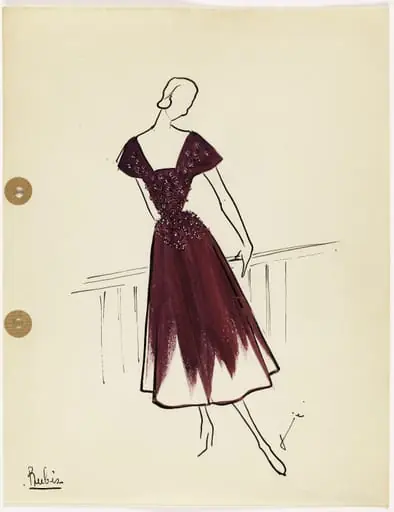
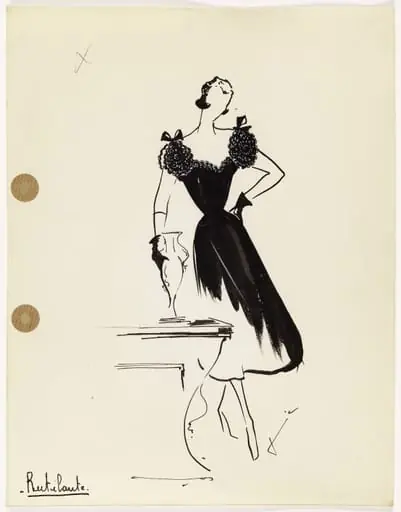
'Nuit Vénitienne' is a drawing by Carven. It dates from 1949 and is held in the collection of the Palais Galliera - Musée de la Mode de la Ville de Paris.
About this work
Overview
Though labeled as a Venetian night scene, the setting remains abstract, suggesting atmosphere rather than location.
Created around 1949, 'Nuit Vénitienne' is a modest ink sketch by the designer Carven. It resides in the collection of the Museum of Ethnography. The work captures a solitary figure in a moment of quiet stillness, rendered with swift, unembellished lines. Though labeled as a Venetian night scene, the setting remains abstract, suggesting atmosphere rather than location. The drawing’s simplicity reflects a focus on gesture over narrative detail.
Subject & Meaning
The figure is a woman dressed in a long, dark purple gown, standing near a window-like structure marked by vertical strokes that may suggest rain, moonlight, or architectural bars. She holds a small bag, hinting at movement or departure. The title evokes a poetic mood, yet the image resists literal interpretation. The absence of facial features or background context invites contemplation of solitude and transition, common themes in mid-century fashion sketches.
Technique & Style
Carven employed a loose, confident ink line to define form, using minimal shading to suggest fabric folds and volume. Small dots along the dress may indicate embellishments or simply rhythmic accents. The drawing avoids heavy detail, favoring fluidity and spontaneity. The vertical lines framing the figure create a sense of enclosure or filtration, as if light or rain filters through a narrow opening. The technique prioritizes immediacy over refinement.
History & Provenance
The drawing was produced during Carven’s active years as a fashion designer, likely as a personal study or preparatory sketch. It entered the Museum of Ethnography’s collection in the late 20th century, possibly through donation or acquisition of design archives. Its classification within an ethnographic context suggests an interest in everyday visual culture rather than fine art traditions, aligning with the museum’s broader mission to document material life.
Context
In postwar France, fashion illustrators often worked between commercial design and personal expression. Carven’s sketch reflects this duality: it is neither a finished garment rendering nor a public advertisement, but a private moment of observation. The absence of overt luxury or glamour distinguishes it from typical fashion imagery of the era, instead emphasizing mood and quiet presence over display.
Legacy
Though not widely exhibited, 'Nuit Vénitienne' contributes to understanding how fashion designers used drawing as a tool for emotional resonance, not just technical planning. Its inclusion in an ethnographic museum underscores the value of informal, personal works in documenting cultural habits. The sketch remains a quiet example of how design sensibility can extend beyond clothing into the realm of atmosphere and gesture.
Artist & collection
Artist
These delicate ink-on-paper drawings capture the quiet poetry of everyday things: pinecones, reeds, apples.
Museum
Palais Galliera - Musée de la Mode de la Ville de Paris
Continue through works from the same source collection.