Artwork
Ocelot
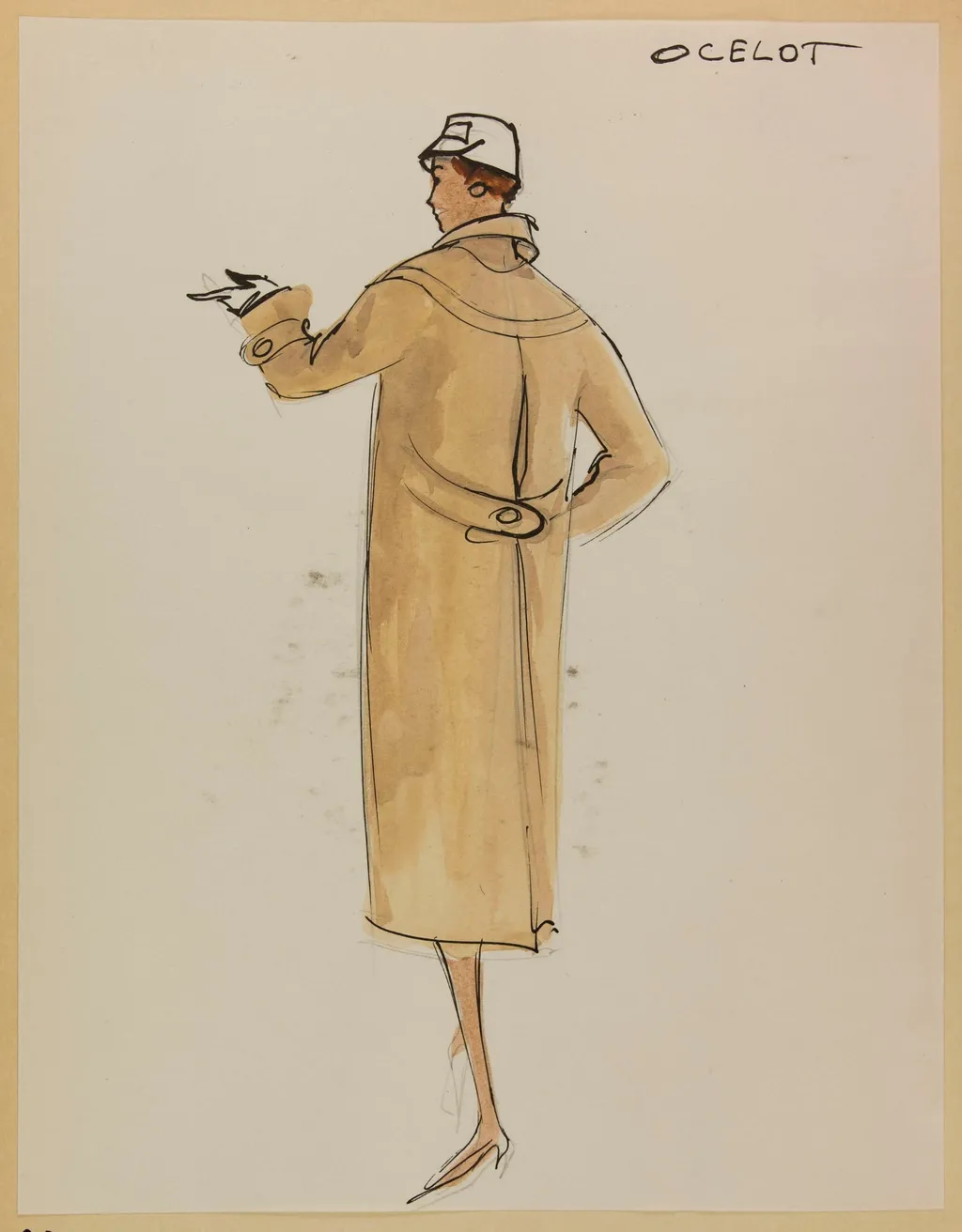
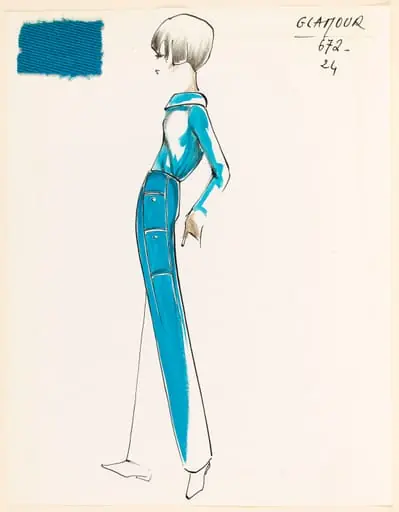
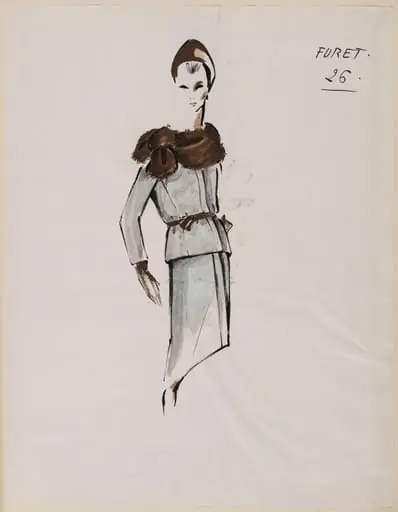
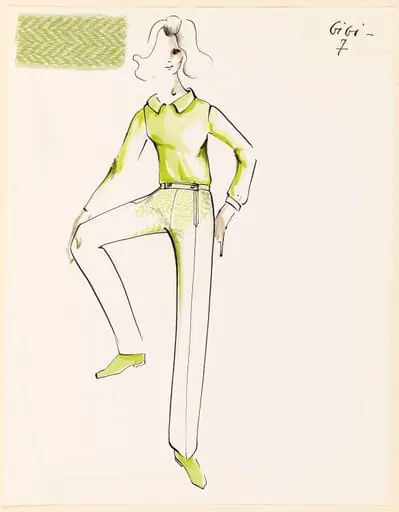
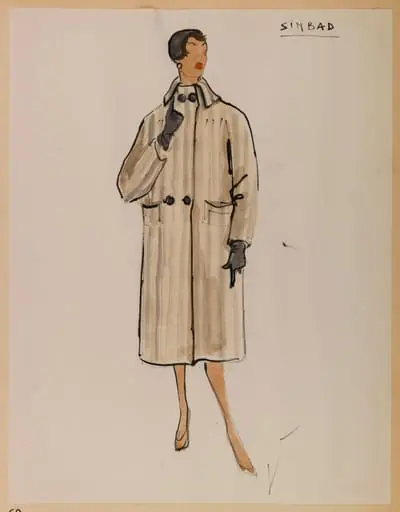
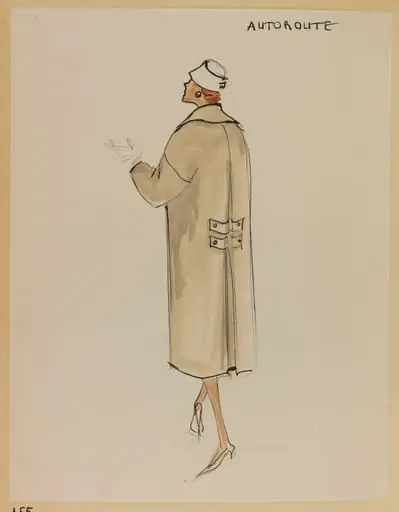
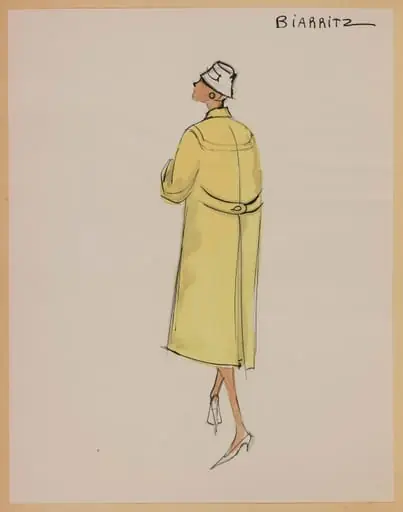
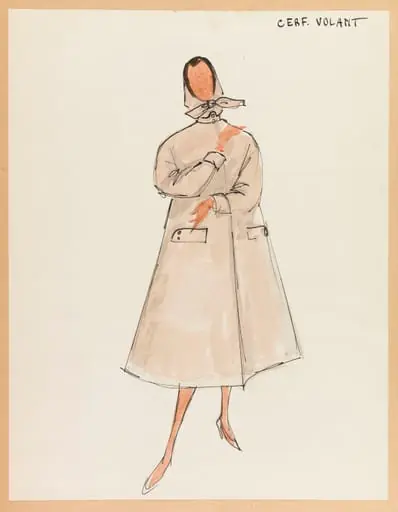
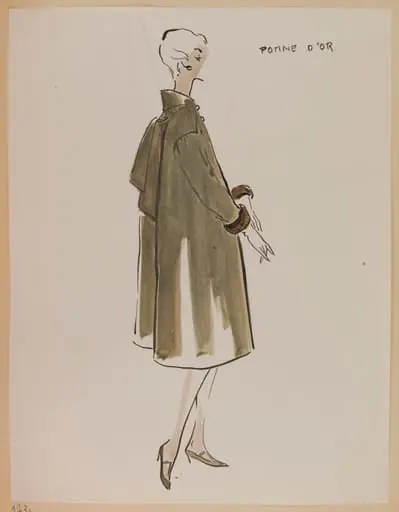
Ocelot is a drawing by Carven. It dates from 1955 and is held in the collection of the Palais Galliera - Musée de la Mode de la Ville de Paris.
About this work
Overview
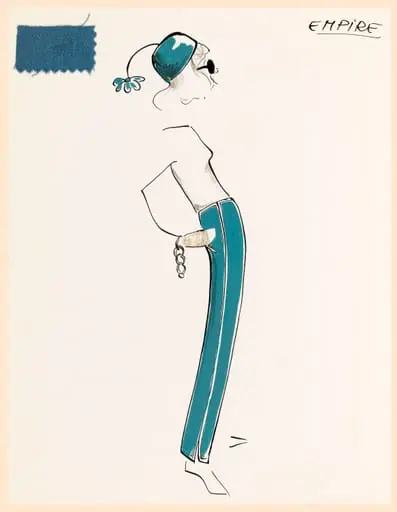
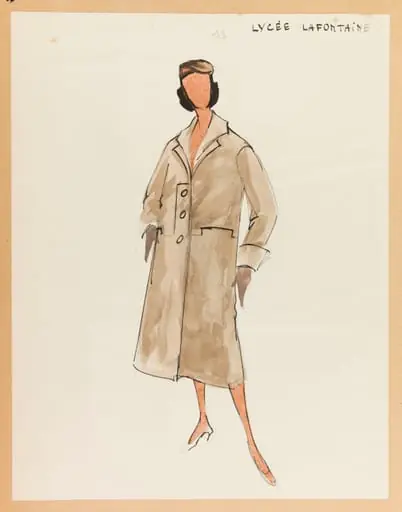
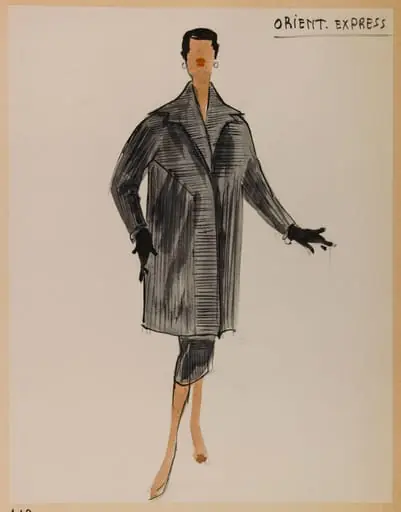
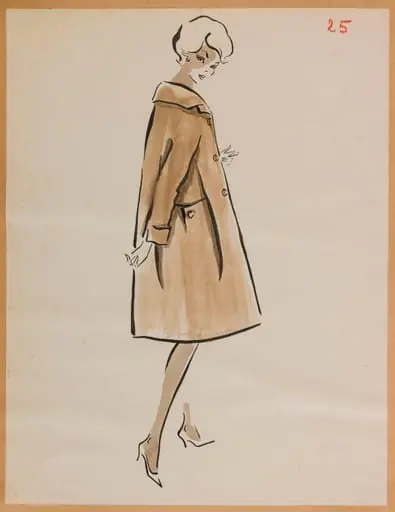
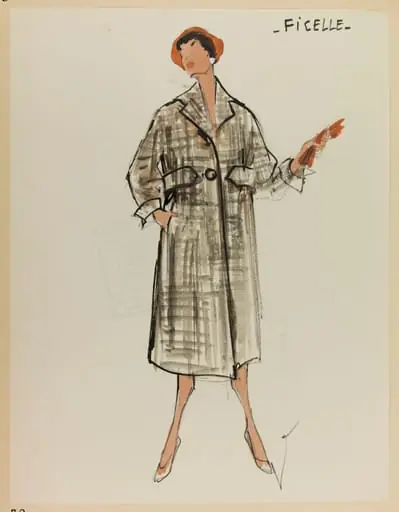
The work presents a solitary figure viewed from behind, rendered with minimal, fluid lines and subtle shading.
Created around 1955, Ocelot is a pencil sketch attributed to the artist Carven. It resides in the collection of the Museum of Ethnography. The work presents a solitary figure viewed from behind, rendered with minimal, fluid lines and subtle shading. Its informal quality suggests it was made as a quick observational study rather than a finished piece. The title, scrawled in the corner, adds an enigmatic layer to the image.
Subject & Meaning
The figure, dressed in a long coat and flat-brimmed hat, stands with one hand resting on the hip and the other holding a rolled object, possibly paper. No clear narrative or identity is given; the title 'Ocelot' may refer to the subject’s nickname, a symbolic reference, or an inside designation. The ambiguity invites interpretation without prescribing meaning, leaving the figure’s role or context deliberately open.
Technique & Style
Carven employed loose, rapid pencil strokes to define form, avoiding detailed rendering. Shadows are sparingly applied to suggest volume rather than define it. The drawing’s spontaneity reflects a focus on gesture and posture over precision. This approach aligns with sketchbook traditions, prioritizing immediacy and observation over polish, characteristic of informal artistic practice.
History & Provenance
The sketch entered the Museum of Ethnography’s collection after Carven’s lifetime, though its acquisition history is not fully documented. It has remained in the museum’s holdings since at least the late 20th century. No exhibition records or prior ownership details are widely available, suggesting it was acquired as part of a broader group of personal studies rather than a celebrated work.
Context
Made in the mid-1950s, the sketch reflects a period when many artists turned to quick, personal drawings as a means of recording visual impressions outside formal projects. Carven’s work fits within this trend, echoing the observational habits of contemporaries who valued sketching as a private, exploratory practice rather than a public statement.
Legacy
Ocelot remains a quiet example of Carven’s sketchbook output, valued for its unpretentiousness and directness. It contributes to understanding the artist’s process rather than their public output. While not widely reproduced or studied, it offers insight into the everyday visual habits of mid-century artists working outside the mainstream art world.
Artist & collection
Artist
These delicate ink-on-paper drawings capture the quiet poetry of everyday things: pinecones, reeds, apples.
Museum
Palais Galliera - Musée de la Mode de la Ville de Paris
Continue through works from the same source collection.