Artwork
Oudot
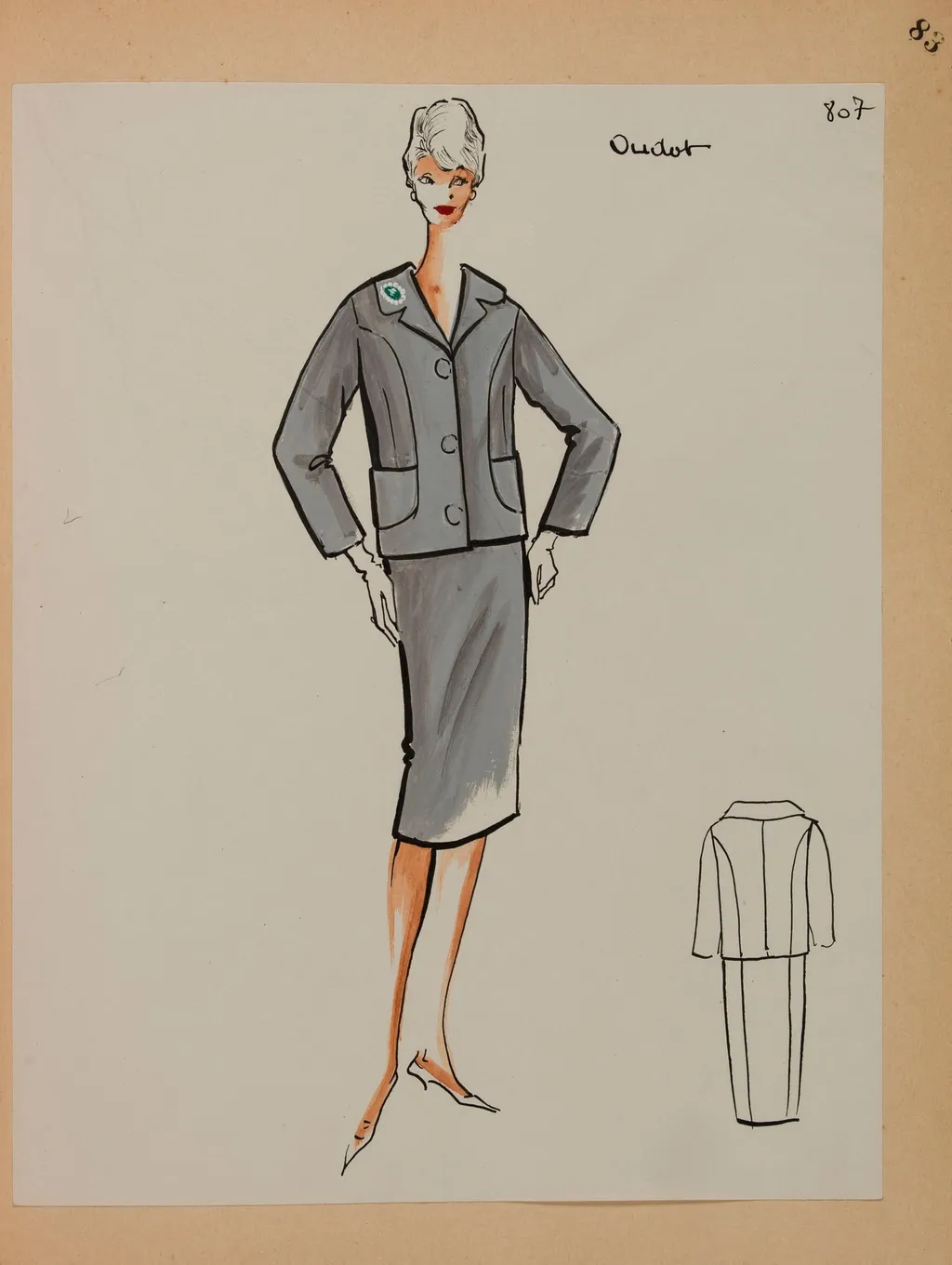
Oudot is a drawing by Carven. It dates from 1958 and is held in the collection of the Palais Galliera - Musée de la Mode de la Ville de Paris.
About this work
Overview
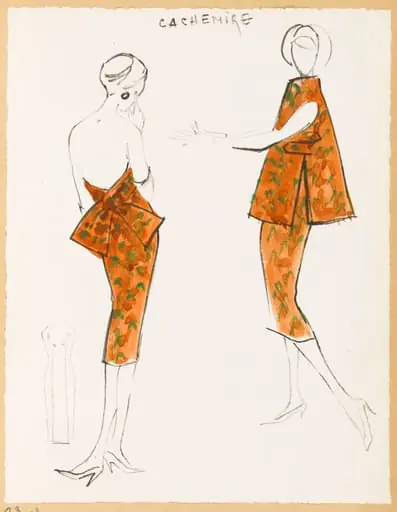
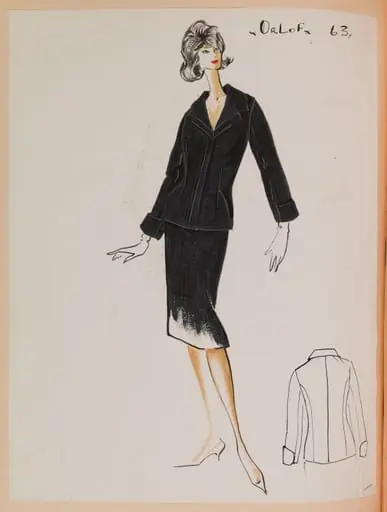
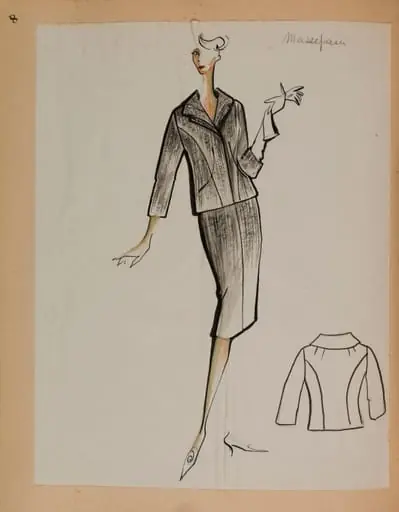
A secondary sketch on the right shows the garment’s rear profile, suggesting an interest in structural detail.
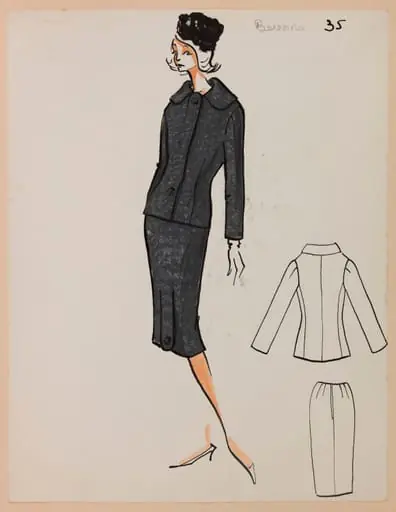
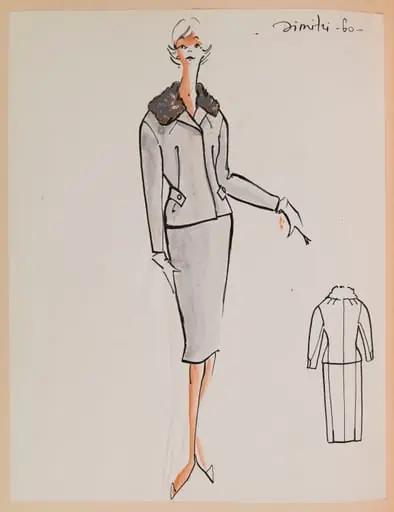
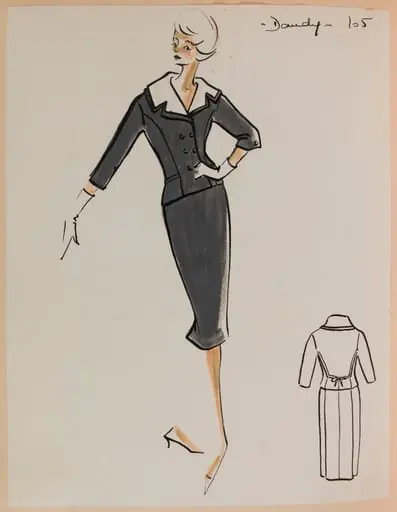
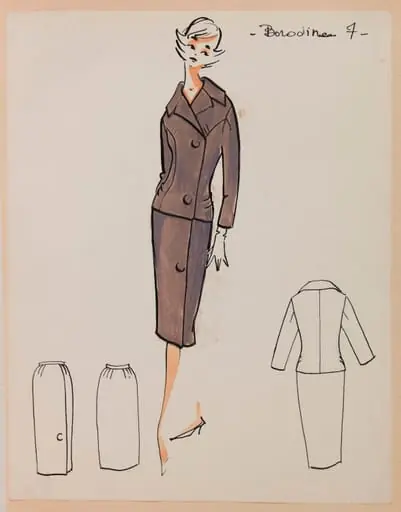
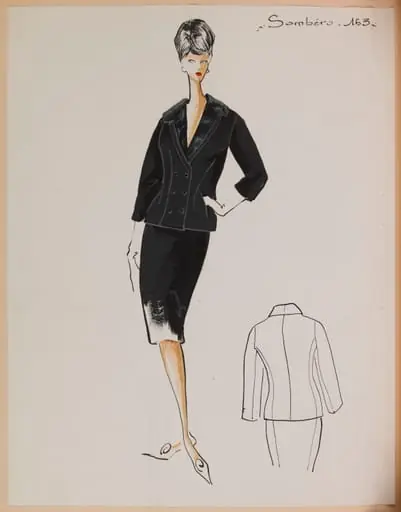
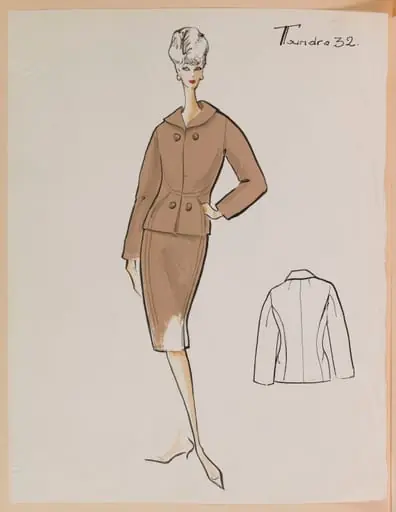
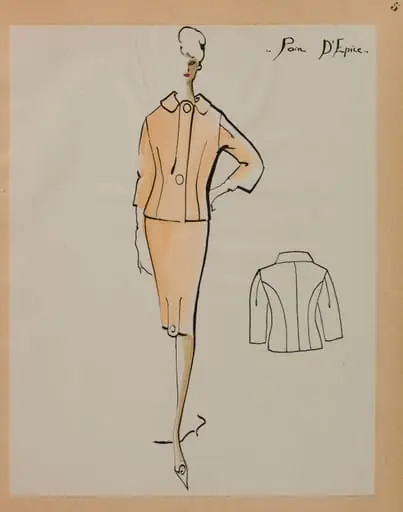
Oudot is a graphite drawing attributed to the French fashion designer Carven, dated around 1958. It is part of the collection at the Museum of Ethnography. The work captures a single figure in a tailored gray suit, rendered with restrained precision. A secondary sketch on the right shows the garment’s rear profile, suggesting an interest in structural detail. The drawing’s quiet elegance reflects its origin in fashion design rather than fine art.
Subject & Meaning
The subject is a woman dressed in a modest, mid-century suit with a brooch at the lapel, short white hair styled in an updo, and high heels. Her posture is still, her expression neutral. The image conveys composure and understated authority, typical of postwar professional femininity. The inclusion of the back view implies a functional purpose—perhaps a design study for a client or garment prototype—rather than a portrait.
Technique & Style
Executed in graphite, the drawing uses clean, unbroken lines and minimal tonal variation to define form. Gray tones are applied sparingly, emphasizing silhouette over texture. The absence of background or contextual elements focuses attention on the garment’s cut and fit. The style is deliberate and economical, aligning with fashion illustration practices of the era that prioritized clarity and proportion over expressive flourish.
History & Provenance
The drawing entered the Museum of Ethnography’s collection as part of a broader acquisition of fashion-related materials. Its attribution to Carven is based on stylistic consistency with known design sketches from the late 1950s. No documentation of its original commission or owner survives, but its presence in an ethnographic context suggests it was valued as a cultural artifact of mid-century dress practices.
Context
In the late 1950s, Parisian fashion houses like Carven produced detailed technical drawings to guide tailors and clients. These sketches were working documents, often discarded after use. Oudot’s survival and institutional preservation reflect a growing recognition of fashion design as a form of cultural expression. Its inclusion in an ethnographic museum signals a shift toward viewing clothing as a marker of social identity.
Legacy
Oudot remains a quiet testament to the precision of mid-century fashion design. Though not widely exhibited, it contributes to scholarly understanding of how women’s professional attire was conceptualized in postwar Europe. Its preservation underscores the evolving status of fashion sketches—not merely as tools of production, but as records of aesthetic and social norms.
Artist & collection
Artist
These delicate ink-on-paper drawings capture the quiet poetry of everyday things: pinecones, reeds, apples.
Museum
Palais Galliera - Musée de la Mode de la Ville de Paris
Continue through works from the same source collection.