Artwork
'Palme d'Or'
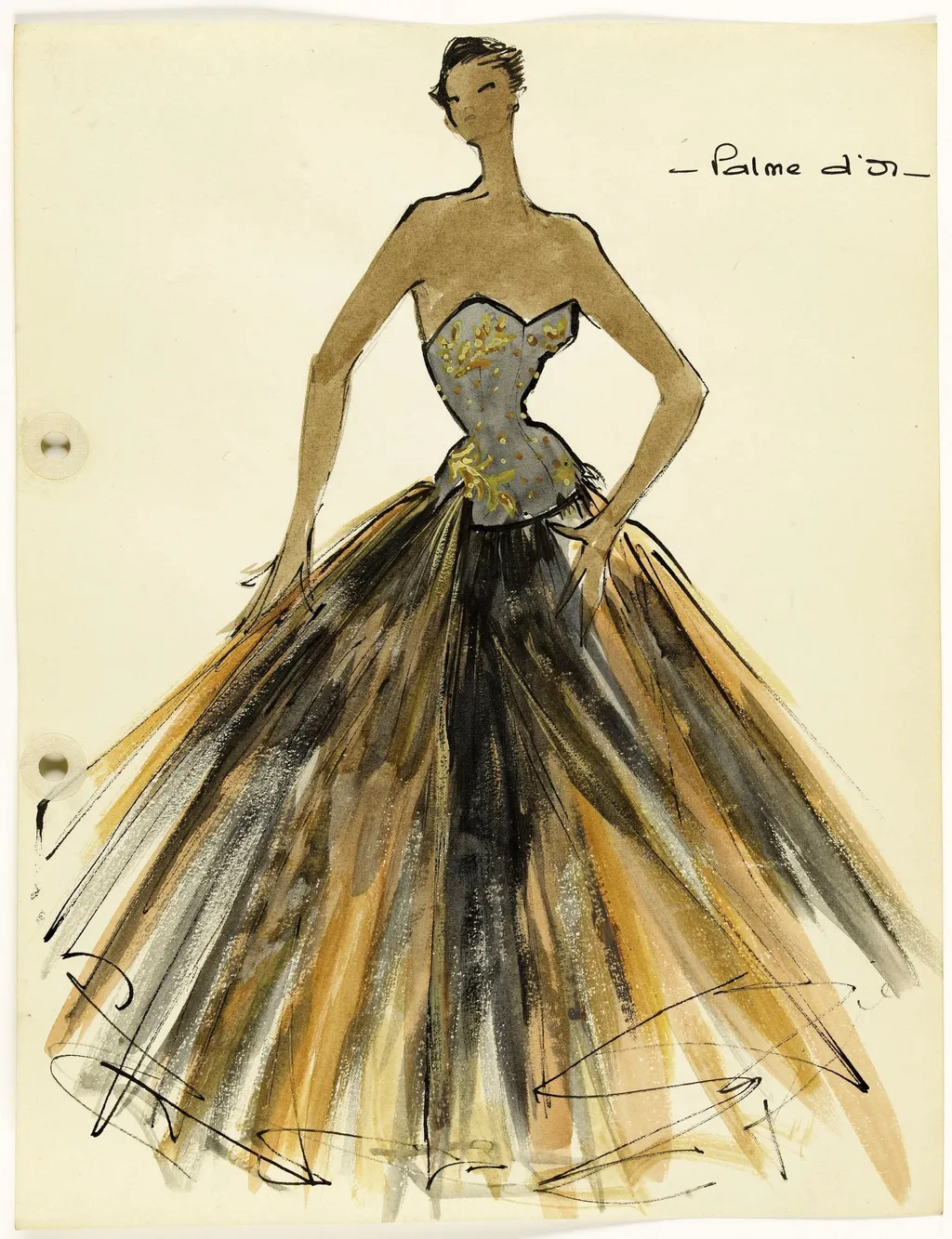
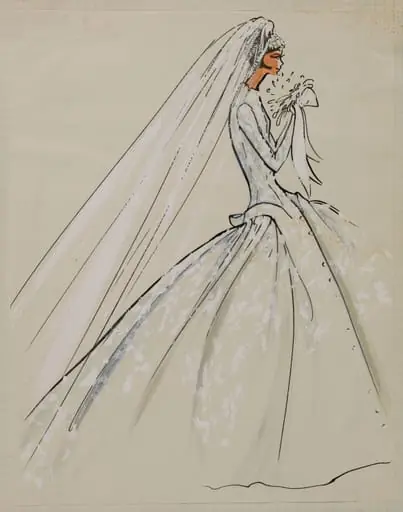
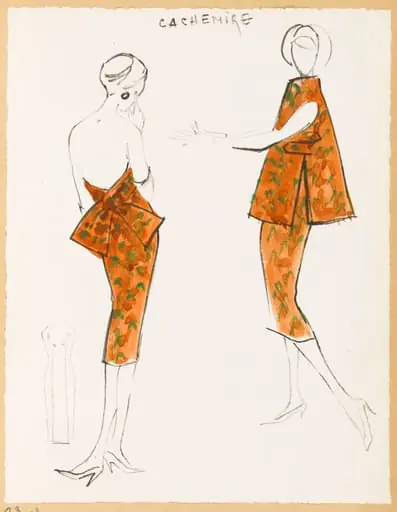
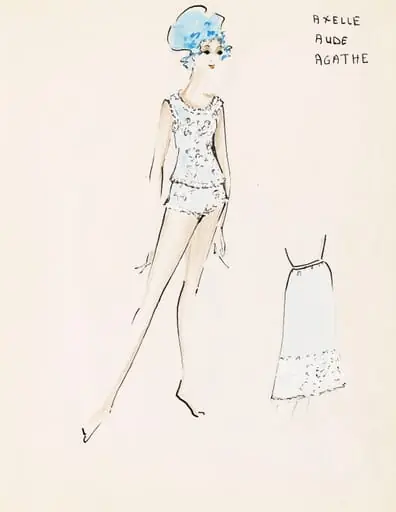
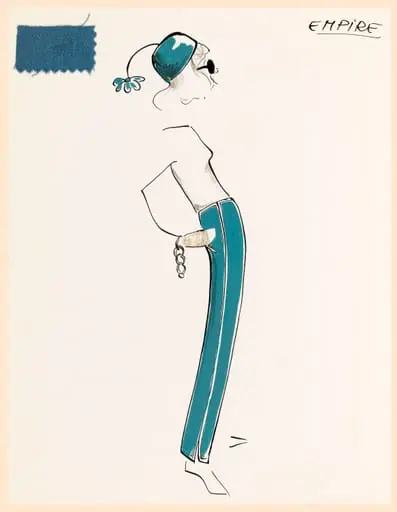
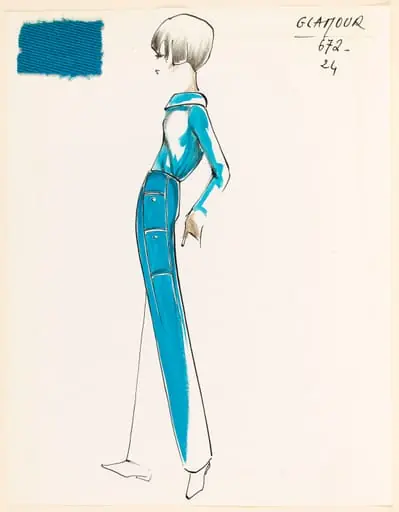
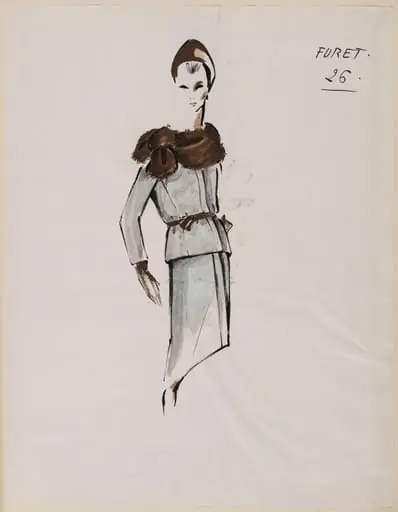
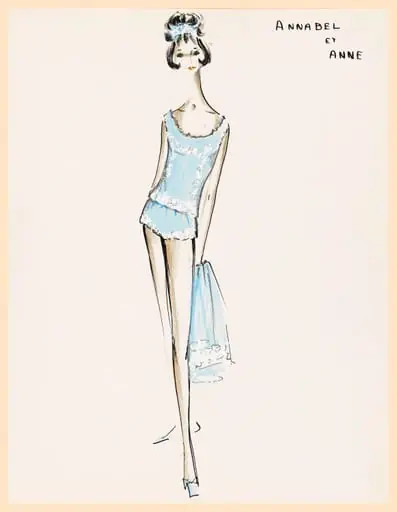
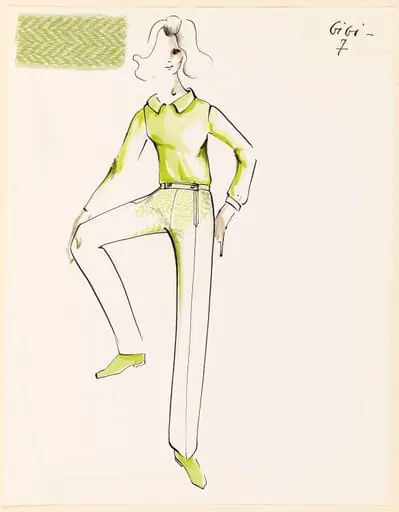
'Palme d'Or' is a drawing by Carven. It dates from 1951 and is held in the collection of the Palais Galliera - Musée de la Mode de la Ville de Paris.
About this work
Overview
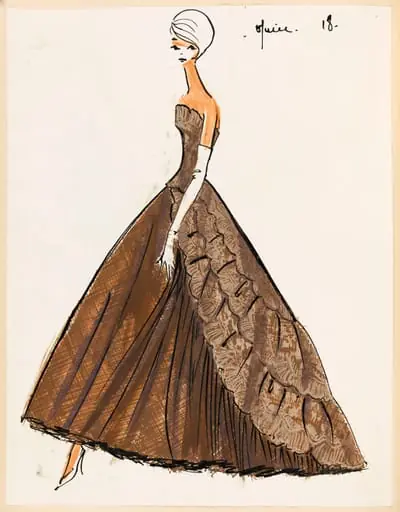
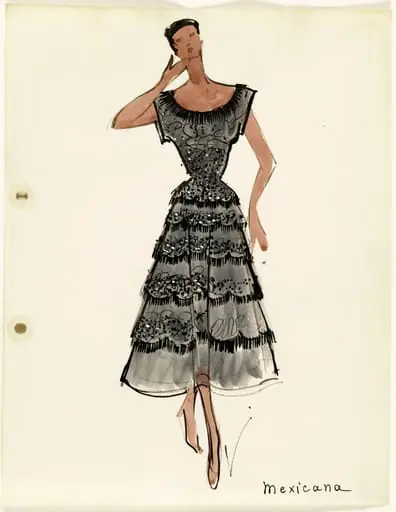
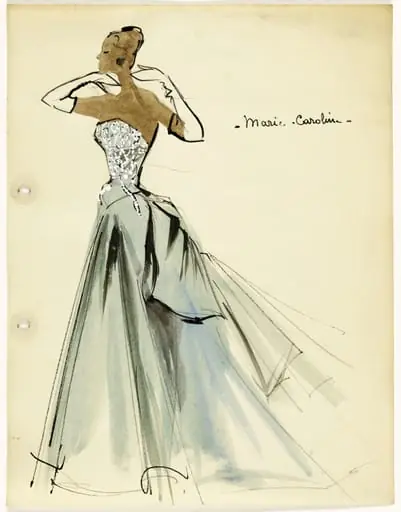
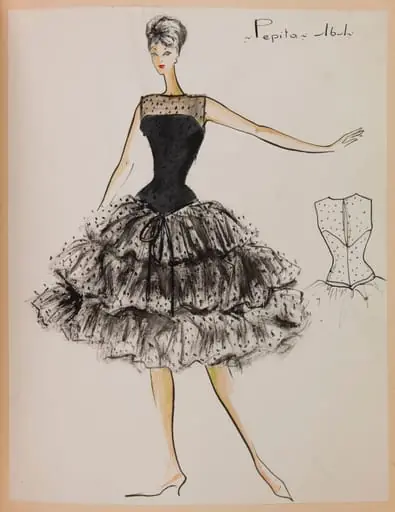
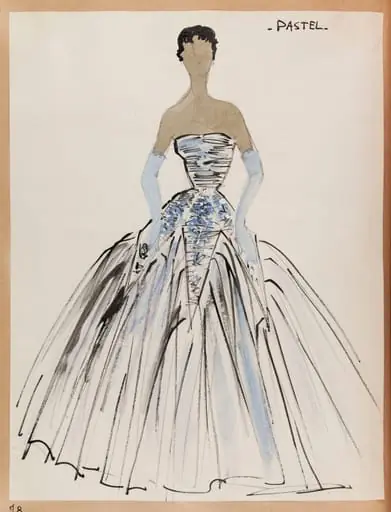
Created around 1951, “Palme d’Or” is a drawing by the French fashion house Carven that resides in the Museum of Ethnography’s collection. The work portrays a single figure—a woman in an elaborate evening dress—set against a muted beige ground that isolates the subject and emphasizes the details of her attire.
Subject & Meaning
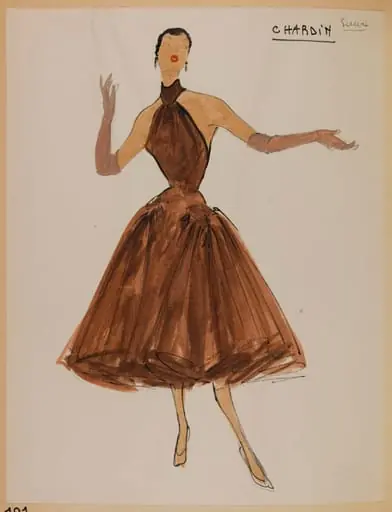
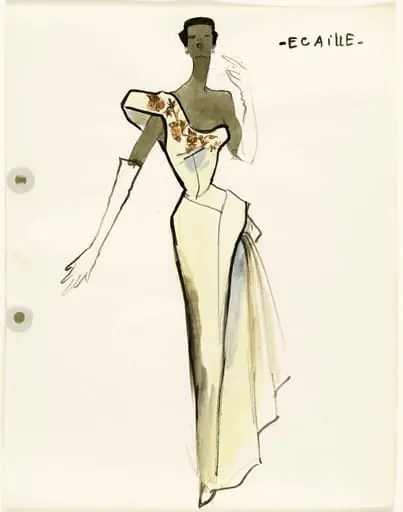
The composition centers on a poised woman whose hands rest on her hips and whose head tilts slightly to the right. Dressed in a formal gown with a gray, gold‑trimmed bodice and a full, pleated skirt rendered in black, gold and brown, she conveys a quiet confidence that reflects mid‑century notions of refined femininity.
Technique & Style
Executed in drawing, the piece relies on careful line work and subtle shading to model the fabric’s texture and the figure’s features. The artist uses a restrained palette—primarily neutrals punctuated by metallic accents—to highlight the contrast between the sleek silhouette and the soft, light‑colored background.
History & Provenance
Attributed to Carven, a leading Parisian fashion house of the post‑war era, the drawing dates to the early 1950s. It entered the Museum of Ethnography’s holdings through acquisition, though the precise circumstances of its donation or purchase have not been publicly detailed.
Context
During the early 1950s, Carven was known for translating haute‑couture sensibilities into accessible designs, often emphasizing elegance and practicality. “Palme d’Or” reflects this aesthetic, presenting an idealized vision of evening wear that aligns with the period’s broader interest in sophisticated, yet wearable, fashion illustration.
Artist & collection
Artist
These delicate ink-on-paper drawings capture the quiet poetry of everyday things: pinecones, reeds, apples.
Museum
Palais Galliera - Musée de la Mode de la Ville de Paris
Continue through works from the same source collection.