Artwork
Pré-catelan
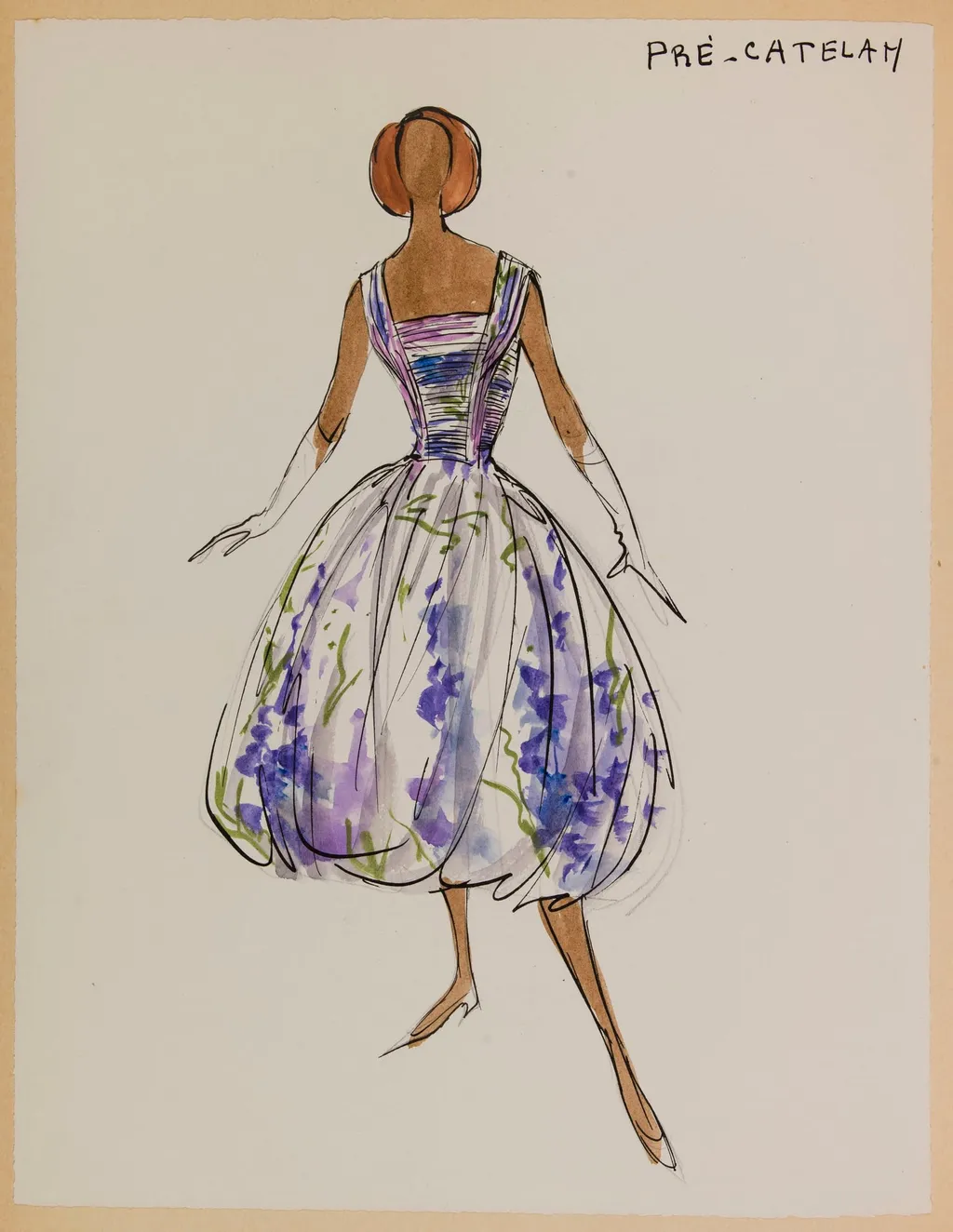
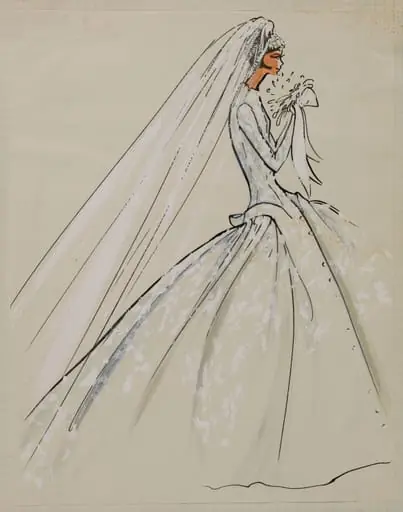
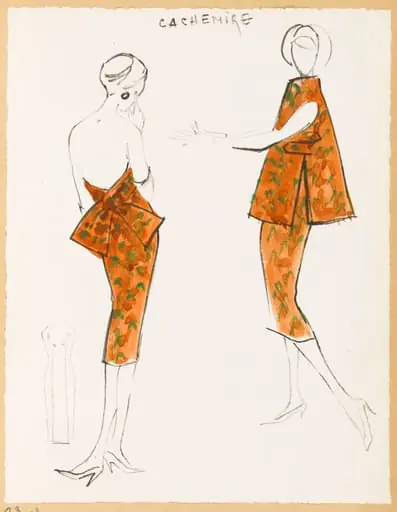
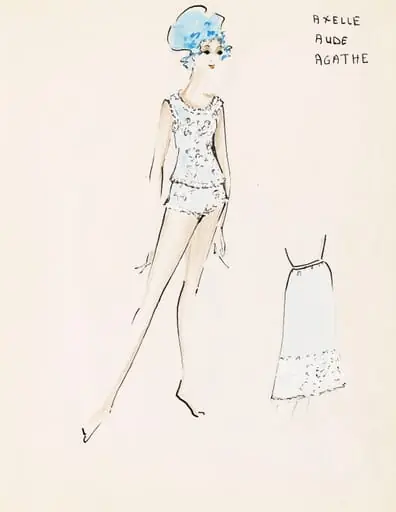
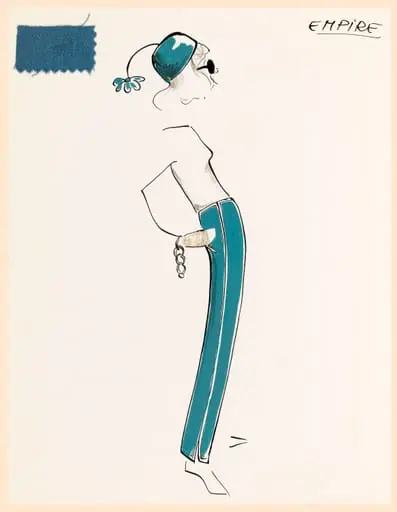
Pré-catelan is a drawing by Carven. It dates from 1956 and is held in the collection of the Palais Galliera - Musée de la Mode de la Ville de Paris.
About this work
Overview
Though labeled as an image, it functions as a fashion study, reflecting the designer’s attention to silhouette and textile detail in postwar women’s wear.
Pré-catelan, dated around 1956, is a drawing by the French fashion designer Carven. It resides in the collection of the Museum of Ethnography. The work captures a single figure in a moment of poised stillness, rendered with fine linework and subtle tonal contrasts. Though labeled as an image, it functions as a fashion study, reflecting the designer’s attention to silhouette and textile detail in postwar women’s wear.
Subject & Meaning
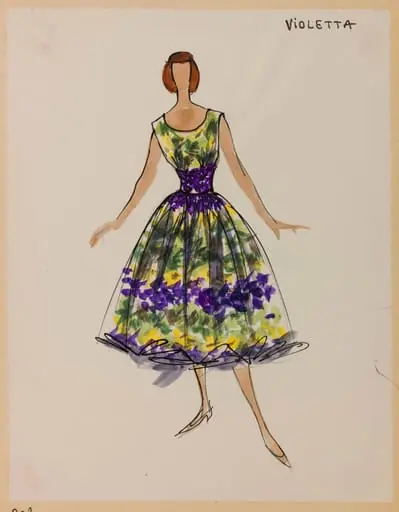
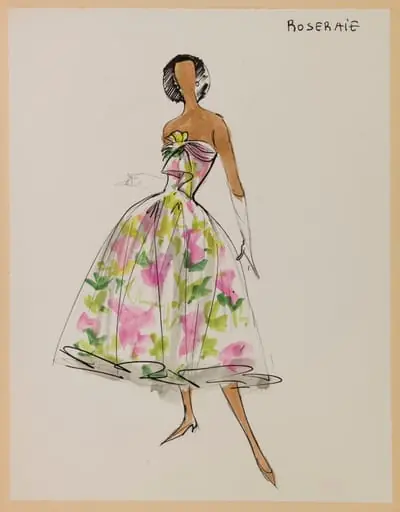
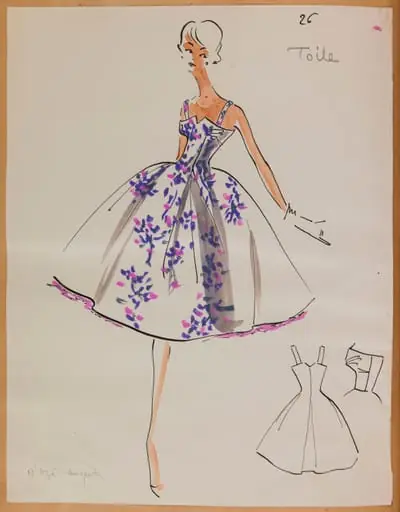
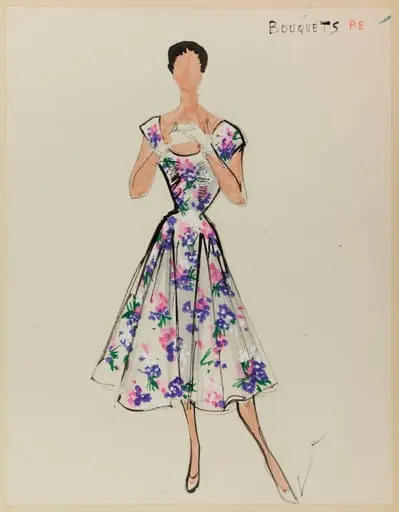
The figure is a woman dressed in a sleeveless gown with a fitted, striped bodice and a full, floral-patterned skirt. Her bobbed hair and gloves suggest a formal, mid-century urban setting. The composition avoids narrative, focusing instead on the interplay of texture and structure. The design conveys a quiet confidence, aligning with Carven’s reputation for refined, wearable elegance rather than theatrical display.
Technique & Style
Executed in pencil or ink, the drawing emphasizes clean contours and selective shading. The floral skirt is rendered with rhythmic, repeating motifs, while the bodice’s stripes are drawn with precise, parallel lines. The contrast between the organic pattern of the skirt and the geometric stripes creates visual rhythm. Gloves and hair are minimized in detail, directing focus to the garment’s architecture and the figure’s composed posture.
History & Provenance
The drawing entered the Museum of Ethnography’s collection in the late 20th century, likely as part of a broader acquisition of fashion-related materials documenting mid-century European design. Its origin as a preparatory sketch for a garment is implied by its focus on textile and cut, though no known garment from this design survives. It remains one of few surviving drawings by Carven in a public institutional context.
Context
Created in the mid-1950s, Pré-catelan reflects the postwar revival of French fashion, where designers like Carven emphasized tailored femininity without overt opulence. The style aligns with Parisian ateliers that balanced commercial appeal with artistic restraint. Unlike haute couture showpieces, this drawing suggests a more accessible, ready-to-wear sensibility, catering to a growing middle-class clientele seeking refined daily attire.
Legacy
Pré-catelan contributes to the understanding of Carven’s design philosophy beyond her well-known garments. As a rare surviving sketch, it illustrates how fashion was conceptualized in private practice before production. The work is now referenced in studies of mid-century French fashion illustration, offering insight into the quiet, methodical process behind everyday elegance in postwar Europe.
Artist & collection
Artist
These delicate ink-on-paper drawings capture the quiet poetry of everyday things: pinecones, reeds, apples.
Museum
Palais Galliera - Musée de la Mode de la Ville de Paris
Continue through works from the same source collection.