Artwork
Robe blanche à motif floral
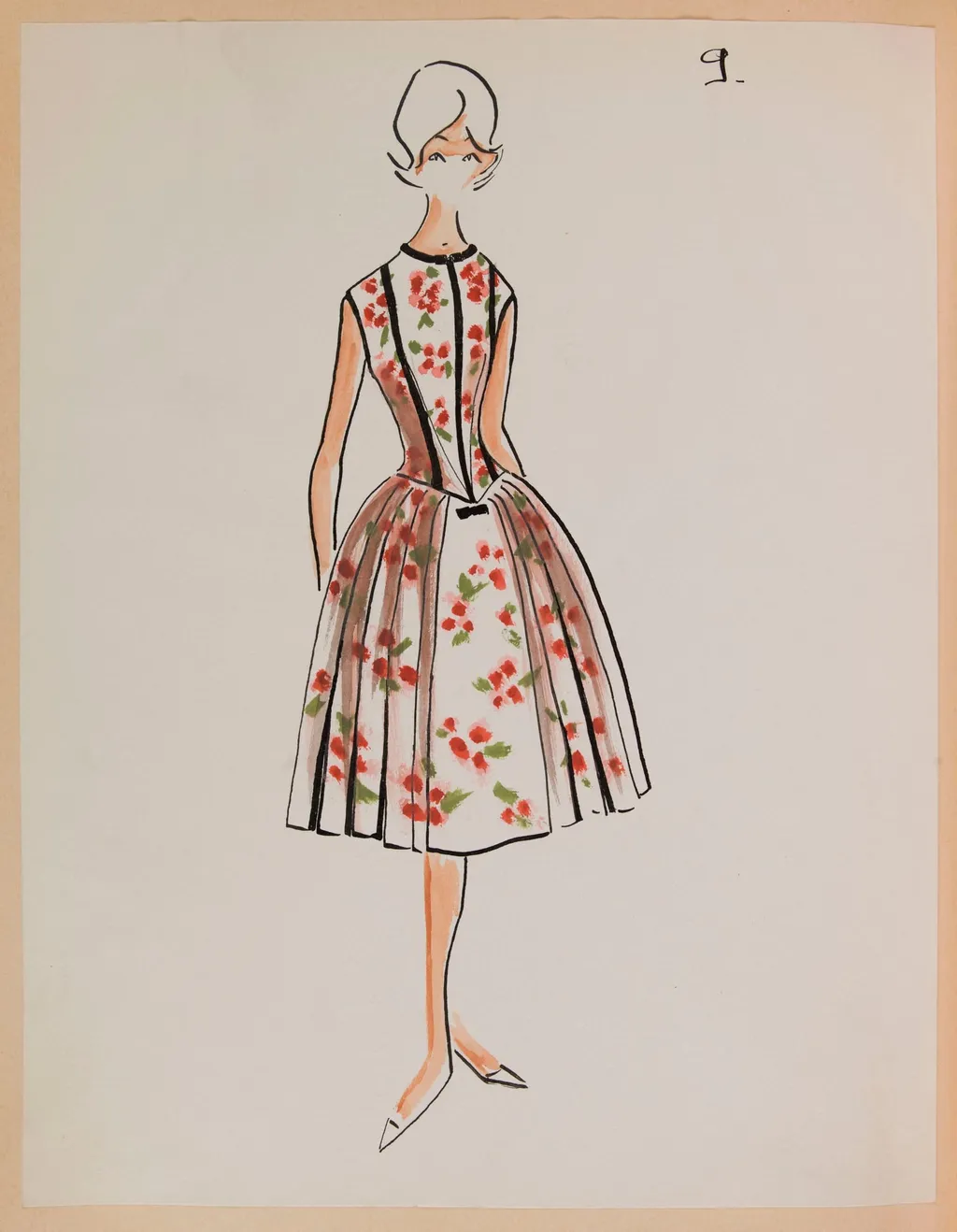
Robe blanche à motif floral is a drawing by Carven. It dates from 1959 and is held in the collection of the Palais Galliera - Musée de la Mode de la Ville de Paris.
About this work
Overview
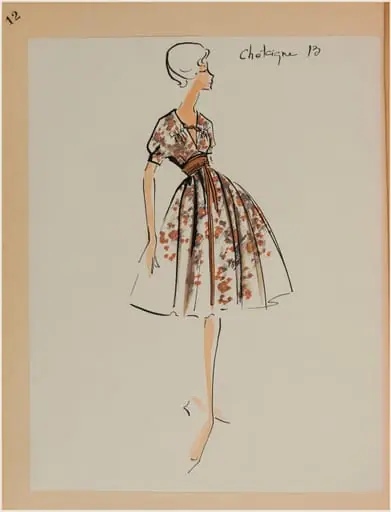
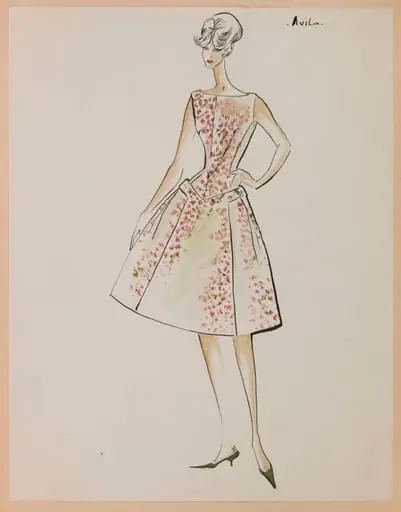
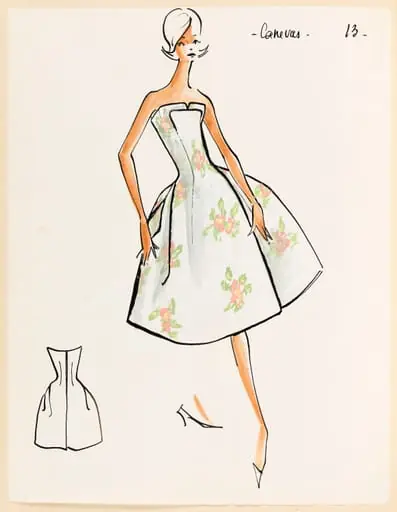
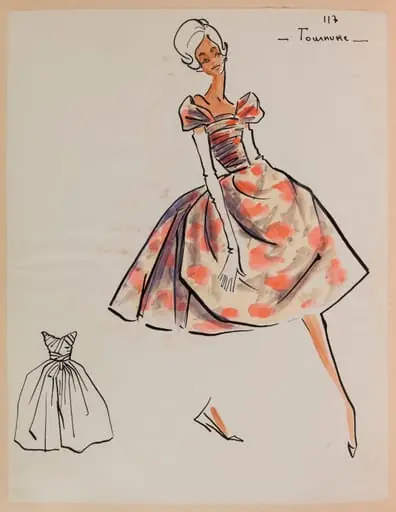
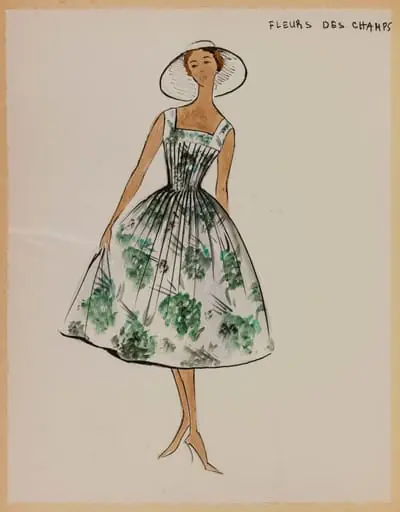
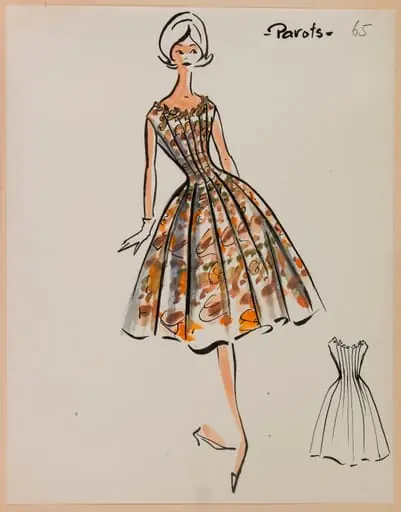
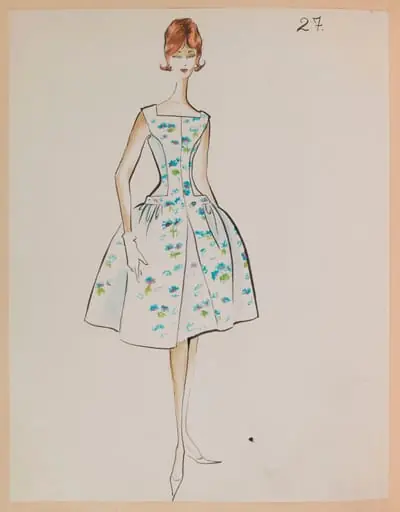
Created around 1959, this fashion sketch depicts a dress designed by the French label Carven. Rendered in ink with fluid, spontaneous lines, it captures the silhouette of a woman wearing a two-part ensemble: a black bodice and a white skirt, both adorned with a floral motif. The drawing functions as a design study rather than a finished illustration, emphasizing movement and form over detail.
Subject & Meaning
The contrast between the dark bodice and pale skirt, unified by a recurring floral pattern, suggests harmony between structure and ornament.
The figure wears a modest, tailored dress suited to mid-century feminine ideals. The contrast between the dark bodice and pale skirt, unified by a recurring floral pattern, suggests harmony between structure and ornament. The neat hairstyle and heels imply a refined, everyday elegance. The motif, though simplified, evokes natural forms without literal representation, aligning with postwar design’s preference for restraint.
Technique & Style
The sketch employs loose, rapid ink strokes typical of fashion illustration from the period. Details are suggested rather than rendered—flowers appear as minimal clusters of dots and curves, and fabric folds are indicated with a few decisive lines. The absence of shading and the use of negative space reflect a focus on silhouette and proportion, prioritizing clarity for garment construction over atmospheric depth.
History & Provenance
The drawing entered the collection of the Museum of Ethnography, where it is preserved as part of a broader archive of 20th-century fashion design. Its presence in an ethnographic context signals its value as a cultural artifact, documenting the aesthetics and production practices of a postwar French couture house. No earlier ownership records are publicly documented.
Context
In the late 1950s, Carven was known for blending Parisian sophistication with accessible elegance, appealing to a growing middle-class clientele. This sketch reflects the era’s shift toward lighter fabrics and floral motifs, influenced by both haute couture traditions and the rising popularity of ready-to-wear. Fashion drawings like this served as internal guides for pattern makers and tailors.
Legacy
As a representative example of mid-century fashion drafting, the sketch contributes to the understanding of how design ideas were communicated before digital tools. Its preservation in an ethnographic museum underscores its role in documenting everyday material culture. While not signed or dated definitively, its stylistic features align with Carven’s known output from the period.
Artist & collection
Artist
These delicate ink-on-paper drawings capture the quiet poetry of everyday things: pinecones, reeds, apples.
Museum
Palais Galliera - Musée de la Mode de la Ville de Paris
Continue through works from the same source collection.