Artwork
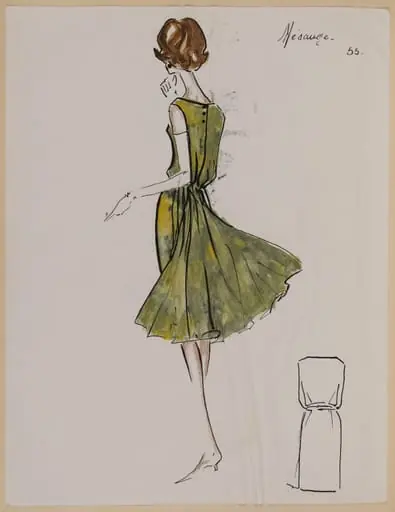
Robe à bretelles kaki clair à motif de soleil boutonnée de haut en bas avec fine ceinture
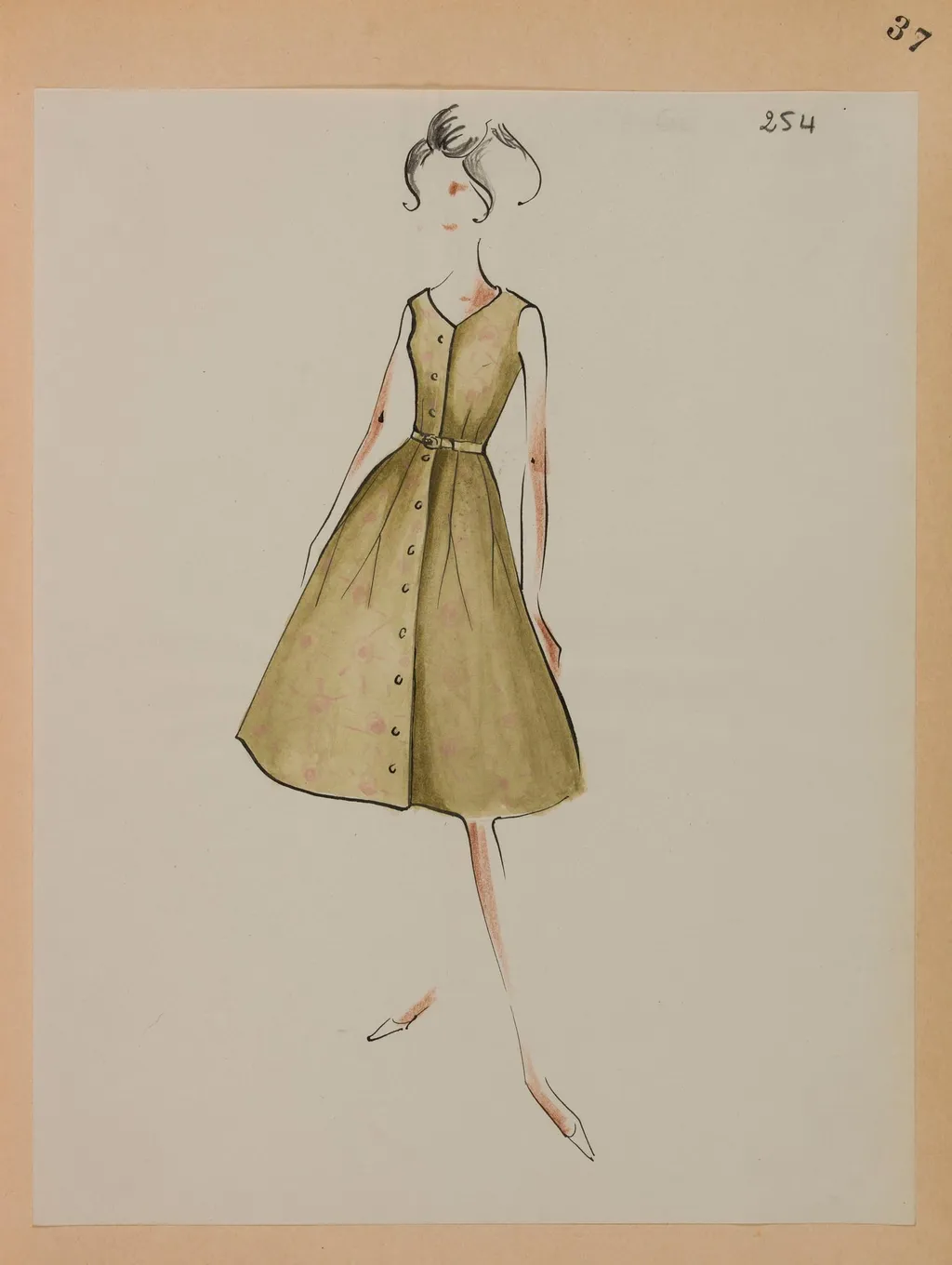
Robe à bretelles kaki clair à motif de soleil boutonnée de haut en bas avec fine ceinture is a drawing by Carven. It dates from 1963 and is held in the collection of the Palais Galliera - Musée de la Mode de la Ville de Paris.
About this work
Overview
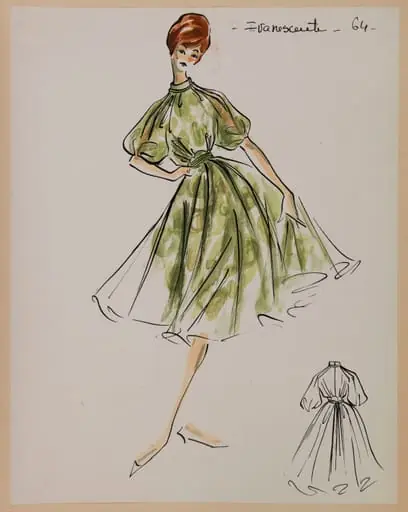
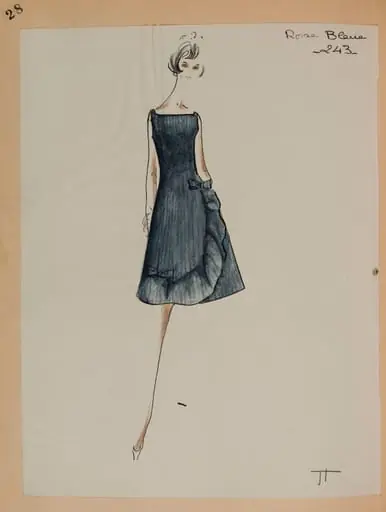
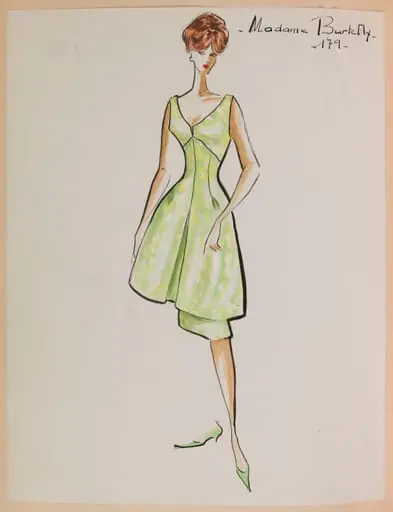
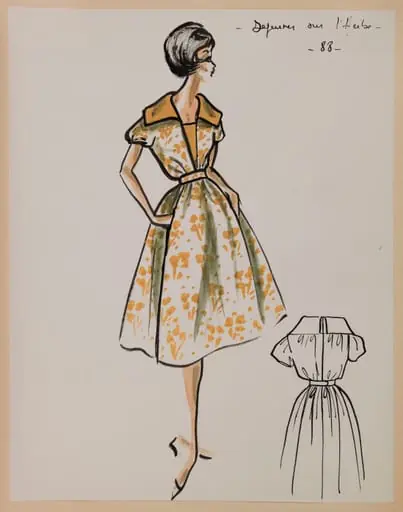
Rendered in loose, spontaneous lines, it depicts a knee-length dress with a V-neck and full front buttoning—a rare feature in women’s wear of the period.
This sketch, dated around 1963, is a design study by the French fashion house Carven. Rendered in loose, spontaneous lines, it depicts a knee-length dress with a V-neck and full front buttoning—a rare feature in women’s wear of the period. The figure is rendered minimally, with attention focused on the garment’s structure rather than anatomical detail. The work is held in the collection of the Museum of Ethnography as part of its documentation of mid-century design practices.
Subject & Meaning
The dress is designed for everyday wear, combining practicality with subtle ornamentation. The faint floral motif and light earth-toned fabric suggest a quiet, seasonal sensibility, while the full-buttoning front offers ease of movement and modesty. The narrow belt subtly defines the waist without constricting, reflecting a postwar preference for relaxed yet tailored silhouettes. The sketch captures a moment of transition in women’s fashion toward functional elegance.
Technique & Style
Executed in rapid, fluid pencil strokes, the drawing resembles a working sketch rather than a polished presentation. Contours are suggestive rather than precise, emphasizing form over finish. The absence of shading and minimal detail in the figure’s features direct focus to the garment’s silhouette and fastening system. This approach was typical of design studios prioritizing clarity of construction over decorative flourish.
History & Provenance
Created during Carven’s active period in Parisian fashion, the sketch entered the Museum of Ethnography’s collection as part of a broader effort to preserve textile and garment design records. Its inclusion reflects institutional interest in documenting the evolution of everyday clothing, particularly designs that challenged conventional norms of closure and fit in women’s wear during the early 1960s.
Context
In the early 1960s, most dresses featured partial buttoning or zippers, making full-front buttoning an unusual choice. Carven’s design aligned with a growing trend toward practicality and ease, influenced by changing social roles and the rise of ready-to-wear. The sketch’s modest scale and informal style mirror the studio’s emphasis on wearable, non-ostentatious fashion, distinct from haute couture extravagance.
Legacy
This sketch remains a quiet testament to Carven’s commitment to understated innovation. Its preservation in a museum of ethnography, rather than a fashion archive, underscores its significance as an artifact of daily life. The design’s functional details—full buttoning, light fabric, subtle shaping—continue to inform contemporary approaches to accessible, well-considered clothing.
Artist & collection
Artist
These delicate ink-on-paper drawings capture the quiet poetry of everyday things: pinecones, reeds, apples.

Museum
Palais Galliera - Musée de la Mode de la Ville de Paris
Continue through works from the same source collection.