Artwork
Rosine
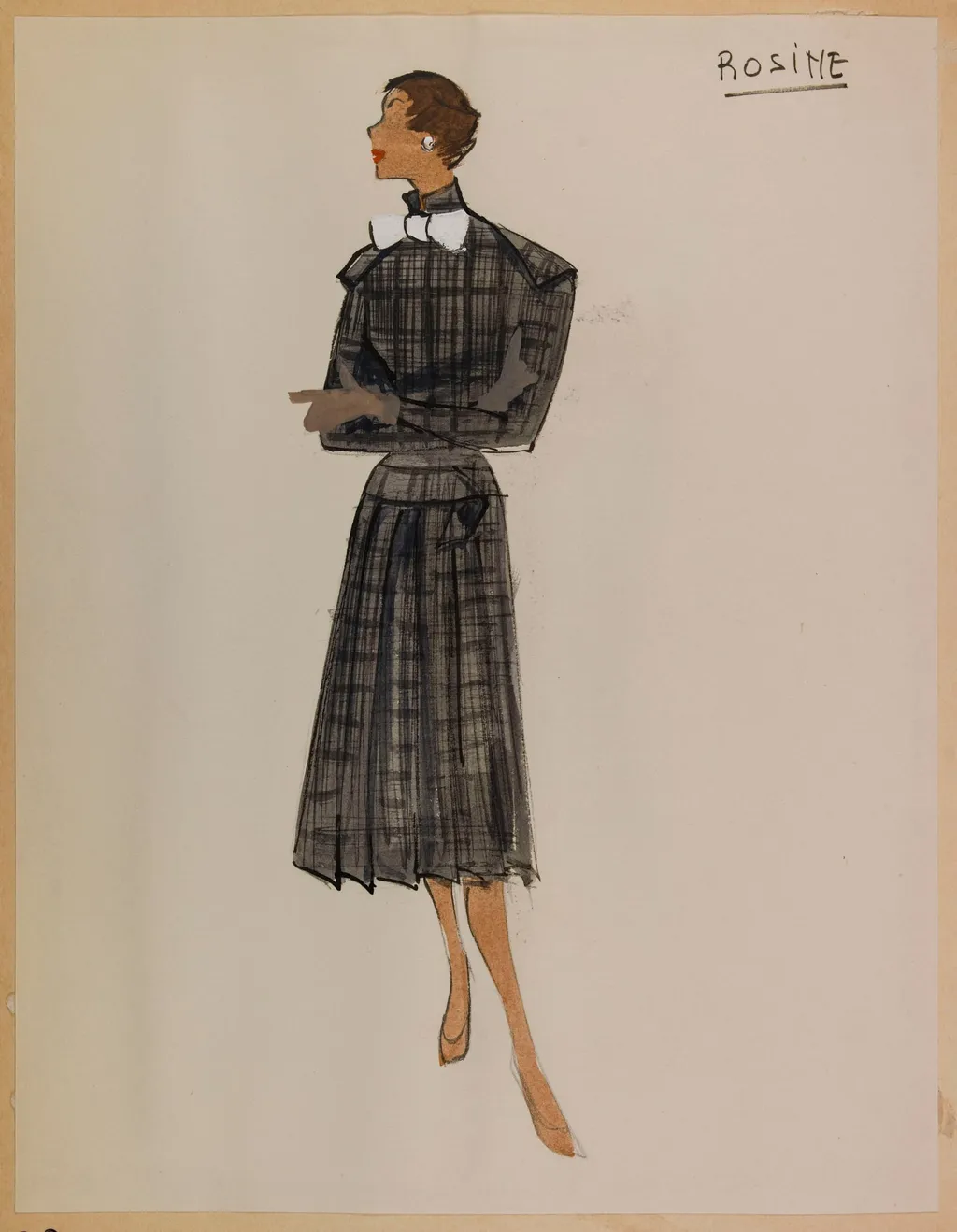
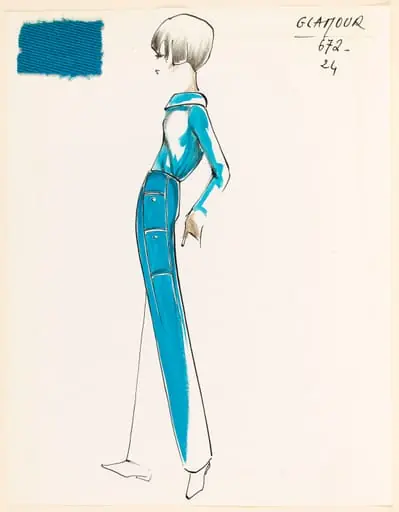
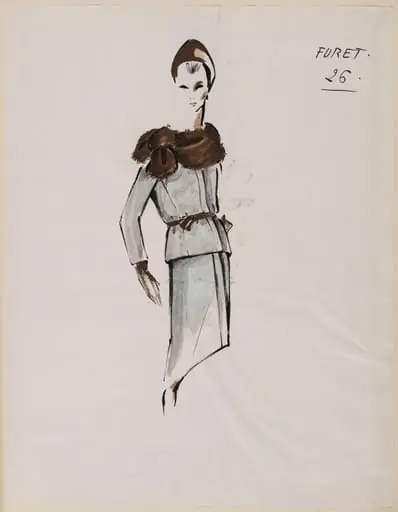
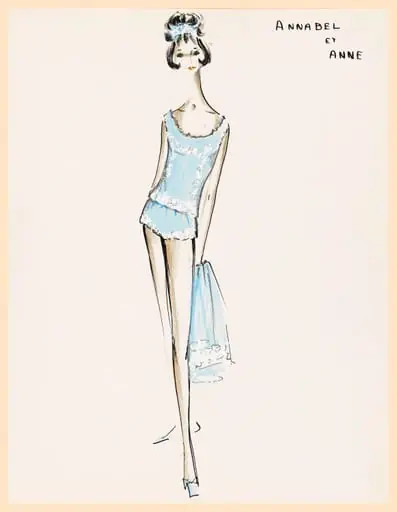
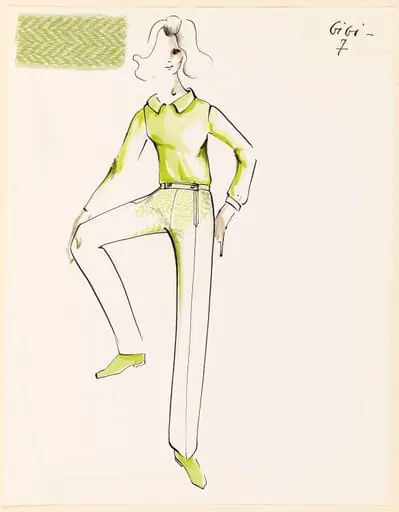
Rosine is a drawing by Carven. It dates from 1953 and is held in the collection of the Palais Galliera - Musée de la Mode de la Ville de Paris.
About this work
The drawing looks like it was made fast, with brushstrokes that feel almost like a quick fashion note.
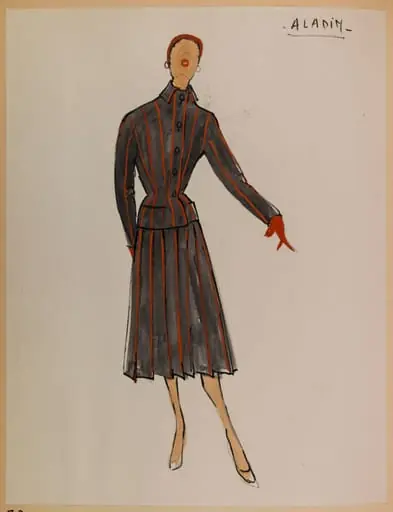
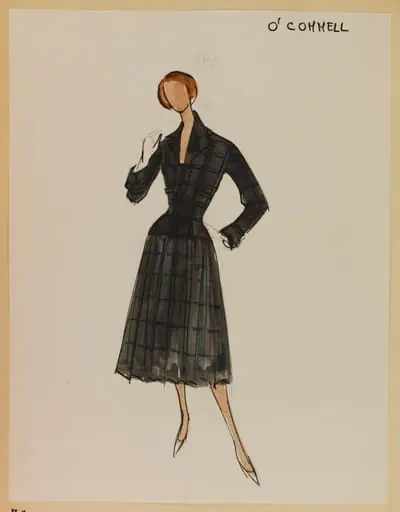
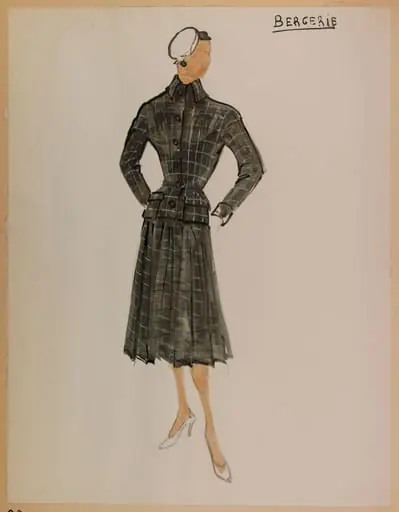
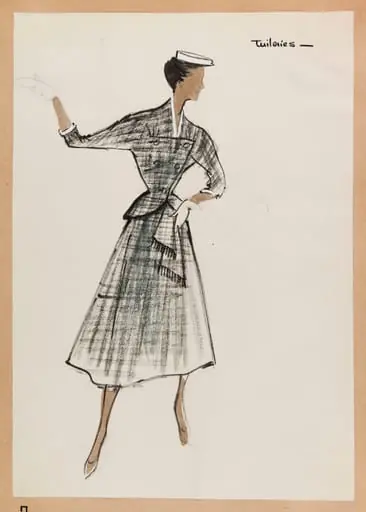
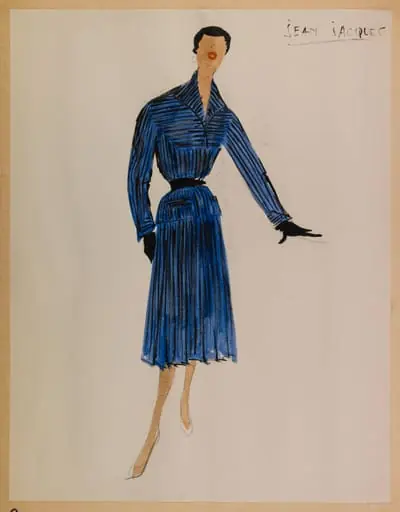
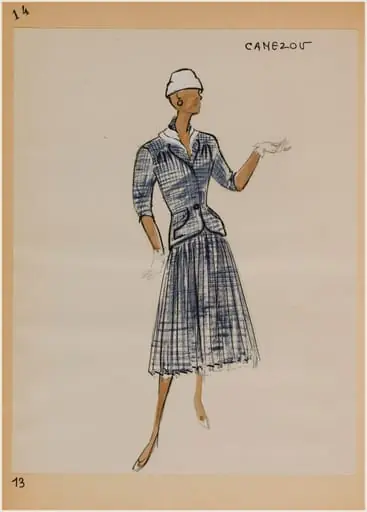
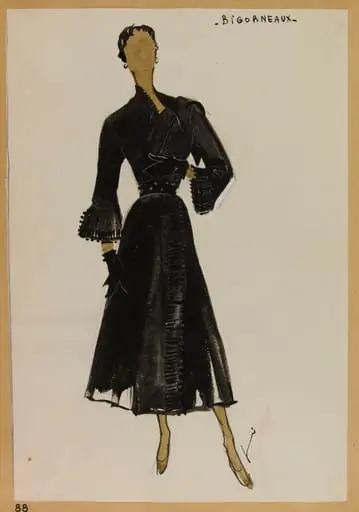
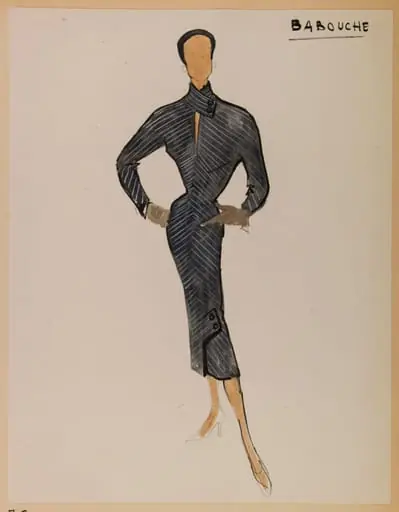
This sketch shows a woman in a loose, dark plaid dress with a high collar and long sleeves. Her skirt flares slightly at the knee, and she stands with one hand resting on her hip. The lines are simple and quick, with just a few shadows to show shape.
The name *Rosine* is written in the corner—maybe the woman’s name or the design’s title. The drawing looks like it was made fast, with brushstrokes that feel almost like a quick fashion note.
If you like this style, look up Carven next—they designed clothes like this in the mid-20th century.
Overview
Created around 1953 by the French fashion designer Carven, this ink sketch depicts a woman named Rosine. Executed with swift, economical brushwork, the drawing functions as a fashion study rather than a finished illustration. It resides in the collection of the Museum of Ethnography, where it is preserved as a record of mid-century design practice and personal artistic notation.
Subject & Meaning
The figure, identified as Rosine, wears a loose, dark plaid dress with a high collar and long sleeves, its skirt gently flaring at the knee. Her posture—one hand on the hip—suggests casual poise. The label may indicate either the model’s name or the garment’s designation. The sketch captures a moment of personal design thinking, possibly tied to a specific client or collection, rather than a public-facing advertisement.
Technique & Style
Rendered in rapid brushstrokes with minimal shading, the drawing emphasizes line over detail. The artist uses sparse ink to suggest volume and form, avoiding heavy modeling. The fluid, almost spontaneous quality reflects the urgency of fashion sketching—intended to convey silhouette and structure quickly. This method aligns with the practical needs of designers documenting ideas during the creative process.
History & Provenance
The drawing entered the Museum of Ethnography’s collection as part of a broader archive of Carven’s design materials. Its origin traces to the designer’s studio in the early 1950s, a period when Carven was refining her signature blend of elegance and ease. The sketch’s survival suggests it was retained for its documentary value, not as a commercial artifact.
Context
In postwar Paris, fashion houses relied on rapid sketches to communicate designs to ateliers. Carven, known for her refined yet accessible styles, used such drawings to translate ideas into garments for a clientele seeking understated sophistication. This sketch reflects a broader industry practice where drawing served as both tool and memory aid, bridging imagination and production.
Legacy
Though not widely exhibited, the sketch contributes to understanding how designers worked behind the scenes. It preserves a quiet, personal moment in mid-century fashion creation, offering insight into the manual processes that preceded mass production. As such, it remains a valuable artifact for scholars studying the material culture of design.
Artist & collection
Artist
These delicate ink-on-paper drawings capture the quiet poetry of everyday things: pinecones, reeds, apples.
Museum
Palais Galliera - Musée de la Mode de la Ville de Paris
Continue through works from the same source collection.