Artwork
Ségonie
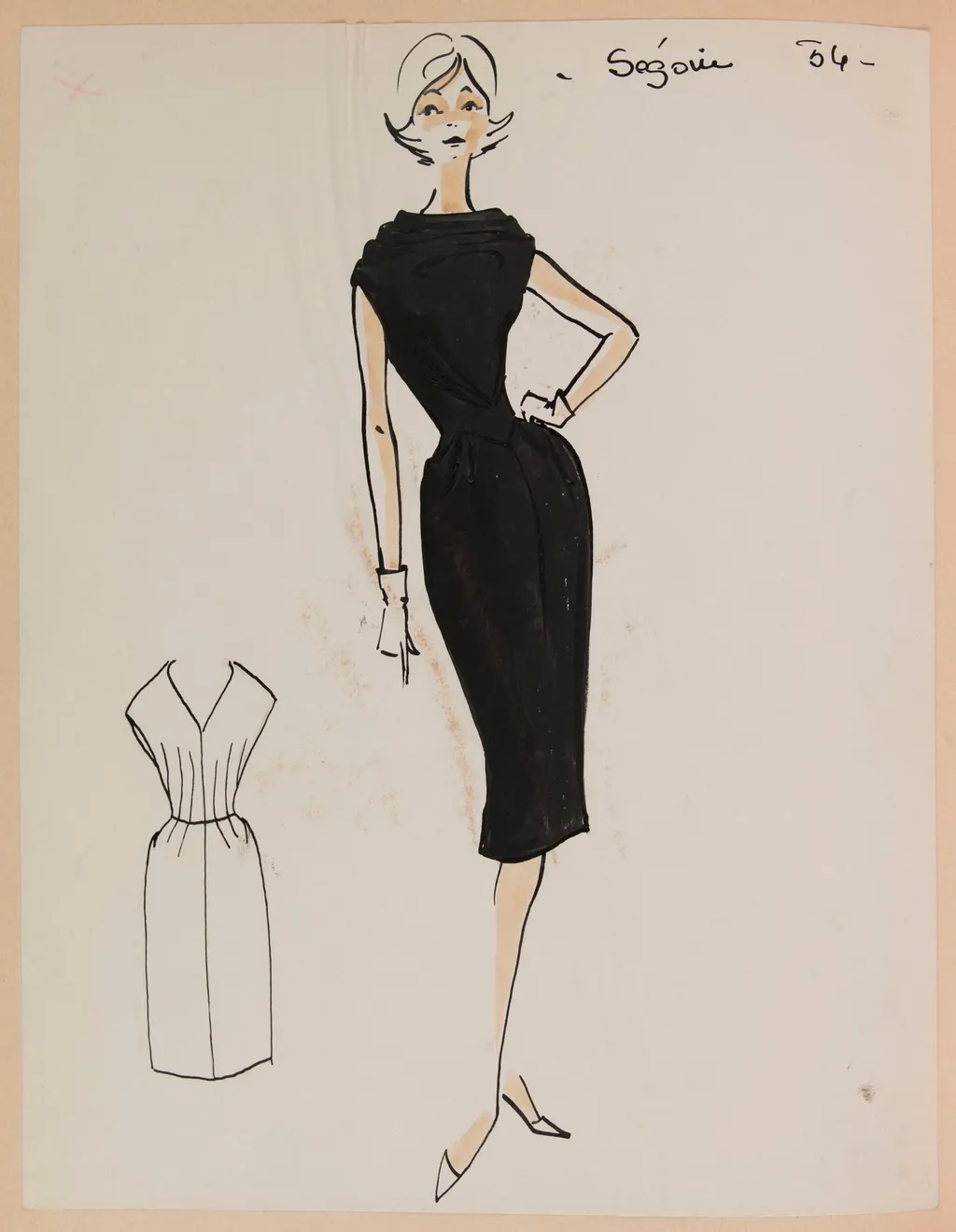
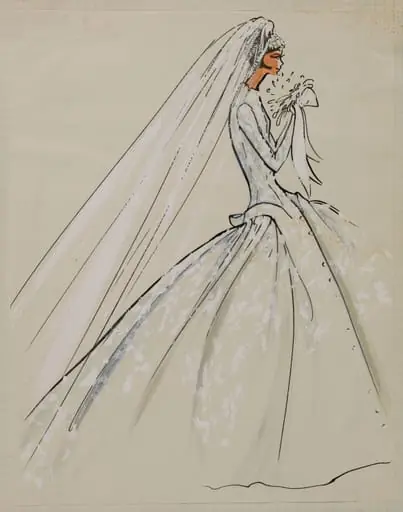
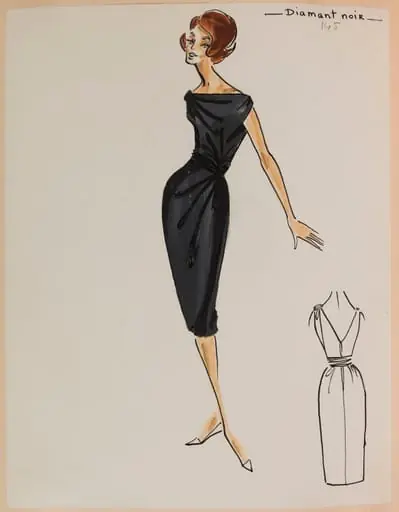
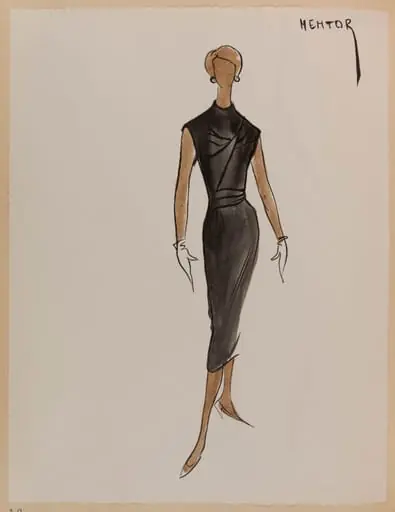
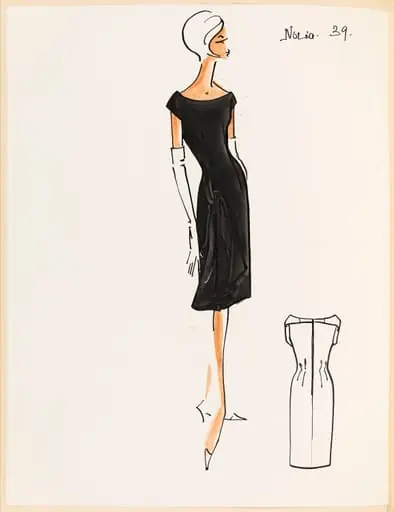
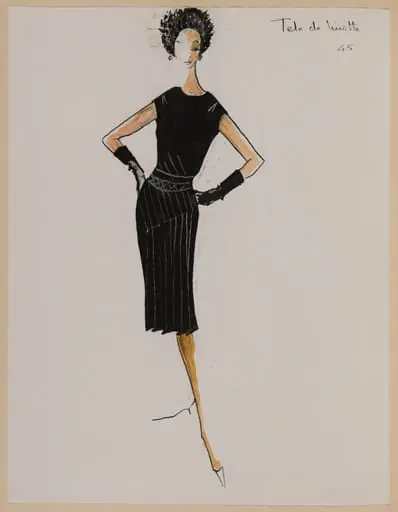
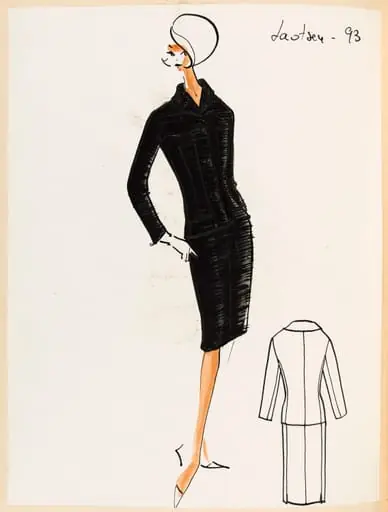
Ségonie is a drawing by Carven. It dates from 1958 and is held in the collection of the Palais Galliera - Musée de la Mode de la Ville de Paris.
About this work
Overview
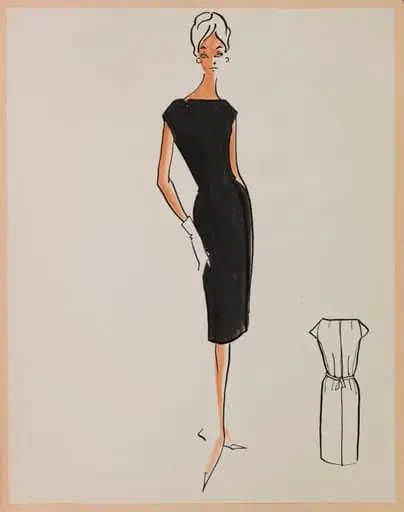
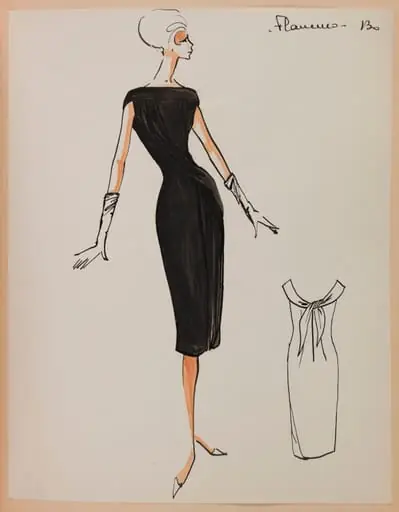
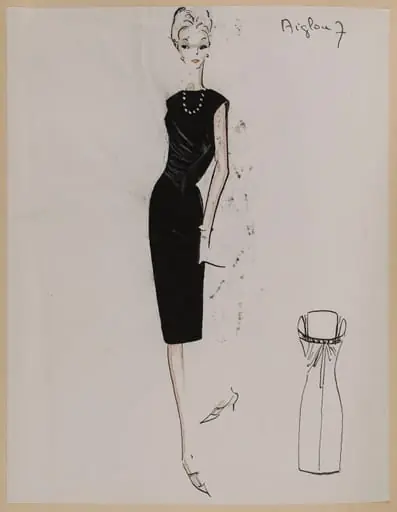
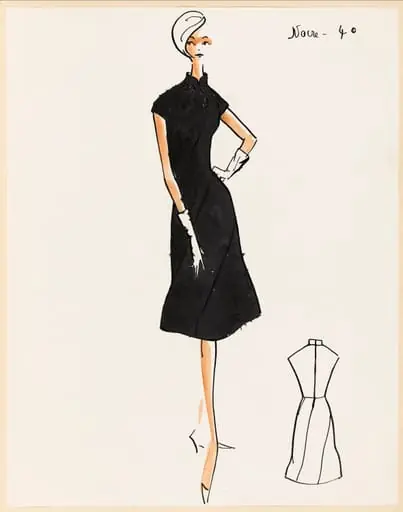
The work presents a stylized portrait of a woman alongside a technical flat drawing of her dress, blending fashion design with figurative representation.
Ségonie is a pencil sketch from around 1958, attributed to the French fashion house Carven. It resides in the collection of the Museum of Ethnography. The work presents a stylized portrait of a woman alongside a technical flat drawing of her dress, blending fashion design with figurative representation. The composition emphasizes structure over narrative, reflecting the studio practice of mid-century couture.
Subject & Meaning
The figure is depicted in a poised, upright stance, one hand resting on her hip, suggesting self-assurance. Her attire—a tailored black dress with a fitted bodice and flared skirt—is rendered with precision, indicating its importance as the central subject. The inclusion of the flat pattern drawing beside her transforms the image into a document of design, where the woman becomes both wearer and vessel for the garment’s form.
Technique & Style
Executed in clean, linear pencil strokes, the sketch avoids heavy shading, focusing instead on silhouette and proportion. The woman’s hair is drawn with minimal detail, reinforcing the dress as the primary element. The flat pattern beside her is rendered with geometric clarity, typical of fashion technical drawings. The signature 'Carven' in the corner anchors the work to the fashion label, signaling its functional origin in design development.
History & Provenance
Created circa 1958, the sketch likely originated in Carven’s design studio during the production of a seasonal collection. It entered the Museum of Ethnography’s holdings through acquisition or donation, possibly as part of a broader effort to document fashion as cultural artifact. Its preservation reflects institutional interest in the material culture of mid-century European fashion design.
Context
In the late 1950s, Parisian fashion houses emphasized precision in both garment construction and visual presentation. Sketches like Ségonie served as internal tools for design refinement and client presentation. The integration of figure and flat pattern aligns with industry practices of the time, where fashion illustration bridged artistic expression and technical specification.
Legacy
Ségonie endures as a quiet example of how fashion design was documented in its era—not as fine art, but as functional record. Its presence in an ethnographic museum underscores a shift in cultural institutions toward recognizing clothing as a medium of social and aesthetic expression. The work remains a testament to the quiet labor behind couture production.
Artist & collection
Artist
These delicate ink-on-paper drawings capture the quiet poetry of everyday things: pinecones, reeds, apples.
Museum
Palais Galliera - Musée de la Mode de la Ville de Paris
Continue through works from the same source collection.