Artwork
Sévillane
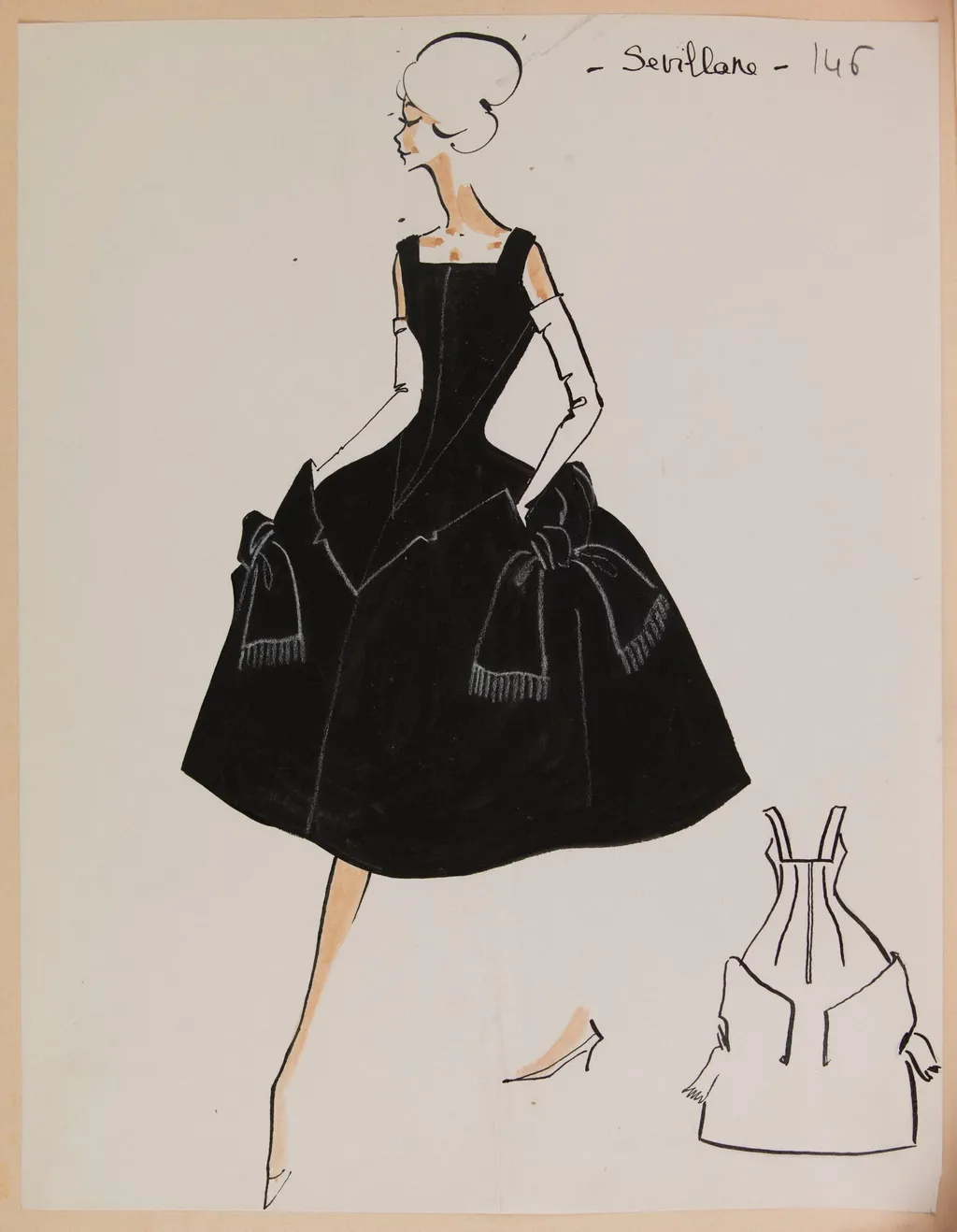
Sévillane is a drawing by Carven. It dates from 1958 and is held in the collection of the Palais Galliera - Musée de la Mode de la Ville de Paris.
About this work
Overview
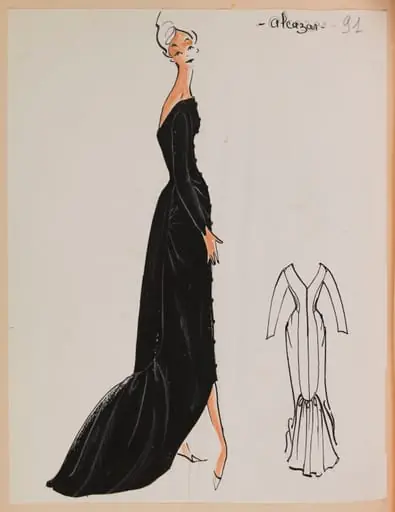
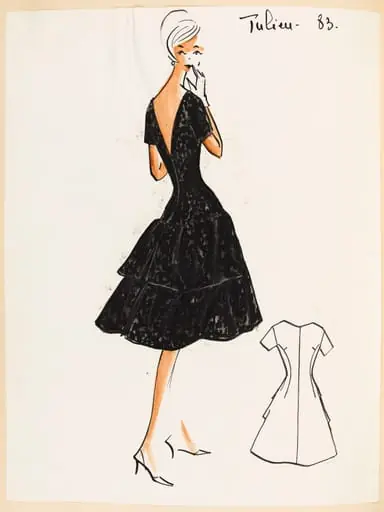
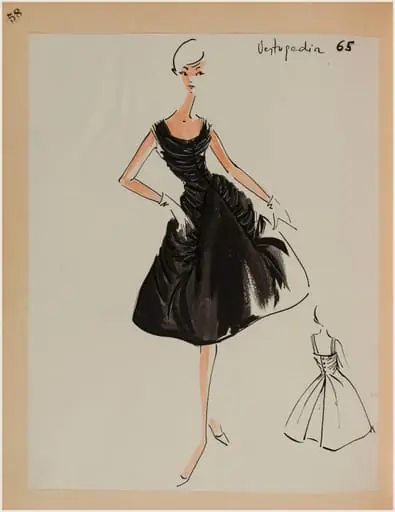
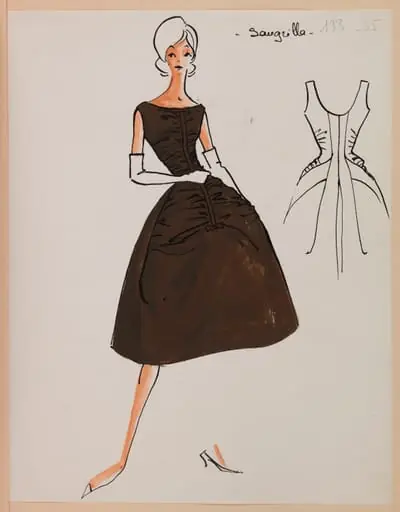
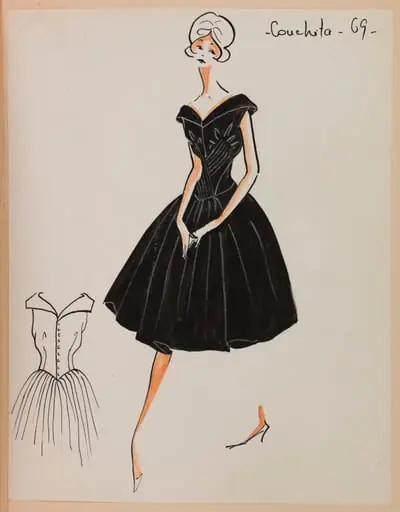
The drawing captures a woman in a full black dress, rendered with loose, economical lines that emphasize volume and movement rather than fine detail.
Sévillane is a pencil sketch from around 1958 by French designer Carven, likely created as a design study. It is part of the collection at the Museum of Ethnography. The drawing captures a woman in a full black dress, rendered with loose, economical lines that emphasize volume and movement rather than fine detail. A secondary sketch beside it shows the dress’s back silhouette, suggesting the artist was refining the garment’s structure.
Subject & Meaning
The figure in Sévillane embodies a relaxed, self-assured posture, suggesting a sense of ease in the garment. The dress, with its wide bell-shaped skirt and square neckline, evokes mid-century Spanish-inspired fashion, possibly referencing traditional regional attire. The sketch does not depict a specific person but rather an idealized form, focused on the interplay between body and fabric rather than identity or narrative.
Technique & Style
Carven employed swift, unrefined pencil strokes to convey the dress’s volume and flow. The lines are minimal yet precise, capturing the silhouette without ornamentation. The inclusion of a separate back view indicates a functional approach—this was not a finished illustration but a working study. The absence of facial features or background reinforces the focus on the garment’s form and structure.
History & Provenance
Sévillane entered the Museum of Ethnography’s collection as part of a broader acquisition of fashion design materials from Carven’s studio. Its origin as a preparatory sketch suggests it was used internally during the design process. The work was not exhibited publicly at the time of creation but was preserved for its insight into mid-century French fashion development and textile experimentation.
Context
In the late 1950s, Parisian fashion houses increasingly drew from global traditions to refresh their silhouettes. Carven, known for blending elegance with practicality, was experimenting with volume and structure during this period. Sévillane reflects this trend, channeling Spanish folk dress into contemporary ready-to-wear, aligning with broader postwar interests in cultural motifs as sources of modern design.
Legacy
Sévillane remains a quiet example of how fashion designers used sketching to explore form before production. It offers a glimpse into the iterative process behind garments that later entered the market. While not widely known outside specialist circles, it contributes to scholarly understanding of how mid-century designers translated cultural references into wearable, modern shapes.
Artist & collection
Artist
These delicate ink-on-paper drawings capture the quiet poetry of everyday things: pinecones, reeds, apples.
Museum
Palais Galliera - Musée de la Mode de la Ville de Paris
Continue through works from the same source collection.