Artwork
Sauge
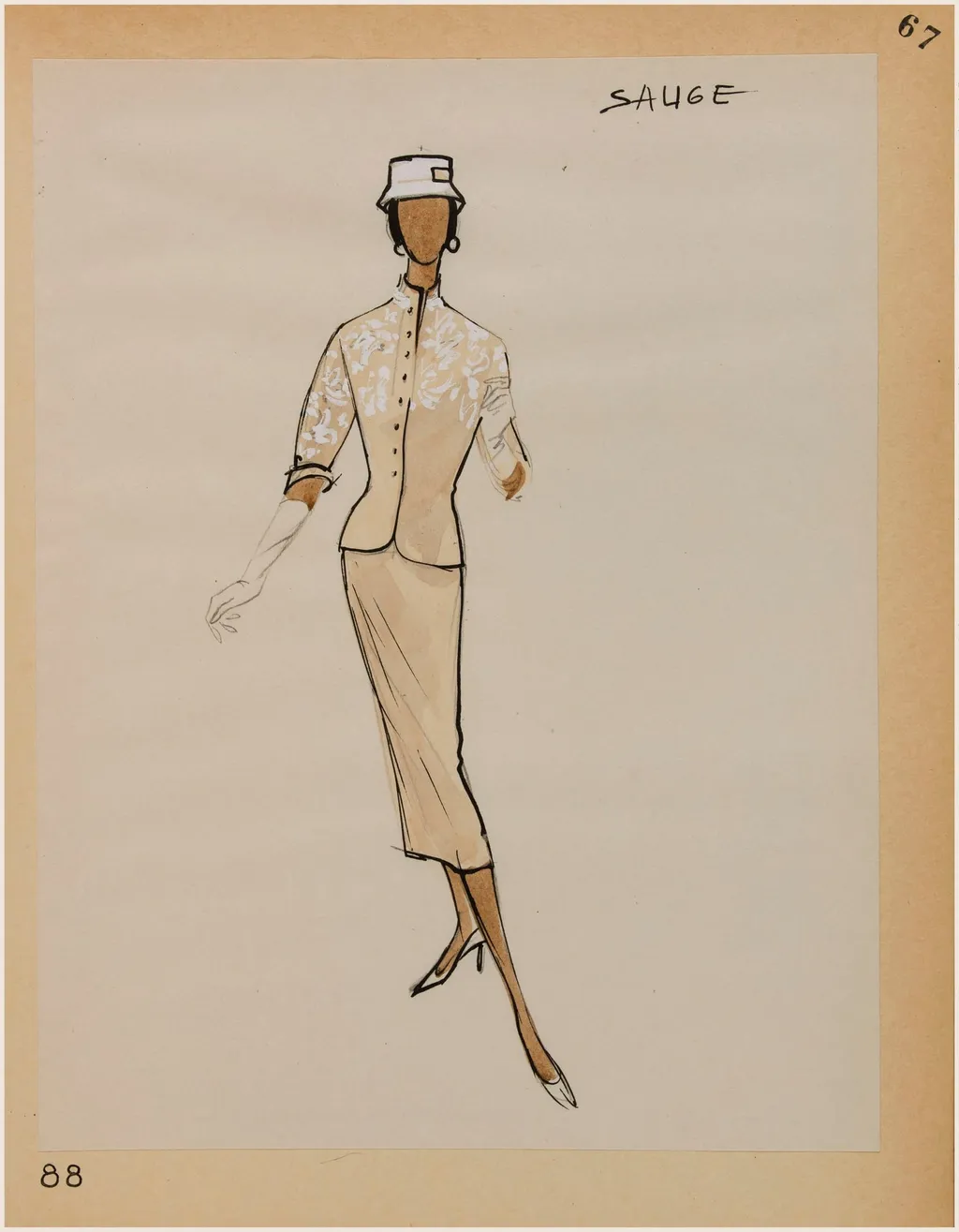
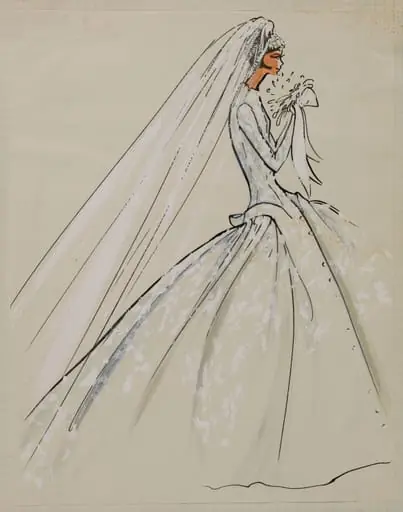
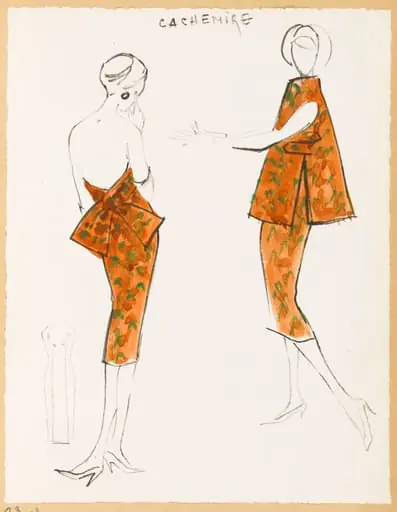
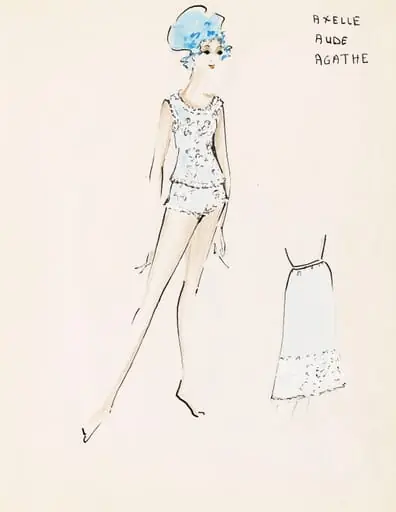
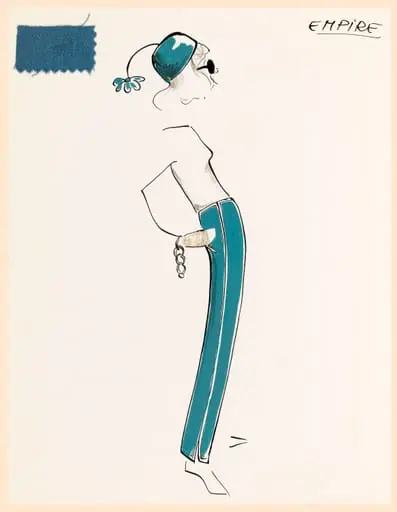
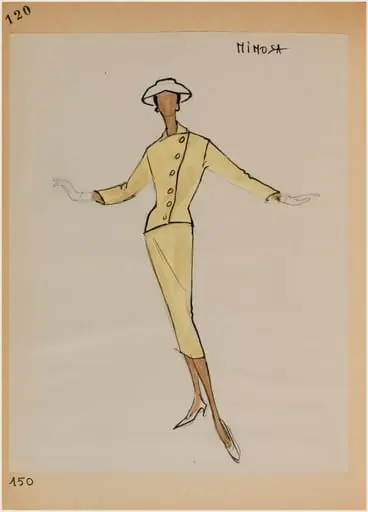
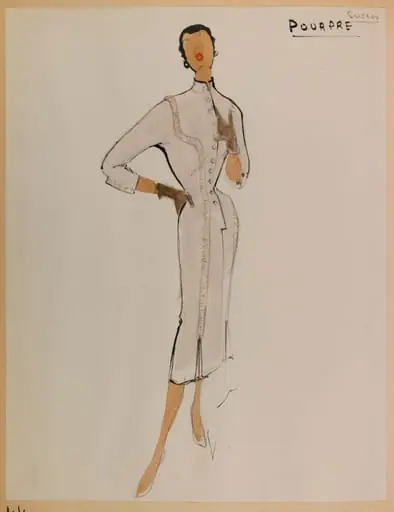
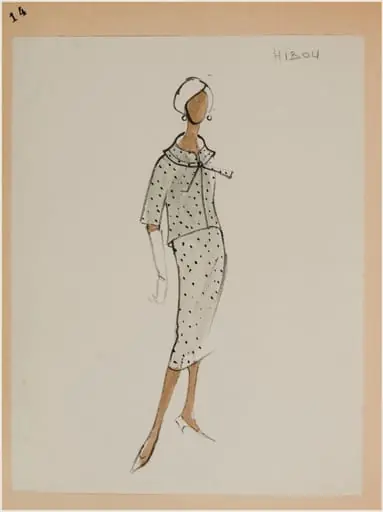
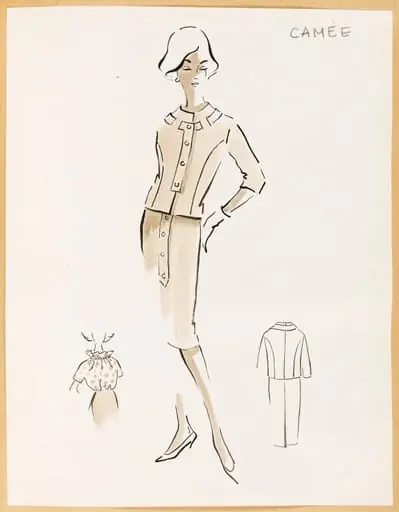
Sauge is a drawing by Carven. It dates from 1956 and is held in the collection of the Palais Galliera - Musée de la Mode de la Ville de Paris.
About this work
Overview
Its monochromatic palette and attention to detail reflect a documentary approach to contemporary dress, situating the figure within a quiet, unadorned space.
Sauge is a 1956 ink drawing by the artist Carven, currently held in the collection of the Museum of Ethnography. The work presents a solitary female figure rendered in fine, precise lines, capturing the silhouette and texture of mid-century fashion. Its monochromatic palette and attention to detail reflect a documentary approach to contemporary dress, situating the figure within a quiet, unadorned space.
Subject & Meaning
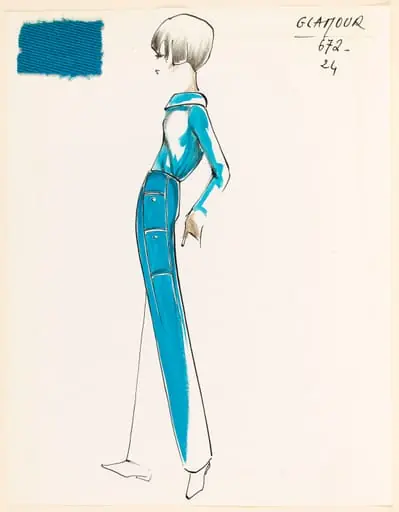
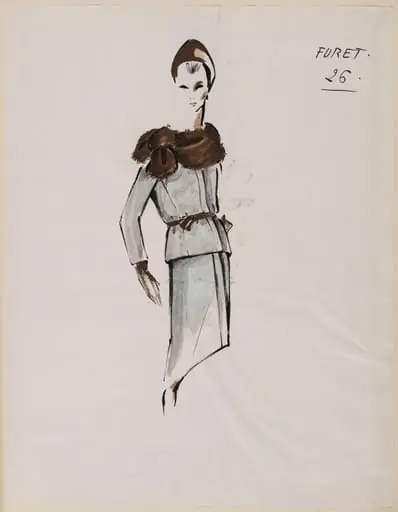
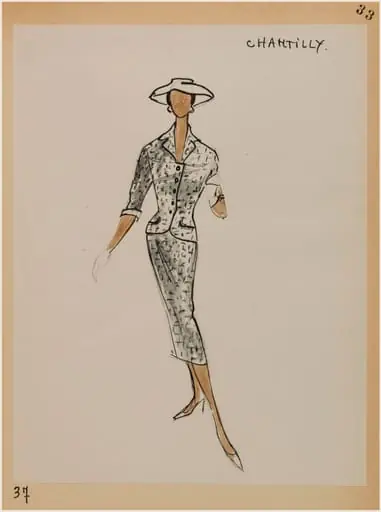
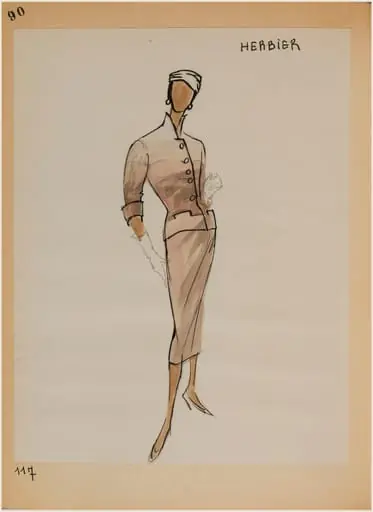
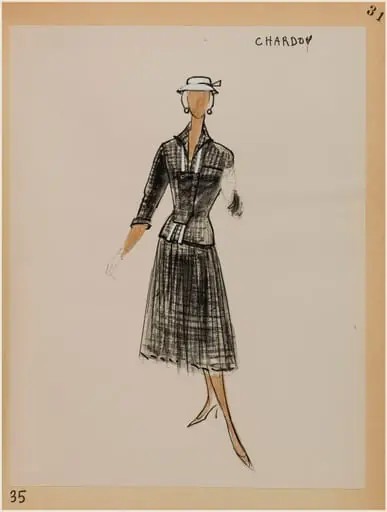
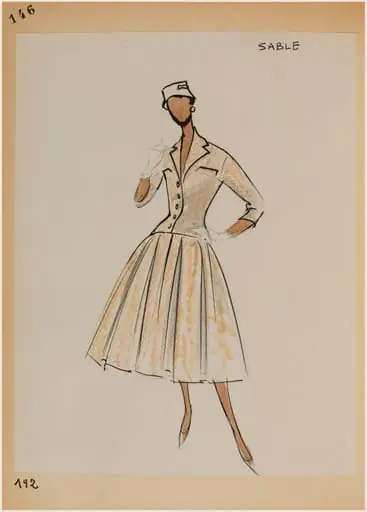
The subject is a woman dressed in an ensemble typical of 1950s urban fashion: a white hat, tailored jacket with delicate patterning, matching skirt, gloves, and heeled shoes. The attire suggests a middle- or upper-class woman engaged in public life, possibly attending a social or ceremonial occasion. The drawing does not depict action or emotion, instead emphasizing the form and structure of clothing as a cultural artifact.
Technique & Style
Carven employed fine-line ink drawing to render fabric folds, hat texture, and shoe contours with meticulous clarity. The absence of color focuses attention on form and line, while the light beige background creates subtle contrast without distraction. The style is observational rather than expressive, aligning with ethnographic documentation practices of the period.
History & Provenance
Created in 1956, the drawing entered the Museum of Ethnography’s collection shortly after its completion. Its origin as a study of contemporary dress indicates it was likely produced as part of a broader effort to record evolving fashion norms. No record of prior ownership or exhibition history is publicly documented beyond its institutional acquisition.
Context
In the mid-1950s, fashion design in Europe was transitioning from wartime austerity to renewed emphasis on elegance and craftsmanship. Carven, known for her couture work, may have used this drawing to explore how everyday wear reflected social identity. The piece aligns with ethnographic projects seeking to preserve material culture during a period of rapid stylistic change.
Legacy
Sauge remains a quiet but significant record of postwar women’s fashion, valued for its precision and neutrality. It contributes to scholarly understanding of how clothing functioned as both personal expression and cultural signifier. The drawing is not widely reproduced, but within the museum’s collection, it serves as a reference for studies in 20th-century dress history.
Artist & collection
Artist
These delicate ink-on-paper drawings capture the quiet poetry of everyday things: pinecones, reeds, apples.
Museum
Palais Galliera - Musée de la Mode de la Ville de Paris
Continue through works from the same source collection.