Artwork
Sauterelle
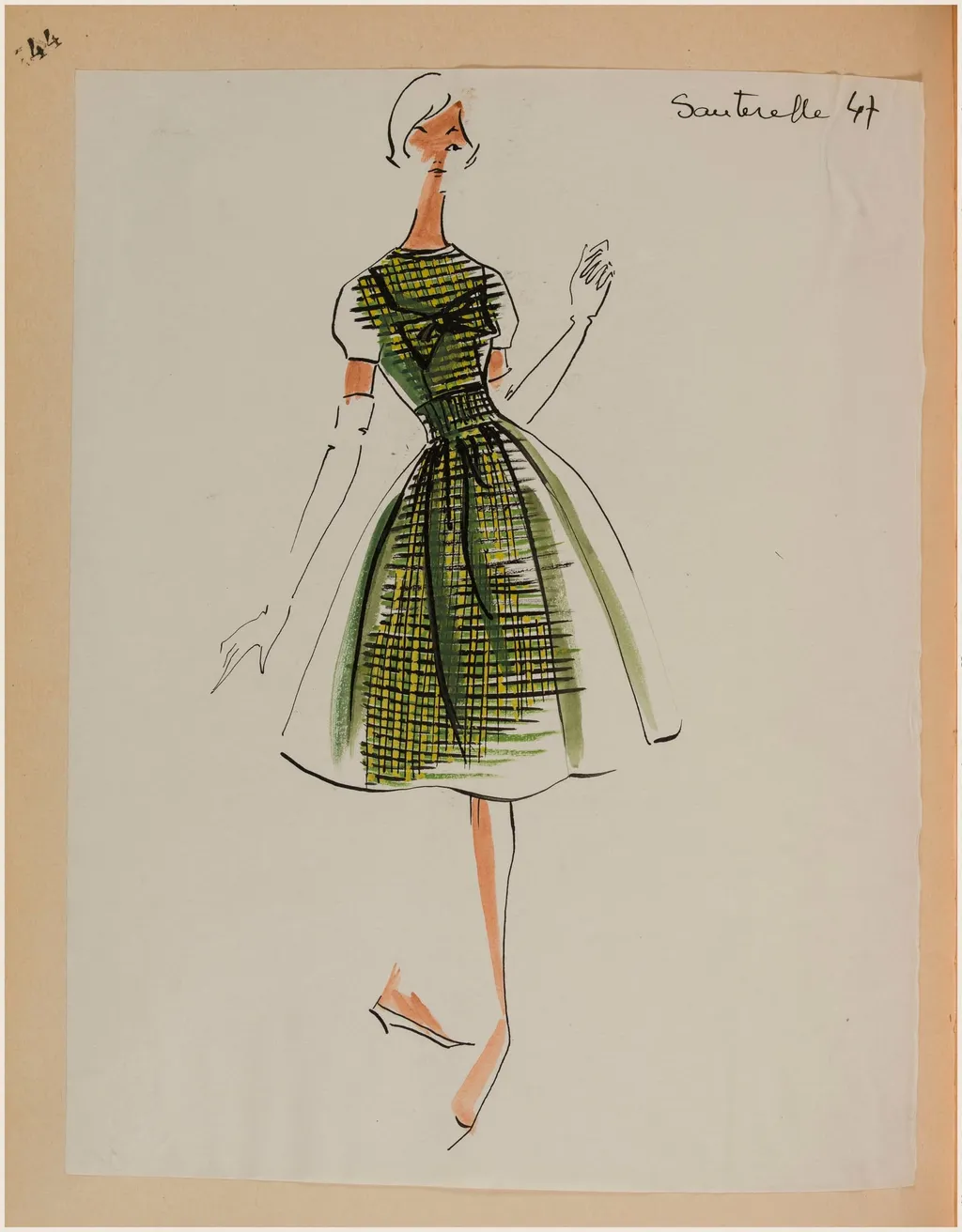
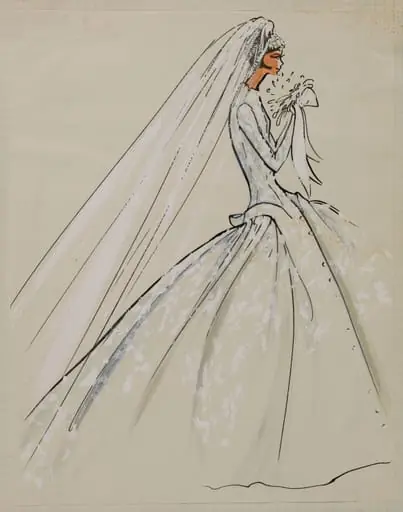
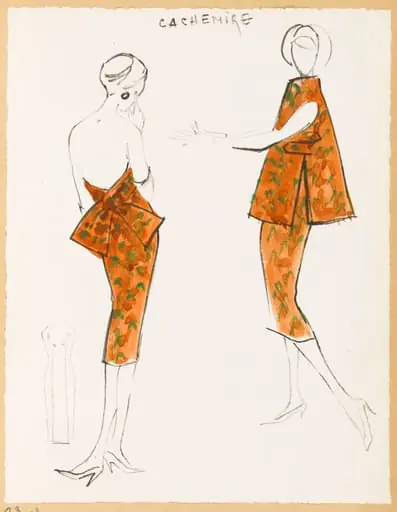
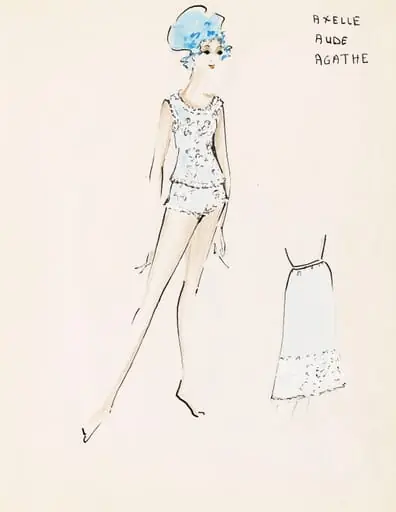
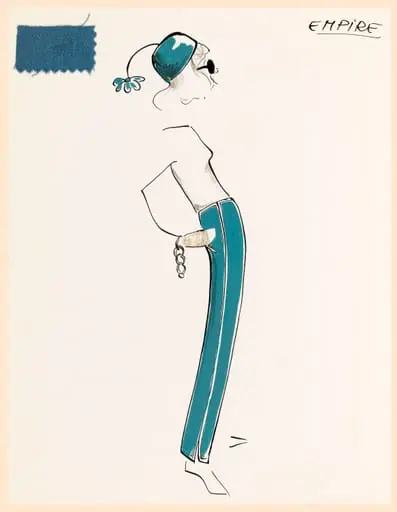
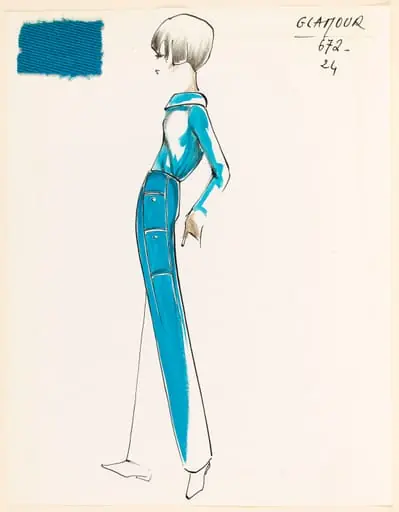
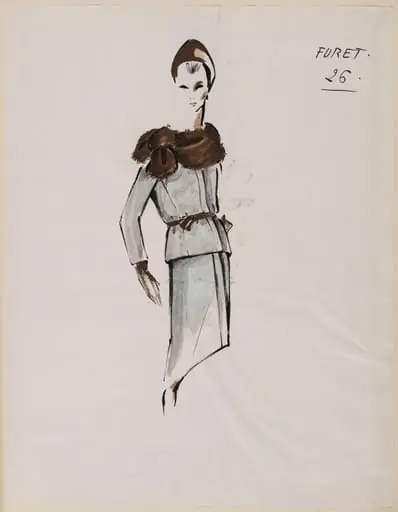
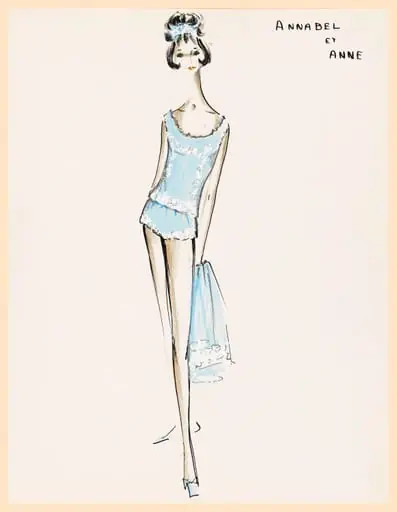
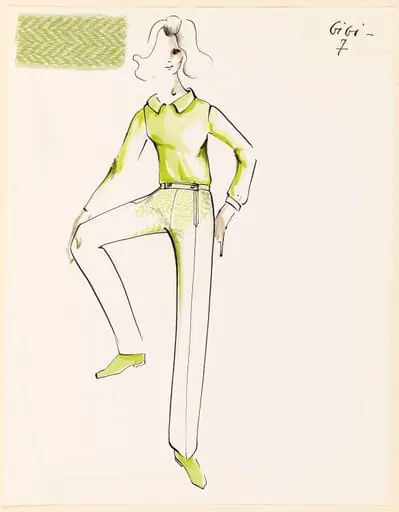
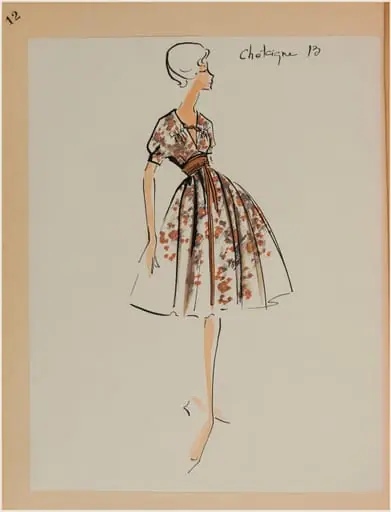
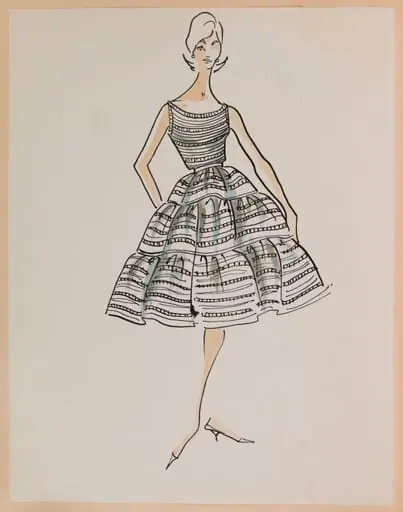
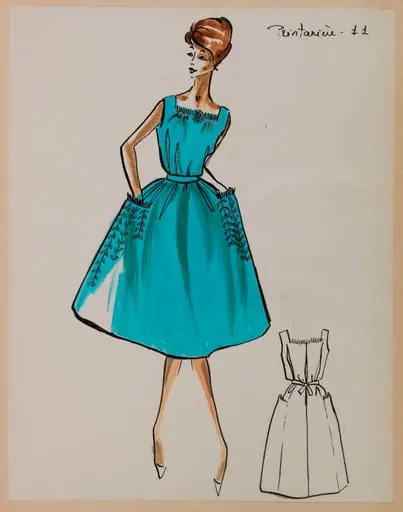
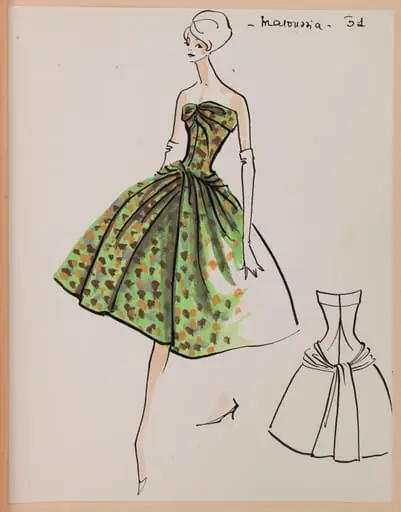
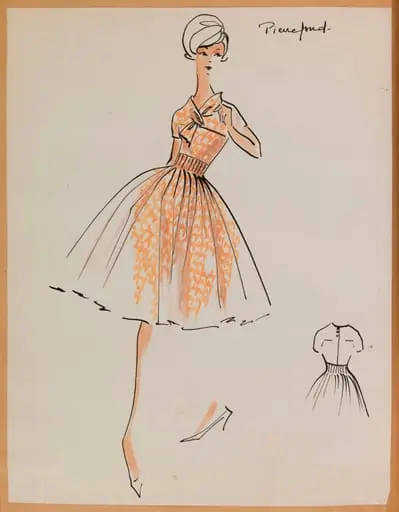
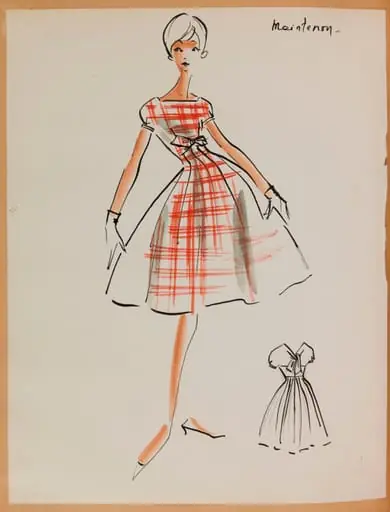
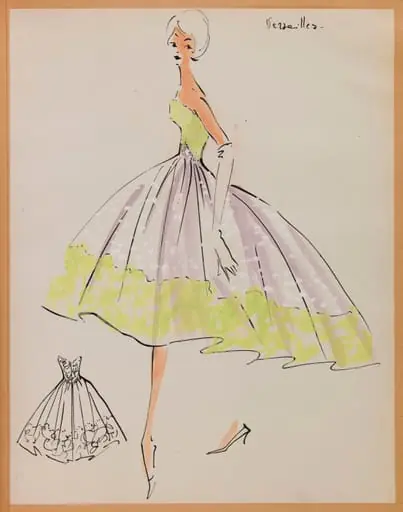
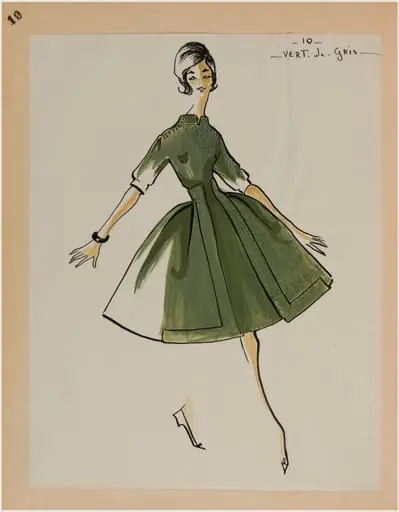
Sauterelle is a drawing by Carven. It dates from 1958 and is held in the collection of the Palais Galliera - Musée de la Mode de la Ville de Paris.
About this work
Overview
Its informal quality suggests it was made as a quick study, possibly during the design process for a garment or as a personal record of movement and form.
Sauterelle, dated around 1958, is a pencil sketch by the French designer Carven. It resides in the collection of the Museum of Ethnography. The work captures a momentary observation rather than a finished illustration, rendered with minimal, spontaneous strokes. Its informal quality suggests it was made as a quick study, possibly during the design process for a garment or as a personal record of movement and form.
Subject & Meaning
The figure is a woman dressed in a lightweight, checkered garment with short sleeves and a flared skirt, suggesting mid-century casual wear. Her short, tidy hair and poised stance imply a sense of quiet composure. The object in her right hand is indistinct but likely a small accessory or prop, hinting at daily ritual. The sketch avoids narrative, focusing instead on posture and fabric flow, reflecting an interest in the lived experience of clothing.
Technique & Style
Carven employed light, fluid pencil lines, varying pressure to suggest volume without shading. Some contours are barely visible, as if erased or lightly touched; others are more defined, guiding the eye through the figure’s silhouette. The sketch’s unfinished nature reveals the artist’s process—lines are layered, tentative, and responsive, capturing motion and texture through economy rather than detail.
History & Provenance
The sketch entered the Museum of Ethnography’s collection as part of a broader acquisition of Carven’s personal archives. Its origin as a working drawing, not a public-facing design, makes it a rare glimpse into the designer’s private creative practice. It was likely preserved for its insight into mid-century fashion development rather than as a standalone artwork.
Context
Created in the late 1950s, Sauterelle reflects the era’s shift toward relaxed, wearable fashion. Carven, known for blending elegance with practicality, often sketched daily life to inform her collections. This drawing aligns with postwar European design values—simplicity, movement, and attention to the body in motion—offering a quiet counterpoint to the more formal couture of the time.
Legacy
Sauterelle endures not as a celebrated design but as a document of process. It contributes to scholarly understanding of how fashion designers translated observation into garment construction. Its presence in an ethnographic museum underscores the cultural significance of everyday dress and the quiet labor behind its creation.
Artist & collection
Artist
These delicate ink-on-paper drawings capture the quiet poetry of everyday things: pinecones, reeds, apples.
Museum
Palais Galliera - Musée de la Mode de la Ville de Paris
Continue through works from the same source collection.