Artwork
'Troïka'
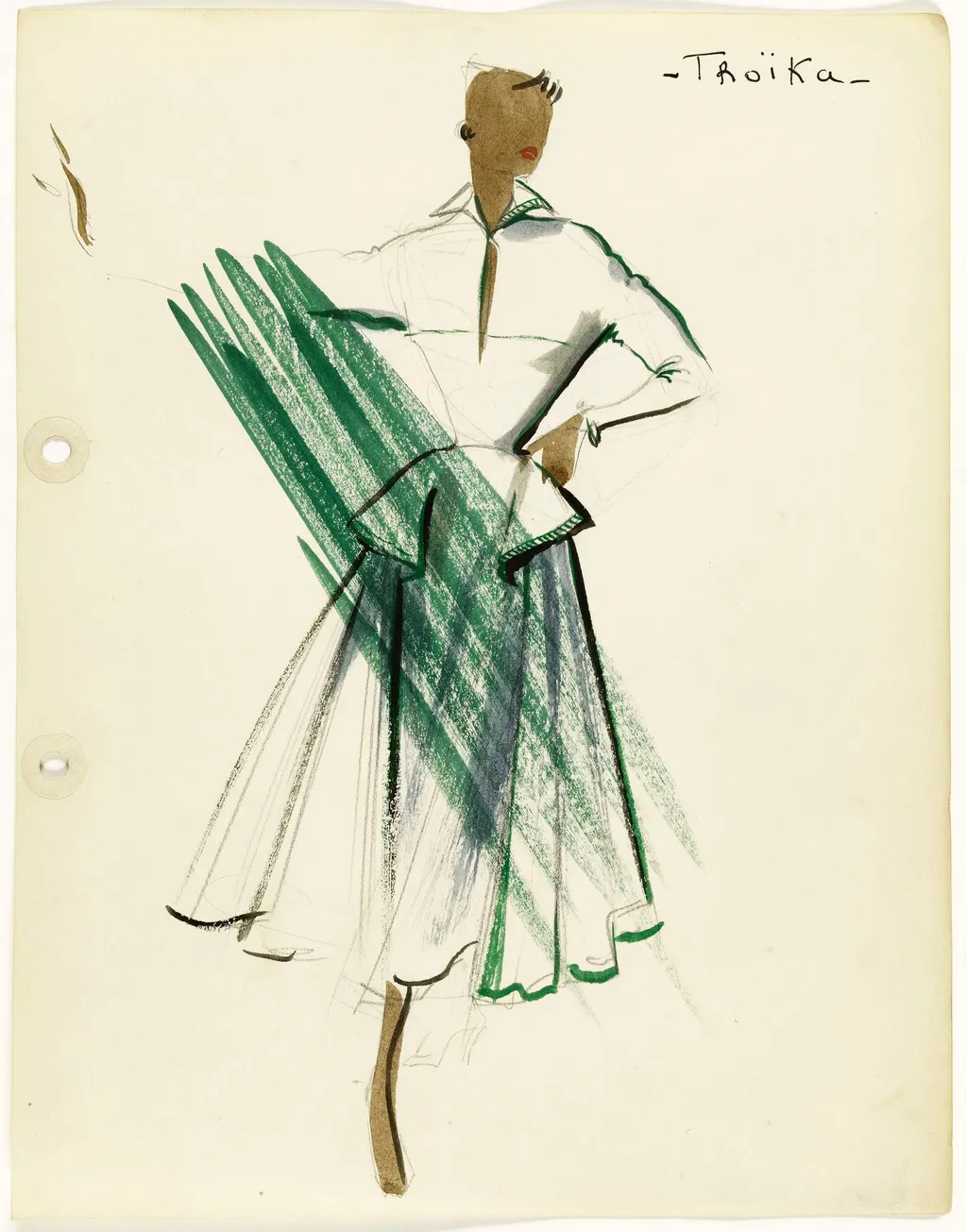
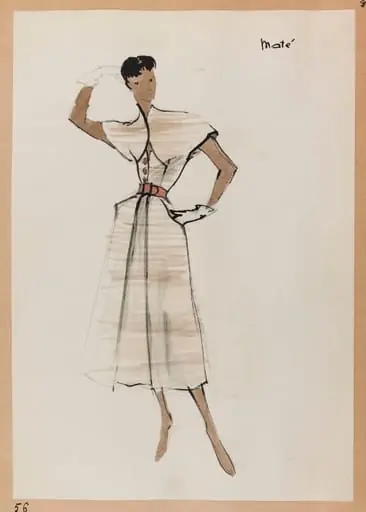
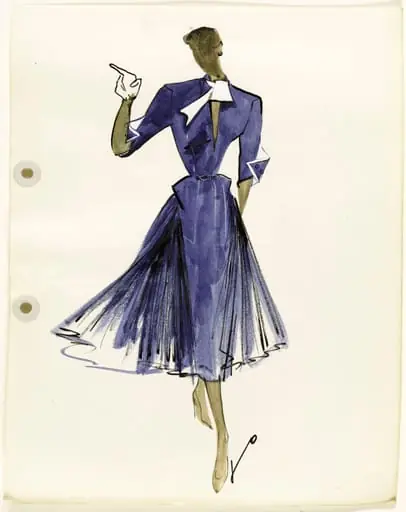
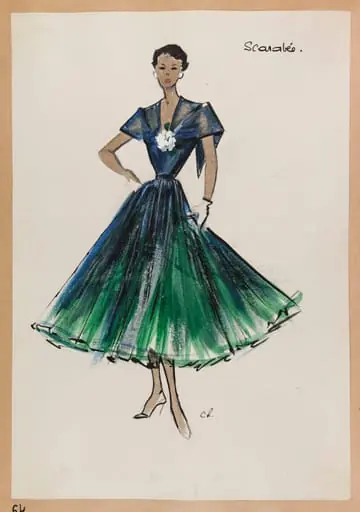
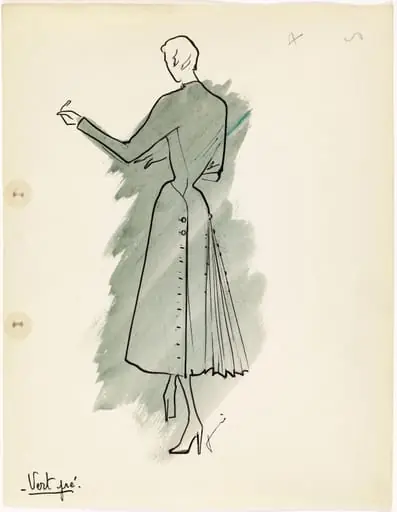
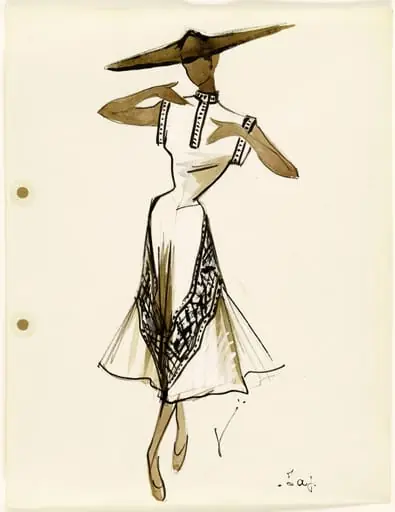
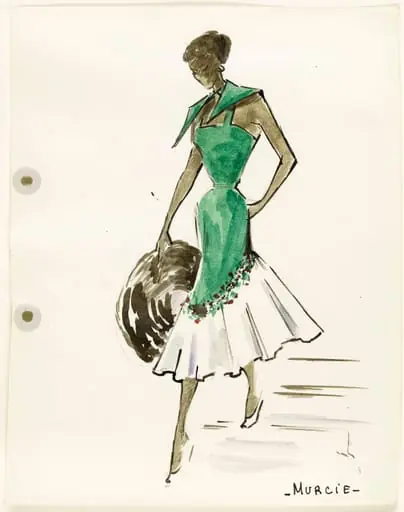
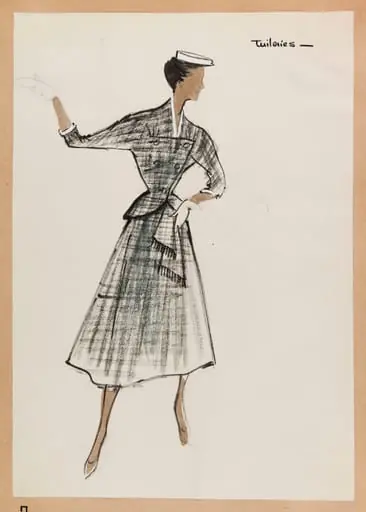
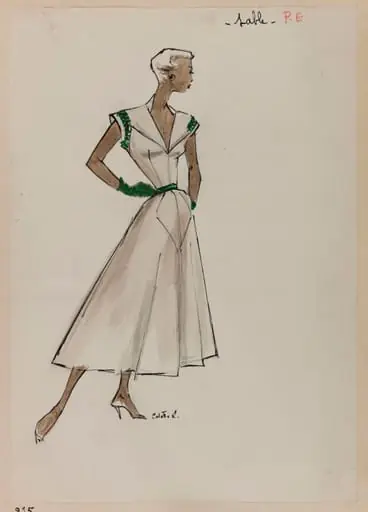
'Troïka' is a drawing by Carven. It dates from 1951 and is held in the collection of the Palais Galliera - Musée de la Mode de la Ville de Paris.
About this work
Overview
Created around 1951, 'Troïka' is a graphite sketch by the designer Carven, currently held in the collection of the Museum of Ethnography.
Created around 1951, 'Troïka' is a graphite sketch by the designer Carven, currently held in the collection of the Museum of Ethnography. The work captures a single figure in motion, rendered with rapid, fluid lines and minimal detail. Its focus on textile and posture rather than facial features suggests an interest in movement and form over portraiture. The title, inscribed in the corner, remains unexplained in available records.
Subject & Meaning
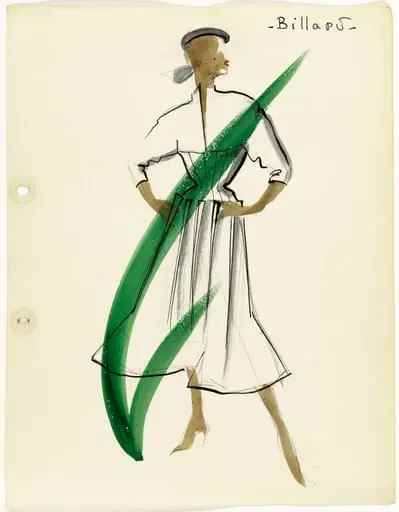
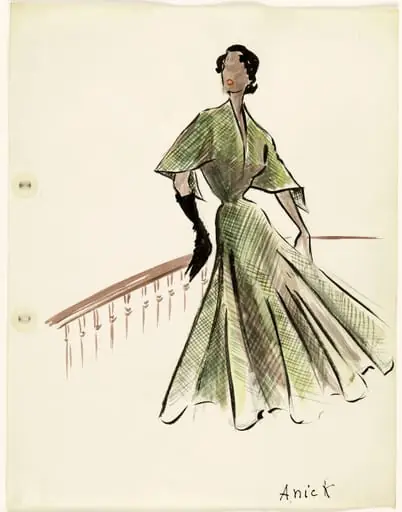
The figure is a woman wearing a long, flared green dress, her arms extended as if to spread the fabric like wings. The pose implies motion—perhaps a dance or ritual gesture—but no narrative context is provided. The absence of facial features directs attention to the dress as the central element, suggesting the garment itself carries symbolic or cultural weight. The title 'Troïka' may reference a Russian three-horse sled or a trio, though its relevance here is unclear.
Technique & Style
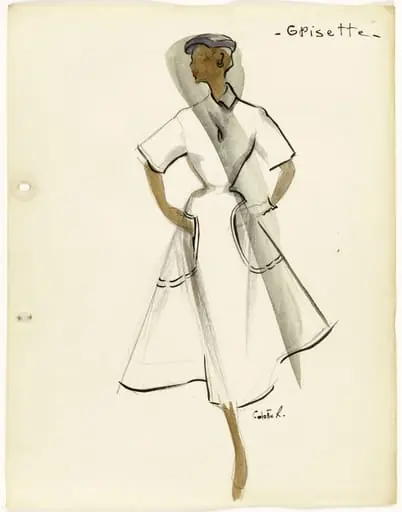
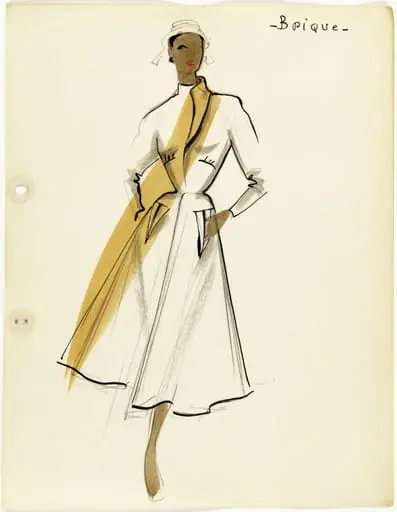
Carven employed loose, gestural lines to convey the flow of fabric and the figure’s motion. Light shading adds subtle volume without defining form rigidly. The sketch’s spontaneity suggests a rapid study, possibly made from life or memory. The emphasis on silhouette and drapery, rather than anatomical precision, reflects a design-oriented approach, prioritizing the dynamics of clothing over individual identity.
History & Provenance
The drawing entered the Museum of Ethnography’s collection without documented provenance prior to its acquisition. No exhibition history or correspondence linking it to specific events or commissions has been preserved. Its presence in an ethnographic institution, rather than a fashion or fine arts archive, hints at its perceived cultural or anthropological significance, though the artist’s intent remains unrecorded.
Context
Carven, primarily known for fashion design in mid-20th century France, occasionally produced drawings that blurred the line between costume study and artistic expression. 'Troïka' aligns with a period when designers explored non-Western aesthetics and movement-based forms. The sketch may reflect an interest in folk dance or global textile traditions, though no direct link to a specific culture has been established.
Legacy
The work survives as a fragment of Carven’s broader practice, offering insight into how fashion designers engaged with movement and form beyond garment construction. Its inclusion in an ethnographic museum suggests curators viewed it as a cultural artifact rather than a purely aesthetic object. Though not widely reproduced, it remains a quiet example of design thinking in motion.
Artist & collection
Artist
These delicate ink-on-paper drawings capture the quiet poetry of everyday things: pinecones, reeds, apples.
Museum
Palais Galliera - Musée de la Mode de la Ville de Paris
Continue through works from the same source collection.