Artwork
Violoncelle
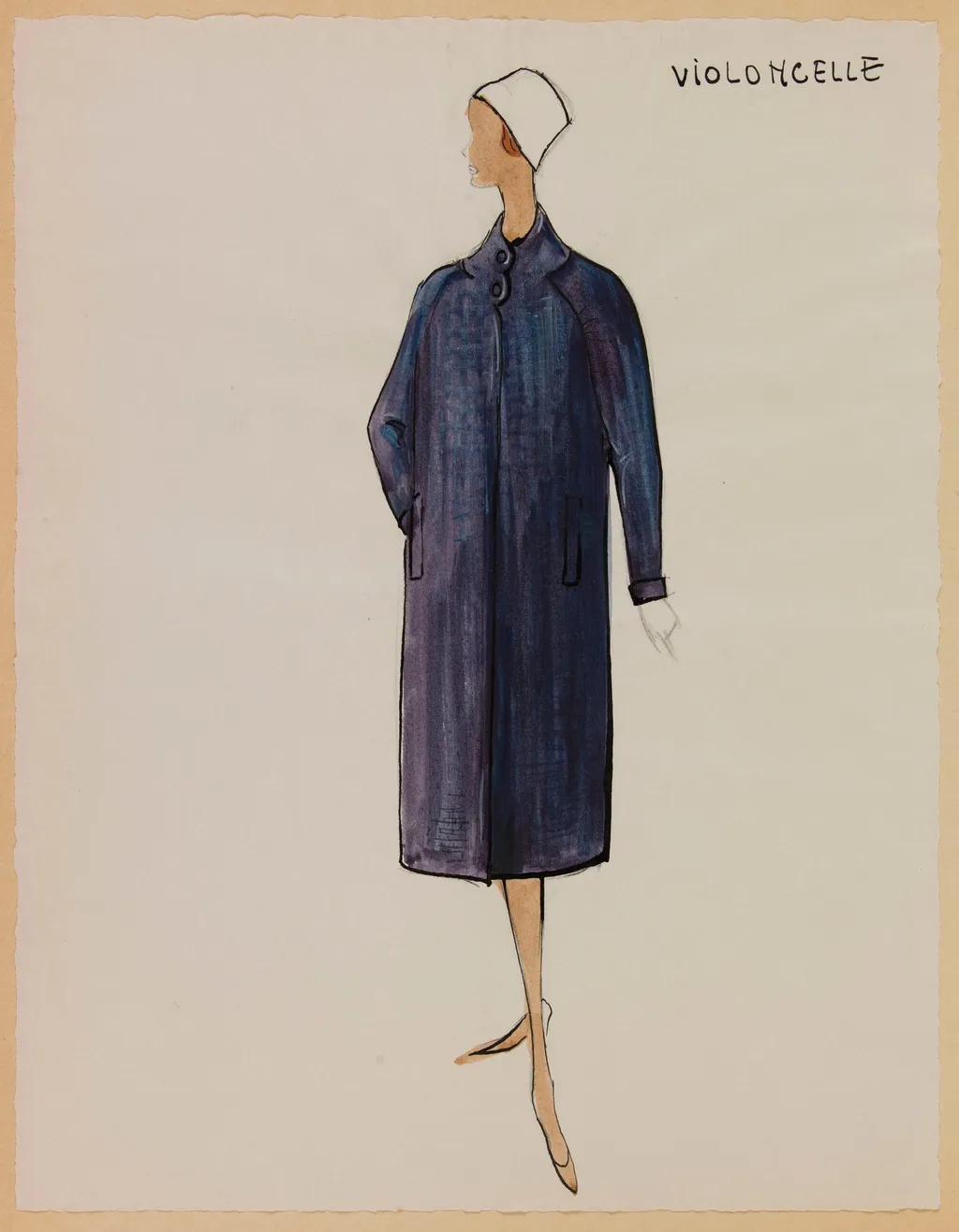
Violoncelle is a drawing by Carven. It dates from 1956 and is held in the collection of the Palais Galliera - Musée de la Mode de la Ville de Paris.
About this work
Overview
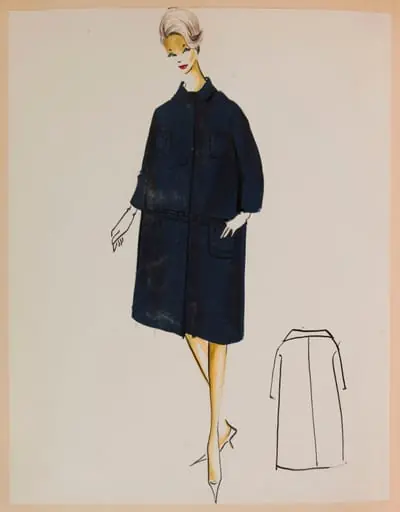
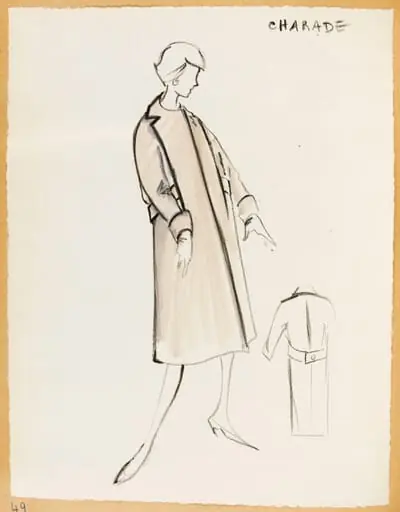
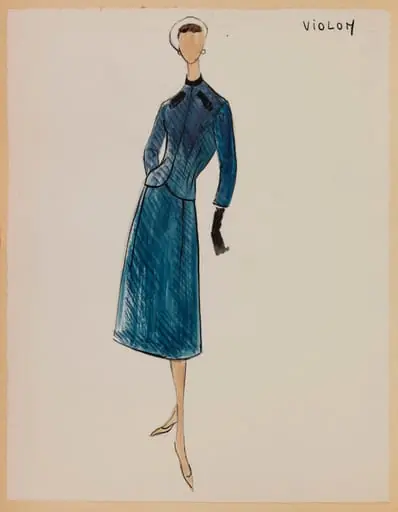
Executed in soft, muted tones, the image depicts a solitary female figure in a long, dark coat with a high collar and deep pockets.
Created around 1956, Violoncelle is a delicate line drawing attributed to the designer Carven. Executed in soft, muted tones, the image depicts a solitary female figure in a long, dark coat with a high collar and deep pockets. Her hands are concealed within the coat’s folds, and her footwear is minimal. The background is unadorned, emphasizing the figure’s stillness. The title, written in the upper corner, references the French word for cello—an enigmatic detail without clear visual correlation.
Subject & Meaning
The figure appears introspective, her posture suggesting quiet containment. The coat, rendered with precise but unembellished lines, conveys modesty and practicality rather than fashion statement. The absence of facial features or contextual clues invites interpretation, though the title’s reference to a musical instrument introduces ambiguity. Whether the cello symbolizes silence, rhythm, or an inner resonance remains unresolved, leaving the work open to contemplation rather than narrative.
Technique & Style
The drawing employs restrained linework and a limited palette of earthy grays and muted tones, evoking the economy of fashion sketches. Brush or pen strokes are light and fluid, suggesting spontaneity. There is no shading or texture beyond the outline, and the composition is deliberately sparse. The style aligns with mid-century design studies—functional, observational, and stripped of ornament—yet retains an atmospheric stillness uncommon in purely utilitarian drafts.
History & Provenance
The work is held in the collection of the Museum of Ethnography, suggesting its acquisition as part of a broader documentation of cultural or design practices. Its origins as a personal sketch or preparatory study are unconfirmed. No documentation links it to a specific fashion collection or public exhibition at the time of creation. Its presence in an ethnographic context implies an interest in everyday visual culture rather than fine art.
Context
In the mid-1950s, Carven was active in Parisian fashion, known for understated, wearable designs. This drawing may reflect the designer’s habit of recording silhouettes for garments, though its lack of labels or measurements distinguishes it from technical patterns. The choice of title—linking a human form to a musical instrument—hints at a poetic sensibility within an industry often focused on utility. The work exists at the intersection of design practice and private reflection.
Legacy
Violoncelle endures not as a celebrated design artifact but as a quiet testament to the unseen labor behind fashion. Its inclusion in an ethnographic museum signals recognition of the cultural weight carried by informal, everyday drawings. While not widely reproduced or studied, it offers insight into the quiet, contemplative side of mid-century design culture—where form, silence, and suggestion held equal value to function.
Artist & collection
Artist
These delicate ink-on-paper drawings capture the quiet poetry of everyday things: pinecones, reeds, apples.
Museum
Palais Galliera - Musée de la Mode de la Ville de Paris
Continue through works from the same source collection.