Artwork
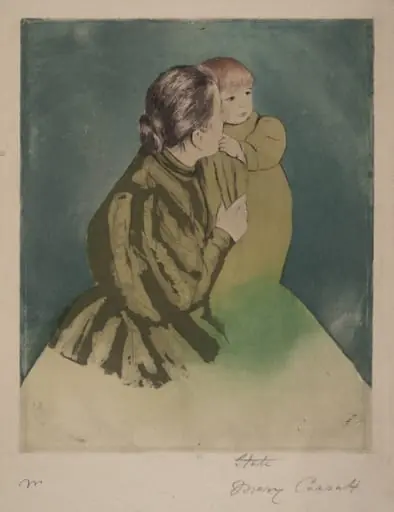
Peasant Mother and Child
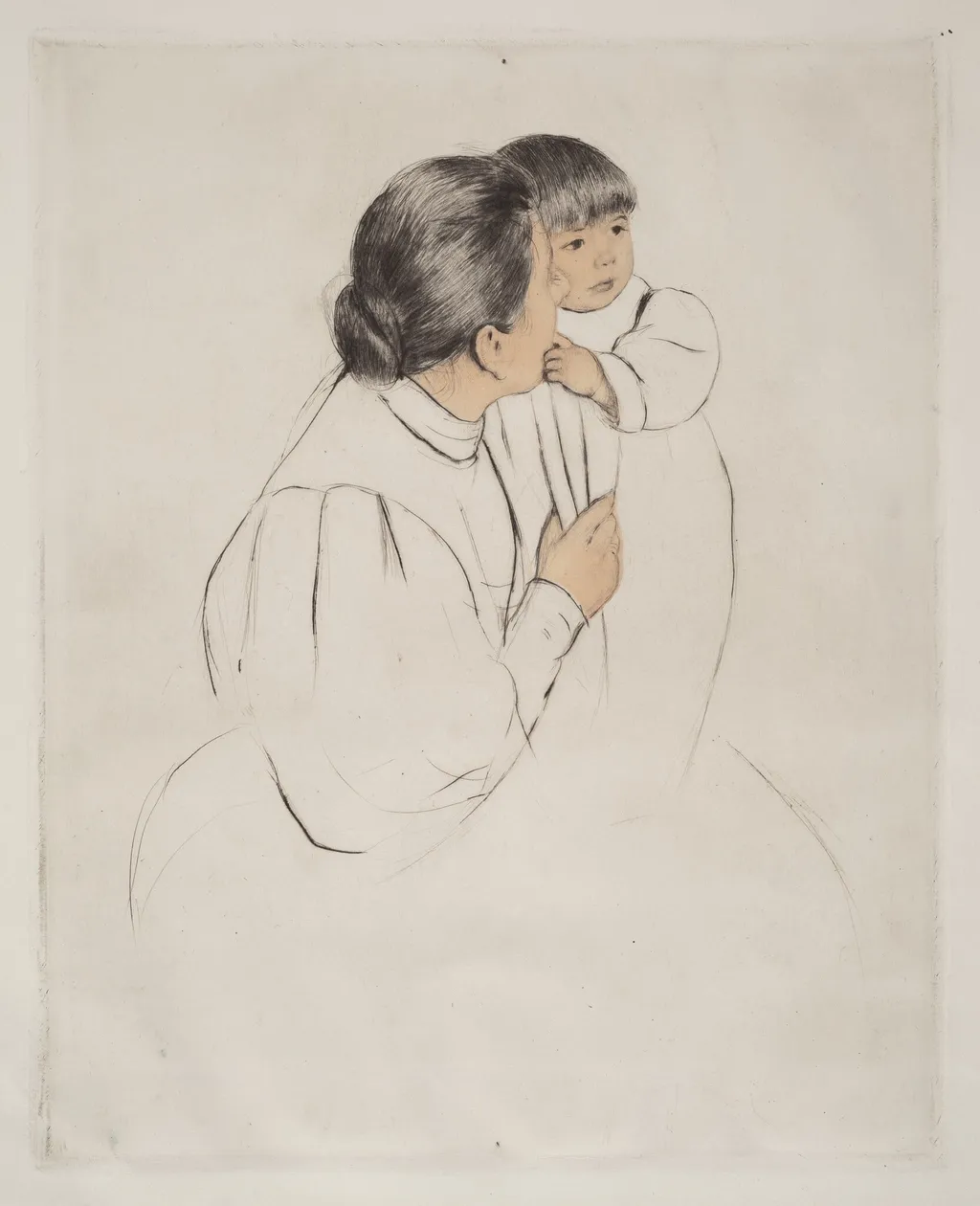
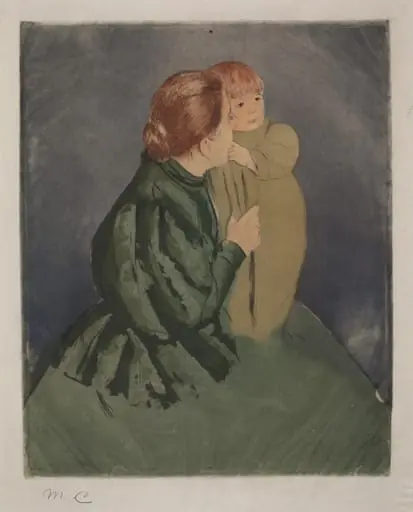
Peasant Mother and Child is an ink print by the Impressionist artist Mary Cassatt. It dates from 1894 and is held in the collection of the National Gallery of Art.
About this work
Overview
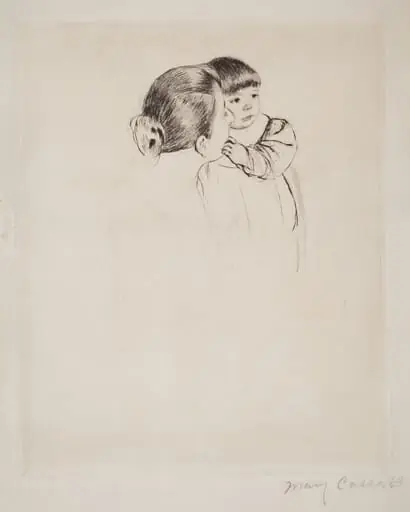
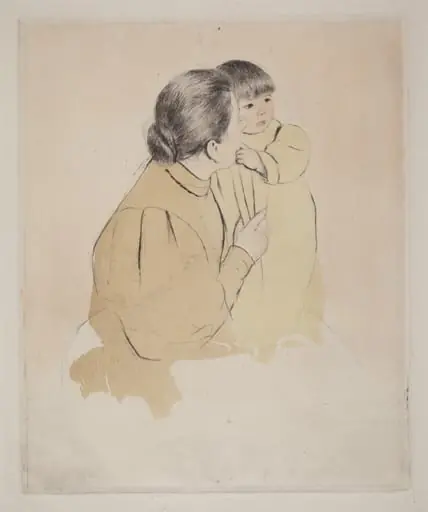
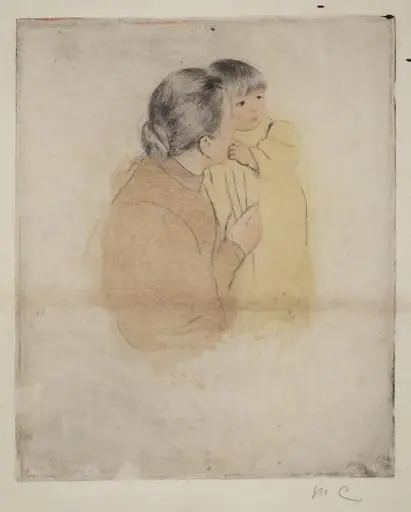
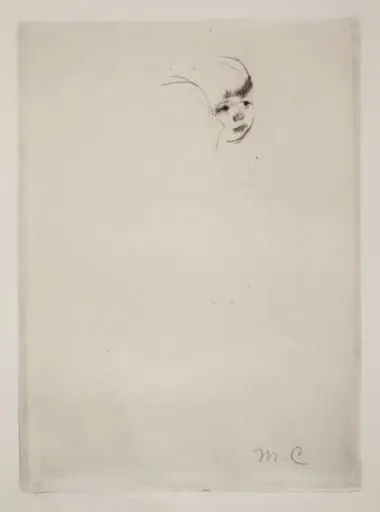
Peasant Mother and Child is a print created by Mary Cassatt around 1894, utilizing color drypoint and aquatint techniques. This work exemplifies Cassatt's focus on capturing intimate domestic moments, particularly the bond between women and children.
Subject & Meaning
The print depicts a serene scene of a peasant woman seated with a child on her lap, conveying a sense of tender closeness. The subject's simplicity and the artist's emphasis on their quiet interaction underscore Cassatt's interest in everyday, emotional connections.
Technique & Style
Characterized by loose, sketchy lines and a soft, gentle quality, the print showcases Cassatt's expressive yet delicate technique. The sparse detailing maintains the work's intimate, spontaneous feel, akin to a quick drawing.
History & Provenance
Created during Cassatt's time as an American expatriate in France, this print reflects her association with Impressionist circles, though its style leans more towards capturing quiet, personal moments than typical Impressionist subjects.
Context
Within Cassatt's oeuvre, Peasant Mother and Child sits alongside other works emphasizing the relationships between women and children, a theme central to her practice and reflective of her observations on family and intimacy.
Legacy
While not individually renowned as a landmark piece, Peasant Mother and Child contributes to Cassatt's broader legacy of portraying women's lives and mother-child relationships with sensitivity, influencing subsequent artists in their depiction of domestic intimacy.
Artist & collection
Artist
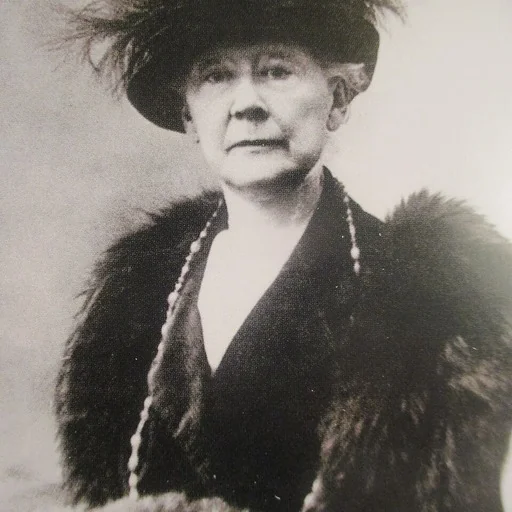
Mary Stevenson Cassatt (; May 22, 1844 – June 14, 1926) was an American painter and printmaker.