Artwork
The Bath
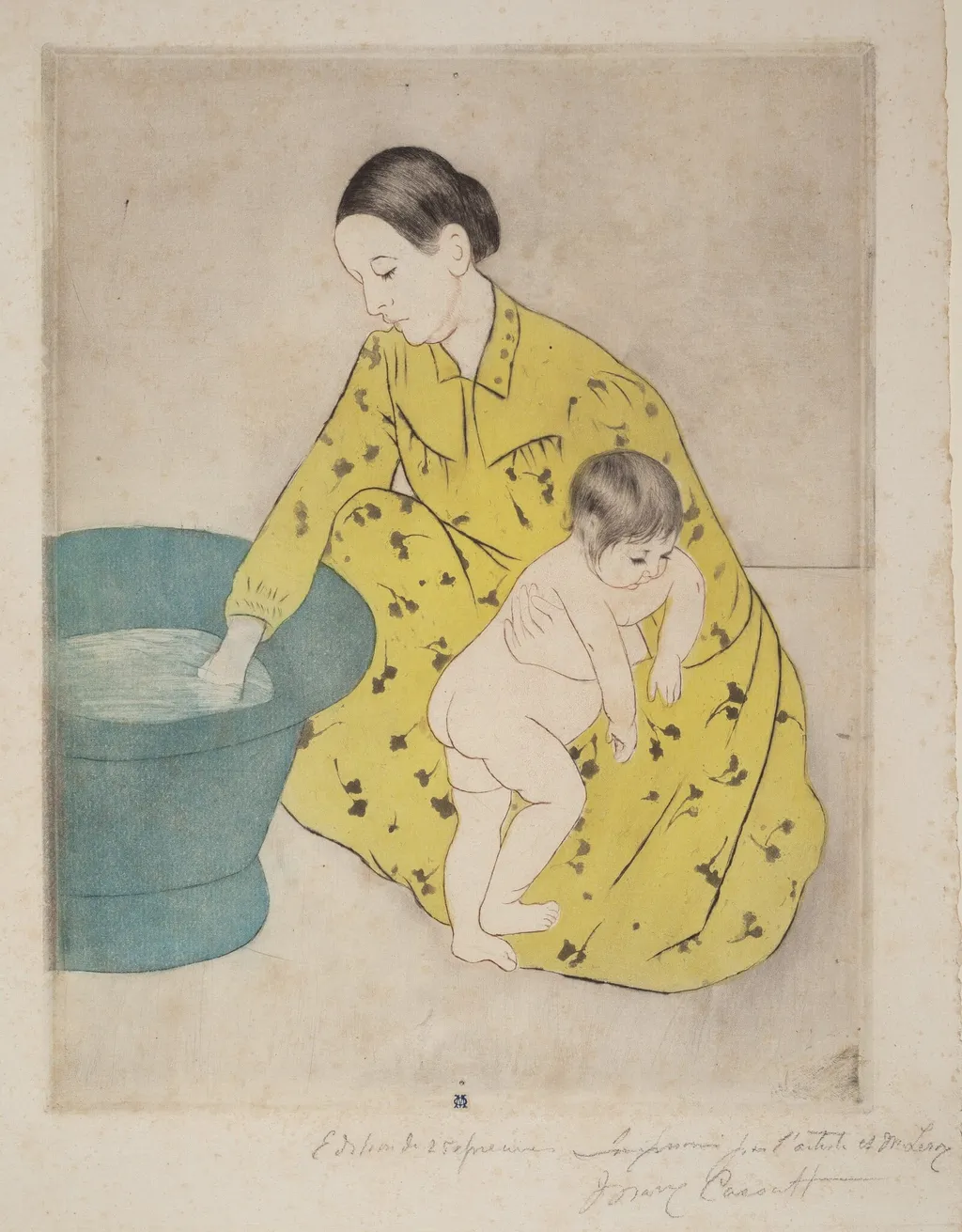
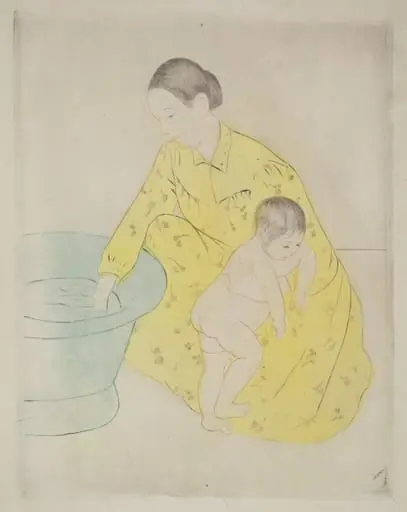
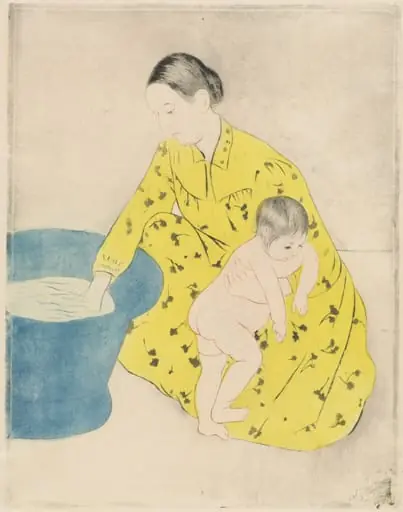
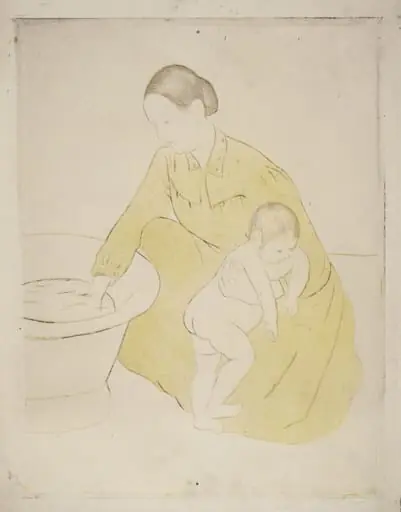
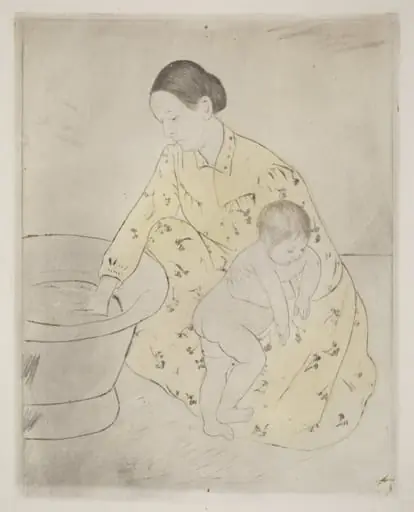
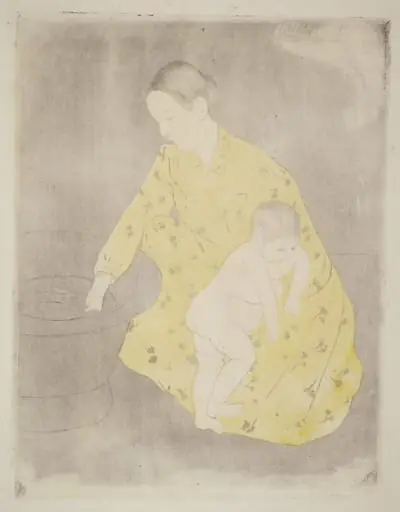
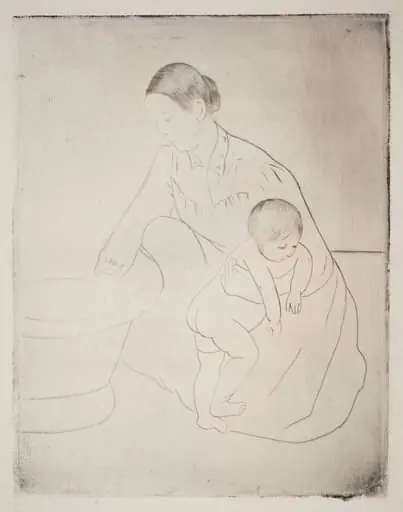
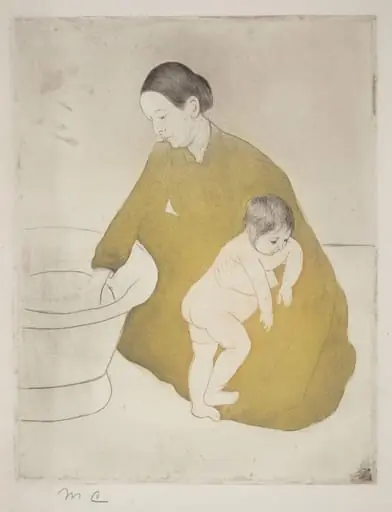
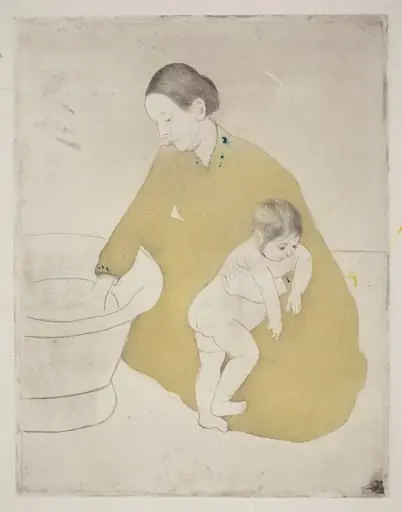
The Bath is an ink print by the Impressionist artist Mary Cassatt. It dates from 1890 and is held in the collection of the National Gallery of Art.
About this work
Overview
Created in 1890, *The Bath* is a multicolor print by Mary Cassatt, combining drypoint, softground etching, and aquatint on laid paper.
Created in 1890, *The Bath* is a multicolor print by Mary Cassatt, combining drypoint, softground etching, and aquatint on laid paper. Though American by birth, Cassatt lived and worked in France, where she engaged with the Impressionist circle. This work exemplifies her commitment to printmaking as a serious artistic medium, distinct from her paintings, and reflects her interest in domestic intimacy as a subject worthy of sustained artistic attention.
Subject & Meaning
The scene portrays a mother cradling her infant in a quiet, unidealized moment of care. The child reaches toward the mother’s face, suggesting a tender, instinctive bond. Cassatt avoids sentimentality, presenting the interaction with calm realism. The mother’s dressed form contrasts with the child’s nudity, emphasizing vulnerability and protection. The composition centers on physical closeness rather than narrative, inviting contemplation of everyday maternal gestures.
Technique & Style
Cassatt layered color through multiple etching plates, using softground to capture the texture of the mother’s patterned dress and aquatint for subtle tonal gradations in skin and fabric. Drypoint added fine, expressive lines to define contours and folds. The print’s soft, muted palette—dominated by ochres and blues—enhances the quiet atmosphere. The child’s relaxed posture and the informal placement of the bucket suggest spontaneity, as if capturing a fleeting, unposed moment.
History & Provenance
*The Bath* was produced during Cassatt’s most active period in printmaking, following her collaboration with Degas and her participation in Impressionist exhibitions. It was likely printed in a small edition, typical of her experimental approach. The work remained within private collections in Europe and the United States, eventually entering public museum holdings. Its survival in good condition reflects its careful handling and the durability of the paper and inks used.
Context
In late 19th-century France, depictions of motherhood were often idealized or moralized. Cassatt’s prints countered this by portraying private, unadorned moments of care, aligning with broader feminist interests in women’s lived experience. Her choice of printmaking allowed wider distribution of these images, reaching audiences beyond traditional gallery spaces. The work reflects both Japanese ukiyo-e influences and the Impressionist focus on contemporary life.
Legacy
*The Bath* helped redefine the potential of printmaking as a vehicle for intimate, modern subject matter. Cassatt’s technical innovation in color printing influenced later artists exploring similar themes. The work remains a touchstone in discussions of gender, domesticity, and artistic medium, demonstrating how technical precision can serve emotional authenticity without overt drama.
Artist & collection
Artist
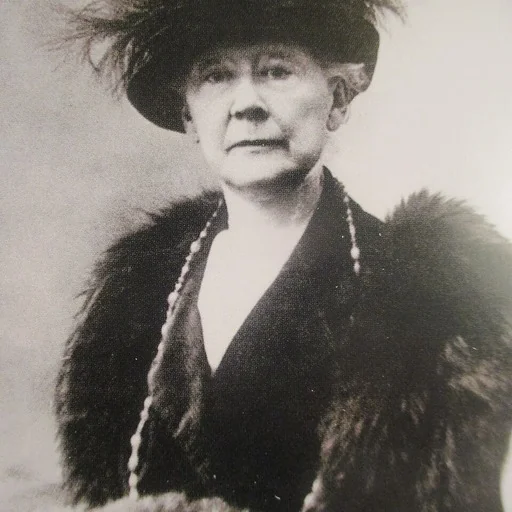
Mary Stevenson Cassatt (; May 22, 1844 – June 14, 1926) was an American painter and printmaker.

![The Bath [verso], by Mary Cassatt](https://artifactworldgallery.com/img/mary-cassatt--the-bath-verso--999b365b4668ddfc-w320.webp)
![The Bath [recto], by Mary Cassatt](https://artifactworldgallery.com/img/mary-cassatt--the-bath-recto--67276d728e4d9c9f-w320.webp)