Artwork
A Pawnee Warrior Sacrificing His Favorite Horse
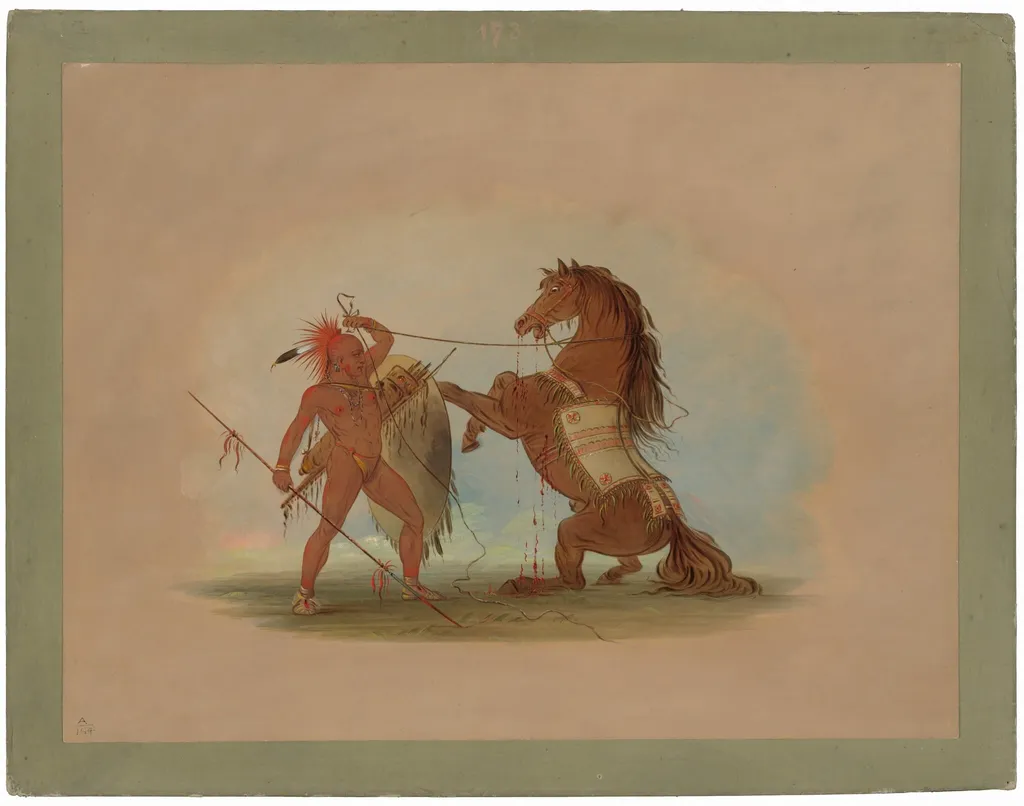
A Pawnee Warrior Sacrificing His Favorite Horse is an oil painting by the American Folk Art artist George Catlin. It dates from 1865 and is held in the collection of the National Gallery of Art.
About this work
Overview
Created in 1865, this oil painting on card, later mounted on paperboard, depicts a Pawnee warrior engaged in a ritual sacrifice of his prized horse. The work belongs to the American folk tradition and is catalogued as religious art, reflecting the artist’s interest in documenting Indigenous customs.
Subject & Meaning
The central figure, a warrior clad in a loincloth and feathered headdress, holds a spear and a bow while standing beside a brown horse whose neck is wounded. The scene suggests a ceremonial act of offering, a practice recorded among Plains tribes, emphasizing the spiritual bond between rider and animal.
Technique & Style
Rendered in oil, the composition employs a muted background that isolates the figures, allowing the bright details of the warrior’s ornaments—necklace, bracelets, and feathered plume—to stand out against the subdued tones. The brushwork combines a documentary clarity with the naïve vigor typical of 19th‑century folk painting.
History & Provenance
George Catlin, a lawyer‑turned painter, traveled to the western frontier during the 1830s, producing numerous portraits and genre scenes of Plains peoples. This particular work entered the National Gallery of Art in Washington, where it remains part of the museum’s collection of American art.
Context
Catlin’s oeuvre aimed to preserve the customs of Native American societies amid rapid expansion of Euro‑American settlement. By portraying a sacrificial rite, the painting offers a rare visual record of Pawnee religious practice, complementing his extensive written accounts of tribal life.
Artist & collection

Artist
George Catlin ( KAT-lin; July 26, 1796 – December 23, 1872) was an American lawyer, painter, author, and traveler, who specialized in portraits of Native Americans in the American frontier.

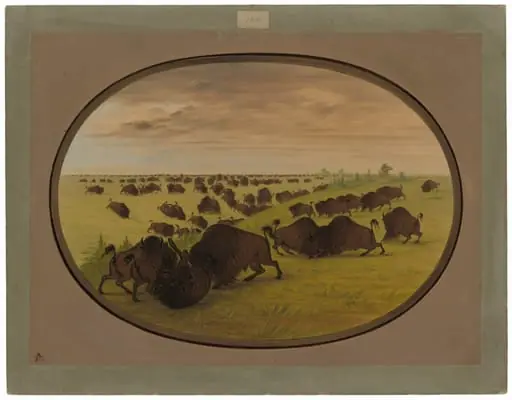 Bulls Fighting
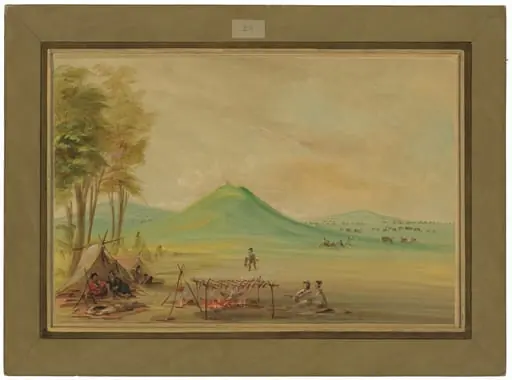 Expedition Encamped on a Texas Prairie. April 1686
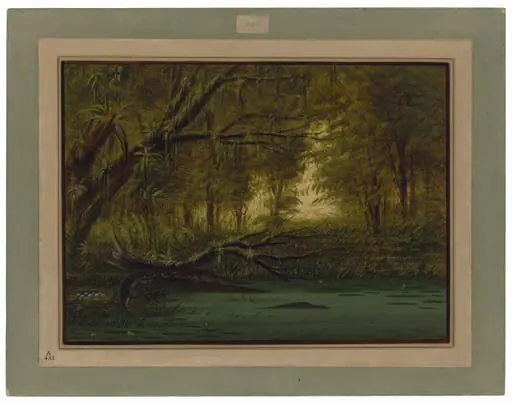 An Alligator's Nest
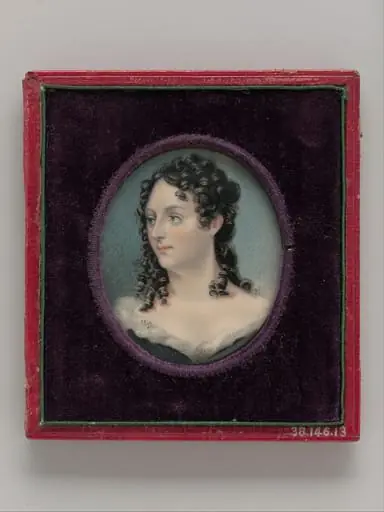 Mrs. George Catlin (Clara Bartlet Gregory)
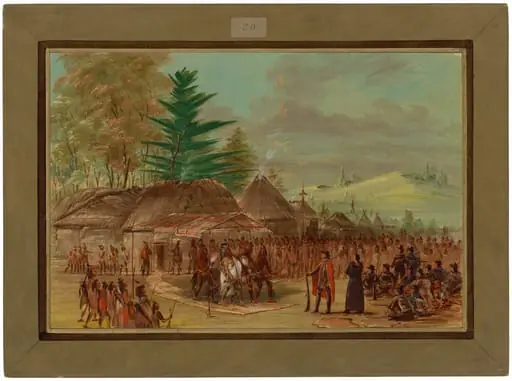 Chief of the Taensa Indians Receiving La Salle. March 20, 1682
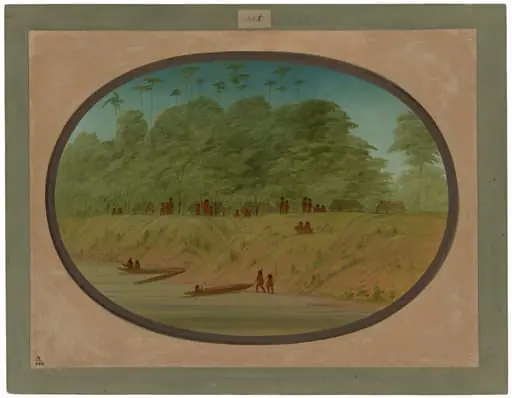 A Small Village - Payaguas Indians
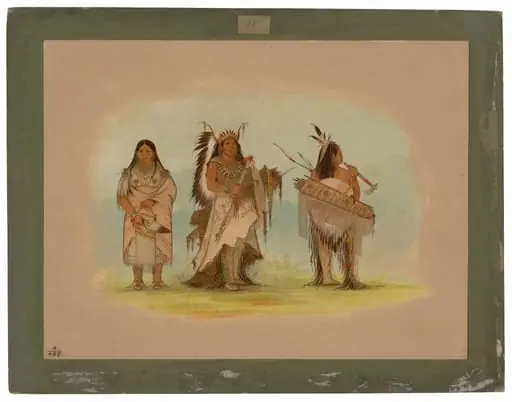 Omaha Chief, His Wife, and a Warrior
 Father Hennepin Leaving the Mississippi to Join La Salle. May 8, 1680