Artwork
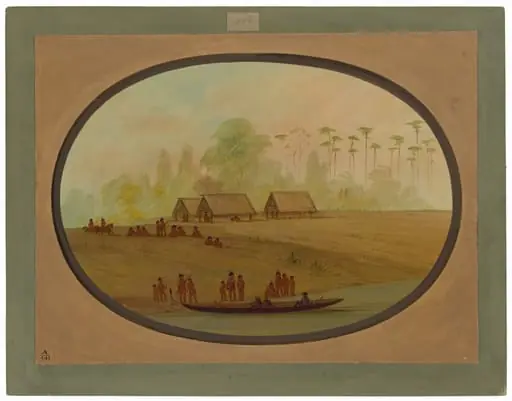
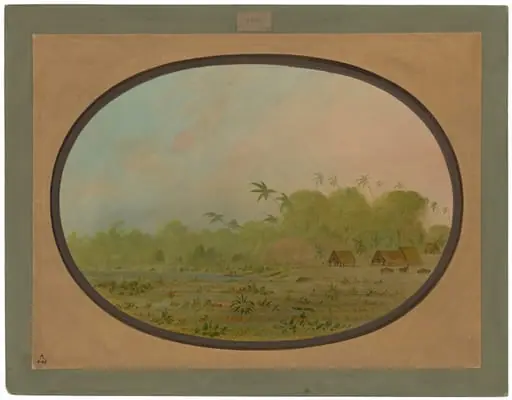
A Sepibo Village
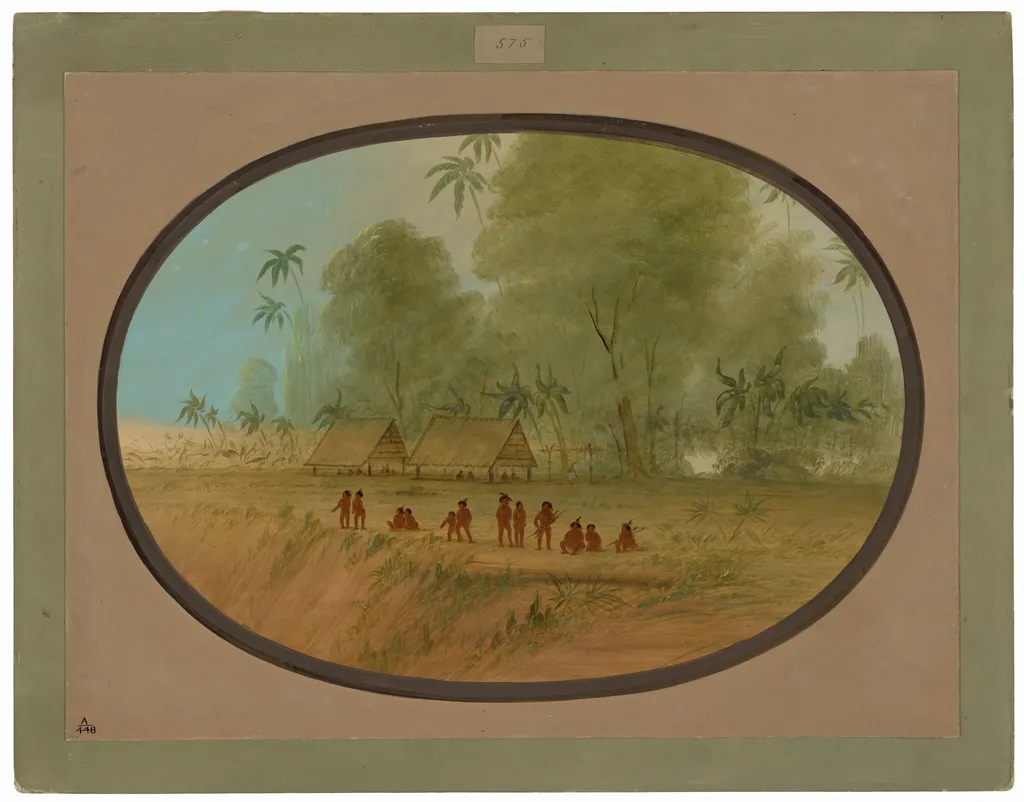
A Sepibo Village is an oil painting by the Impressionist artist George Catlin. It dates from 1862 and is held in the collection of the National Gallery of Art.
About this work
Overview
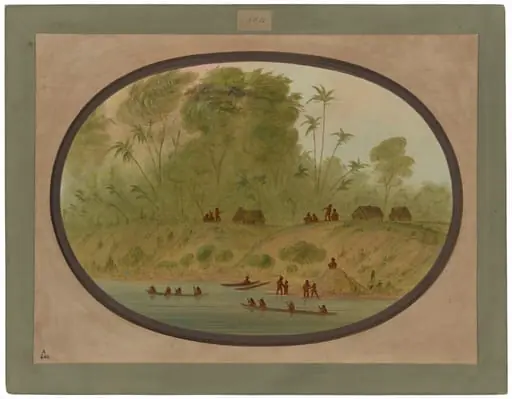
Created in 1862, *A Sepibo Village* is an oil painting executed on card that has been mounted on paperboard. The composition presents a modest settlement framed by a surrounding woodland, with a solitary, prominently rendered tree occupying the central space. The work reflects the artist’s interest in recording the visual character of frontier communities.
Subject & Meaning
The scene depicts a small village of Plains Indians, its modest structures clustered amid a forested landscape. The dominant tree serves as a visual anchor, suggesting both a natural landmark and a gathering point for the inhabitants. The painting conveys a quiet, everyday moment rather than a dramatic event, emphasizing the relationship between the community and its environment.
Technique & Style
Catlin employed oil pigments on a card support, a choice that allowed for fine detail and a relatively smooth surface. The mounting on paperboard provides additional stability. Brushwork is precise, especially in the rendering of foliage and architectural elements, while the overall palette remains muted, reinforcing the work’s documentary character.
History & Provenance
George Catlin, a lawyer‑turned painter, traveled to the American West on five expeditions during the 1830s, producing portraits and written accounts of Plains Indian life. *A Sepibo Village* was completed after these journeys, synthesizing his field observations into a studio composition. The painting now belongs to the collection of the National Gallery of Art in Washington, D.C.
Artist & collection

Artist
George Catlin ( KAT-lin; July 26, 1796 – December 23, 1872) was an American lawyer, painter, author, and traveler, who specialized in portraits of Native Americans in the American frontier.

 Bulls Fighting
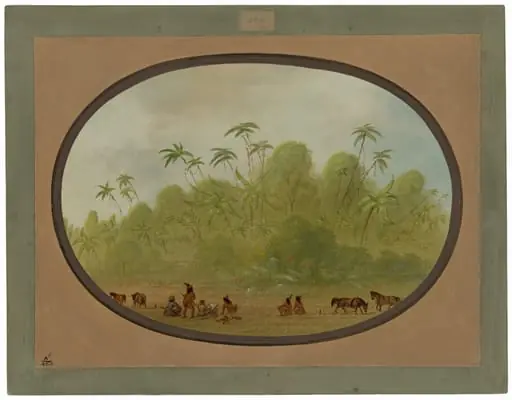
 Expedition Encamped on a Texas Prairie. April 1686
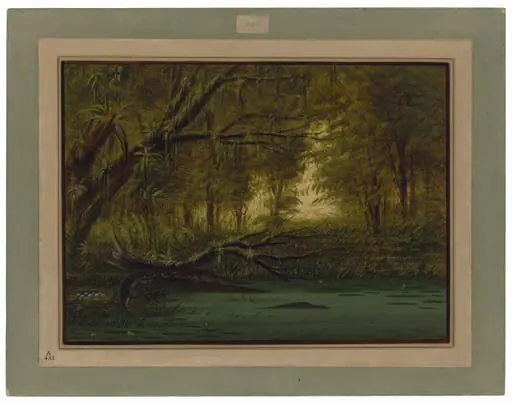 An Alligator's Nest
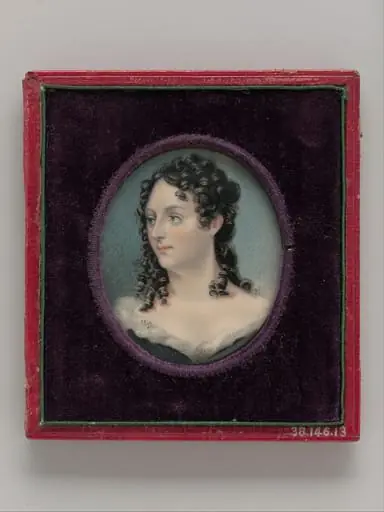 Mrs. George Catlin (Clara Bartlet Gregory)
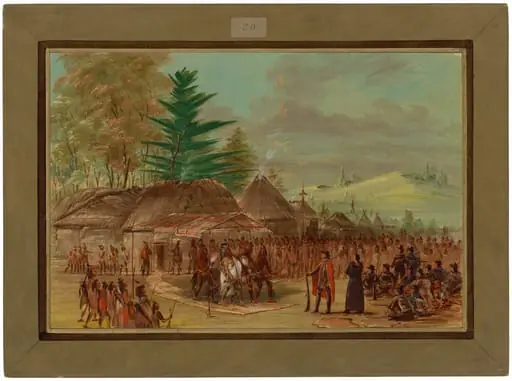 Chief of the Taensa Indians Receiving La Salle. March 20, 1682
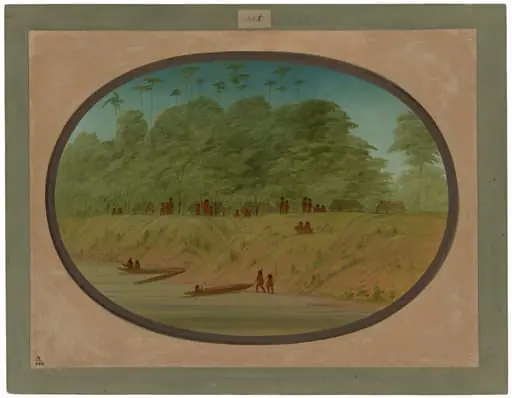 A Small Village - Payaguas Indians
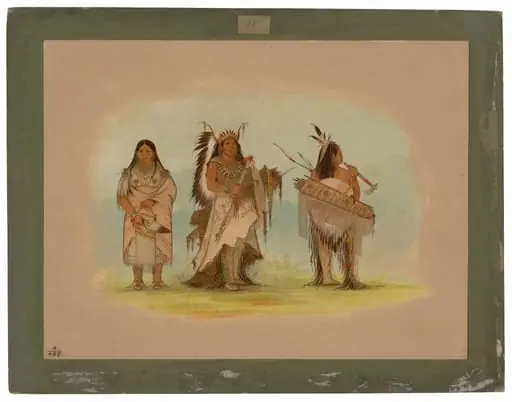 Omaha Chief, His Wife, and a Warrior
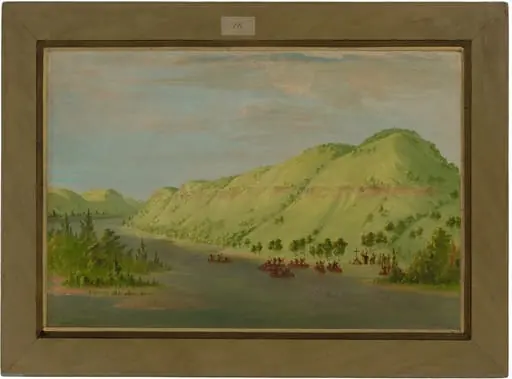 Father Hennepin Leaving the Mississippi to Join La Salle. May 8, 1680