Artwork
Assinneboine Chief before and after Civilization
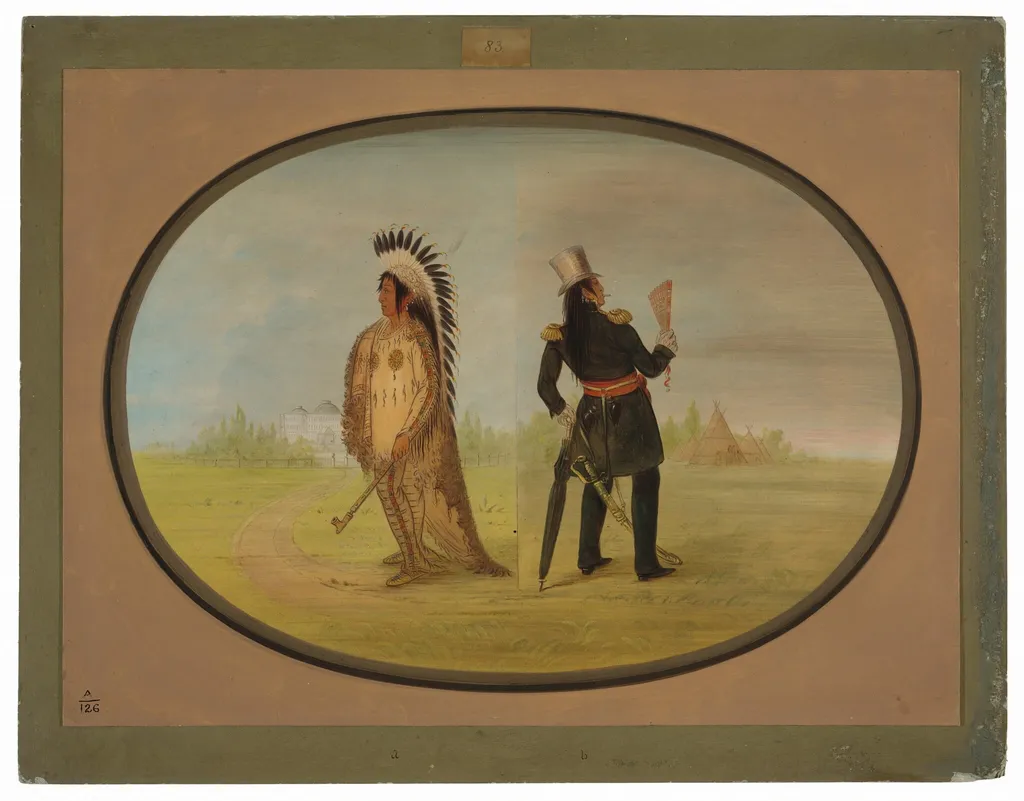
Assinneboine Chief before and after Civilization is an oil painting by the Impressionist artist George Catlin. It dates from 1865 and is held in the collection of the National Gallery of Art.
About this work
George Catlin made this in 1861 to show how Native Americans changed after contact with European settlers.
This painting shows two side-by-side portraits of an Assiniboine chief. On the left, he wears traditional Native clothing with a pipe and feathers. On the right, he wears a suit and tie, holding a book.
George Catlin made this in 1861 to show how Native Americans changed after contact with European settlers. The contrast is stark—one life before, one after.
The colors are bold and simple. Look up Catlin, George.
Overview
George Catlin’s oil on card work, titled *Assiniboine Chief before and after Civilization*, presents a dual portrait of a Plains chief. The left panel shows the leader in traditional regalia with a pipe and feathered headdress, while the right panel depicts him in a European suit, tie, and holding a book, highlighting a visual contrast between pre‑contact and post‑contact identities.
Subject & Meaning
The composition juxtaposes two states of the same individual: one embodying Indigenous customs and the other reflecting the assimilation pressures of Euro‑American society. By placing the two images side by side, Catlin underscores the cultural transformation imposed on Native peoples during the era of westward expansion.
Technique & Style
Executed in oil on a card mounted on paperboard, the painting employs bold, uncomplicated colour blocks characteristic of Catlin’s frontier portraiture. The straightforward rendering emphasizes the figures rather than elaborate background detail, reinforcing the didactic purpose of the work.
History & Provenance
Catlin, originally a lawyer, turned to painting after extensive travels across the Plains in the 1830s, documenting Indigenous life. He produced this particular piece in the mid‑1860s, adding to a larger body of portraiture that combined ethnographic observation with landscape elements. Earlier in his career he contributed engravings and lithographs to publications such as Cadwallader D. Colden’s 1825 *Memoir*.
Context
Created during a period of intense cultural disruption for Native American communities, the work reflects contemporary debates about “civilization” and assimilation. It aligns with Catlin’s broader mission to record what he perceived as a vanishing way of life amid the United States’ westward push.
Artist & collection

Artist
George Catlin ( KAT-lin; July 26, 1796 – December 23, 1872) was an American lawyer, painter, author, and traveler, who specialized in portraits of Native Americans in the American frontier.

 Bulls Fighting
 Expedition Encamped on a Texas Prairie. April 1686
 An Alligator's Nest
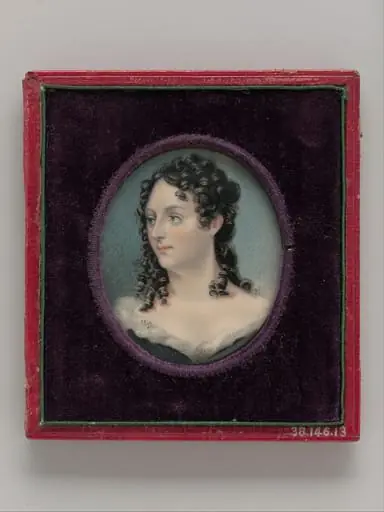 Mrs. George Catlin (Clara Bartlet Gregory)
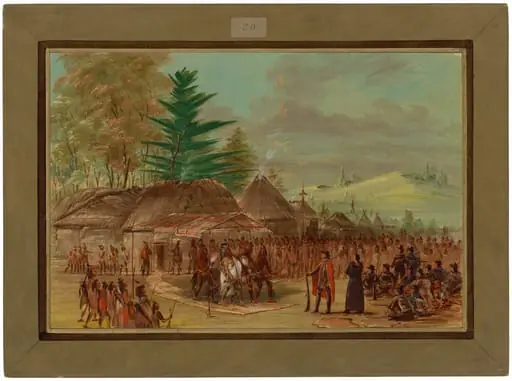 Chief of the Taensa Indians Receiving La Salle. March 20, 1682
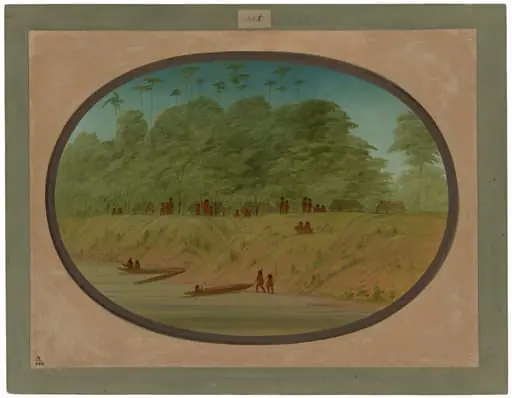 A Small Village - Payaguas Indians
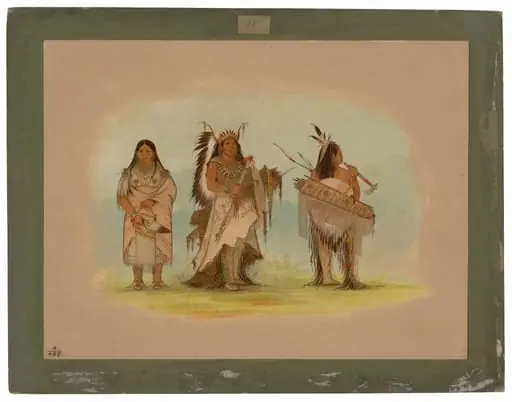 Omaha Chief, His Wife, and a Warrior
 Father Hennepin Leaving the Mississippi to Join La Salle. May 8, 1680