Artwork
Father Hennepin and Two Companions Made Prisoners by the Sioux. April 1680
Father Hennepin and Two Companions Made Prisoners by the Sioux. April 1680 is an oil painting by the Romanticist artist George Catlin. It dates from 1848 and is held in the collection of the National Gallery of Art.
About this work
George Catlin shows three men tied to a tree under dark skies. Their clothes look European. One wears a white shirt. The men seem tired.
This painting tells a real story. In 1680, a French priest named Hennepin got captured by Sioux warriors. Catlin painted it decades later from stories he heard.
Look up Catlin, George to see more like this.
Overview
George Catlin’s 1848 oil on canvas, *Father Hennepin and Two Companions Made Prisoners by the Sioux, April 1680*, records a dramatic episode from early French colonial history. The work portrays three European‑clad figures bound to a tree beneath a stormy sky, illustrating the moment when the French missionary Louis Hennepin and two companions were seized by Sioux warriors.
Subject & Meaning
The painting visualizes a captivity narrative that circulated in the 19th‑century frontier imagination. By focusing on the weary, restrained men, Catlin emphasizes the vulnerability of European explorers amid the hostile environment of the Upper Mississippi region, while also hinting at the broader clash of cultures between French missionaries and the Sioux.
Technique & Style
Executed in oil, the canvas employs a muted palette of grays and earth tones to convey the ominous atmosphere. Catlin’s handling of light and shadow accentuates the tension of the scene, while the detailed rendering of the men’s European attire contrasts with the rough, natural background, reflecting his documentary approach to frontier subjects.
History & Provenance
Catlin, a former lawyer who turned to painting after extensive travels in the 1830s, created this work as part of his larger project to document Native American life and related historical events. The composition was based on oral accounts and written sources about Hennepin’s 1680 capture, rather than direct observation.
Context
The painting fits within a mid‑19th‑century American interest in frontier history and the romanticization of encounters between European settlers and Indigenous peoples. Catlin’s broader oeuvre includes portraits of Plains tribes and scenes of daily life, positioning this work as both a historical illustration and a visual record of cultural conflict.
Artist & collection

Artist
George Catlin ( KAT-lin; July 26, 1796 – December 23, 1872) was an American lawyer, painter, author, and traveler, who specialized in portraits of Native Americans in the American frontier.

 Bulls Fighting
 Expedition Encamped on a Texas Prairie. April 1686
 An Alligator's Nest
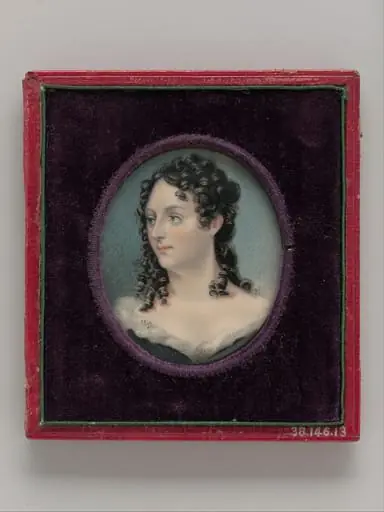 Mrs. George Catlin (Clara Bartlet Gregory)
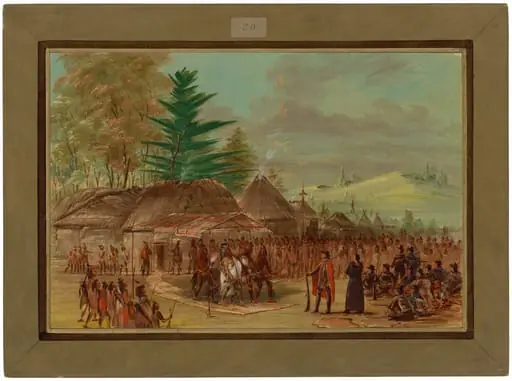 Chief of the Taensa Indians Receiving La Salle. March 20, 1682
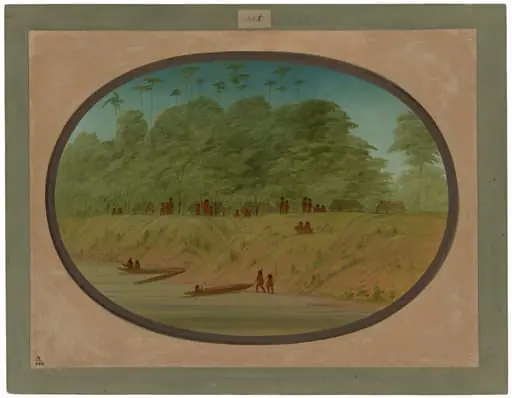 A Small Village - Payaguas Indians
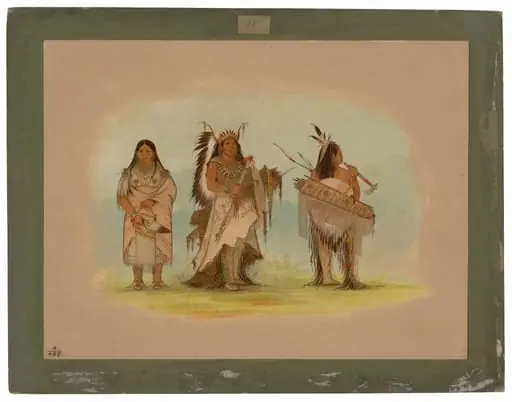 Omaha Chief, His Wife, and a Warrior
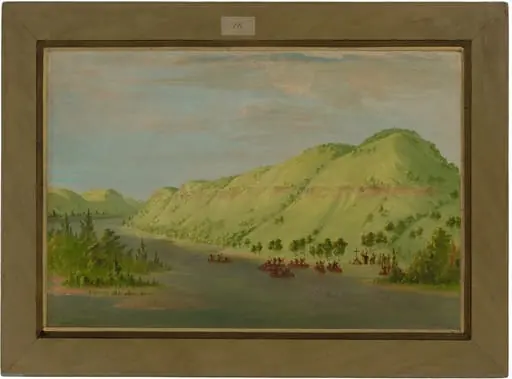 Father Hennepin Leaving the Mississippi to Join La Salle. May 8, 1680
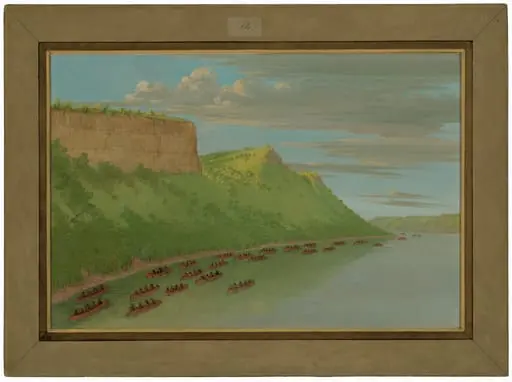 Father Hennepin and Companions Passing Lover's Leap. April 1680
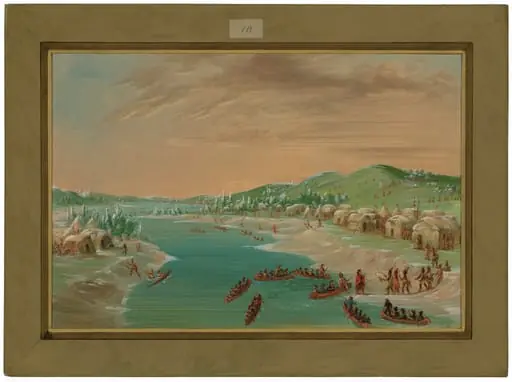 La Salle and Party Arrive at the Village of the Illinois. January 1, 1680
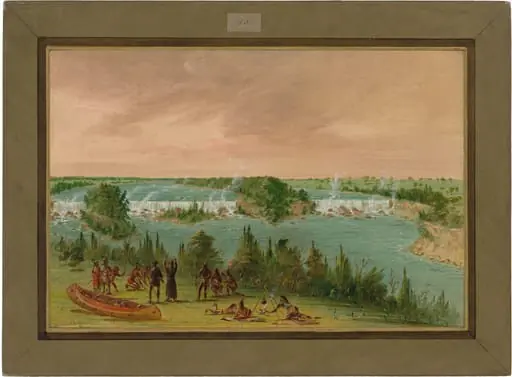 Father Hennepin and Companions at the Falls of St. Anthony. May 1, 1680
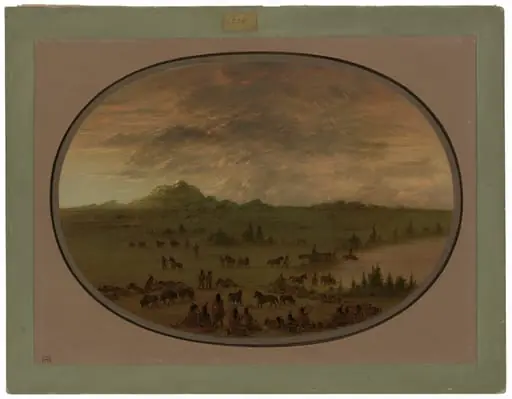 Bivouac of a Sioux War Party at Sunrise
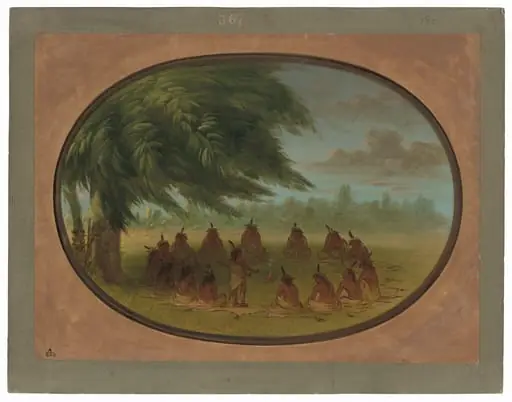 An Indian Council - Sioux
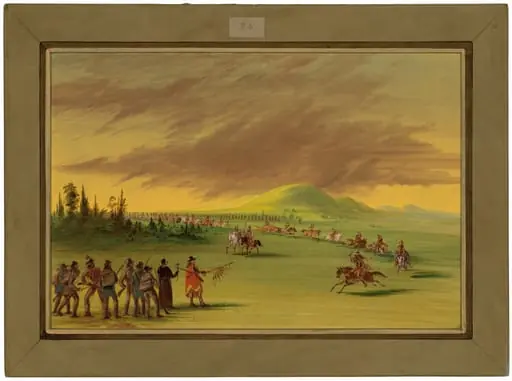 La Salle Meets a War Party of Cenis Indians on a Texas Prairie. April 25, 1686
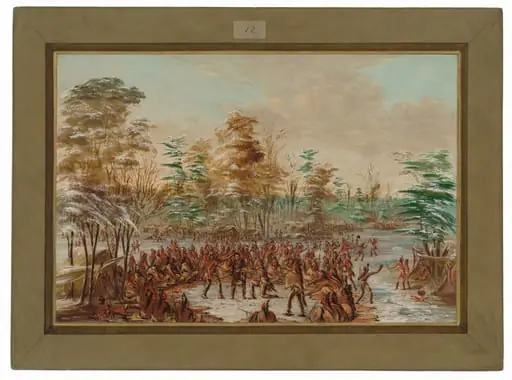 De Tonty Suing for Peace in the Iroquois Village. January 2, 1680
 A Sioux Village