Artwork
The Haystack and the Moon
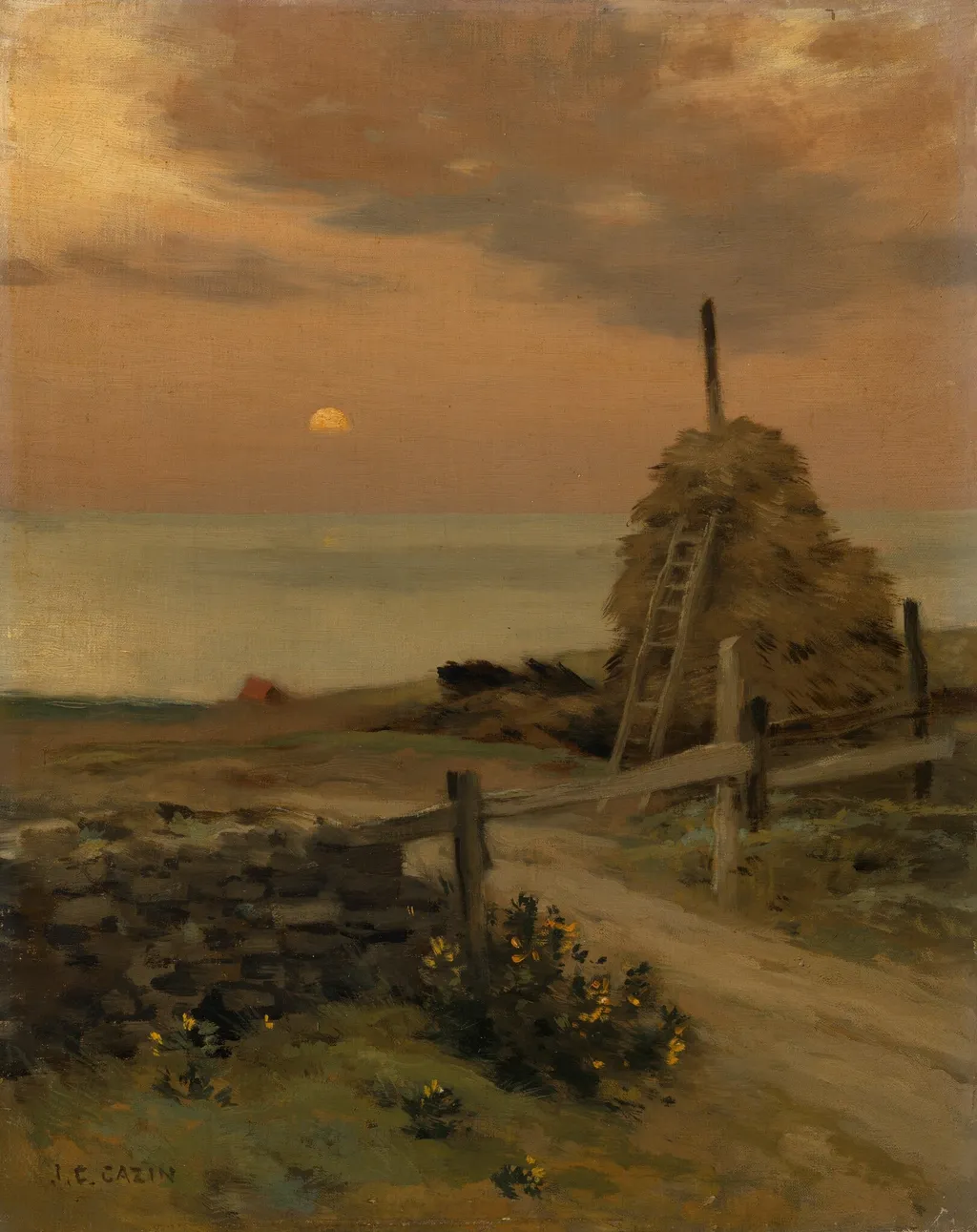
The Haystack and the Moon is an oil painting by the Impressionist artist Jean-Charles Cazin. It dates from 1876 and is held in the collection of the National Gallery of Art.
About this work
Overview
Jean-Charles Cazin’s oil on canvas, The Haystack and the Moon, dates from 1876. The composition presents a tranquil rural scene at twilight, dominated by a solitary haystack beneath a low, luminous moon. A modest red‑roofed structure emerges on the horizon, while a wooden fence and scattered wildflowers frame the foreground, establishing a calm, atmospheric landscape.
Subject & Meaning
The work captures a moment of evening stillness, emphasizing the relationship between human labor, represented by the haystack, and the natural cycle symbolized by the moon. The modest dwelling hints at habitation within the landscape, suggesting a quiet coexistence of agrarian life and the broader celestial rhythm.
Technique & Style
Cazin employs loose, warm brushwork that blends earthy browns with soft yellows, allowing light to dissolve into color rather than define precise edges. This approach seeks to convey the fleeting quality of dusk, aligning with contemporary interests in atmospheric effects and the transitory nature of illumination.
History & Provenance
Created in the late nineteenth century, The Haystack and the Moon reflects Cazin’s engagement with the evolving French landscape tradition. While specific ownership records are limited, the painting has been documented in catalogues of his work and remains a representative example of his oeuvre from the 1870s.
Own this work as a print
Artist & collection