Artwork
Martyrdom of Saint Margaret
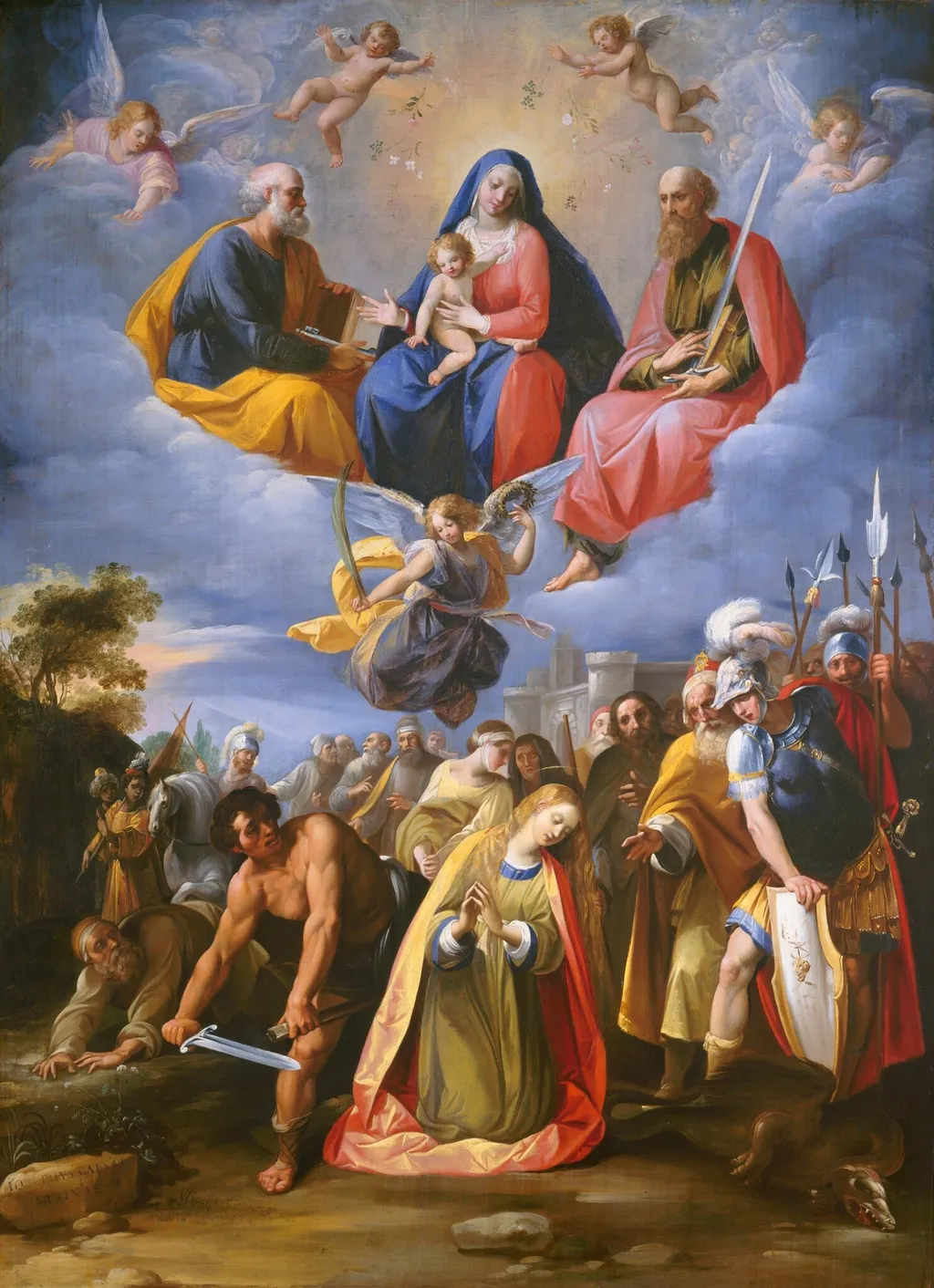
Martyrdom of Saint Margaret is an oil painting by the Baroque artist Giuseppe Cesari. It dates from 1610 and is held in the collection of the National Gallery of Art.
About this work
Overview
Giuseppe Cesari, often called Il Giuseppino or the Cavaliere d’Arpino, executed the oil‑on‑panel work *Martyrdom of Saint Margaret* circa 1610. Created during the early Baroque era in Italy, the painting reflects the artist’s position at the crossroads of late Mannerist sensibilities and emerging Baroque dynamism.
Subject & Meaning
The composition portrays the execution of Saint Margaret, centering a kneeling female figure dressed in yellow and a red mantle. She is surrounded by a gathering of onlookers, while celestial beings—an ethereal woman in blue, a child, and attendant angels—hover above on clouds, suggesting a heavenly witness to the martyr’s suffering.
Technique & Style
Cesari employs a pronounced chiaroscuro, juxtaposing deep shadows with luminous areas to heighten drama. The figures on the clouds are rendered in vivid, saturated hues that contrast with the darker ground, emphasizing the tension between earthly turmoil and divine presence characteristic of the period’s stylistic shift.
History & Provenance
A leading Mannerist painter in Rome, Cesari received numerous papal commissions, notably from Pope Clement VIII and Pope Sixtus V. His workshop, where the young Caravaggio briefly trained, produced this work, situating it within a network of Roman artistic patronage in the early seventeenth century.
Context
The painting emerges at a time when Roman art was transitioning from the elongated elegance of Mannerism toward the more visceral, movement‑driven language of Baroque. Cesari’s blend of refined figure drawing and dramatic lighting mirrors this broader cultural shift in religious visual culture.
Own this work as a print
Artist & collection
Artist
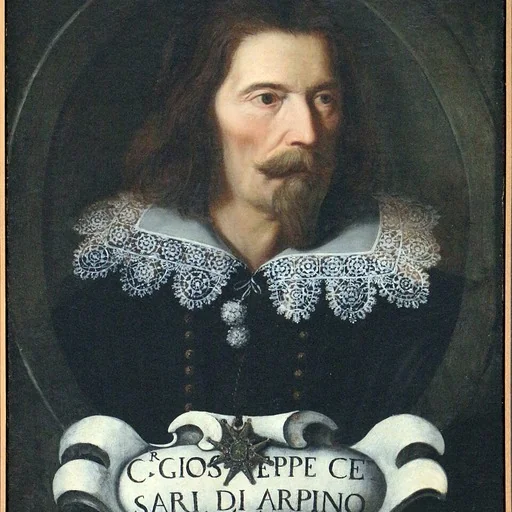
Giuseppe Cesari (14 February 1568 – 3 July 1640) was an Italian Mannerist painter, also named Il Giuseppino and called Cavaliere d'Arpino, because he was created Knight of the Supreme Order of Christ by his patron Pope Clement VIII.
